Table of Contents
Your brain is like a high-performance computer. It can master the knowledge needed to fly a commercial airline, build entire worlds in books, and memorize every lyric of Bohemian Rhapsody… but it can also flunk on a test or forget where you left your keys.
Learning isn’t only about effort, it’s also about engineering.
The way you study can either work with your brain’s biological wiring or against it. And that’s where cognitive science comes in to provide us with a user’s manual to our own brain.
Over the past half-century, psychologists, neuroscientists, and educators have uncovered a collection of learning principles that explain how the brain processes, stores, and retrieves information. Together, they form the cognitive science of studying: a blueprint for learning faster, remembering longer, and actually enjoying the process.
That’s what this guide is all about.
Whether you’re a student, educator, professional, or lifelong learner, acquiring new skills and knowledge is central to what it means to live a rich and curiosity-driven life. And understanding how your brain learns will help you do so as fast and as painlessly as humanly possible.
So, starting with retrieval practice, let’s take a tour of sixteen of the most powerful ideas shaping how humans learn. In each one, we’ll then explain how study tools like digital flashcard apps harness or circumvent these principles for fast, effective learning.
Retrieval Practice
What Is Retrieval Practice?
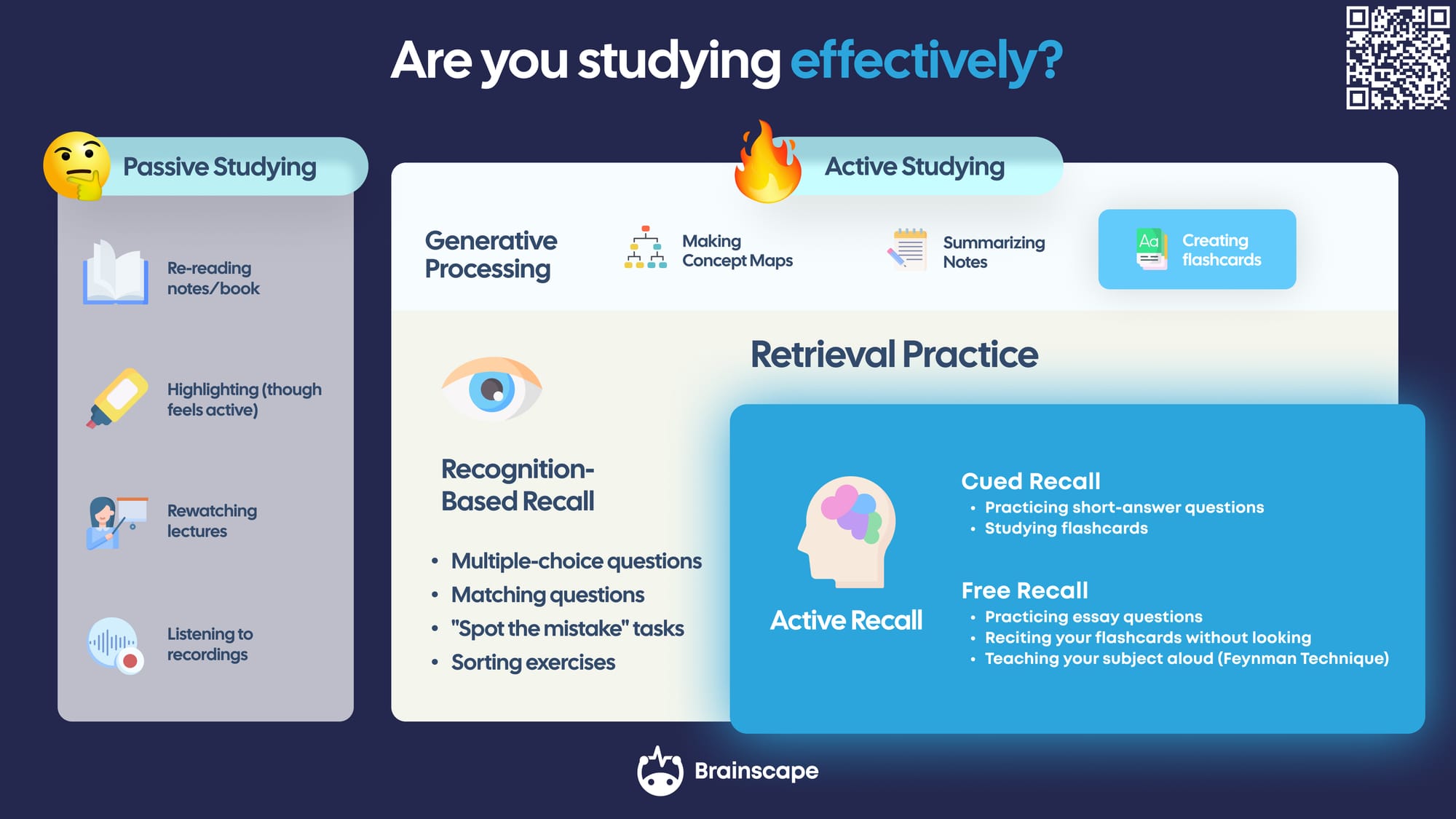
Retrieval practice is the study strategy of pulling information out of your memory instead of passively re-reading or highlighting it in a textbook. In other words: answering questions based on the material you’re trying to learn. This could involve flashcards, matching games, multiple-choice quizzes, or other types of questions.
This passive vs. active distinction matters more than most learners realize, because it changes what your brain is actually forced to do. The infographic below lays out the difference at a glance, so you can quickly sanity-check your current study habits.
Why Is Retrieval Practice So Powerful?
Memory is more like a muscle than a storage cabinet. The more you use it, the stronger it gets. By forcing yourself to retrieve an answer, you reinforce the signal that that knowledge is important, thereby making it easier to find later.
Studies show retrieval practice improves long-term retention far more effectively than re-reading or note-reviewing. It’s why answering questions that compel you to retrieve the information from memory is the secret sauce of learning.
How Do Digital Flashcards Apply Retrieval Practice To Learning?
While retrieval practice can technically involve recognition-based exercises like answering multiple-choice or matching questions, digital flashcards are the ultimate form of retrieval practice, since they break knowledge into its most fundamental "binary" learning objectives. They then compel you to retrieve
(I say “digital” because apps like Brainscape or Anki are far superior to paper flashcards in that they are engineered to tap into several of the cognitive science principles we’ll be discussing here.)
Each flashcard presents a question based on a single piece of knowledge. Retrieval practice is somewhat of an umbrella term so you could either be compelled to answer this question from scratch, without any prompts (active recall) or you could write the flashcard to provide hints or prompts, like a list of multiple-choice answers to choose from.
Both exercises involve retrieval practice but active recall is much more powerful for long-term learning and we’ll be discussing that in the next section.
In fact, retrieval practice is such an integral learning principle that we wrote a whole article to help you apply it to your own learning, or to that of your students or kids.
[Learn more about retrieval practice →]
Active Recall
What Is Active Recall?
Active recall and retrieval practice are often used interchangeably, but they are not really the same thing. Active recall is more of a subset of retrieval practice. While even a recognition-based exercise like taking a multiple-choice quiz can be considered retrieval practice, active recall specifically refers to pulling the information directly from your brain, without the aid of hints or prompts, such as by answering short answers or essay questions.
In other words, you’re recalling information from scratch.
Why Is Active Recall So Powerful?
Recognition feels easy, but it’s deceptive. Your brain easily (and routinely) mistakes familiarity for mastery. Active recall eliminates the crutch of recognition, forcing you to reconstruct knowledge from the ground up. That knowledge can be anything from straightforward vocabulary to a vast network of concepts supporting a theory, system, or process.
For example, if I asked you to explain the water cycle to me, you’d not only need to remember (1) what evaporation is, but also (2) how the migration of moisture-laden air onshore leads to (2) adiabatic cooling, (3) condensation and cloud formation, and (4) rainfall. That rain then (5) runs back down the land and into the ocean.
To successfully tell this story—which I’ve grossly simplified (at the college level, the right answer would be much closer to an essay)—you’re connecting multiple concepts and processes into a more complex tapestry of knowledge.
This reconstruction process is what transforms information from “I’ve seen that before” to “I own that concept.” Active recall is the driving force behind that process.
There are many ways to apply this to your learning, the most efficient being (1) the Feynman Technique and (2) a good flashcard app. Speaking of which…
How Do Digital Flashcards Apply Active Recall to Learning?
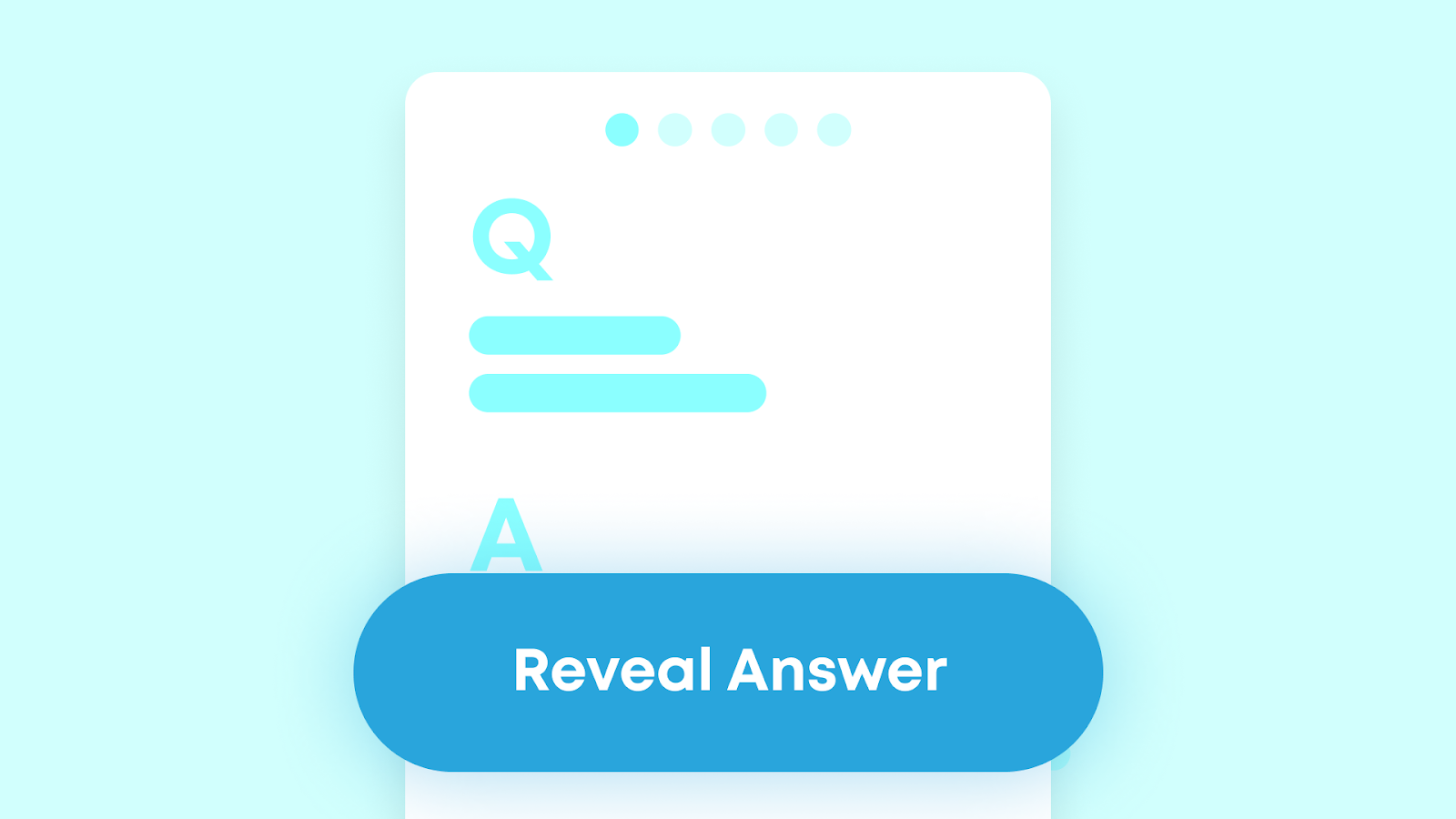
Flashcards by their very nature compel you to actively recall information, without the assistance of prompts or clues. Not to throw too many terms at you but flashcards actually lean into a subset of active recall called "cued recall" because they prompt you (or cue you) to answer a question based on a single concept. You are then compelled to answer this question by retrieving the information from your memory and your memory alone. (Not by choosing from a multiple-choice list!)
That question can be simple, based on a single fact (“What is condensation?”), or it can be complex, requiring you to weave together multiple concepts ("Describe the various stages of the water cycle at the atmospheric conditions necessary for each one”).
[Learn more about active recall →]
Metacognition
What Is Metacognition?
To put it simply, metacognition is “thinking about your thinking”. In other words: it's your ability to assess how well you actually know something. It’s the internal voice asking, “Do I really get this, or am I just nodding along?” The ability to be honest with yourself in answering that question shouldn’t never be underestimated.
Why Is Metacognition So Powerful?
Strong learners aren’t just good at remembering; they’re good at judging what they remember (see next section on Judgements of Learning). By reflecting on your confidence, you can pinpoint knowledge weaknesses, reality-check illusions of competence, and focus your study time where it matters.
For example, an inexperienced learner may work through a textbook, spending just as much time on the easy chapters as the difficult ones. In fact, because struggling sucks, they may even breeze a little too quickly through the difficult chapters to “get it over with”. This invariably leaves precious marks on the table when exam time rolls around.
An experienced learner, on the other hand, knows NOT to avoid their weaknesses. In fact, the shakier they feel in a concept, the more intensely they dig into it. But in order to address their weaknesses, they first need to identify them, which you can do by asking yourself: “How well do I understand this?” “Can I explain this concept from the ground up?” “Or are there gaps in my reasoning that leave me feeling unsure?”
Flashcards can be a tool that naturally facilitates this…
How Do Digital Flashcards Apply Metacognition To Learning?
After each flashcard review in a flashcard app, you can typically rate your confidence on how well you were able to answer it: not just whether you were right, but how sure you were. Digital flashcard apps like Brainscape compel you to answer that question based on a scale of 1 to 5 with 1 being “I didn’t know this at all” and 5 being “I knew this so well, I’ll never forget it”.
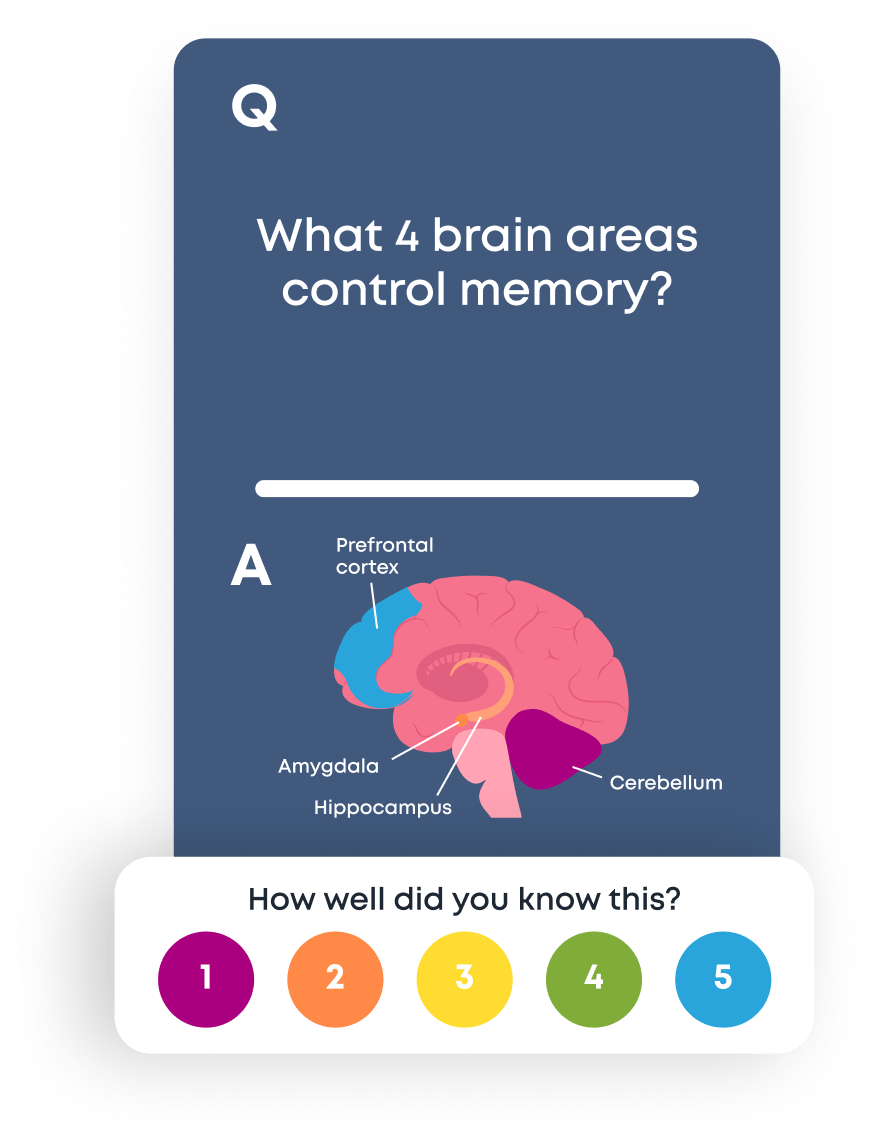
This self-assessment trains your metacognition. You’re constantly calibrating how well you know each concept, and whether you’re a young kid or an adult learner, this is a skill that’ll serve you very well in life.
[Learn more about metacognition →]
Resolution (Judgments of Learning)
What Is Resolution (Judgments of Learning)?
Resolution measures how accurately your confidence matches your actual knowledge. If you think you know something but can’t recall it later, your resolution is low. Anyone who’s ever gone into a test or exam feeling optimistic, only to emerge completely defeated will know exactly how this feels.
Naturally, strong learners who regularly exercise their powers of metacognition have a high resolution. Those who don’t won’t develop this muscle, resulting in poor judgement and resolution.
Why Is Resolution So Powerful?
Accurate self-assessment not only ensures you’re investing sufficient focus on the concepts you’re weakest on but also prevents wasted effort on studying the concepts you already know well. And this sets you up to be a very efficient learner.
High-resolution learners are able to waltz into exams confident because their self-judgments align with real performance. Thankfully, this is a skill that can be improved over time through feedback and reflection.
How Do Digital Flashcards Apply Resolution To Learning?
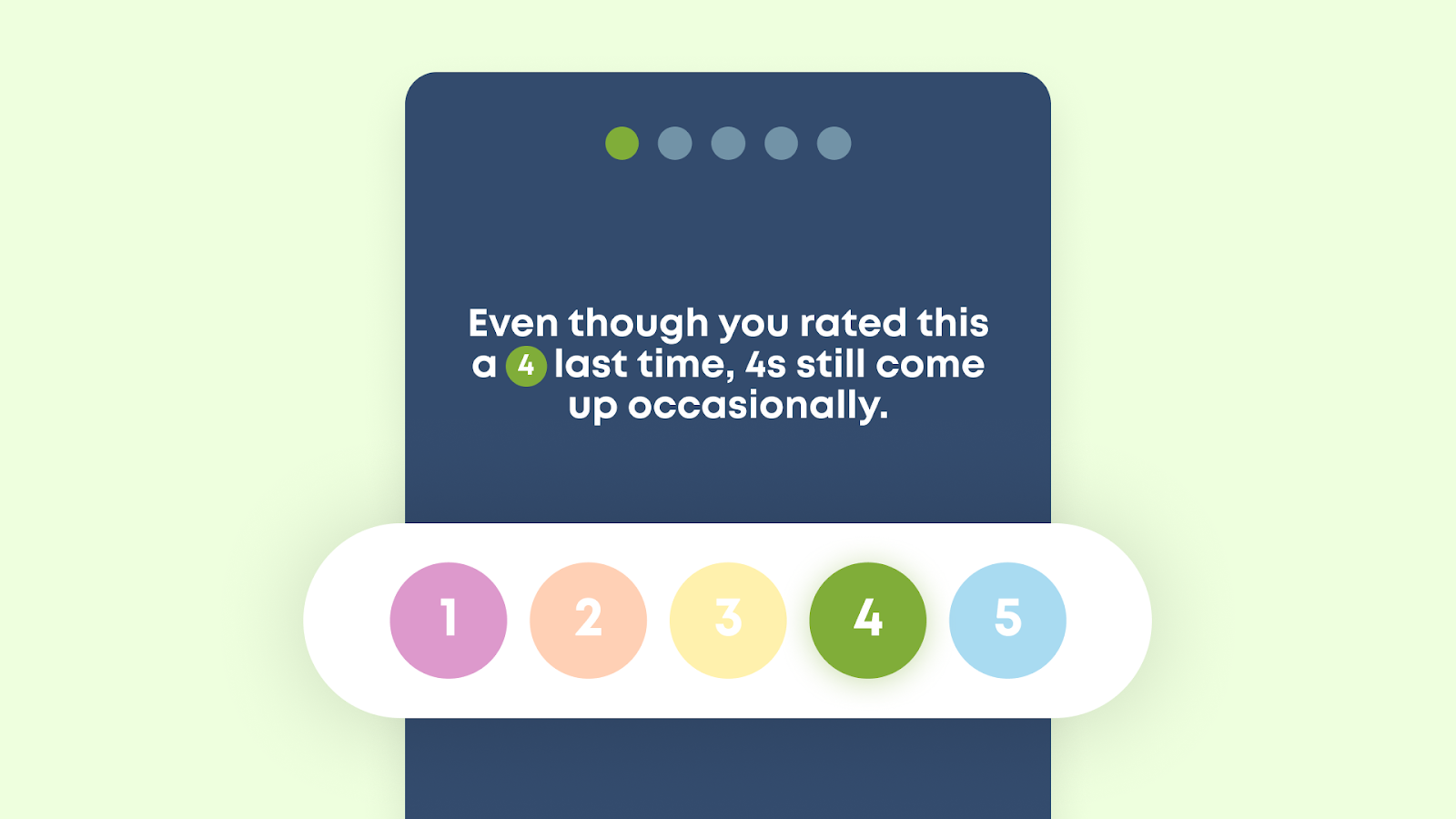
When a flashcard you once rated a 4 or 5 (i.e. “easy”) turns out to be tricky, that feedback loop recalibrates your sense of judgment. “Oops, maybe I didn’t know this so well after all! I’d better think a little more carefully about this in the future.” Gradually, you’ll learn to predict your own memory with striking precision, which is a trait possessed by strong learners.
[Learn more about Judgments of Learning →]
This is why flashcard apps with confidence-based rating systems built into their learning algorithms (like Brainscape) are such beneficial study tools: because they help you develop your metacognitive abilities and, therefore, your resolution!
These rating systems also inform the app when and how often to show you certain concepts again, which leads us neatly to our next powerful learning tactic…
Spaced Repetition
What Is Spaced Repetition?
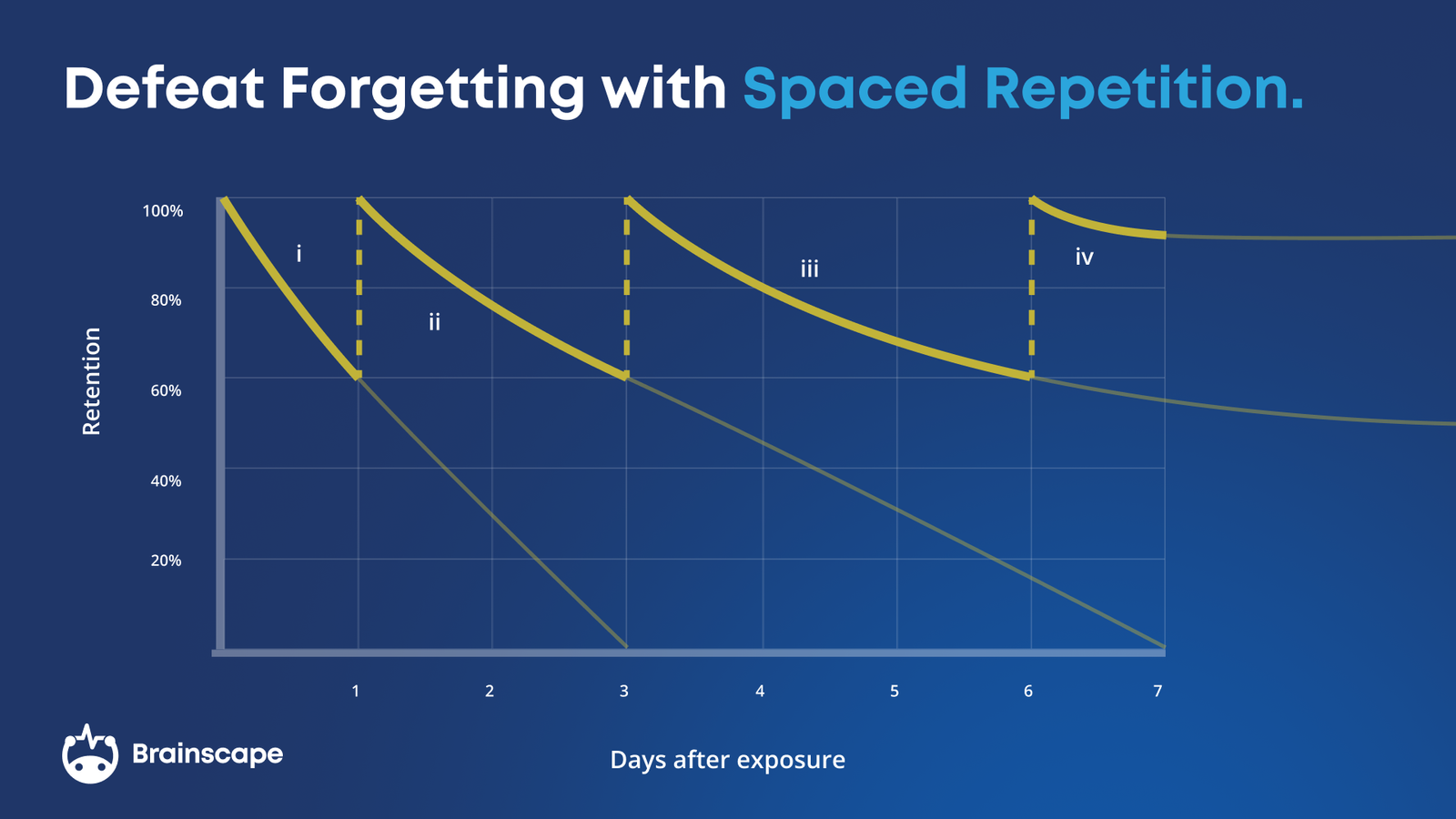
Spaced repetition is the strategy of reviewing material again and again, usually at increasingly longer intervals, until it is so deeply baked into your memory that you’ll never forget it: like your native language, your phone number, or your first kiss.
Instead of cramming the entire syllabus the night before a major test or exam, a spaced repetition study strategy will have you reviewing the information at carefully tailored intervals spread out over many days and weeks (like you see in the image above).
Moreover, you’ll be reviewing the material at intervals that are based on how well you know it, with the harder concepts repeating more frequently and the easier concepts less so. (This is called confidence-based repetition, which we’ll be digging into in the next section.)
Why Is Spaced Repetition So Powerful?
The brain forgets things predictably (it’s called the “forgetting curve”). Spaced repetition is powerful because it combats memory decay, refreshing memories at the perfect moment to make them stronger each time.
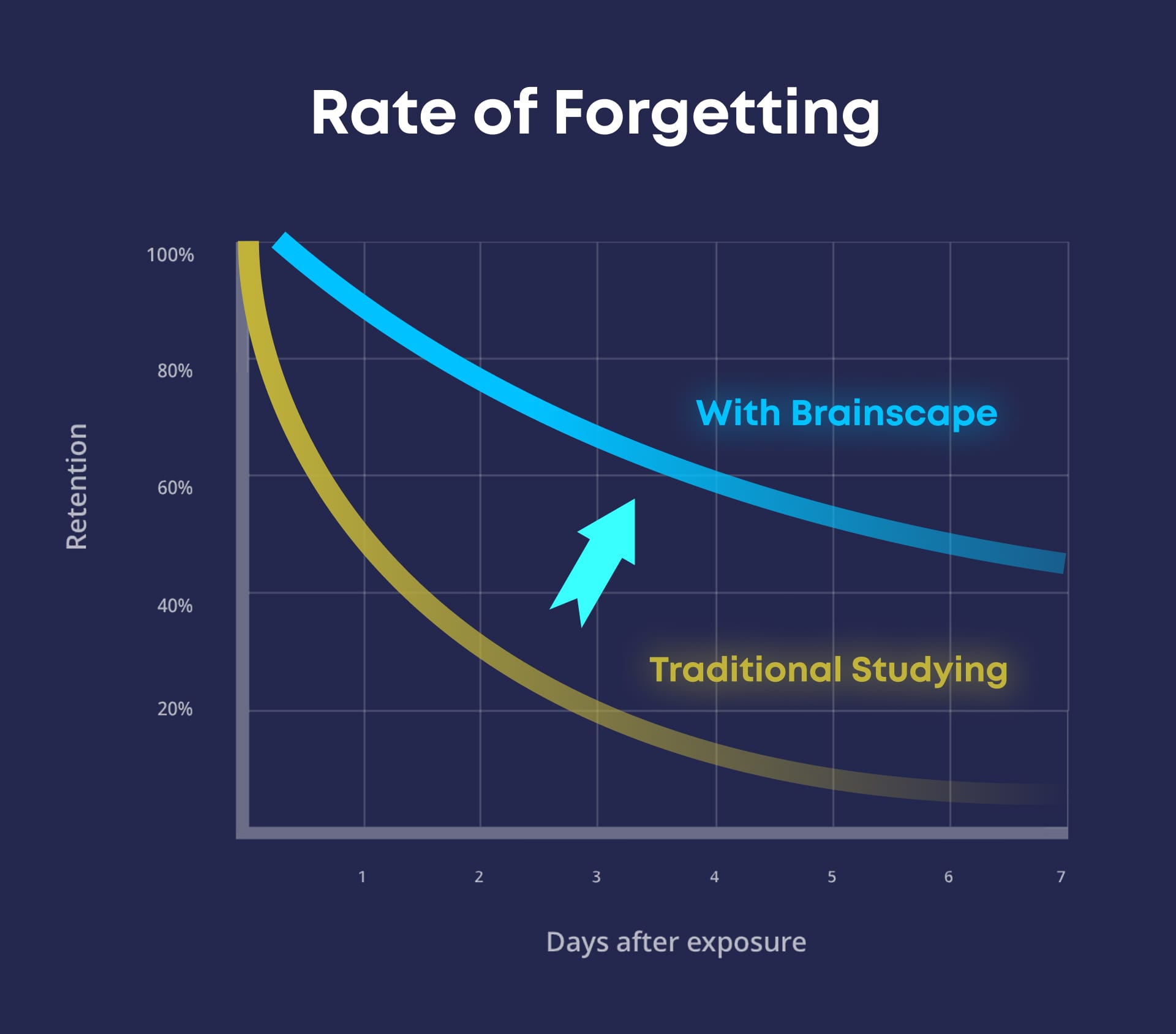
This technique leverages the brain's natural processes by reinforcing memory through repeated, spaced-out active recall, ensuring information moves from short-term to long-term storage.
How Do Digital Flashcards Apply Spaced Repetition To Learning?
Modern flashcard systems are designed to repeat concepts to you again and again at intervals that can be tailored in several ways. Some apps automate the repetition according to a set timeline, for example: again after 3 minutes, again after 20, again a day later, and so on. Others, like Brainscape, schedule each card’s review based on how well you knew the answer. (This is something called confidence-based repetition and we’ll be discussing that in the next section.)
In either case, flashcard apps make it easier for you to focus most of your study time on your weakest concepts and to space your studies out over time.
[Learn more about spaced repetition →]
Confidence-Based Repetition
What Is Confidence-Based Repetition?
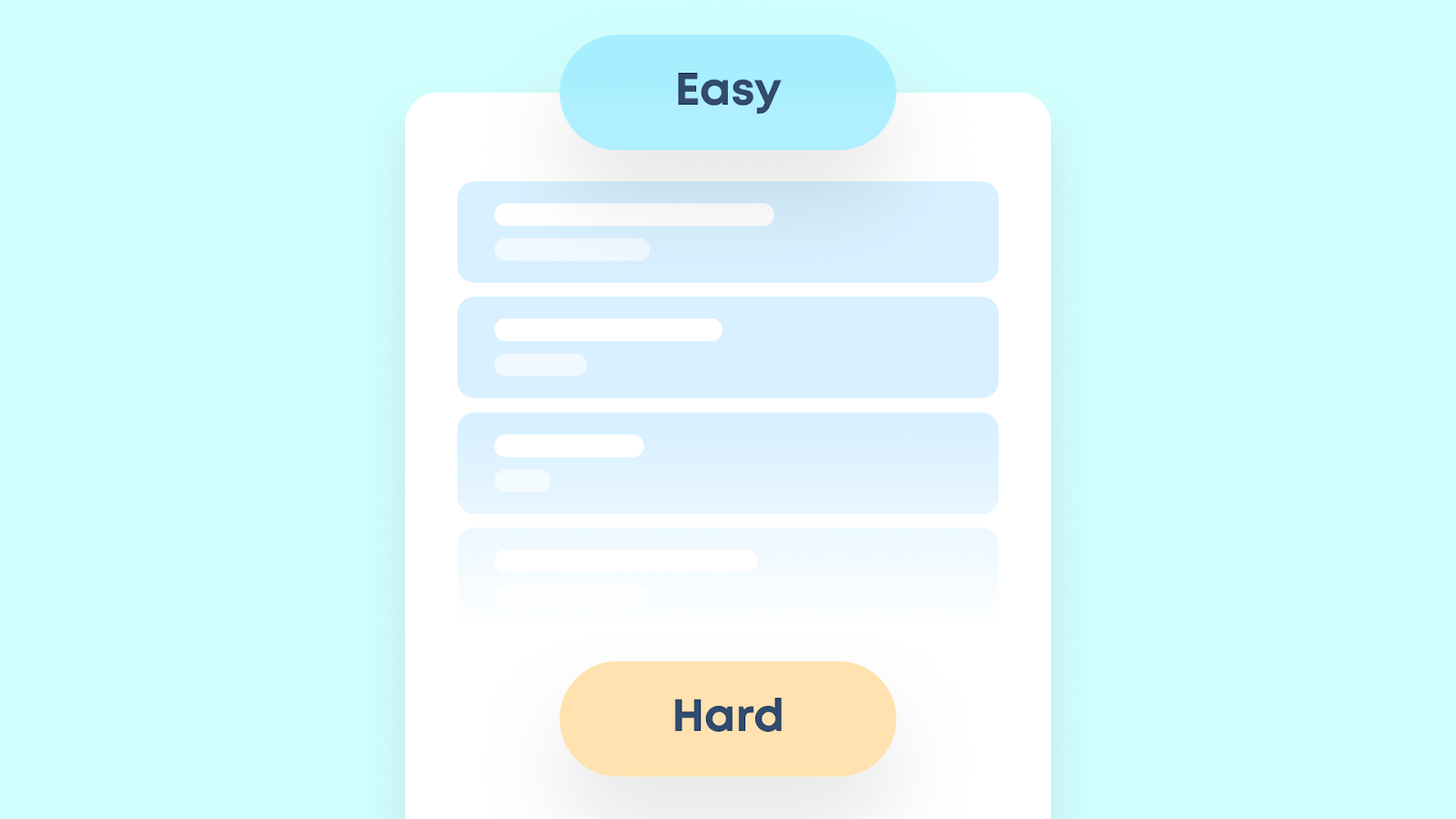
Confidence-based repetition involves the spaced repetition of concepts based upon how well you know them—more often if you don’t know them well and less often if you do—as opposed to delivering concepts at fixed intervals. In other words, your review schedule adapts to your confidence level.
(This is how more advanced digital flashcard systems like Brainscape and Anki work.)
Why Is Confidence-Based Repetition So Powerful
By personalizing the spacing of concepts according to your unique strengths and weaknesses, you spend your time exactly where it’s needed: on reinforcing the knowledge that’s most likely to slip away. It’s like having a personal trainer for your memory who knows which “muscles” need more reps!
How Do Digital Flashcards Apply Confidence-Based Repetition?

Each confidence rating you give informs the study algorithm when that card reappears. Over time, your study plan becomes a living system, constantly adapting to your strengths and weaknesses. (I say all of this assuming you’re using a flashcard app that has built-in confidence-based repetition.
If you’re a stickler for tradition and prefer paper flashcards, you can recreate this yourself by manually separating your cards into at least three buckets: “I didn’t know this at all”, “I sort-of knew this but feel like I’ll forget it” and “I knew this perfectly”. Then, repeat the first bucket twice as often as the second, with occasional reviews of the third.
[Learn more about confidence-based repetition →]
Cognitive Load Theory
What Is Cognitive Load Theory?
The whole thesis behind Cognitive Load Theory (CLT) is that your working memory has limits. Overload it, and learning collapses, which is a feeling you’ll be familiar with if you’ve ever tried to pull an all-nighter before a test or exam. You didn’t do all that well, did you?
But it goes deeper than that. Educators need to be careful in designing their lesson plans because they don’t want to underchallenge, nor overwhelm their students. The same applies to your own, independent learning! Understanding Cognitive Load Theory will help you strike a good balance between struggle and relief, thereby optimizing the pace of your learning.
Why Is Cognitive Load Theory So Powerful?
Your brain is like a computer with limited RAM. If too many programs run at once (dense text, poor explanations, irrelevant visuals) it freezes. Well-structured learning materials occupy the Goldilocks's zone of just enough struggle to keep you learning optimally, without your brain’s processor overheating.
How Do Digital Flashcards Apply Cognitive Load Theory?
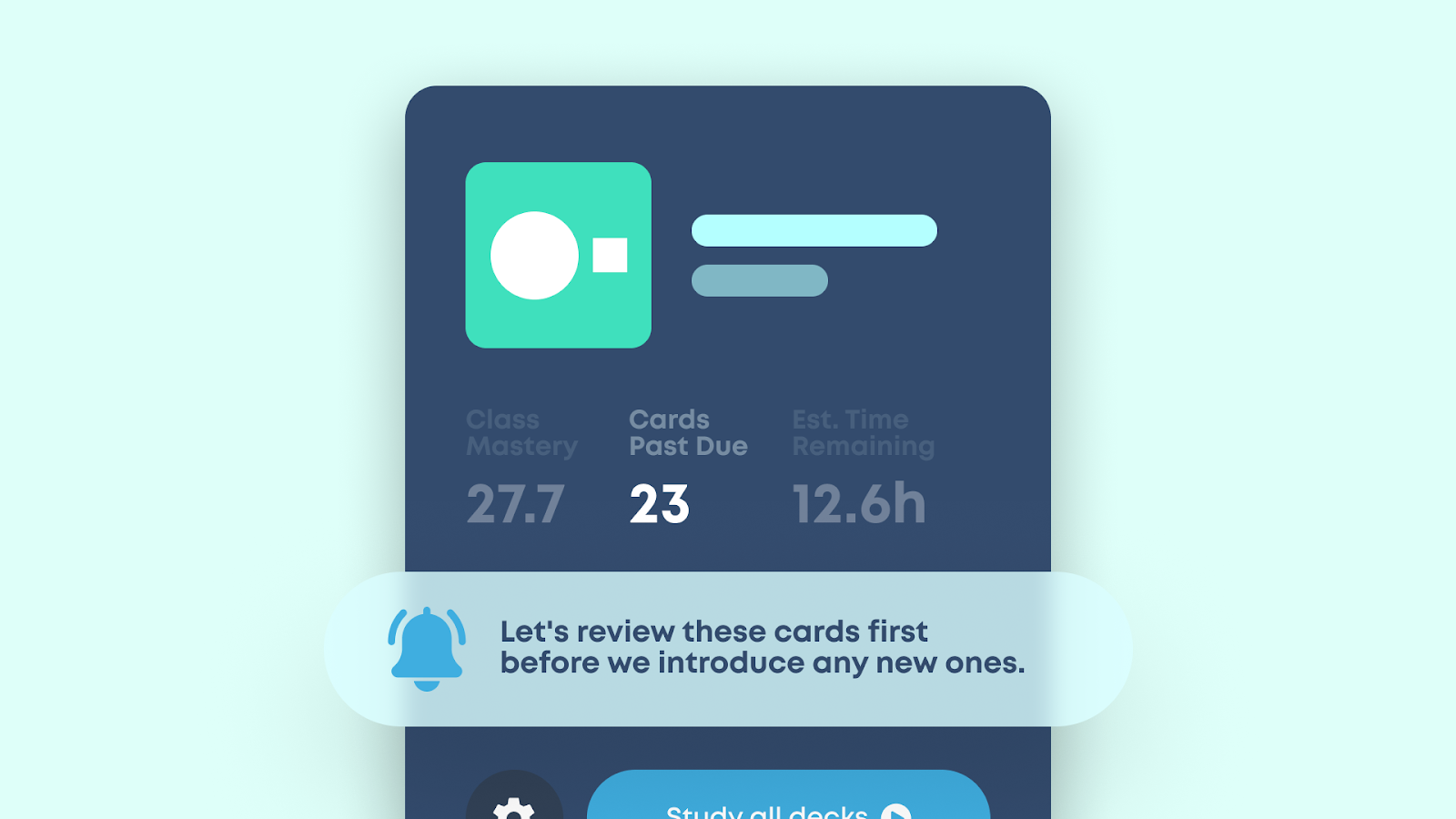
Flashcards simplify complex topics into digestible bites AND into short, manageable study sessions of 10-card-rounds (which is what Brainscape does). By chunking material into Q&A pairs, they allow you to focus on one concept at a time and to steadily build your knowledge from the ground up, facilitating smooth and sustainable learning.
[Learn more about Cognitive Load Theory →]
Scaffolding in Education
What Is Scaffolding in Education?
Scaffolding is a teaching and learning technique in which an instructor (or tool) provides temporary support that helps learners reach a higher level of understanding than they could achieve on their own. As the learner becomes more capable, those supports are gradually removed.
In other words, just like buildings are erected with the help of scaffolding, scaffolding in the context of learning gives learners temporary support as they build new knowledge or skills.
Why Is Scaffolding So Powerful?
The best teachers (and tools) guide you through tasks that are just beyond your independent ability, what psychologist Lev Vygotsky called the Zone of Proximal Development. In this “sweet spot,” learning feels challenging but achievable, setting the student up to make consistent progress, while avoiding both frustration (too challenging) and boredom (not challenging enough).
The whole goal of this is to empower students to tackle challenges that would otherwise be just out of reach, until they can confidently stand (and think) on their own. This matters a whole lot to you if you care about learning and personal growth, whether it’s your own or that of a class of students.
How Do Digital Flashcards Apply Scaffolding To Learning?
Well-designed flashcard collections start with simple, foundational concepts and build gradually in difficulty until you’re able to logically connect everything in that subject’s complex landscape.
This is yet another reason why I harp on about digital flashcard apps like Brainscape: because scaffolding has been engineered into the learning algorithm and because pre-made, certified flashcard collections like these have been built to carefully scaffold knowledge.
Combined with those other core cognitive science principles of active recall, spaced repetition, and metacognition, scaffolding ensures you spend time in that perfect growth zone.
[Learn more about scaffolding in education →]
Free Recall
What Is Free Recall?
Free recall is the subset of active recall where you try to remember everything you can about a topic without cues. It’s explaining a topic in its totality, from beginning to end, from the ground up, in as much detail as you can muster. That’s free recall. Like wearing boxers without underpants. High stakes, but rewarding.
In fact, there’s a whole learning technique called the Feynman Technique, which involves teaching a subject in great detail, from the ground up, in a way that a 5th grader could understand it. If you can do that, then you truly know your subject.
Why Is Free Recall So Powerful?
By reconstructing knowledge from scratch, you expose every weak link in your memory. It takes hella effort, and that’s exactly why it works. The harder your brain works to retrieve information, the stronger the resulting memory becomes.
How Do Digital Flashcards Apply Free Recall To Learning?
While flashcards typically prompt you to answer questions on your subject (cued recall), free recall makes an excellent follow-up: when you are close to mastering a deck, close the app and try to explain the topic aloud as if teaching it. That exercise transforms your ability to recall individual facts into true understanding of the subject as a complex network of interconnected facts.
[Learn more about free recall →]
Hyperbolic Discounting
What Is Hyperbolic Discounting?
Hyperbolic discounting describes our tendency to choose smaller, immediate rewards over larger, delayed ones. “Study now” loses to “scroll later” because your brain discounts future benefits over the anticipation of immediate gratification. It’s why we crush Doritos instead of healthy salads; surf the web instead of exercise; spend money instead of save; and put off studying for literally anything else. Yup, there are few things as endearingly (and annoyingly) human as hyperbolic discounting.
Why Is Hyperbolic Discounting So Harmful?
This bias explains procrastination, inconsistency, and the endless “I’ll start tomorrows” and “What the hells”. Our brains aren’t lazy, they’re wired to conserve energy and grab at immediate rewards because you never know when the next one might come along. (Which worked when we were cavemen and women… but not so much today.) Recognizing this bias helps you design systems that reward consistency today.
How Do Digital Flashcards Offset Hyperbolic Discounting?
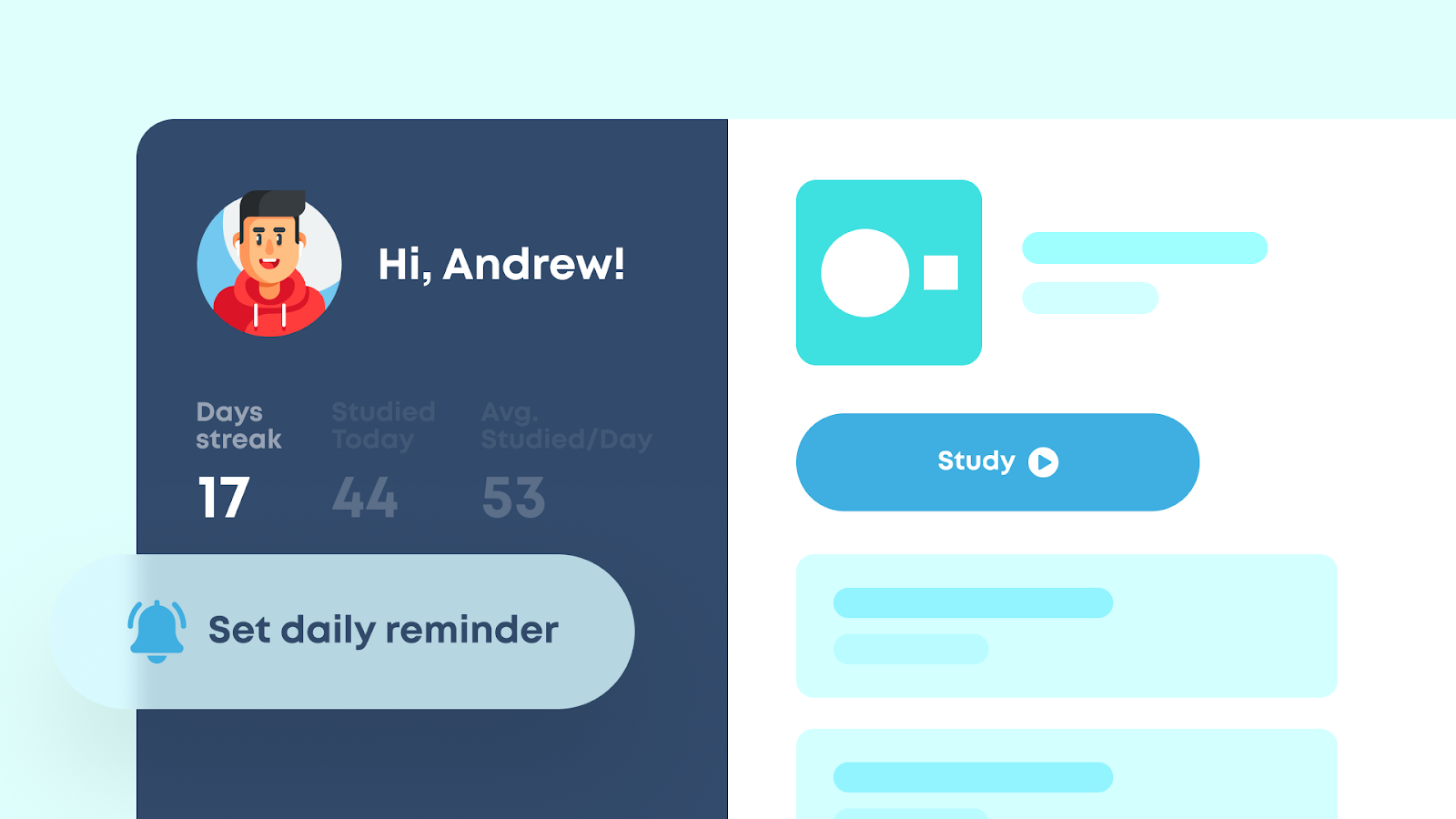
Short study sessions, visible streaks, and immediate progress feedback create near-term motivation loops that outsmart your brain’s delay bias. Frequent mini-rewards keep you moving toward the big, long-term goal. Before you know it? You’ve mastered an entire subject simply because the app kept you coming back for more, day in and day out.
[Learn more about hyperbolic discounting →]
Variable Reward
What Is a Variable Reward System?
A variable reward system is any structure in which reinforcement arrives on an unpredictable schedule, creating a sense of anticipation that keeps you coming back for more. Classic example? Slot machines! There’s a reason so many people blow so much money on literally the worst investment ever invented by humankind, second only to pyramid schemes.
Instead of receiving a guaranteed payoff every time you perform a behavior, you get a reward only sometimes, and you never know exactly when. It’s the same psychological engine behind why slot machines are gripping, why social media feeds feel endlessly scrollable, and why the occasional sudden breakthrough while studying feels so satisfying.
Why Is Variable Reward So Powerful?
Uncertainty gives variable rewards heightens dopamine release, increasing engagement, persistence, and motivation. The thrill of “maybe this time” keeps you coming back, a phenomenon wisely co-opted by modern habit-forming apps like Brainscape, Streak, and stickK.
When used intentionally and ethically, variable reward systems channel this natural responsiveness to unpredictability into healthier contexts, helping you stay engaged, alert, and emotionally invested in your progress.
How Do Digital Flashcards Apply Variable Reward To Learning?
Flashcard apps apply this principle very easily because they (1) break subjects down into atomic concepts that are then delivered to you (2) via an algorithm that’s programmed with a spaced repetition schedule. By varying the intervals between reviews, learners cannot predict exactly when a flashcard will reappear. This built-in uncertainty strengthens retrieval effects and increases attention.
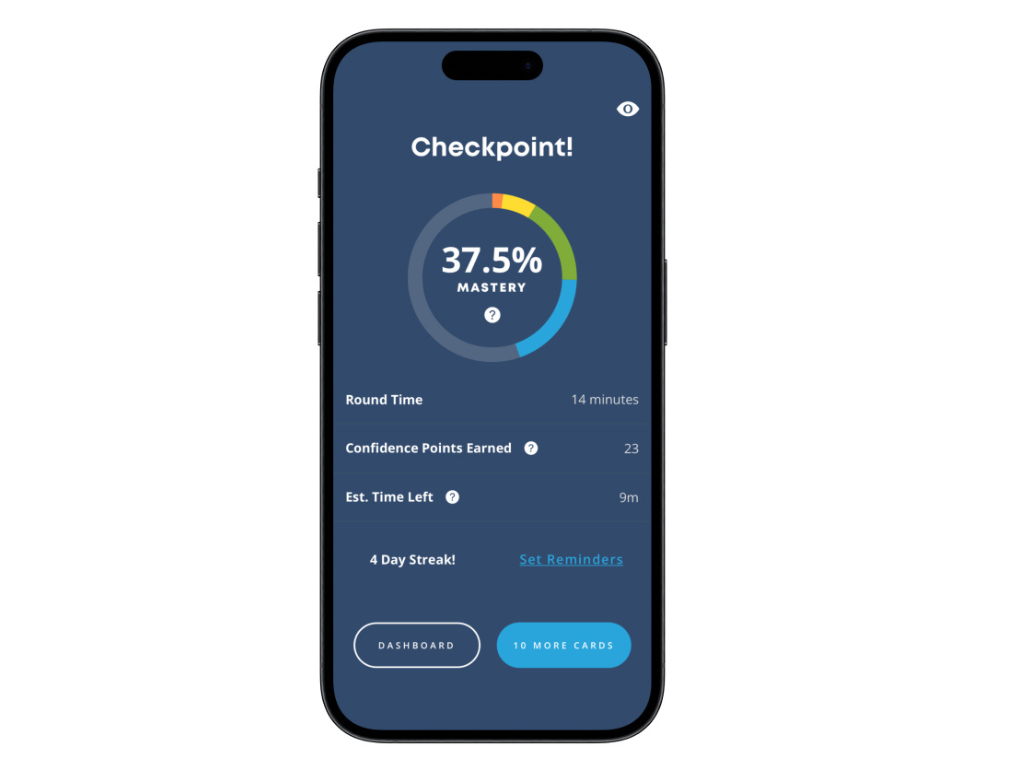
Additionally, in the case of Brainscape, with your percentage mastery updated every 10 flashcards studied, the small wins keep your motivation fresh, turning repetition into reward.
[Learn more about variable reward →]
Social Motivation Theory
What Is Social Motivation Theory?
Social motivation is the subtle psychological and biological force that makes us work harder when other humans are in the picture. Whether it’s the accountability of a study buddy, the buzz of a group challenge, or just wanting to impress your peers, social motivation taps into the most primal part of our learning machinery: our need to belong.
Why Is Social Motivation Theory So Powerful?
Humans are social creatures… which means we’re also social learners. In the world of education, Social Motivation Theory suggests that we learn more effectively when our effort is socially recognized and connected to others. And it makes sense because humans are wired to seek approval, contribution, and connection!
We push harder when others can see our effort, and we learn faster when explaining ideas to peers. That said, there is a dark side to social motivation and that’s that too much comparison can be discouraging, so balance is key: collaboration over competition.
How Do Digital Flashcards Apply Social Motivation Theory?
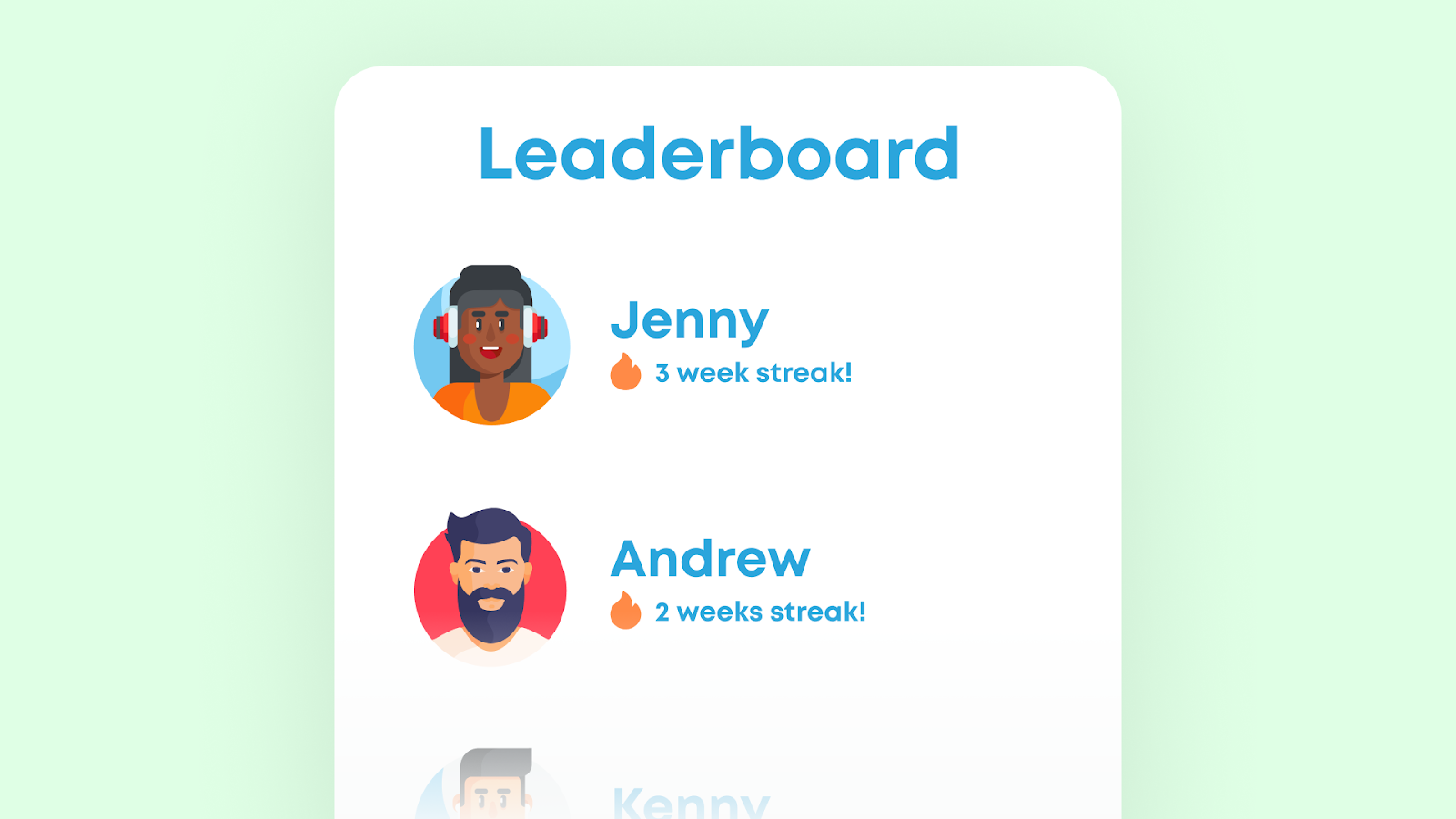
Features like class leaderboards and collaborative flashcard creation tools—both of which apps like Brainscape have—introduce gentle accountability and shared progress, harnessing our natural drive for connection.
[Learn more about social motivation theory →]
Interleaving Study
What Is Interleaving Study?
Interleaving study or practice means intentionally alternating between different topics, skills, or problem types, instead of focusing on one at a time (blocked practice).
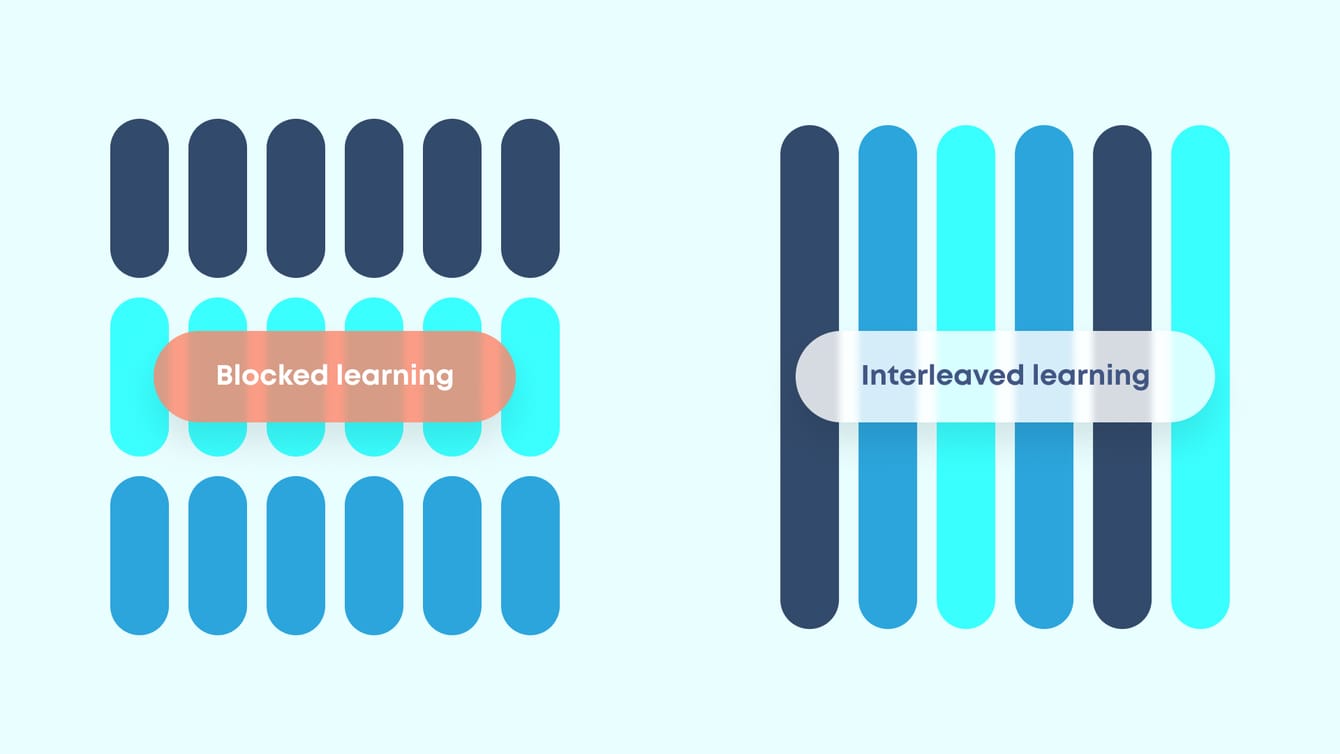
Where traditional learning relies on “blocking” (e.g., spending one full session on biology, then one on chemistry), interleaving alternates between these subjects, forcing your brain to repeatedly shift context and re-engage different cognitive processes.
Why Is Interleaving Study So Powerful?
Switching between subjects forces your brain to differentiate, recall, and re-contextualize knowledge. Interleaving, though harder in the moment, produces deeper encoding because it:
- Forces discrimination between similar ideas (e.g., identifying when to apply one formula vs. another).
- Strengthens retrieval pathways, since each switch reactivates memory traces from a different angle.
- Enhances transfer, the ability to apply knowledge in new contexts.
- Builds resilience against forgetting by spacing exposure naturally.
This effect is so reliable that Rohrer and Taylor (2007) found students practicing interleaved problem sets scored 43% higher on later tests than those using blocked practice.
How Do Digital Flashcards Apply Interleaving Study To Learning?
Flashcards make interleaving practice easy because they are by their very nature discrete, atomic nuggets of knowledge. This allows you to chop, change, shuffle, and switch them. Even paper flashcards allow you to randomize topics and questions… but not nearly to the level of sophistication of apps like Brainscape, which actually has an interleaving feature called Smart Study.

The unpredictability keeps you alert and deepens connections across domains.
[Learn more about interleaving →]
The “What the Hell” Effect
What Is the “What the Hell” Effect?
The “What the Hell” Effect describes how one small failure (“I missed a day”) can trigger full-scale relapse (“so what the hell, I’ll quit altogether”). It's eating a single chocolate and abandoning a healthy diet altogether; it's goofing off for an hour and then deciding you "may as well suspend all productivity until tomorrow".
(So relatable.)
Why Is The “What the Hell” Effect So Powerful?
This psychological spiral is fueled by guilt and perfectionism. When people equate one misstep with total failure, the motivation just gets totally sucked out of them, causing them to give up completely. It's the subsequent loss of consistency that so often derails success, which is the strongest driver in any long-term ambitious goal, whether it's fitness, quitting bad habits, or learning.
How Do Digital Flashcards Offset the “What the Hell” Effect?
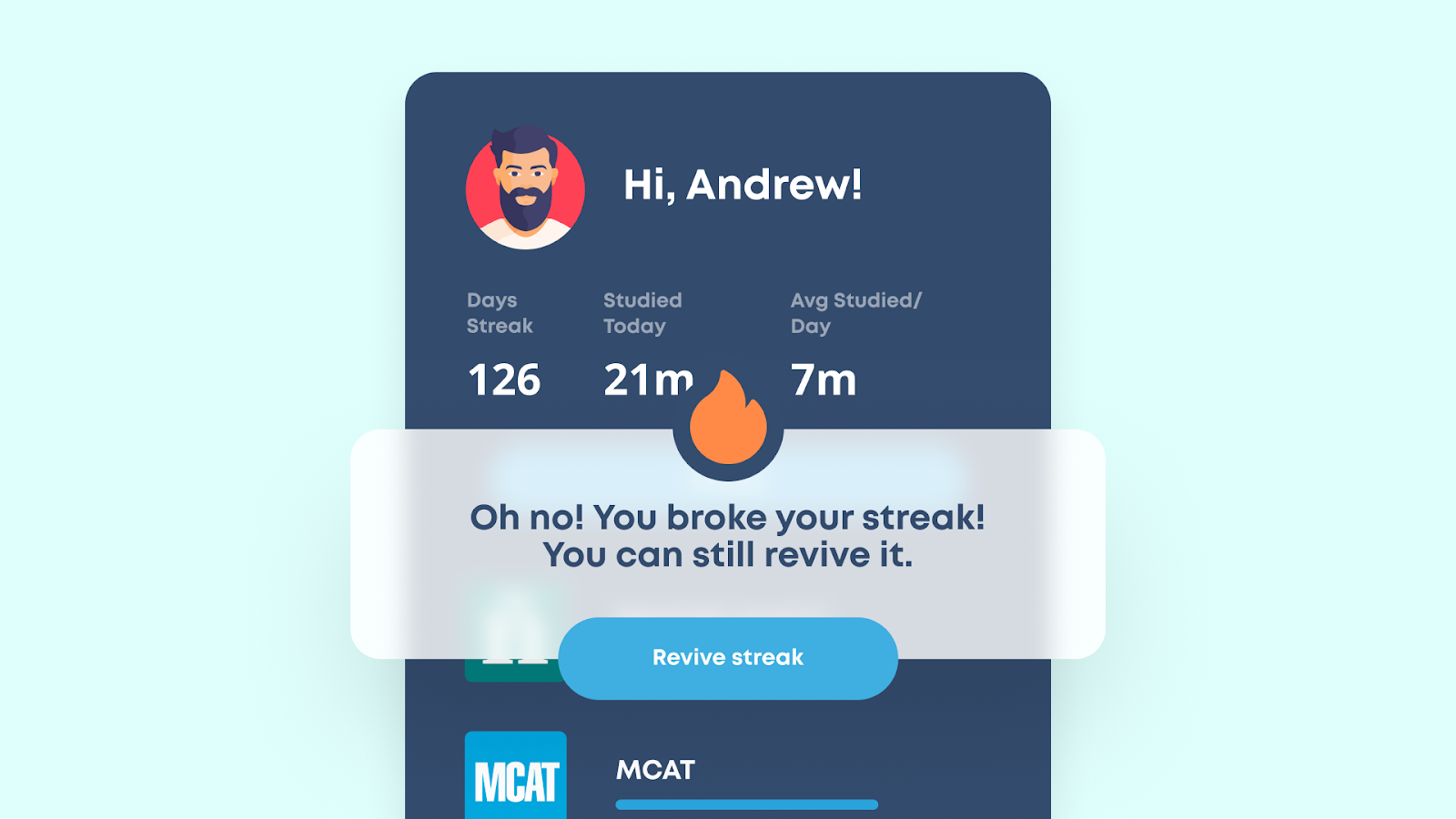
By visualizing long-term progress (not just streaks) and offering soft resets, digital study tools reduce the sting of slip-ups. Missed a day? No problem. The system nudges you back before “what the hell” turns into “never mind.” Some apps even offer "forgiveness", allowing you to maintain certain metrics, like study streaks, even when you accidentally miss a day.
[Learn more about the “What the Hell” Effect →]
Bloom’s 2 Sigma Problem
What Is Bloom’s 2 Sigma Problem?
In 1984, educational psychologist Benjamin Bloom discovered that students receiving one-on-one tutoring performed two standard deviations better than students in a traditional classroom, effectively moving from the average to the top 2%. That’s great! Except that this model of education isn’t practical (or affordable) for the vast majority of students. That’s why it’s called “a problem”.
Why Is Bloom’s 2 Sigma Problem Important To Learning?

The so-called “2 Sigma Problem” poses a challenge: How can educators replicate the effectiveness of tutoring at scale? Bloom’s research revealed that the reason it’s so effective lies in feedback, pacing, and personalization. Students receive immediate corrective feedback from tutors, advancing only when they demonstrate mastery. Moreover, they follow a path tailored to their strengths and weaknesses.
These three ingredients created the conditions for deeper engagement and more accurate mental models, which traditional whole-class instruction rarely provides.
How Do Digital Flashcards Help Address Bloom’s 2 Sigma Problem?
Adaptive flashcard systems emulate the essence of personalized tutoring: instant feedback, individualized pacing, and focus on each learner’s zone of growth. In this sense, they’re one step closer to solving Bloom’s 2-sigma riddle.
[Learn more about Bloom’s 2 Sigma Problem →]
Generative Processing
What Is Generative Processing?
Generative processing happens when learners create something new from the material they’re studying, such as rewriting, summarizing, or transforming it into another form like flashcards or concept maps.
Why Is Generative Processing So Powerful?
When you produce knowledge, you reorganize it in your own words, connecting it to existing mental frameworks. That’s the difference between memorizing definitions and actually understanding them.
How Do Digital Flashcards Apply Generative Processing To Learning?
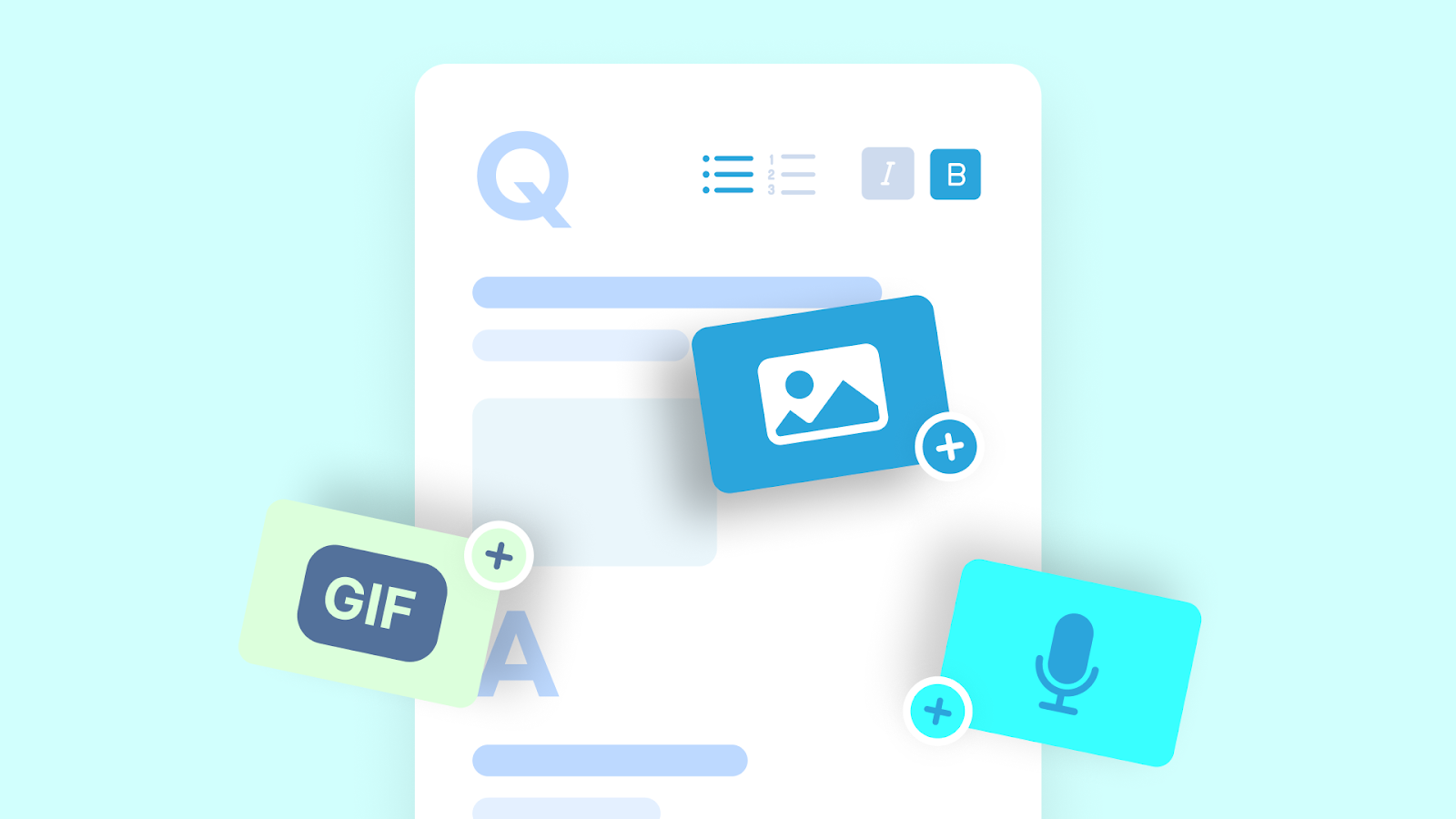
Creating your own flashcards requires you to decide what’s important, how to phrase it, and how to test it, and this is generative processing in action. Each flashcard you make deepens understanding and builds mental connections that stick!
Flashcards exercise a form of generative processing called elaborative interrogation, where you are specifically generating questions from material. Instead of simply accepting a fact, you’re framing that fact as a question-and-answer pair, forcing your mind to dig for explanations, connect prior knowledge, and build richer mental models. This “why-question habit” doesn’t just add detail; it strengthens retrieval pathways by giving your memory more hooks to grab onto later.
In other words, elaborative interrogation turns isolated facts into meaningful, well-wired knowledge structures exactly the kind your brain loves to remember.
[Learn more about generative processing →]
The Grand Takeaway…
Over millennia of environmental stressors and social interactions, our brain has evolved to acquire knowledge and skills a certain way. Even though our modern lives are completely different from the way they were even just 100 years ago, this biological wiring persists and explains many (if not most, or even all) of the learning challenges we face today.
In many ways, the modern learning system demands that we bend our brain to perform tasks it has not evolved to do, sitting for extended periods of time to focus for hours on end on subjects that are not really relevant to our primary imperatives to eat, reproduce, and survive.
In spite of this, if you want to learn more efficiently, you need to work with your brain’s biological wiring and, in this article, we just showed you 16 complementary cognitive science strategies to do that. Retrieval practice strengthens memory. Spacing prevents forgetting. Feedback builds insight. Motivation and reward systems keep you coming back for more.
When you weave these principles together, you create a fast, efficient learning system, whether you’re studying anatomy, finance, or French verbs. That’s what digital flashcards are designed to do: personalize, adapt, and reinforce learning based on how you actually think.
Want to explore each concept in depth? Check out our full library of nerdy cognitive science articles here.
Get Brainscape's Educator User Guide
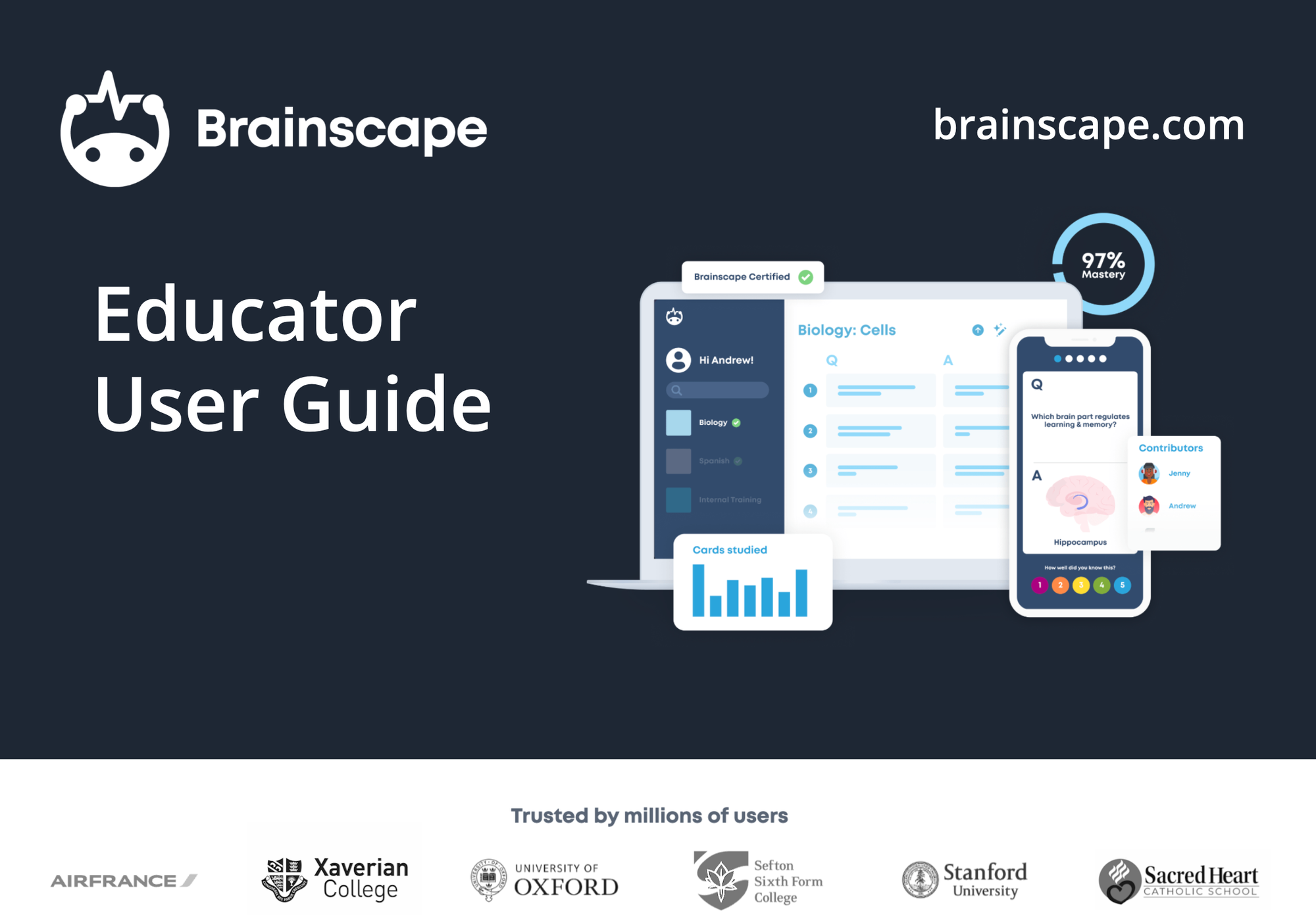
Curious to learn more about how to introduce Brainscape into your physical or virtual classroom? Our Educator User Guide provides a detailed walkthrough of how to get set up. It'll also give you all the material you need to motivate for its adoption amongst your students, their parents, and/or the faculty of your school or college:
References
Ainslie, G. (1975). Specious reward: A behavioral theory of impulsiveness and impulse control. Psychological Bulletin, 82(4), 463–496. https://doi.org/10.1037/h0076860
Battig, W. F. (1979). The flexibility of human memory. In L. S. Cermak & F. I. M. Craik (Eds.), Levels of processing in human memory (pp. 23–44). Lawrence Erlbaum.(Pre-Rohrer articulation of contextual interference, precursor to interleaving research)
Bloom, B. S. (1984). The 2 sigma problem: The search for methods of group instruction as effective as one-to-one tutoring. Educational Researcher, 13(6), 4–16. https://doi.org/10.3102/0013189X013006004
Cepeda, N. J., Pashler, H., Vul, E., Wixted, J. T., & Rohrer, D. (2006). Distributed practice in verbal recall tasks: A review and quantitative synthesis. Psychological Bulletin, 132(3), 354–380. https://doi.org/10.1037/0033-2909.132.3.354
Ebbinghaus, H. (1885/1913). Memory: A contribution to experimental psychology (H. A. Ruger & C. E. Bussenius, Trans.). Teachers College, Columbia University. (Original work published 1885)
Flavell, J. H. (1979). Metacognition and cognitive monitoring. American Psychologist, 34(10), 906–911. https://doi.org/10.1037/0003-066X.34.10.906
Gates, A. I. (1917). Recitation as a factor in memorizing. Archives of Psychology, 6(40), 1–104. (Foundational demonstration of active recall over rereading)
Marlatt, G. A., Baer, J. S., & Quigley, L. A. (1995). Self-efficacy and addictive behavior. In J. E. Maddux (Ed.), Self-efficacy, adaptation, and adjustment (pp. 289–314). Springer.(Foundational articulation of relapse dynamics underlying the “What the Hell” Effect)
Nelson, T. O., & Dunlosky, J. (1991). When people’s judgments of learning (JOLs) are extremely accurate. Journal of Experimental Psychology: Learning, Memory, and Cognition, 17(4), 509–521. https://pubmed.ncbi.nlm.nih.gov/29187067/
Roediger, H. L., & Karpicke, J. D. (2006). Test-enhanced learning: Taking memory tests improves long-term retention. Psychological Science, 17(3), 249–255. https://doi.org/10.1111/j.1467-9280.2006.01693.x
Skinner, B. F. (1957). Schedules of reinforcement (with C. B. Ferster). Appleton-Century-Crofts.(The foundational text on variable-ratio reward schedules)
Sweller, J. (1988). Cognitive load during problem solving: Effects on learning. Cognitive Science, 12(2), 257–285. https://doi.org/10.1207/s15516709cog1202_4
Tulving, E. (1962). Subjective organization in free recall of "unrelated" words. Psychological Review, 69, 344–354. https://doi.org/10.1037/h0043150
Vygotsky, L. S. (1978). Mind in society: The development of higher psychological processes. Harvard University Press.
Wittrock, M. C. (1974). Learning as a generative process. Educational Psychologist, 11(2), 87–95. https://doi.org/10.1080/00461527409529129
Woloshyn, V. E., Willoughby, T., Wood, E., & Pressley, M. (1990). Elaborative interrogation facilitates learning of facts. Journal of Educational Psychology, 82(3), 512–519.
Zajonc, R. B. (1965). Social facilitation. Science, 149(3681), 269–274. https://doi.org/10.1126/science.149.3681.269