Portuguese was born in Portugal, but after crossing the Atlantic and spending centuries surrounded by pão de queijo, sunshine, and saudade, it grew into two distinct dialects. Brazilian and European Portuguese share the same roots, but they dance to different rhythms.
South America’s version feels warm and melodic; Europe’s original flavor is crisp and refined. It’s a bit like comparing American and British English: if you speak one, it’s easy enough to understand both, but there are still clear differences in sound, expression, and personality.
In this article, we’ll fully explore the differences between European and Brazilian Portuguese and provide you with a rational framework for deciding which one to learn, given your language goals.
We’ll also explore the powerful language learning tools you can use to quickly absorb and retain new vocabulary, phrases, and grammar, such as Brainscape, which has adaptive European Portuguese flashcards and Brazilian Portuguese flashcards (as well as a range of other foreign languages).
With that, let’s dive in!
Is Brazilian Portuguese Easier to Understand Than European Portuguese?
Yes, Brazilian Portuguese is generally considered easier to understand than European Portuguese, especially for beginners, because of its more open and relaxed pronunciation. The sounds are open and clear, the rhythm gentle, and every word seems to roll off the tongue.
In contrast, European Portuguese may strike a beginner learner as tighter and more reserved, with many vowels dropped or softened until the words blur together. To a newcomer, it can sound a bit more like a secret being whispered.
Take the verb estudar: in Brazil, it’s pronounced “es-too-DAR” (every vowel pronounced clearly) while in Portugal it comes out more like “shtoo’-DAR” (with reduced vowels and a softer ‘sh’ sound). Both are melodious in their own way, but you would need experience listening to each version in order to understand it.
How Do Vocabulary and Expressions Differ Between Brazilian and European Portuguese?
The words you’ll hear in Brazilian and European Portuguese each carry their own flavor. In Brazil, the language feels lively and current, often reflecting pop culture, music, and everyday urban life. In Portugal, the vocabulary leans more traditional, with older European words that give sentences a slightly formal edge.
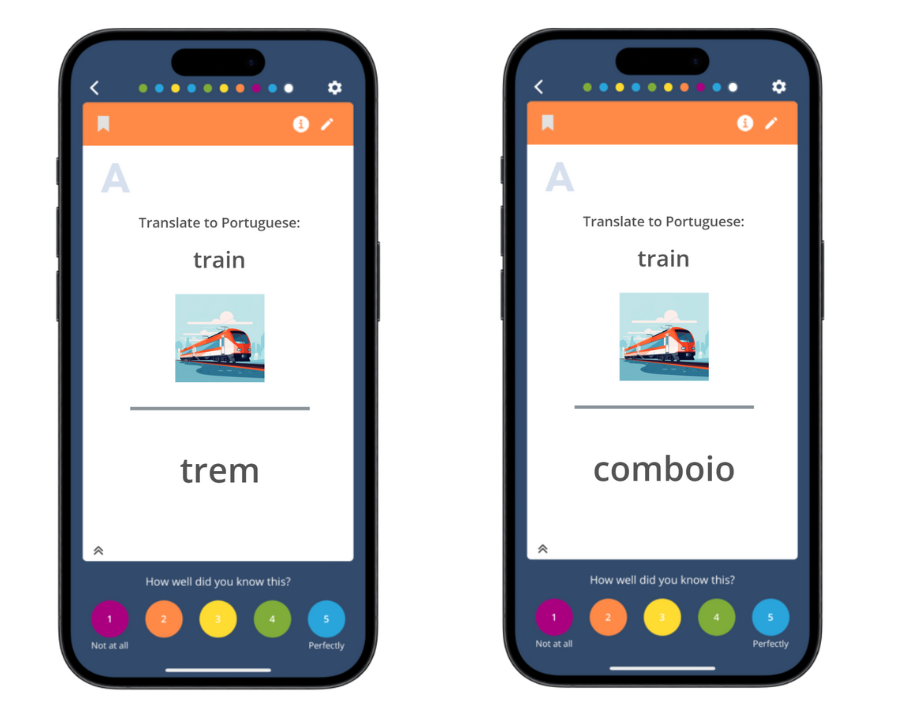
These contrasting linguistic “flavors” appear even in the simplest words. In Brazil, people favor the lively, clipped trem (train), whereas in Portugal you’ll hear the older, more formal-sounding comboio. Likewise, a Brazilian might call something legal (cool)—a slangy, upbeat choice—while a Portuguese speaker might call it giro, a word with that unmistakable old-world lilt.
This is precisely why learners face a choice between European and Brazilian Portuguese in the first place! Because the vocabulary can be strikingly different.
Do Grammar Rules Change Between Brazilian and European Portuguese?
The grammar of Portuguese is largely shared, but style and formality conventions are different between Brazil and Portugal. In Brazil, speakers often include subject pronouns such as você and eles, which gives their speech an open, conversational tone. (Subject pronouns are words like "I," "you," "he," "she," "it," "we," and "they" that replace a noun performing an action in a sentence.)
In Portugal, those pronouns usually vanish because the meaning is already clear from context. For example, instead of saying “Eu te amo”, a person might just say “Te amo” because it would be pretty obvious that they’re referring to themselves as the subject who is doing the lovin’.
Word order changes too: a Brazilian might say “Eu te amo,” while someone in Portugal would say “Eu amo-te.” Either way, a speaker from either country will understand that you’re saying, “I love you,” so neither version is strictly incorrect. It’s just that one word order is more common in Brazil, and the other word order is more common in Portugal.
European Portuguese still uses certain older verb forms (like the personal infinitive and the future subjunctive) much more often, while Brazilians tend to avoid them or replace them with simpler constructions. To a casual learner, these grammatical concepts might sound like ancient Greek, but the difference is actually pretty practical:
The personal infinitive (infinitivo pessoal):This is a verb form that changes depending on who is doing the action, which is something English doesn’t have.
- In Portugal, it’s completely normal to say:
É importante estudarmos antes da prova.“It’s important that we study before the exam.”
- In Brazil, most speakers would skip the personal infinitive and use a simpler structure:
É importante a gente estudar antes da prova.(Literally “It’s important for us to study,” using a gente instead of the conjugated verb.)
(Brazilians still write formally, but tend to simplify sentence structure when speaking.)
The future subjunctive (futuro do conjuntivo):This verb form expresses events that might happen in the future and it shows up all the time in European Portuguese.
- Portugal: Se vieres, avisa-me. (“If you come, let me know.”)
- Brazil: Se você vier, me avisa. (Brazil still has this form grammatically, but in everyday speech people either avoid it or pronounce it so differently that it feels less distinct. Many speakers opt for constructions with quando + future or rely on context rather than the formal verb form.)
What does this mean for your ear as a learner?European Portuguese often sounds more “old-school European” because these grammatical structures are still alive and well. Brazilian Portuguese, on the other hand, tends to feel more streamlined and modern in everyday conversation, with simpler sentence patterns and less reliance on older verb forms.
Finally, formality plays a big role in setting the two dialects apart. In Portugal, politeness is part of daily speech, with phrases like “o senhor” (sir) and “a senhora” (ma’am) used even in friendly settings.
In Brazil, the tone is looser and more familiar, and “você” (you) can be used to address most people without seeming rude. The exception would, of course, be older people who are respectfully addressed as “o senhor” and “a senhora”. However, as a guideline, too informal in Portugal and you may seem rude; too formal in Brazil and you may seem unfriendly.
Is Portuguese Pronunciation Very Different Between Brazil and Portugal?
Pronunciation is where Brazilian and European Portuguese sound like two sides of the same coin. In Brazil, the words breathe through the nose and stretch into clear, open sounds. Every syllable is audible, giving the language a relaxed, musical flow.
(That said, Brazil is a vast country, and accents vary widely from region to region. Some accents can be so strong and different that even other Brazilians have a hard time understanding!)
In Portugal, speech tightens up, with syllables blurring together and some vowels omitted entirely. Each region adds its own twist, but most learners begin with the Brazilian style because every letter is pronounced, so it’s easier to follow.
This is why mastering Portuguese—or any language really—is best done with the help of audio, rather than simply studying a textbook, looking up words in a dictionary, or using paper flashcards. Flashcard apps like Brainscape provide the correct audio pronunciation for every word and phrase, so that you can put into practice the vocabulary you’re learning.
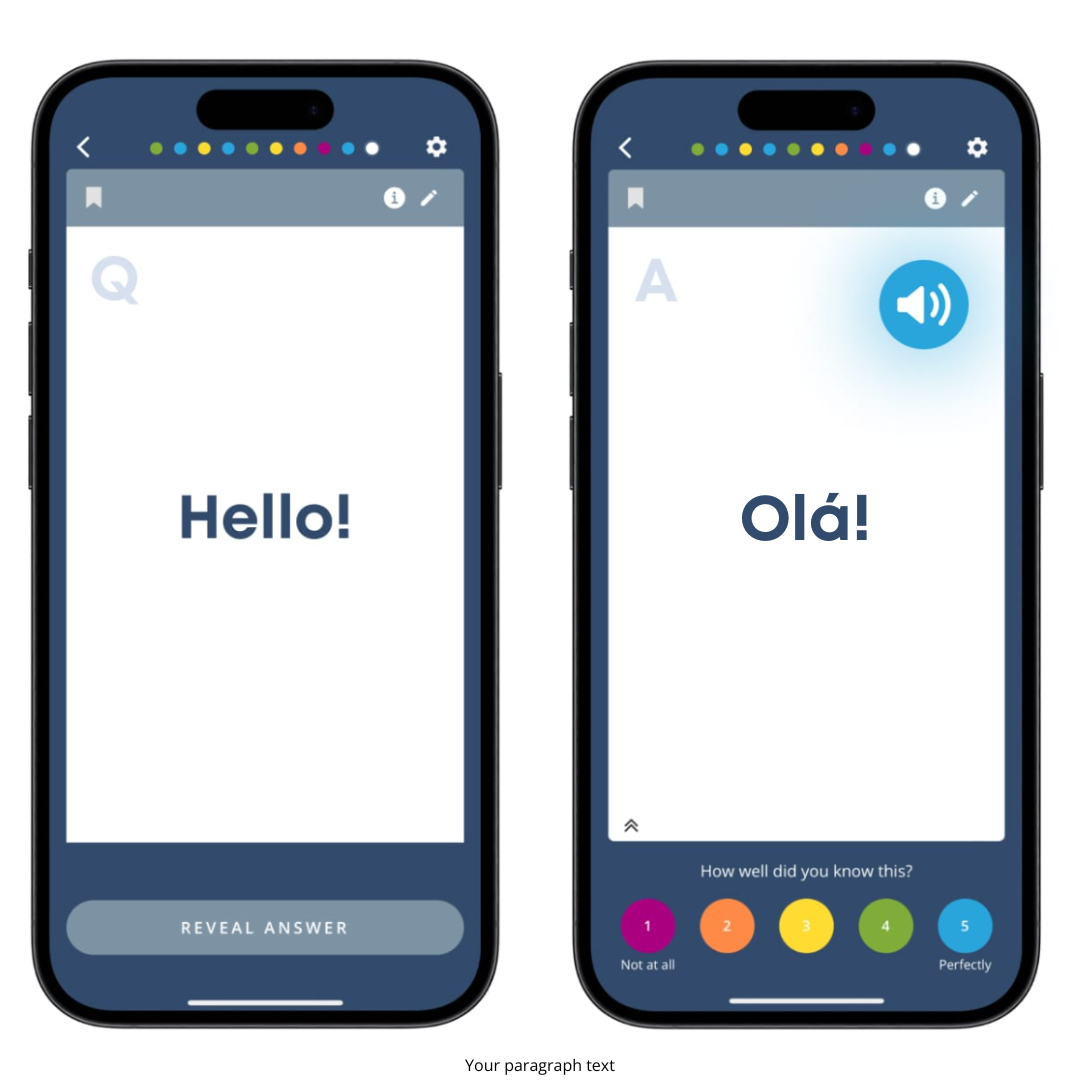
This allows you to learn faster, and be more clearly understood when speaking.
Check out Brainscape's European Portuguese flashcards.
Check out Brainscape's Brazilian Portuguese flashcards.
How Does Slang Differ Between Brazilian and European Portuguese?
Slang is where Portuguese shows its true character! In Brazil, everyday speech is shaped by pop culture, music, and slang. A friendly “cara” means “guy,” “beleza” is an easygoing “okay,” and “grana” is cash in your pocket.
In Portugal, the slang is a bit more traditional European and old-fashioned. A “gajo” is your mate, “fixe” means “cool,” and “massa” is money.
So, now you can really start to appreciate that if you intend to live in, travel to, or hang out with people from Brazil, you should purposefully seek out a Brazilian Portuguese instructor and study materials. Likewise, if you intend to live in, travel to, or hang out with people from Portugal, you should seek out a European Portuguese instructor and study materials.
Can Speakers of Brazilian and European Portuguese Understand Each Other?
In spite of the many differences between the two languages, speakers of Brazilian and European Portuguese understand each other very well! The grammar and most of the vocabulary are shared, so any confusion usually comes from accents or slang.
A Brazilian might take a second to catch the faster, softer sounds of Lisbon, while someone from Portugal may need to pause at a few Brazilian colloquialisms or turns of phrase.
One way to tune your ear in is to increase your exposure to films, music, and conversation from both regions, in addition to daily investments of time in learning grammar and vocabulary. Conversation practice is one of the most powerful ways to quickly learn a new language because it forces you—through social pressure—to apply the principles you learn from your reading materials and flashcards.
Which Version Of Portuguese Should You Learn First?
Which version of Portuguese you learn first depends entirely on your plans. If you’re drawn to Brazil, with its beaches, music, and social culture, start with Brazilian Portuguese. It’s relaxed and clear, and there’s endless media to help you pick it up naturally.
If your focus is Europe, then European Portuguese will suit you better, especially for classical art, work, study, or travel around Portugal. The two share almost all their structure and vocabulary, so once you’ve learned one, moving to the other will be easy.
Two Dialects, One Language… and Your Learning Journey Starts Here
Brazilian and European Portuguese may sound like distant cousins at first, but underneath the accents, grammar quirks, and colorful slang, they remain branches of the same rich linguistic family. Once you understand the major differences—Brazil’s warm, open vowels; Portugal’s crisp, compact delivery; the vocabulary variations; and the subtle shifts in formality—you’ll see that choosing the right dialect to learn boils down very simply to one question: where do you intend to speak it?
If your future involves Brazilian beaches or business connections across São Paulo and Rio, then Brazilian Portuguese will be your most intuitive entry point. If you’re drawn to Portugal’s history, culture, and European lifestyle, then European Portuguese will serve you better. And the bonus? Whichever one you pick first, the other will be easy to understand later.
No matter your choice, the fastest way to build confidence is to immerse yourself daily in vocabulary, grammar, and pronunciation you can actually remember. Brainscape’s adaptive digital flashcards for both Brazilian and European Portuguese (featuring native audio) help you internalize the patterns of the dialect you choose so you can speak naturally, understand easily, and make quick progress with every study session.
In the end, both varieties of Portuguese open doors to new cultures, new friendships, and new opportunities. Start with the version that aligns with your goals and let the learning carry you across the entire Lusophone world!
Frequently Asked Questions About Brazilian and European Portuguese
Is Brazilian Portuguese The Same As European Portuguese?
No, Brazilian Portuguese is not the same as European Portuguese. They are dialects of the same language, with differences in pronunciation, grammar, and vocabulary.
Can A Brazilian Understand Someone From Portugal?
Yes, a Brazilian can understand someone from Portugal, and a Portuguese person can understand someone from Brazil. There are differences in pronunciation and slang, but the core of the language is shared.
Is Brazilian Portuguese Easier To Learn Than European Portuguese?
Many learners think that Brazilian Portuguese is easier to learn than European Portuguese because the sounds are open and clear.
Which Version Of Portuguese Does Duolingo Teach?
Duolingo mostly teaches Brazilian Portuguese. Brainscape, on the other hand, offers adaptive Brazilian Portuguese flashcards and European Portuguese flashcards, with audio included to help you master pronunciation.
Will Learning Brazilian Portuguese Help Me In Portugal?
Yes, learning Brazilian Portuguese will help you in Portugal. You’ll be understood almost everywhere, though some words and expressions will sound different.
Are European Portuguese Speakers Offended If You Speak Brazilian Portuguese?
No, it is not offensive to speak Brazilian Portuguese in Europe. It is comparable to a British person hearing an American accent: noticeable but still familiar.
Can I Switch Between Brazilian Portuguese And European Portuguese Later?
Yes. Once you’re fluent in either version of Portuguese, moving to the other is smooth and mostly a matter of tuning your ear and learning some slightly different terminology.