For years now, homework has been under attack.
Too much stress, too little payoff.
Too much busywork, not enough learning.
In response, many schools, particularly in the U.S., have reduced or eliminated homework altogether. The intention is noble but the consequence is potentially disastrous.
Because when homework disappears, one of education’s most powerful learning mechanisms quietly disappears with it: spaced retrieval practice.
From a cognitive science perspective, homework is perfectly timed memory training. Done well, it creates distance between learning and recall, forcing students’ brains to work just hard enough to strengthen long-term memory.
In other words, homework isn’t the villain. Poorly designed homework is.
So how can educators build retrieval practice into homework without increasing workload, burnout, or resentment?
Let’s break it down.
Why is Homework Such a Powerful Opportunity for Retrieval Practice?
Retrieval practice—the act of recalling information from memory—is one of the most robust findings in cognitive science. When students retrieve information, they assess what they know and they actively strengthen memory traces (Roediger & Karpicke, 2006).
Homework adds an underrated ingredient: spacing between the initial exposure in class and the review of that material later on, at home.
Unlike end-of-class exit tickets or quick quizzes, homework happens later. That temporal gap matters. Research on spaced practice consistently shows that learning is more durable when retrieval attempts are distributed over time rather than massed together (Cepeda et al., 2009).
When homework is eliminated, students lose:
- Delayed retrieval opportunities
- Natural spacing between lessons
- Low-stakes chances to struggle productively
Ironically, anti-homework policies often remove the very conditions that support deeper learning and long-term retention.
What Does Retrieval-based Homework Actually Look Like?
Let’s be clear: retrieval-based homework is not rereading, copying notes, or highlighting chapters in five different colors. (These are all passive, not active forms of recall.)

It’s any task that requires students to pull information out of their heads.
Here are the most effective and realistic ways educators can do this.
- Short-answer recall prompts: Assign 5–10 brief questions that require students to explain, define, or list ideas from class, without notes. Even a single sentence per question is enough to trigger retrieval.
- “Brain dump” homework: Ask students to write down everything they remember about a topic from today’s lesson, then compare it to their notes afterward. This builds retrieval and metacognitive awareness.
- Flashcard creation from the day’s lesson: Have students create a small set of flashcards (for example, 5–10) based on what they learned in class. The act of deciding what belongs on a card is itself a powerful retrieval exercise. (Read: How to Make Flashcards Students Will Actually Want to Study.)
- Pre-reading retrieval: Before a new lesson, ask students to answer a few questions about what they already know—or think they know—about the upcoming topic. This activates prior knowledge and primes learning.
- Error correction tasks: Provide incorrect statements related to the lesson and ask students to identify and correct the errors from memory. This strengthens conceptual boundaries.
- Concept comparison prompts: Ask students to compare two related ideas (“How is X different from Y?”). These prompts deepen understanding and reduce confusion later.
- Explain-it-to-someone-else prompts: Have students write a short explanation of a concept as if teaching it to a younger student or a peer. This leverages generative processing and elaborative interrogation.
- Low-stakes retrieval streaks: Assign tiny, daily retrieval tasks (3–5 minutes) rather than longer weekly assignments. Consistency matters more than length.
The key design principle is simple: If students can complete the homework without recalling information from memory, it’s not retrieval-based homework.
Once educators internalize this lens, many traditional assignments can be easily transformed into powerful learning tools with only small tweaks.
Are Worksheets a Good Form of Retrieval Practice?
Yes… when designed intentionally.
A worksheet is essentially a structured retrieval exercise. Each question asks the student to recall, reconstruct, or apply knowledge. The key is how the questions are written.
Research suggests that:
- Short-answer questions outperform multiple-choice questions for retention and transfer because they require deeper retrieval (Butler & Roediger, 2007).
- Varying question formats (define, explain, compare, apply) improves learning by engaging different retrieval pathways.
Worksheets work best when they:
- Are brief (quality beats quantity)
- Emphasize explanation over recognition
- Mix factual recall with conceptual questions
- Avoid answer-key dependency
The downside of all of this is unfortunately prep time. Designing good retrieval questions takes effort, unless you already have them from a publisher, prior semesters, or shared department resources.
(Alternatively, you could hop on the bandwagon and use AI to swiftly ideate and create high-quality, varied lists of retrieval-based questions, so long as you provide strict constraints and triple-check its outputs.)
Now let’s talk about one of the most powerful vehicles for retrieval practice…
Why is Flashcard Creation Even Better Than Worksheets?

Because it layers retrieval practice with generative processing.
When students create their own flashcards, they’re deciding what matters, how to phrase it, and how ideas connect. This process taps into elaborative interrogation, a strategy shown to improve encoding and understanding (Pressley et al., 1992).
Flashcard creation engages:
- Active recall (“What do I remember?”)
- Generative processing (organizing and rephrasing ideas)
- Metacognition (judging what’s important vs. peripheral)
In short: making flashcards is learning. And this is before they even get to using them!
(Read: The 16 Cognitive Science Concepts That Will Help Your Students Learn Faster.)
Educators can assign flashcard creation:
- After a lesson (“Create 10, 20, etc. cards from today’s class”)
- From a textbook chapter
- Before a lesson, so class time refines and extends existing cards
Students can even be graded on the:
- Accuracy
- Clarity
- Differentiation between similar concepts
(Importantly, not the quantity of flashcards.)
Here’s a guide to creating quality flashcards that promote learning, and a video with some best practices…
Should Students Create Flashcards Before or After the Lesson?
Both work, but for different reasons.
- Before class: Flashcard creation acts as a preview activity, priming prior knowledge and exposing gaps. The lesson then becomes corrective and additive.
- After class: Flashcard creation consolidates learning and forces retrieval while the material is still fresh.
From a cognitive load perspective, pre-lesson flashcards can reduce overwhelm by giving students a mental framework before instruction (Sweller et al., 2019).
Our advice is to use both strategically.
(Read: Should Students Use Existing Flashcards or Make Their Own?)
How Do Students Turn Flashcards into Retrieval Practice?
Creating flashcards is step one. Studying them correctly is step two.
Left to their own devices—especially with paper flashcards—students often:
- Study inconsistently
- Cram before exams
- Stop once things feel “familiar”
This is where digital flashcard platforms come in.
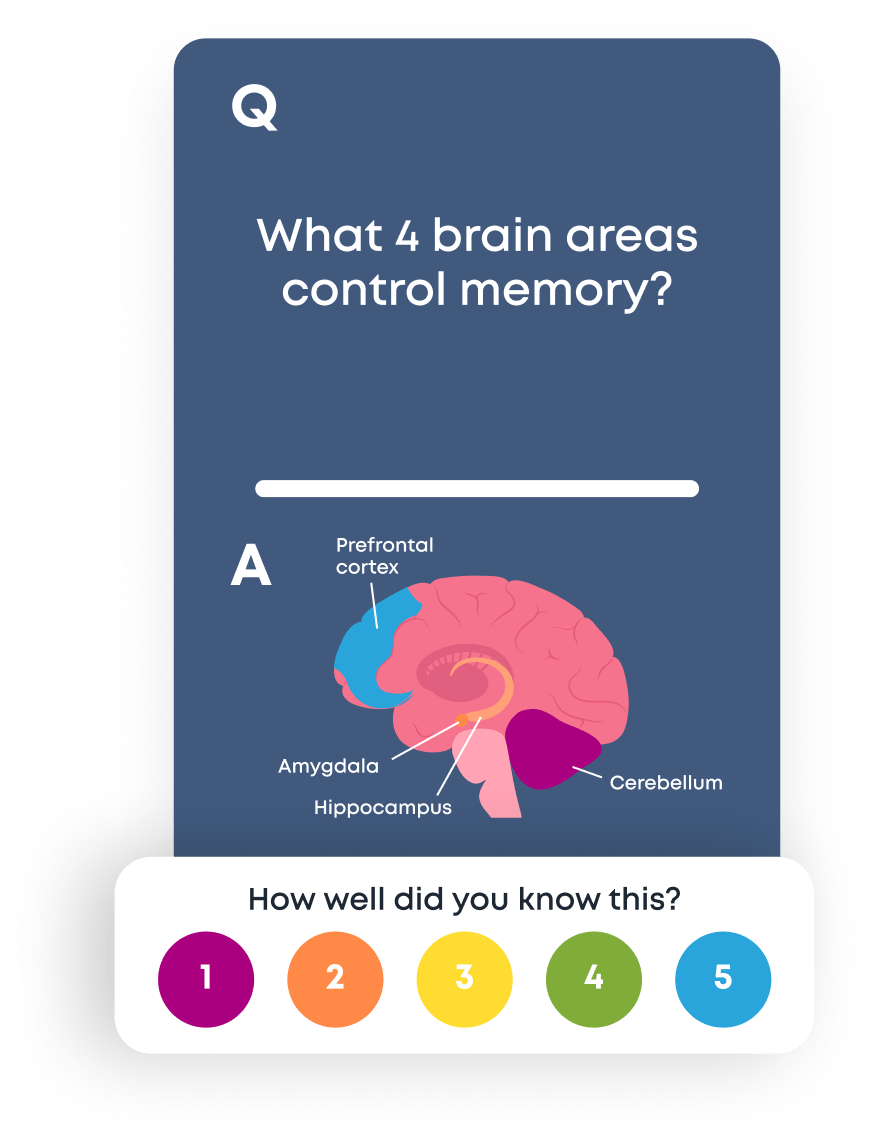
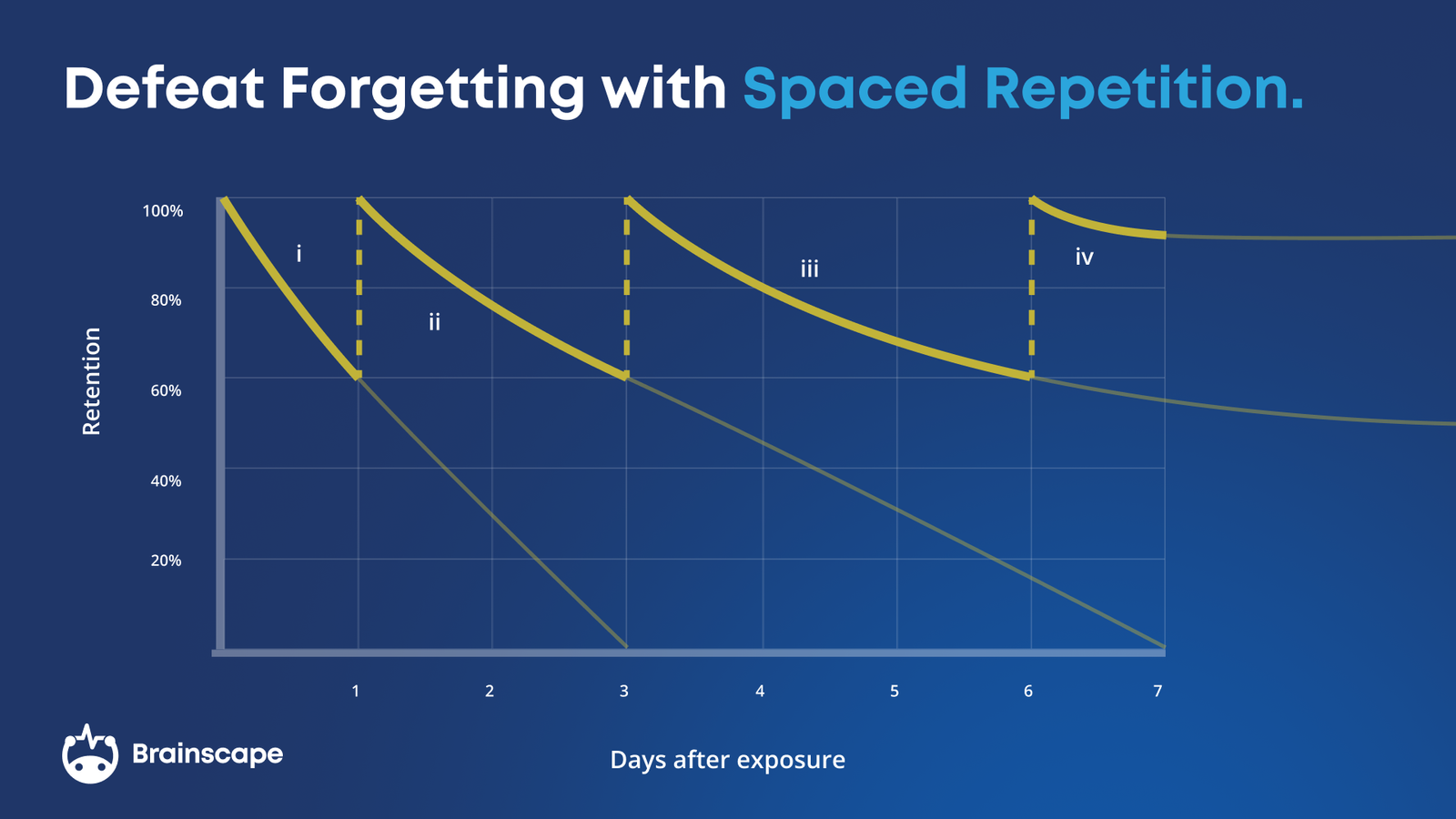
Apps like Brainscape and Anki use spaced repetition algorithms that automatically resurface cards at optimal intervals, according to the unique strengths and weaknesses of the individual student. (You can learn more about spaced repetition here.)
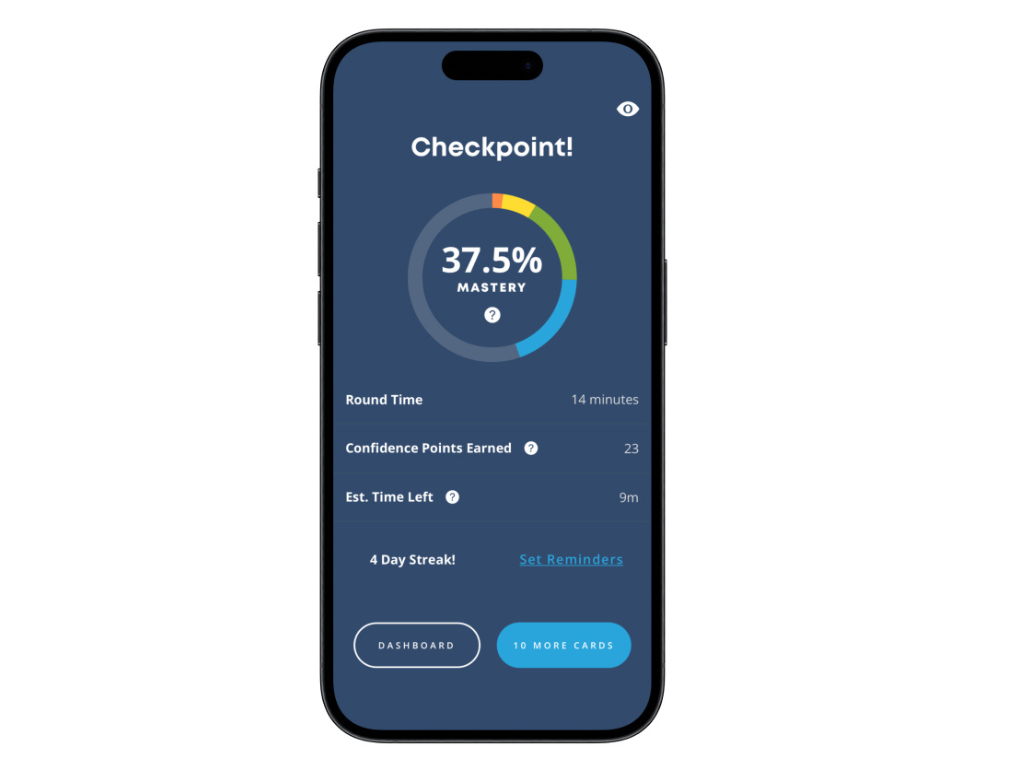
Brainscape, in particular, then shows learners their percentage mastery after each ten-flashcard study round (as well as their estimated time left until 100% mastery) so that they know exactly where they stand with their subject.
Research shows that frequent, low-stakes retrieval is far more effective than last-minute review for building long-term memory (Karpicke & Blunt, 2011).
How Digital Flashcards Supports Retrieval-based Homework
Digital flashcards make retrieval practice assignable, trackable, and habit-forming.
For educators, this means you can:
- Assign flashcard creation as homework
- Provide shared decks aligned to your curriculum
- Track student study activity and consistency
- Encourage daily retrieval instead of cramming
Because apps like Brainscape are built on confidence-based repetition, students naturally spend more time on weaker material, without you needing to micromanage.
Homework becomes less about compliance and more about cognitive training.
Is Daily Retrieval Really Better Than Cramming?
Unambiguously, yes.
Daily retrieval:
- Strengthens memory consolidation
- Improves transfer to new contexts
- Reduces test anxiety by increasing familiarity through effort
Cramming, by contrast, creates short-lived performance gains that evaporate quickly (Dunlosky et al., 2013).
Homework that requires small, frequent acts of retrieval is one of the most effective ways educators can support durable learning, without increasing instructional time.
The Bottom Line for Educators
Homework isn’t the enemy. Non-retrieval homework is.
When homework:
- Is spaced from instruction
- Requires active recall
- Encourages generative processing
- Is supported by tools that promote consistency
…it becomes one of the most powerful learning levers available to educators.
And so, the solution isn’t less homework. It’s better homework designed for how memory actually works.
Hopefully, this article has shown you a clear pathway forward on how to bring effective homework back to your classroom!
Free Educator Resources For You:
- Brainscape Teacher’s Academy: Practical guides for implementing the cognitive science of learning and memory into your classroom, at scale.
- “Tips for Teachers” YouTube Channel: Short, research-backed advice and classroom strategies.
- The Cognitive Science of Studying: 16 Principles for Faster Learning (and how flashcards leverage each one)
Get Brainscape's Educator User Guide
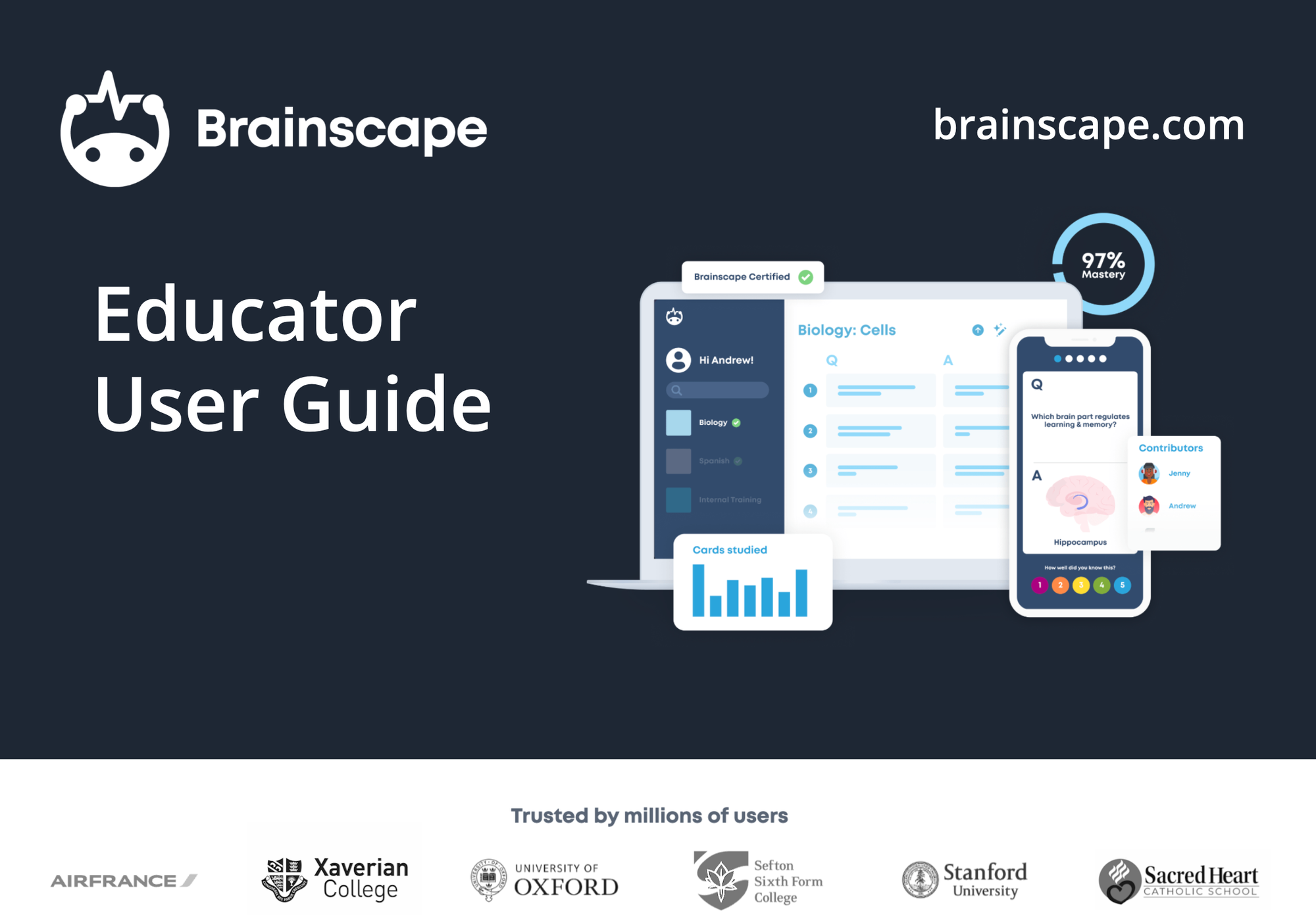
Curious to learn more about how to introduce Brainscape’s digital flashcards into your physical or virtual classroom? Our Educator User Guide provides a detailed walkthrough of how to get set up. It'll also give you all the material you need to motivate for its adoption amongst your students, their parents, and/or the faculty of your school or college:
References
Butler, A. C., & Roediger, H. L. (2007). Testing improves long-term retention in a simulated classroom setting. European Journal of Cognitive Psychology, 19(4–5), 514–527. https://doi.org/10.1080/09541440701326097
Cepeda, N. J., Pashler, H., Vul, E., Wixted, J. T., & Rohrer, D. (2009). Distributed practice in verbal recall tasks: A review and quantitative synthesis. Psychological Bulletin, 135(3), 354–380. https://doi.org/10.1037/a0015166
Dunlosky, J., Rawson, K. A., Marsh, E. J., Nathan, M. J., & Willingham, D. T. (2013). Improving students’ learning with effective learning techniques. Psychological Science in the Public Interest, 14(1), 4–58. https://doi.org/10.1177/1529100612453266
Karpicke, J. D., & Blunt, J. R. (2011). Retrieval practice produces more learning than elaborative studying. Science, 331(6018), 772–775. https://doi.org/10.1126/science.1199327
Pressley, M., McDaniel, M. A., Turnure, J. E., Wood, E., & Ahmad, M. (1992). Generation and precision of elaboration. Journal of Educational Psychology, 84(3), 385–396.
Roediger, H. L., & Karpicke, J. D. (2006). Test-enhanced learning. Psychological Science, 17(3), 249–255. https://doi.org/10.1111/j.1467-9280.2006.01693.x
Sweller, J., Ayres, P., & Kalyuga, S. (2019). Cognitive load theory (2nd ed.). Springer.