What is the pre-operative assessment?
Done a few weeks before surgery to identify any co-morbidities than may lead to complications during anaesthetic, surgery or the post-operative period
- History
- Full general examination (cardio, resp, abdo)
- Investigations
- Anaesthetic airway review
How do you take a preop history?
- History of presenting complaint
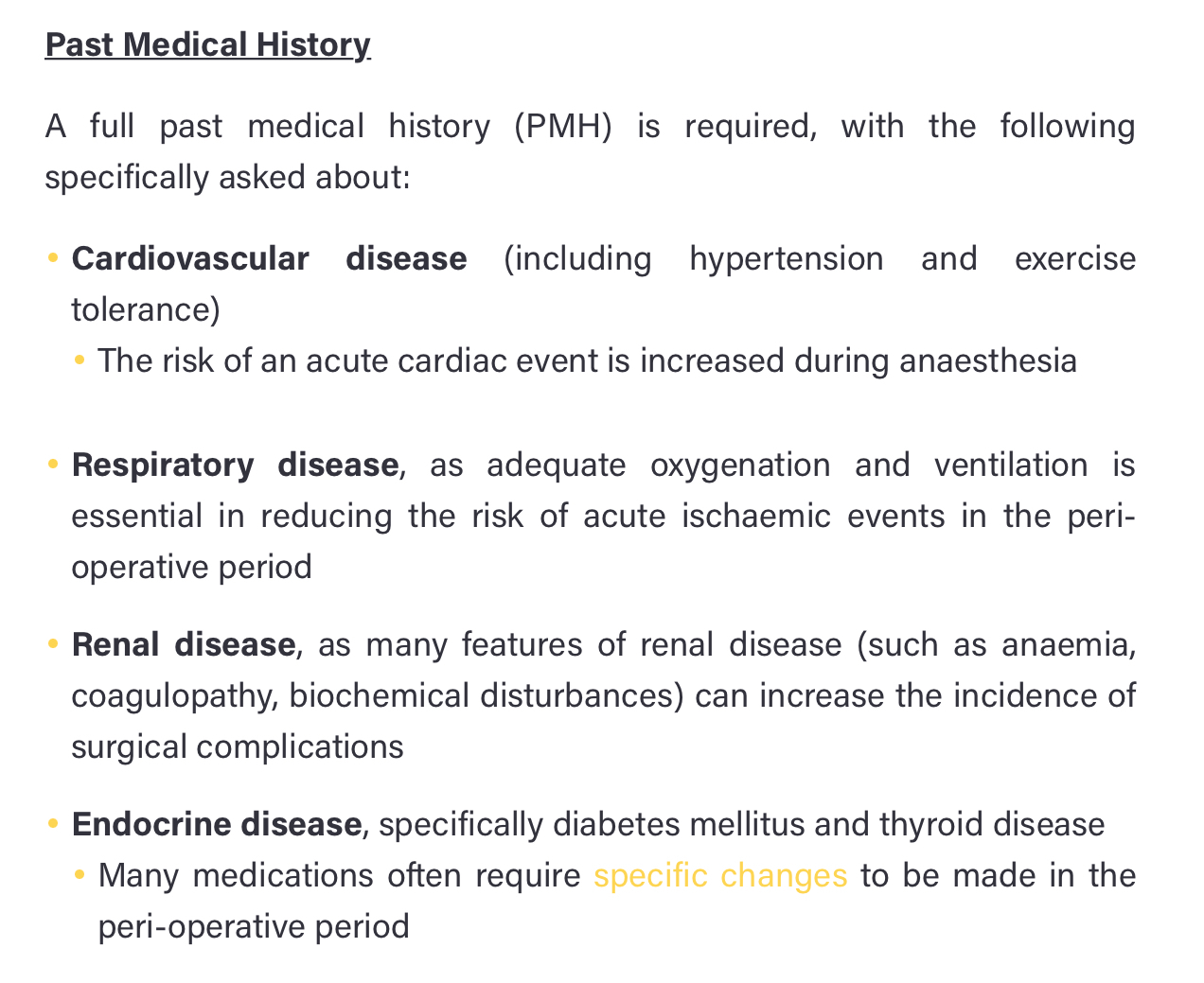
- PMH
- Past surgical history
- Past anaesthetic history (any post op N+V?)
- DHx
- FHx (malignant hyperthermia which is autosomal dominant)
- SHx (alcohol, smoking, exercise tolerance)
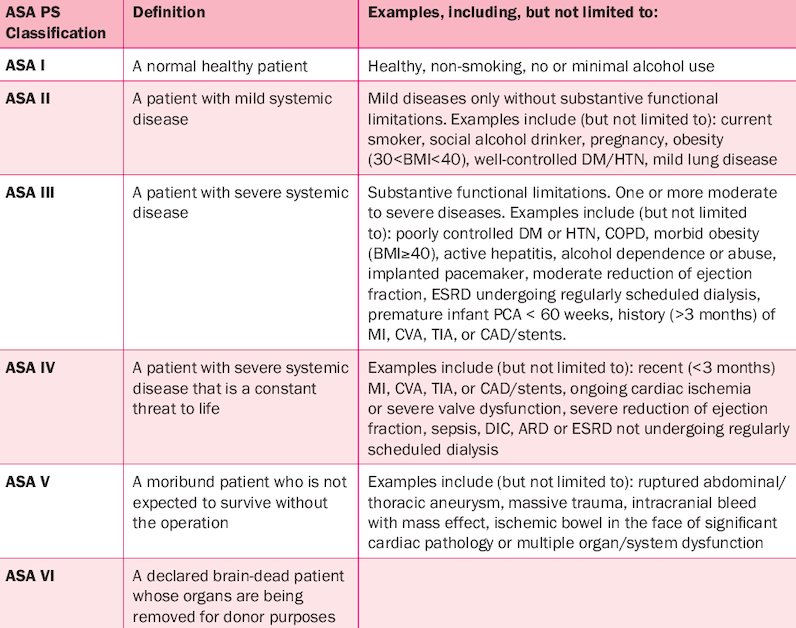
What are the different ASA grades?
I - Normal healthy
II - Mild systemic disease inc smoking
III - Severe systemic disease
IV - Severe systemic illness that is constant threat to life
V - Not expected to survive without operation
What are some preoperative investigations that may be done?
https://www.nice.org.uk/guidance/ng45/chapter/recommendations#chest-xray
https://www.nice.org.uk/guidance/ng45/resources/colour-poster-2423836189
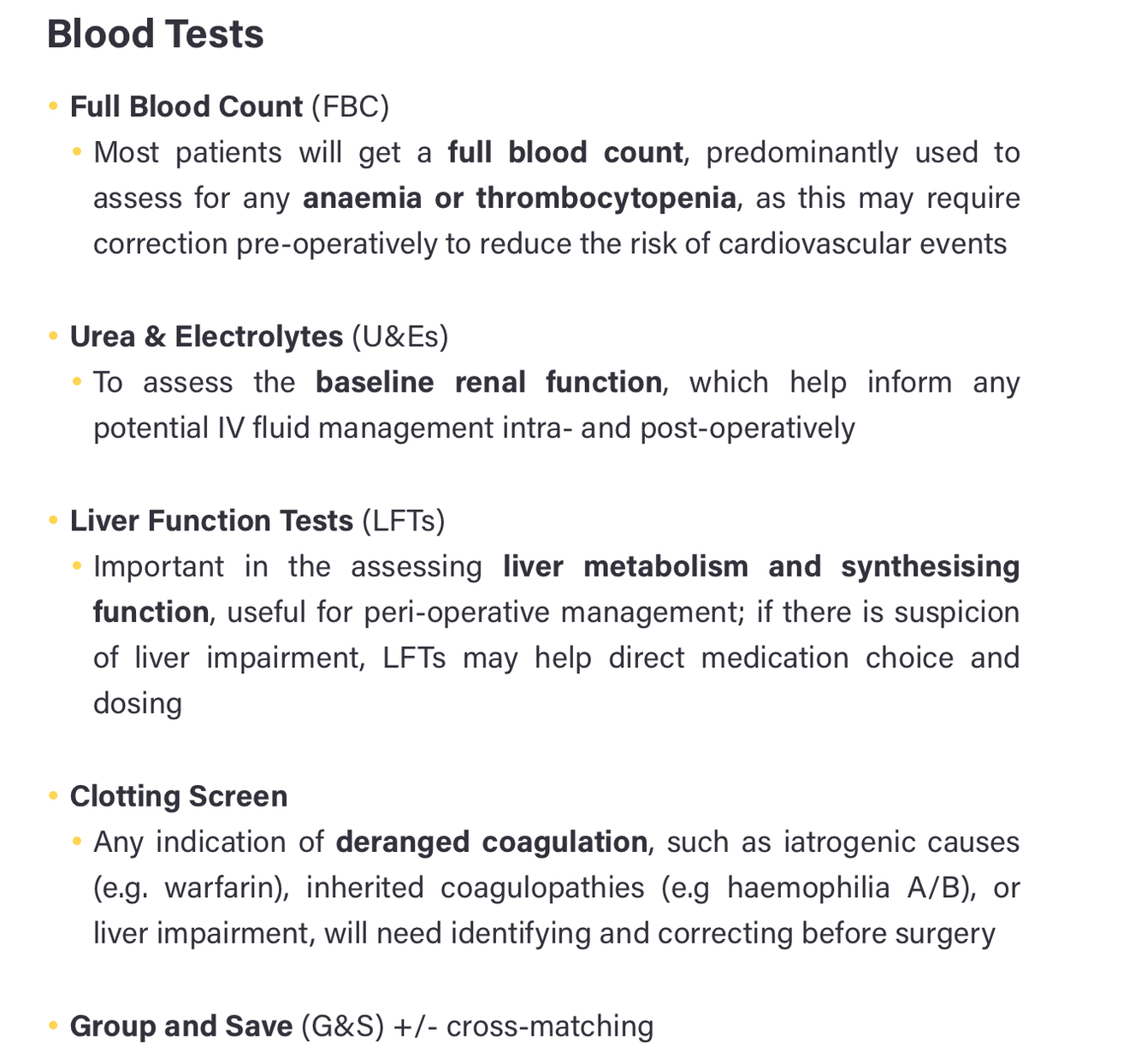
- Blood tests (see image)
- ECG (if history of cardiovascular disease)
- Pregnancy test
- Urinalysis
- MRSA swabs
What is the difference between a group and save and a cross match?
G+S
- Determines blood group and antibodies (ABO and RhD)
- No blood issued
- Not anticipating blood loss
Cross Match
- Mixing patient’s blood with donors blood to see if there is an immune reaction
- Blood is issued
- Done after a G+S
- If anticipating blood loss
What is the airway examination done preoperatively?
- Look at face for any obvious abnormalities (e.g receding mandible retrognathia)
- Open mouth and look for:
- Degree of mouth opening
- Any false teeth? Any loose teeth? Dental hygiene?
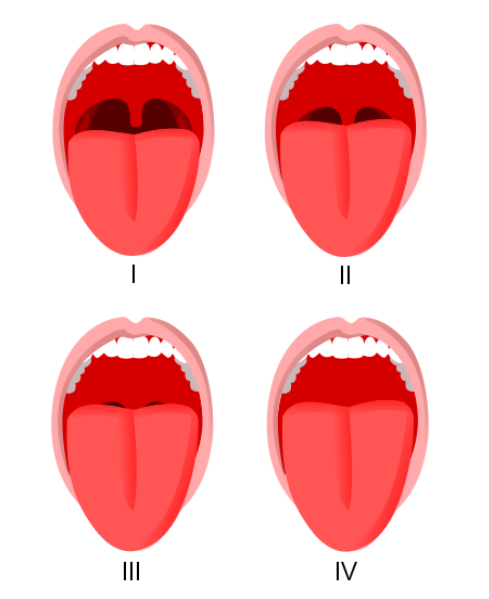
- Mallampati classification of oropharynx when maximally protruding tongue
- Assess neck movements and ask to extend, if distance between thyroid cartilage and chin is less than 6.5cm (three finger breadths), intubation may be difficult
What are some drugs that need to be stopped, started or altered before surgery?
STOP (CHOW)
- Clopidogrel 7 days before
- Hypoglycaemics
- COCP or HRT 4 weeks before
- Warfarin 5 days before (needs to be <1.5 before surgery)
ALTER
- Subcut insulin to IVI
- Long term steroids need to be continued due to risk of Addinsonian crisis, if cannot take orally switch to IV (5mg PO Prednisolone = 20mg IV hydrocortisone)
START
- LMWH
- TED stockings
- Antibiotic prophylaxis
What patients need LMWH for 28 days and TED stockings for this period too after surgery?
- Major GI surgery for cancers
- Lower limb joint replacements
How is a type I diabetics insulin managed during an operation?
PUT FIRST ON THE LIST
- Night before surgery reduce s/c basal insulin dose by 1/3rd
- Omit morning insulin and start IVVRI (continue any s/c long acting insulin)
- Start 5% dextrose at 125 ml/hr
- Take BM every 2 hours
- Keep giving IVVRI until can eat and drink and overlap 30-60 mins with s/c insulin
How are type II diabetics managed before surgery with their anti-diabetic drugs?
- If diabetes is diet controlled no change
- If on medication stop oral hypoglycaemics 24 hours before and stop metformin morning of surgery
- IVVRI with 5% dextrose then given
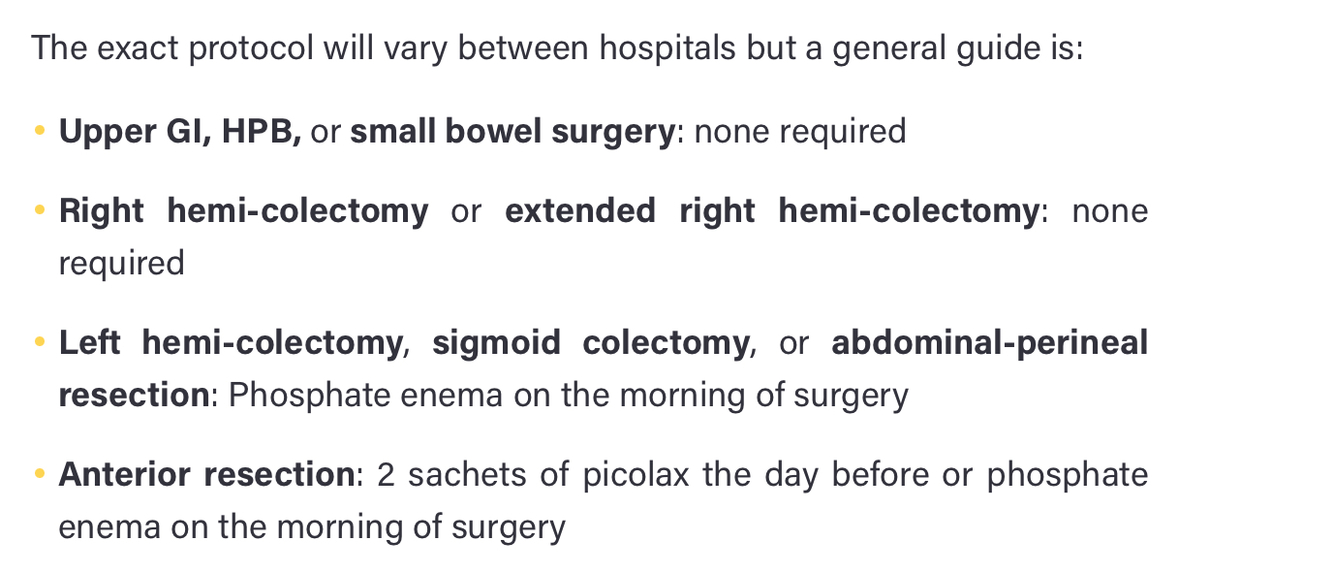
When is bowel preparation needed?
Why does a septic patient need large volumes of IV fluid to maintain their intravascular volume?
Tight junctions between capillary endothelial cells break down and cells become more permeable
Increased hydrostatic pressure and reduced oncotic pressure means more fluid leaves the blood vessels
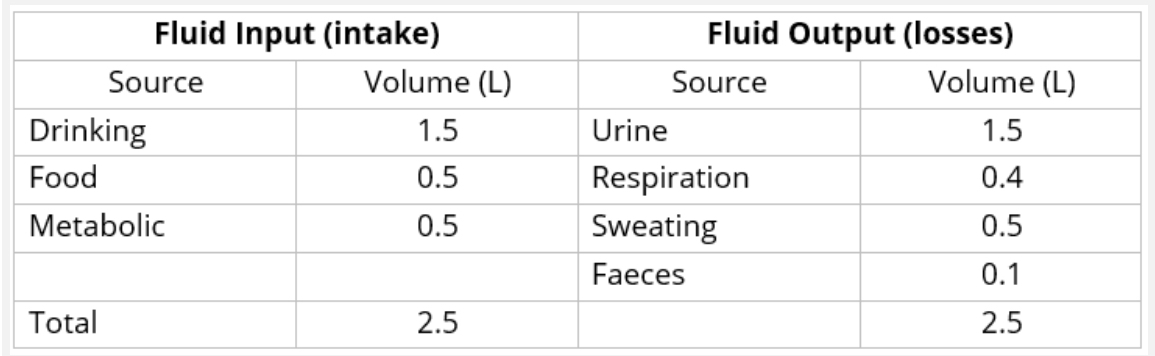
What are some fluid inputs and outputs?
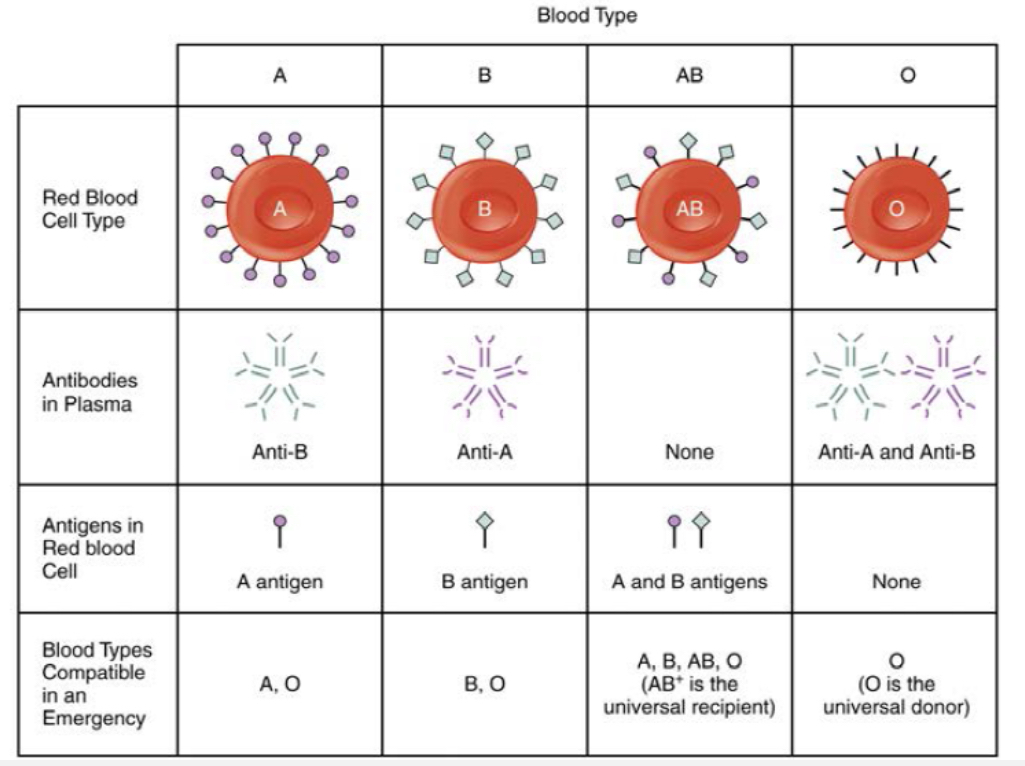
What are the two things checked for on a cross match and who is a universal donor and acceptor?
Rhesus D (most patients are positive) and ABO
Universal Donor: O -ve
Universal Acceptor: AB +ve
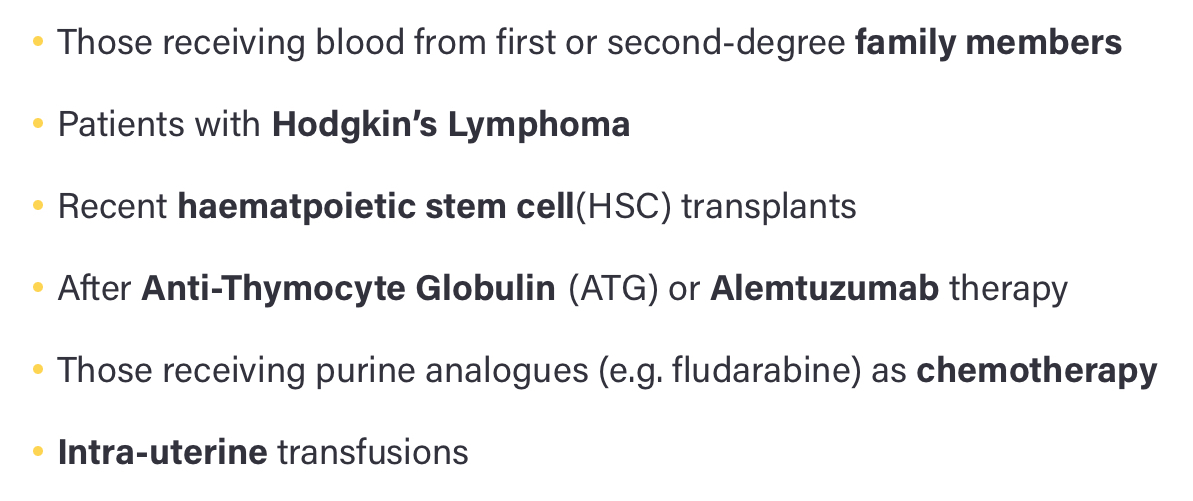
When do patients need to be given CMV -ve blood and irradiated blood products?
CMV -VE: Pregnant women and neonates up to 28 days as CMV has risk of sensorineural deafness and cerebal palsy
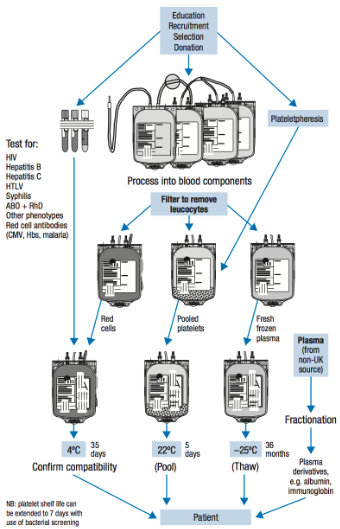
Irradiated: (treated with radiation) reduces risk of graft v host disease, see image
How are patients given a blood transfusion?
- Green (18G) or Grey (16G) cannula as otherwise cells haemolyse as tube too narrow
- Take observations before transfusion, 15-20 minutes after starting, 1 hour after starting and on completion
What do the following blood products contain and what are they used for:
- Packed Red Cells
- Platelets
- Fresh Frozen Plasma (FFP)
- Cryoprecipitate
Packed red cells:
- Contain RBC
- Used for acute blood loss or chronic anaemia where Hb<70 or symptomatic. 1 unit should raise Hb by 10
- Given over 2-4 hours
Platelets
- Contain platelets
- Used for haemorraghic shock, thrombocytopaenia, bleeding with thrombocytopenia, preoperative platelets <50. Should raise platelets by 20-40
- Given over 30 minutes
FFP
- Contains clotting factors
- Used for DIC, haemorraghe due to liver disease, massive haemorraghe after two units of PRC
- Given over 30 minutes
Cryoprecipitate
- Contains fibrinogen, vWF, factor VIII and fibronectin
- Used for DIC with low fibrinogen, vW disease, massive haemorraghe
What is the Enhanced Recovery After Surgery (ERAS) protocol?
Pre-operative
- Educate patients about surgery and milestones/post-op complications after
- Ensure patient as healthy as possible (stop weight loss, smoking, lost weight)
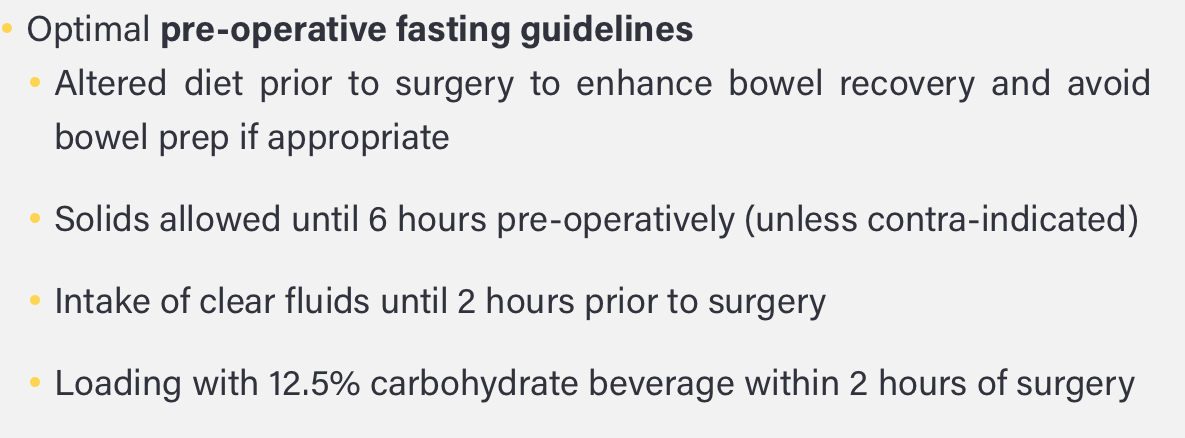
- Optimal preoperative fasting
Intraoperative
- Use of multimodal and non-opioid analgesia
- Use of multimodal post op nausea and vomiting prophylaxis
- Minimally invasive surgery
Postoperative
- Adequate pain control
- Early oral intake
- MDT post-op patient follow up
What is the point of the ERAS protocol?
Reduces post-operative complications, length of hospital stay and overall costs
What procedures are considered for day case surgery and what are the advantages of day case?
Considered if:
- Minimal blood loss expected
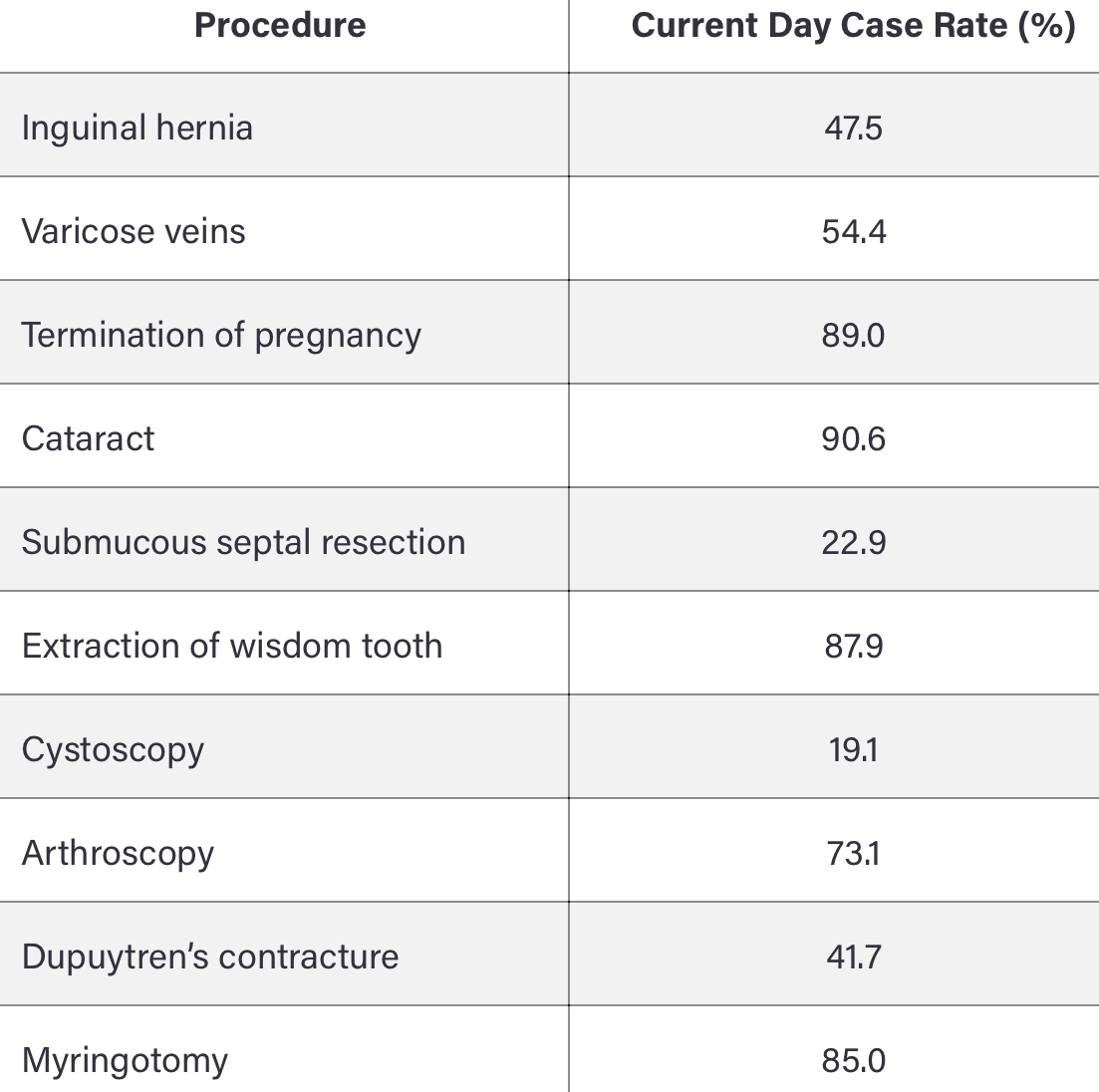
Day case surgery is the admission of select patients to hospital for a planned surgical procedure, returning home on the same day. In the UK, this represents about 70% of all surgery performed.
- Short duration <1hr
- No expected intra/post-op complications
- No specialist aftercare needed
- Social and medical factors acceptable
Advantage:
- Shorter inpatient stay
- Lower infection rates
- Reduced waiting lists
- Cheaper
How can you classify the different types of haemorraghe in a surgical patient?
- Primary: intraoperatively
- Reactive: within 24 hours of operation, usually due to a missed vessel or ligature that slips, don’t usually see intraoperatively due to intraoperative hypotension
Secondary: occurs 7-10 days post operatively, usually due to erosion of a vessel from a spreading infection
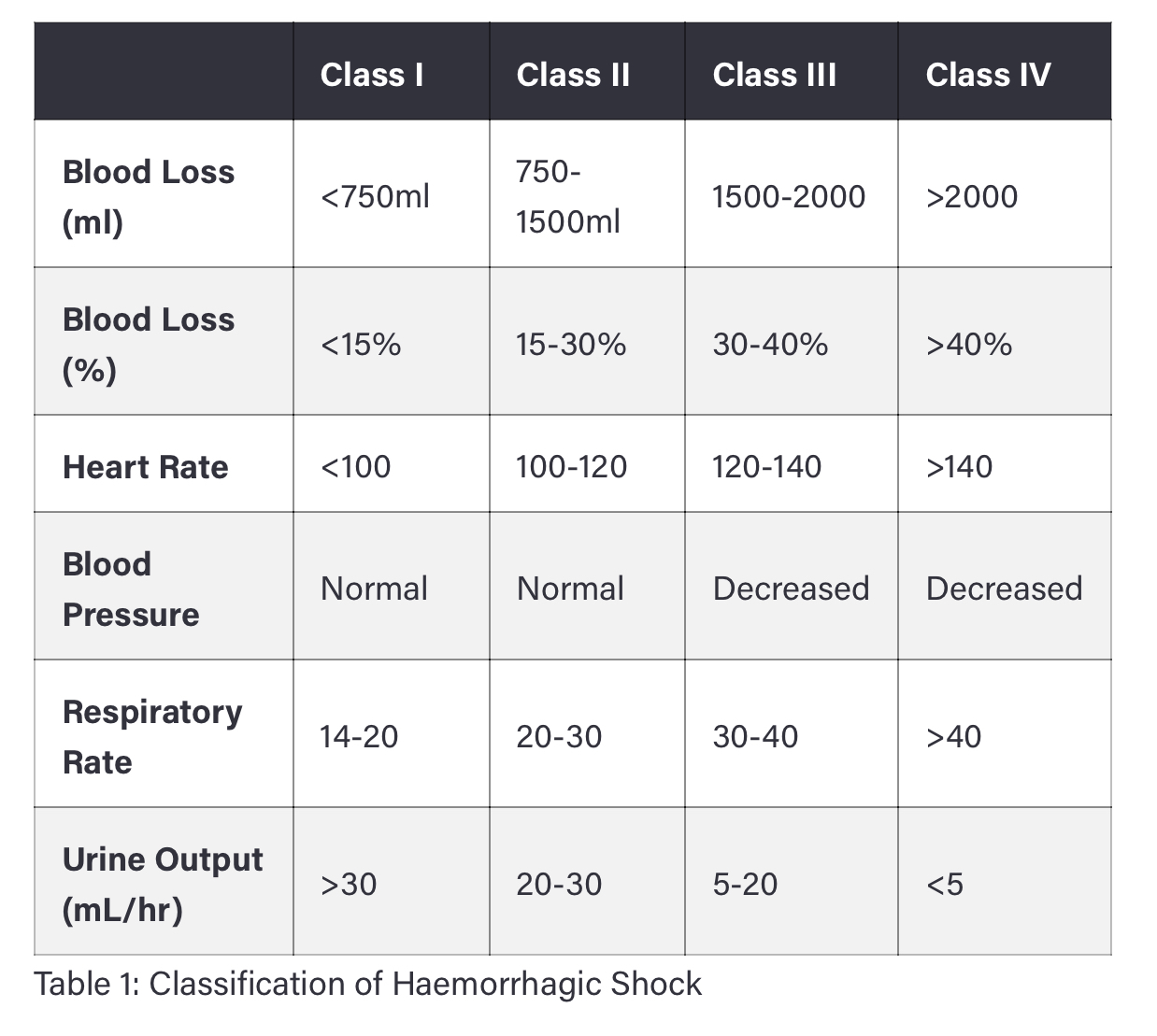
What are some clinical features of haemorraghic shock post-operatively and how can you classify this type of shock?
- Raised respiratory rate (most sensitive)
- Tachycardia
- Dizziness
- Agitation
- Decreased urine output
- Hypotension is late sign
Look for any peritonism, swelling and discolouration on examination
How do you manage post-operative bleeding?
- A to E with 18G cannula minimum and fluid resus
- Read the operation notes to look for wounds, drains, type of surgery
- If bleeding visible apply direct pressure
- Urgent senior surgical review to see if need reoperation
- Urgent blood transfusion with PRC, FFP, platelets and major haemorraghe protocol
What are some signs of post-operative bleeding in the following cases:
- Neck surgery (e.g thyroid/parathyroidectomy)
- Inferior Epigastric Artery Injury
- Retroperitoneal bleeding post angiography
Neck: Airway obstruction as pretracheal fascia can only extend so far. need to airway rescue by removing skin clips and deep suture layers and suction haematoma below
Inferior Epigastric Artery Injury: comes from external iliac and can be damaged by laparoscopic ports as runs along rectus muscle mid-clavicular line
Retroperitoneal Bleeding Post Angiography: puncture site for this procedure is usually external iliac so any bleeding will go into retroperitoneum. if suspected apply direct pressure to puncture site, resuscitate, give blood products




-
1 - Care of the Surgical Patient123
-
2 - General and T&O Imaging71
-
3 - GI Presentations100
-
4 - Upper GI92
-
5 - Hepatobiliary122
-
6 - Lower GI126
-
7 - Anorectal40
-
8 - Breast68
-
9 - KUB76
-
10 - Prostate and Genital Tract81
-
11 - T&O General Principles67
-
12 - T&O Spine, Hip and Thigh89
-
13 - T&O Knee and Leg42
-
14 - T&O Ankle and Foot52
-
15 - T&O Shoulder and Arm57
-
16 - T&O Elbow and Forearm39
-
17 - T&O Wrist and Hand43
-
18 - Peripheral and Arterial Vascular Disease116
-
19 - Vascular64
-
20 - Perioperative Care101
-
21 - Perioperative Care 2 (OSCE Practice)86



