What is a pathogen?
organism that has the capacity to cause disease:
- opportunistic
- primary
What are opportunistic pathogens?
- rarely cause disease in healthy hosts regularly cause disease in compromised hosts:
- burn victims susceptible to infection with pseudomonas aeruginosa
- HIV patients more susceptible to intracellular bacteria (mycobacteria)
- hospitalized patients on broad spectrum antibiotics (clostridium difficile)
What are primary pathogens?
cause disease in healthy individuals
- have virulent mechanisms to overcome, mechanical, innate and adaptive immune responses rarely associate with their host except in the case of disease
- bacillus anthracis
Infectious disease?
- damage or loss of tissue or organ function due to infection or host inflammatory response
- symptoms of infections are caused by the microorganism or by the immune response of the host
Contact with organism does not always lead to disease, what could it lead to?
- elimination by host defense
- part of normal flora
- carrier state
- disease
Whether or not disease results depends on what?
- virulence of pathogen
- environmental factors
- host factors
What is virulence determinate?
properties that enable an organism to enter, replicate and persist in a host:
- expression of capsule, LPS, or pili
- elaboration of exotoxins that kill WBCs, proteases, siderophores
- generation of DNA inversions that lead to antigenic and phase variation
How do we determine what properties of an organism are necessary or involved in the disease process?
there are scientific processes that we can go through to determine whether or not a virulence factor is required for that organism to cause disease or whether it facilitates ability to cause disease -some have several factors
Stages of infection?
Transmission
Colonization
Multiplication
Invasion
Dissemination
Damage
Congenital transmission?
transmission from mother to child
Colonization?
- the ability to resist physical removal during infection
- establishment at site of infection can be mediated by specific receptor mediated interactions or biofilm formation
Receptor mediate adhesion?
- adhesion: macromolecules on the surface of bacteria (pili, MSCRAMMs)
- receptor: specific carb or peptide on the surface of host cell that is bound by the adhesion
- bacterial adhesions mediate host specific adherence (E coli 987P only cause diarrhea in young pigs) and tissue specific adherence (E coliP pili mediate adherence to urinary tract)- gram -
Microbial surface components recognizing adhesive matrix molecules?
- MSCRAMMs
- superfamily of surface adhesions that target host extracellular matrix proteins such as fibrinogen, fibronectin, collagen for adhesion
- only been studied in Gram + bacteria (lipoteichoic acid binds fibronectin)
- very specific
Biofilm formation?
- aggregate of bacteria that bind to each other on a surface within a slime layer
- many difficult to treat infections are caused by bacteria in biofilms
- bacteria can communicate with other bacterial species in biofilms
- within biofilms bacteria resist:
- antibiotic attack
- being flushed away
- phagocytosis and complement attack
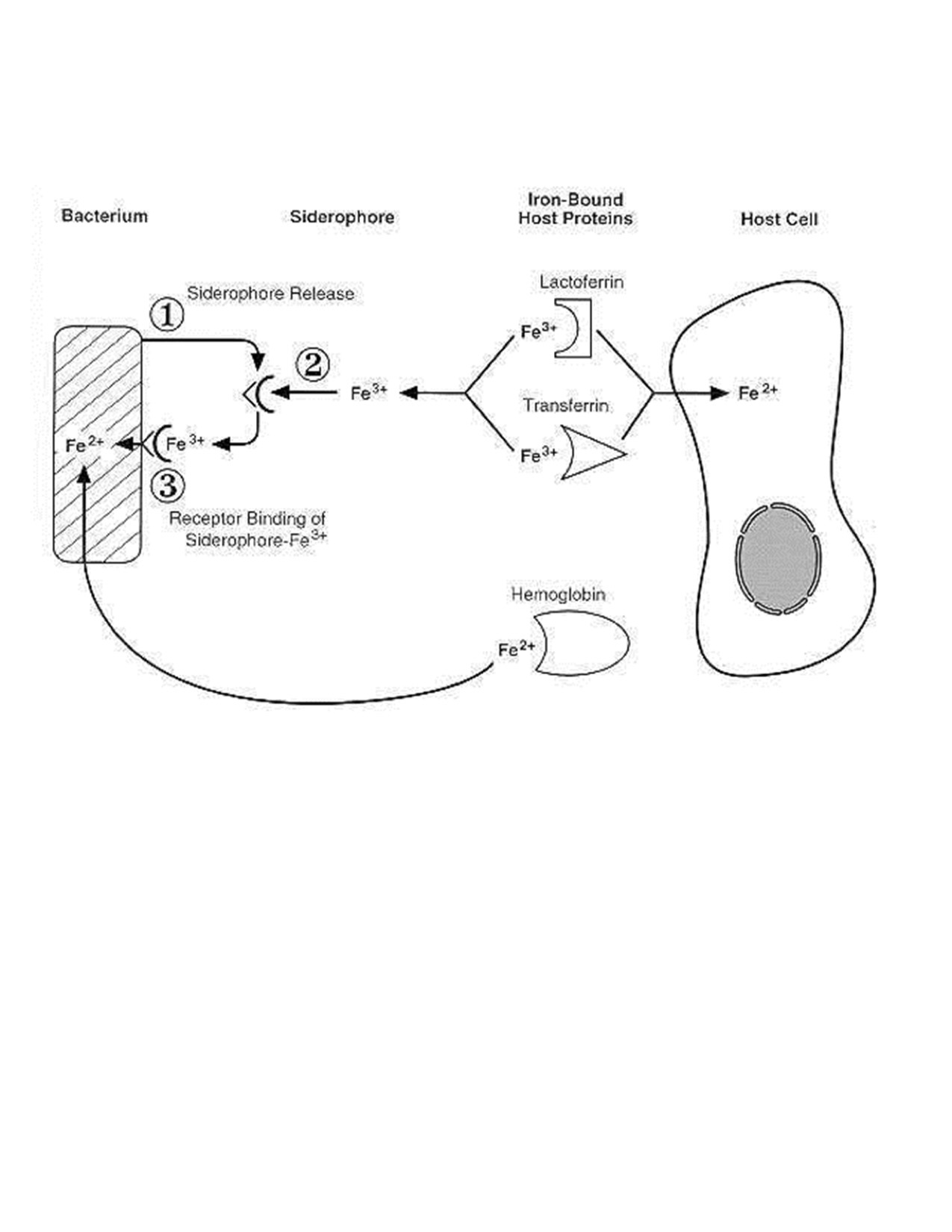
How can bacteria acquire iron?
- secrete chelator called siderophore that bind ferric ions for transport into cell, can steal iron
- some bacteria have membrane proteins that have more affinity for iron than lactoferrin or transferrin, they take the iron
- multiplication: acquisition of iron
What bacteria invade cells?
- facultative intracellular bacteria- invasion of cells is part to pathogenesis (bloody diarrhea instead of watery)
- obligate intracellular bacteria- invasion of cells required for growth or survival (can’t make their own ATP), chlamdyia trachomatis
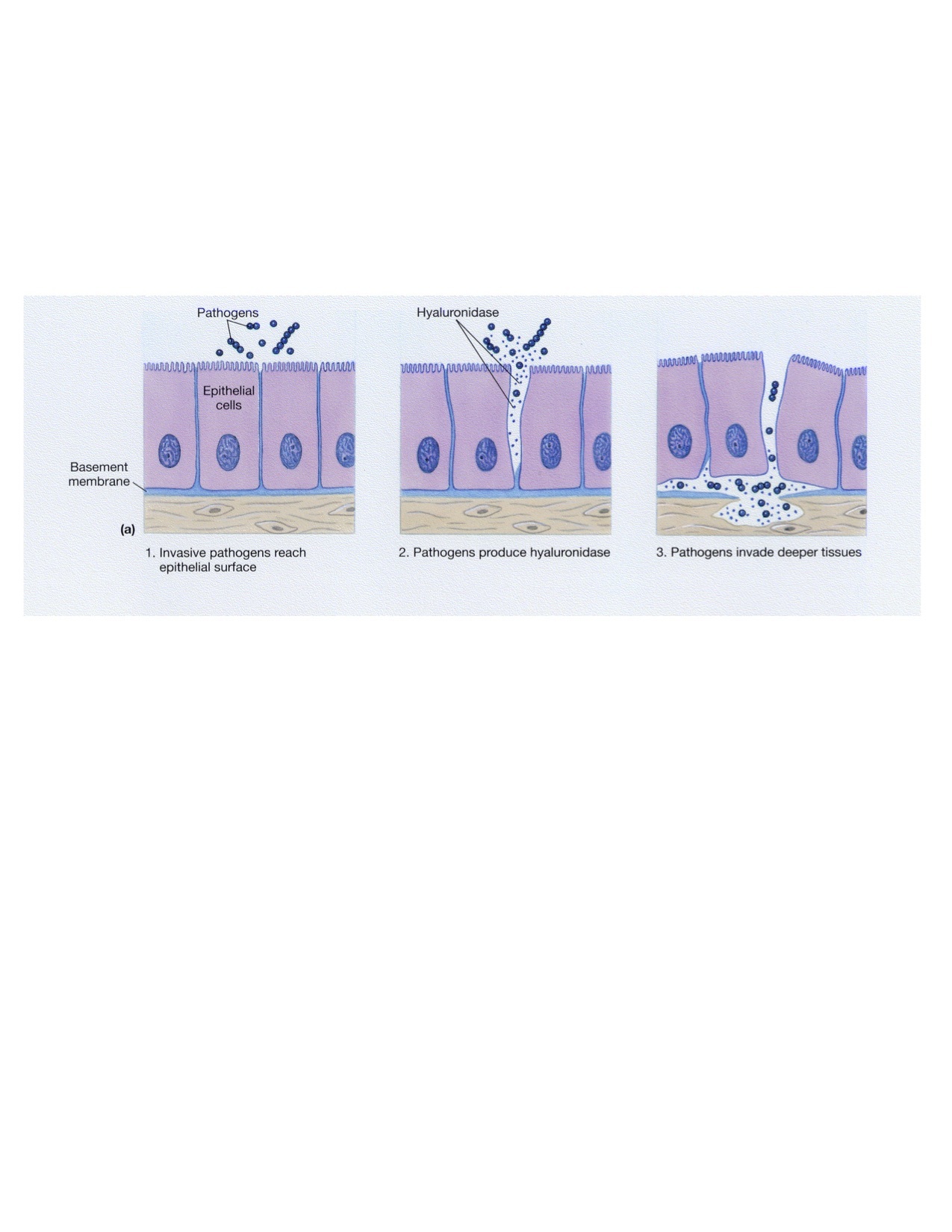
What are exoenzymes?
- allow organisms to degrade certain structures in the body, such as DNA
- facilitate dissemination
- Hyaluronidase- breaks down hyaluronic acid the ground substance of connective tissue
- Deoxyribonuclease (DNase)- thin pus made viscous by DNA released by dead WBC
- Streptokinase- activates plasminogen and converts it to plasmin which attacks fibrin clots allowing spread
What can direct damage due to infection be the result of?
- by products of bacteria growth (acids, gas)
- secretion of exoenzymes that break down cells intracellular matrixes of host tissues
- secretion or elaboration of bacterial toxins (endo and exotoxins)
- damage by the immune response (host mediated pathogenesis)
Bacterial toxins?
- alter metabolism of host cells
- exaggerate normal physiological functions
- stop cell growth
- some cause disease by themselves (purified toxin)
two categories:
- endotoxins
- exotoxins
Endotoxins?
- LPS, lipid A-moiety toxic
- Gram negative
- outer membrane
- chromosomal, necessary gene
- weakly antigenic- cannot purify lipid A to immunize someone
- no toxoid, no vaccine
- weakly neutral by antibodies
- stable at high temps
- effect of LPS is the same regardless of bacterial origin
- immune response is responsible for disease
- liberated when bacteria lyse and/or released as part of membrane fractions
Exotoxins?
- proteins
- Gram negative and Gram +
- extracellular- excretes it
- frequent phage or plasmid- acquired from
- highly antigenic
- can make toxoid vaccines
- neutralized by antibodies (IgG)
- unstable by high temperatures
- effects vary depending on bacterial origin
- different specificities, different diseases
What is lipid A part of?
LPS- this is the toxic portion
-liberated when bacteria lyse and released as part of membrane fractions
Lipid A is what?
PAMP- pathogen associated molecular pattern
-bind to and are recognized by PRR of the innate immune system
Examples of PAMPs?
- LPS, lipoteichoic acid, lipoproteins, mycobacterial lipoarabinomannan
- peptidoglycan, flagella
- DNA (unmethylated CpG motifs not in mammalian DNA), toxins


-
Introduction40
-
Innate Immunity38
-
Acquired Immunity24
-
Antigens and Antibodies49
-
Complement32
-
Antigen Processing and MHC43
-
Activation of B and T cells by Antigen56
-
Cell-Mediated Immunity37
-
Cytokines26
-
Intro to Bacteria39
-
Acute Inflammation59
-
Chronic Inflammation29
-
Bacterial Genetics35
-
Bacterial Pathogenesis36
-
Staphylococcus Aureus25
-
Mycobacterium Tuberculosis32
-
Introduction to Virology37
-
Influenza26
-
HIV26
-
Into to Parasitology76
-
Malaria30
-
Intro to Mycology56
-
Opportunistic pathogens78
-
Zika40
-
Microbial Evasion of Immune Response26
-
Immune Response to Microbes29
-
Vaccines31
-
Emerging Infectious Diseases51
-
Infectious Causes of Cancer68



