- A 12 year old girl comes to your office complaining of worsening shortness of breath with exertion. You find that she has a hemodynamically significant ASD.
A. List 3 auscultatory findings of an ASD.
B. List 2 long-term complications of an unrepaired ASD.
A.
- Fixed split S2
- Middiastolic murmur at LLSB
- Systolic ejection murmur at LUSB
- Crackles in lungs (pulmonary overcirculation)
B.
- Congestive heart failure
- Pulmonary hypertension
- Atrial arrhythmias
- You see the following ECG.
A. What is the major abnormality on the ECG?
B. What condition is this most commonly associated with?
C. What rhythm is this patient at risk for?
D. What is the definitive treatment?
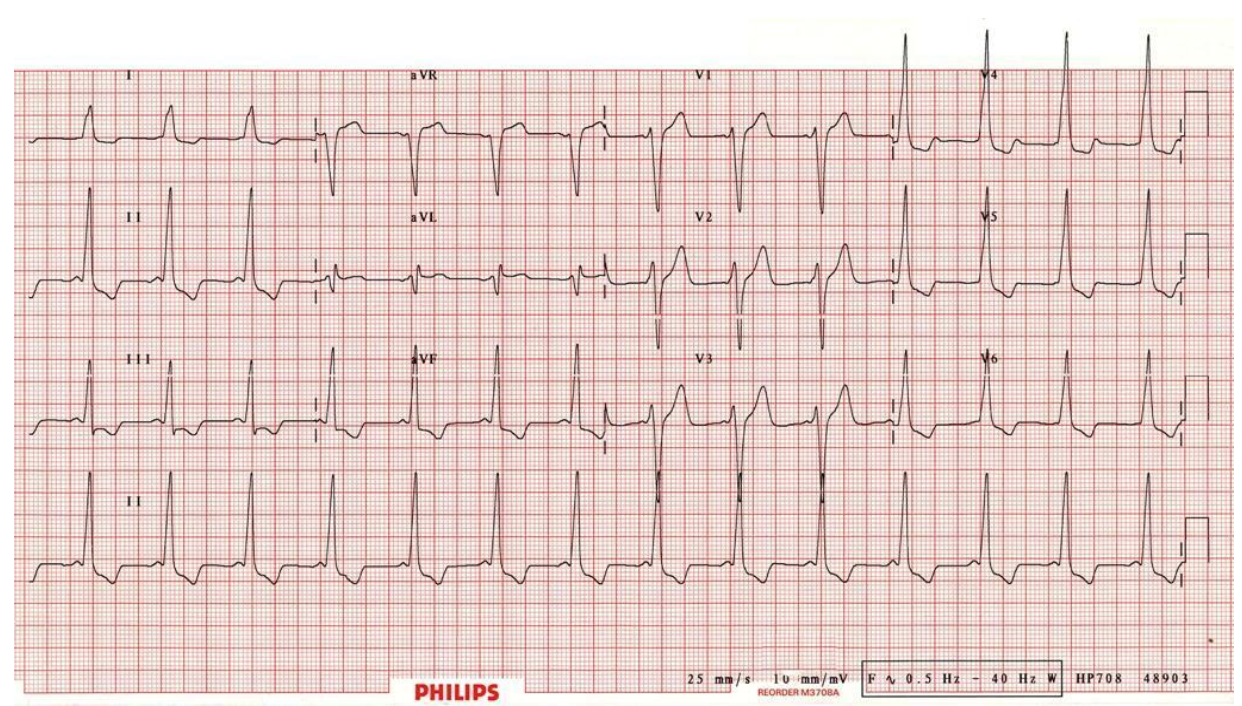
A. Delta wave (short PR, wide QRS)
B. Wolf-Parkinson-White
C. Paroxysmal SVT and atrial fibrillation, which can degenerate to VF
D. Ablation
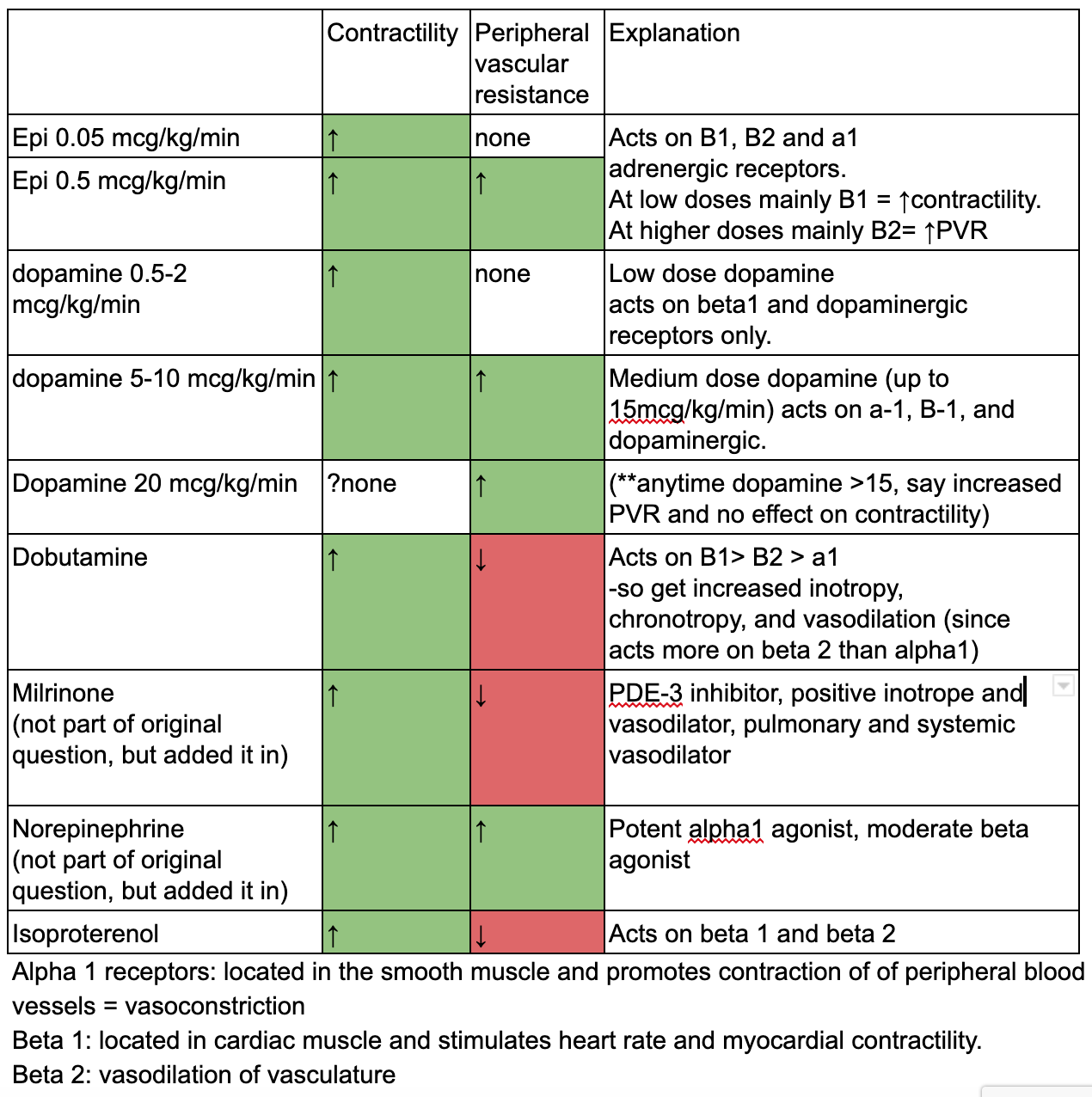
Table given with medications. Write “increase” “decrease” or “none” for effect of the following on (a) contractility and (b) PVR
A. Epi 0.05 mcg/kg/min
B. Epi 0.5mcg/kg/min
C. Dopamine 0.5-2mcg/kg/min
D. Dopamine 0.5-2mcg/kg/min
E. Dopamine 5-10mcg/kg/min
F. Dopamine 20mcg/kg/min
G. Dobutamine
H. Milrinone
I. Norepinephrine
J. Isoproteronol
- 7 year old girl with “confirmed” hypertension (didn’t say how it was confirmed). Has had normal CBC, urea, creatinine, electrolytes. Name 4 investigations you would do at this point (did not specify for investigation vs treatment/evaluation).
- Urinalysis for protein + blood
- ECHO for LVH
- AUS with doppler
- Retinal exam
- Fasting lipid and glucose profile
- PSG
HTN Evaluation (Nelson’s)
- Evaluate for identifiable cuase
- Hx + PEx
- Lytes, BUN, Cr, CBC
- U/A + UCx
- Renal U/S
- Evaluate for comorbidity
- Fasting lipid panel, fasting glucose
- Drug screen
- PSG
- Evaluate for end-organ damage
- ECHO
- Retinal exam
- Additional evaluation as indicated
- Ambulatory BP measurement
- Plasma renin (for mineralocorticoid-related disease)
- Further renovascular imaging
- Arteriography
- Plasma + urine steroid + catecholamine levels
- A term baby is born to a mother with maternal lupus. He is noted to have congenital heart block.
a) Name the 2 most common antibodies in congenital heart block.
b) Name 3 other manifestations of neonatal lupus.
A. Anti-Rho and anti-La
B. Other manifestations
- Rash - annular or macular erythema, scaly rash on face, scalp, trunk
- Cytopenias
- Hepatitis
- An 11 month old girl comes in lethargic, febrile with HR 180, bounding pulses, warm feet.
a. What is her cardiac output likely to be compared to normal?
b. What is her systemic vascular resistance likely to be compared to normal?
c. How would you classify her physiologic state?
d. Write your initial IV fluid order for this girl.
A. Increased. CO = HR x SV. CO = (MAP - CVP)/SVR. Increase HR. Decreased SVR. Suggests increased CO.
B. Decreased SVR
C. Warm septic shock. If BP given, can report compensated vs uncompensated shock.
D. NS 20mL/kg bolus IV push. Repeat up to 60mL/hr, then consider norepi (for vasoconstrictor with no effect on cardiac contractility)
D5NS at maintenance (but not the first fluid order)
- A 12 year old child is referred to you for assessment of a heart murmur.
a. What is one clinical characteristic of the murmur that would be very reassuring to you in proving that the murmur is benign?
b. Name 3 innocent murmurs
A. Changes with position
Benign murmurs
- Systolic
- Grade 1-2
- Soft
- Changes with inspiration
- Changes with position (louder lying down, softer sitting up)
B.
- Stills murmur
- Peripheral pulmonary artery stenosis
- Venous hum
- 6 month old with congestive heart failure secondary to congenital heart disease. Not gaining weight despite attempts to provide adequate calories. List 4 reasons why this child may not be gaining weight.
- Inadequate amount of calories (higher metabolic demand)
- Inadequate intake from poor feeding (tires out when feeding)
- Inadequate intake from psychosocial reasons (incorrect mixing of formula)
- Genetic syndrome with other anomalies that may be contributing to failure to thrive (e.g. hypotonia, seizures)
- Child may have been retaining fluid before and now is not, so it appears as weight loss or lack of weight gain
- A 4 month old presents with hepatomegaly, pallor and sweating while feeding. SaO2 96% and working hard with feeds. What are 3 primary cardiac causes that could account for congestive heart failure?
- VSD
- TOF (pink tets)
- Dilated cardiomyopathy
- XRAY of cardiomegaly and boy has dyspnea, increased JVP, S3, S4, Pansystolic murmur at the apex.
A. What are TWO findings on XRAY?
B. How do you interpret this xray?
C. What is the most likely cause of this presentation?
A. Cardiomegaly. Pulmonary edema (fluid in fissures, increased pulmonary vascular markings)
B. Conjestive heart failure.
C. VSD
- Description of TGA
A. What is the diagnosis?
B. What do you give next?
A. TGA
- Needs VSD/ASD/PDA to survive
- Reversed sat differential. Low on RA, high in leg
- Normal S1, loud single S2
- Very blue, NO MURMUR
- CXR: egg on a string, eventual increased PBF (once pulmonary resistance drops)
- ECG: can be normal, RVH
B. Prostaglandin E1 infusion 0.05-0.1mcg/kg/min initially, then 0.01-0.05 mcg/kg/min
Balloon atrial septostomy (if no VSD)
Ultimately will need arterial switch
- Child with syncope x 2, has long QT, what 3 historical information would make you concern
- Syncope occuring during rest/sleep (LQTS3)
- Syncope triggered by fright, emotion, stress
- FHx of long QT and/or sudden death
- With chest pain, palpitations, SOB
- Name 2 cardiac conditions that have a single S2.
- Truncus arteriosus
- TGA with intact ventricular septum
- Work up of patient with vascular ring
(Also my questions: A. what is it, B. How does it present, C. How to diagnose)
Vascular ring
- Congenital abN of aortic arch + major branches -> vascular rings around trachea + esophagus with varying degrees of compression
- Most common: double aortic arch, right aortic arch with left ligamentum arteriosum
- Others: anomalous innominate artery, aberrant right subclavian, pulmonary sling
Presentation
- Stridor, chonic wheeze
- Exacerbated by crying, feeding, flexion of neck
- Relieved with extension of neck
- May have brassy cough, pneumonia, sudden death from aspiration
- Swallowing dysfunction
Diagnosis
- ECHO +/- cardiac MRI/CT
- Cardiac catheterization for cases with associated anomalies or in rare cases where other modalities are not diagnostic
- Bronchosopy in more severe cases to determine exact extent of airway narrowing
- (Barium esophagogram previously used for diagnosis)
- Newborn with persistent bradycardia. ECG given. Looks like heart block… identify the problem. What 2 things is this child at risk for?
A. Congenital heart block
B. If it were to mean risk based on heart block
- Heart failure
- Sudden cardiac arrest
- Other arrhythmias (e.g. Afib)
If it were to mean other problems child is at risk for:
- Cytopenias
- Hepatitis
- Rash
- An infant presents with a 2 day history of poor feeding, more fussy. In the ER, ECG is done (given - showed a narrow complex QRS, tachycardia, rate about 240, p-waves not consistently seen).
A. What is the rate?
B. What is your diagnosis?
C. The child looks stable. What are two things you can do to treat?
A. 240. Count the number of Rs in a 10s strip x6. Or 300/# of big boxes
B. SVT
C. 1) Vasovagal manoeuver with ice to forehead, 2) adenosine
- A teenage boy, previously healthy, presents with a 2-3 day history of shortness of breath and diaphoresis. There is no fever. A CXR is done (showed cardiomegaly, increased perivascular markings, no pneumothorax or pneumomediastinum). Hepatomegaly is noted on exam.
a) What two things do you note on the CXR?
b) What are the two MOST LIKELY causes that you need to think of?
A. Cardiomegaly, increased pulmonary markings, peribronchial cuffing
B. 1) Myocarditis, 2) Rheumatic fever, 3) Cardiomyopathy
Child with fixed, split S2 and a systolic ejection murmur on LUSB.
A. What is the diagnosis?
B. List 2 other conditions that would give you a fixed S2.
A. ASD
B. Pulmonary stenosis, Ebstein anomaly
- Patient presents with syncope with exercise. What would make you suspect the more common (Romano-Ward Syndrome) prolonged QT Syndrome?
Family history of long QTS, syncope, sudden death b/c AD
No SNHL, just cardiac
- Three cyanotic heart defects with low pulmonary vasculature
- Tricuspid atresia
- TOF
- Pulmonary stenosis
- Pulmonary atresia
- Ebstein’s anomaly
- Picture of a chest x-ray with a large heart. A 16 year old patient presents with chest pain which is better when she leans forward. Her heart rate is 98. She has a pulsus paradosus of 15.
A. Describe the chest X-ray findings?
B. What is the likely diagnosis?
A. Cardiomegaly (due to pericardial effusion)
B. Pericarditis with likely cardiac tamponade (normal pulsus paradoxus drop is <10mmHg)
- List 3 signs of SVT on the ECG of a 2 year-old
- HR > 220 in infants, >180 in children
- Regular RR intervals
- Narrow complex QRS
- No P waves
- Infant with cyanosis, Sats 75%, no murmur but single S1 & S2. Chest sounds clear. CXR shown with sketchy “egg on a string” (really not good film).
TGA! cyanosis with no murmur
- A. List four clinical signs of endocarditis in a patient with fever and a new murmur.
B. How do you confirm the diagnosis?
A. Endocarditis signs
- Osler node
- Janeway lesion
- Splinter hemorrhages
- Roth spots
- Splenomegaly
- Petechiae
- Arthritis
B. Confirm diagnosis
- ECHO + BCx

-
Nephro/Uro67
-
Nephro/Uro SAQ36
-
Neurology80
-
Neuro SAQ22
-
Endocrinology82
-
Endo SAQ24
-
Infectious Disease107
-
ID SAQ42
-
Respirology97
-
Genetics/Metabolics72
-
GI99
-
GI SAQ57
-
Acute Care98
-
Acute Care/ED SAQ58
-
Pharmacology64
-
Pharmacology SAQ18
-
ENT/Ophtho/Gen Surg80
-
ENT/Ophthal/Gen Surg SAQ35
-
Cardiology49
-
Cardiology SAQ24
-
NICU114
-
NICU SAQ31
-
Dermatology37
-
Derm SAQ18
-
Rheum/MSK/Ortho50
-
Rheum/Ortho SAQ33
-
Heme-Onc78
-
Heme-Onc SAQ34
-
Development91
-
Development SAQ33
-
Psychiatry51
-
Psychiatry SAQ19
-
Allergy/Immunology57
-
Allergy/Immunology SAQ16
-
Ethics/Research15
-
Child Maltreatment SAQ20
-
Ethics/Research SAQ28
-
Adol/Gyne21
-
Adol/Gyne SAQ15



