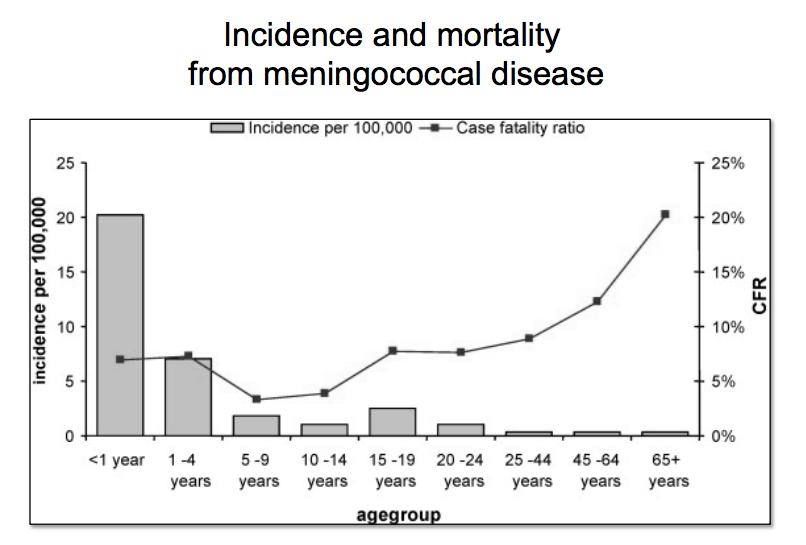
In which age group do CNS infections most commonly occur?
0-4 years
Paediatric disease
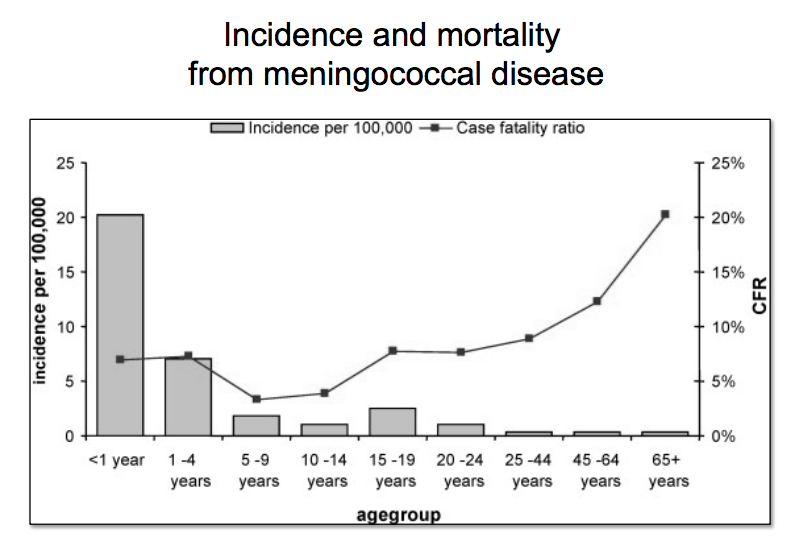
In which age group do CNS infection have the highest mortality rate?
>65 years
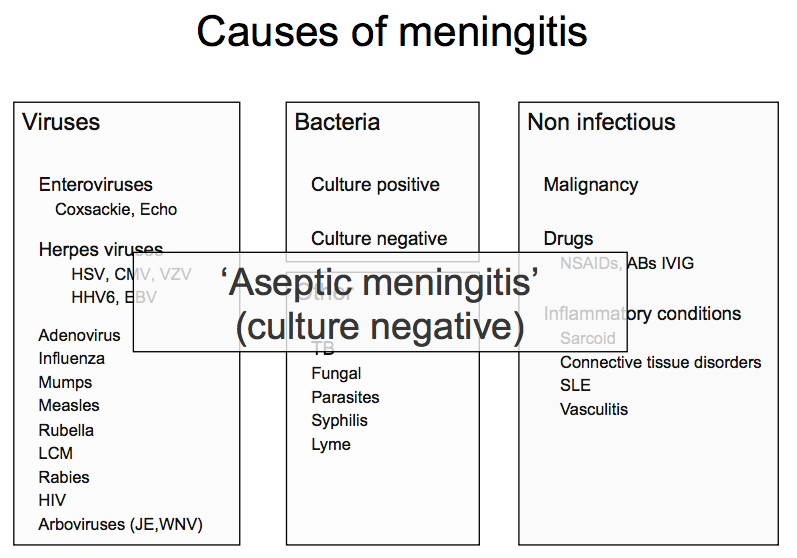
What are the major categories of causes of meningitis?
Viral
Bacterial
Other (eg. TB)
Non infectious
What is the most common casue of meningitis?
Viral
Usually enterovirus
Even though viral meningitis is more common than bacterial meningitis, why is bacterial meningitis more worrying?
Viral meningitis does not cause sequelae, whereas bacterial meningitis does
Bacterial meningitis is more harmful, viral is self-limiting
What is aspetic meningitis?
Any form of meningitis that is not caused by bacteria
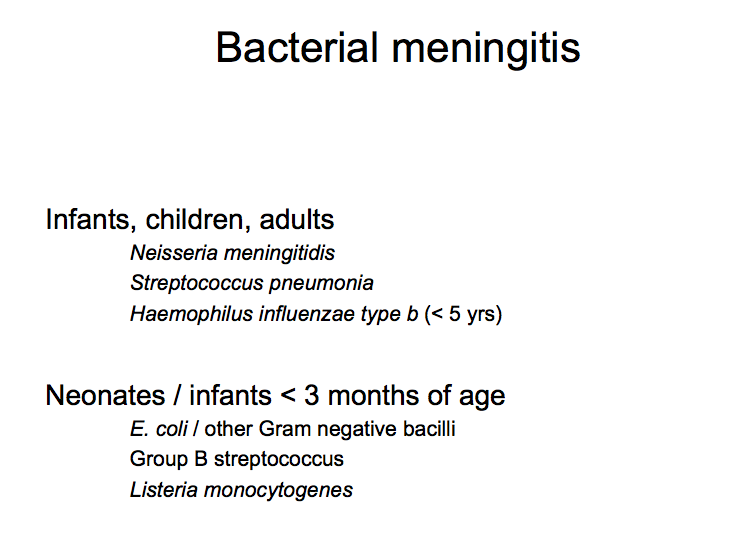
Which three bacteria are the commonest causes of meningitis?
H.influenza
N.meningitidis
S.pneumoniae
Which of the bacterial causes of meningitis is the biggest killer?
In Africa, H.influenza A
Why are H.influenza, N. meningitidis and S.pneumoniae the commonest causes of bacterial meningitis?
These bacteria are best at evading the immune system
Encapsulated with polysaccharide capsule > evade phagocytosis and complement activation
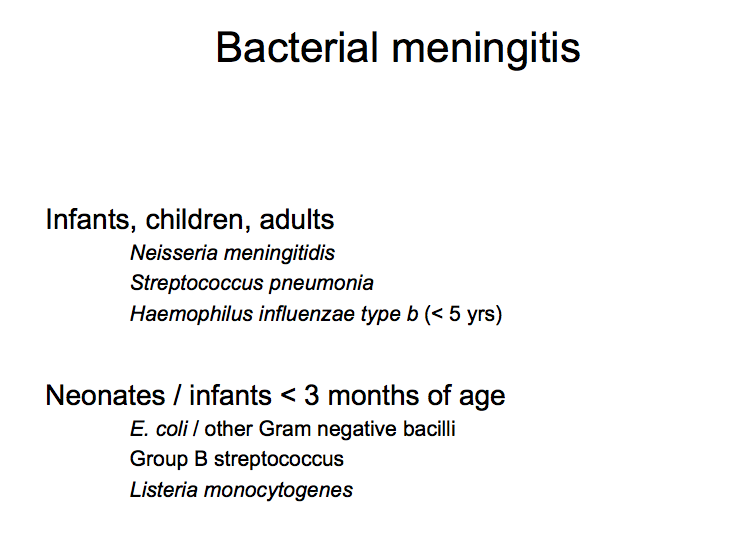
At less than three months of age, which additional causes of meningitis are infants susceptible to?
Those acquired in the birth canal
Group B strep, Listeria and E.coli
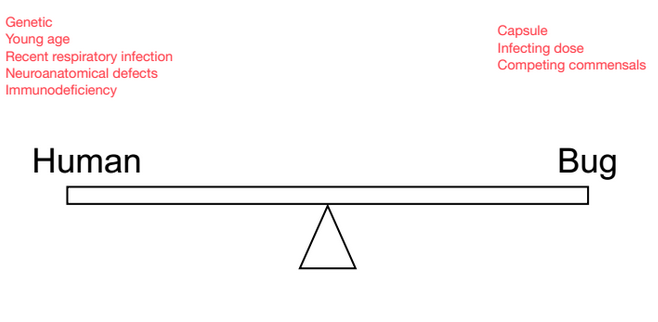
Describe the host and bug factors that determine the likelihoods of infection?
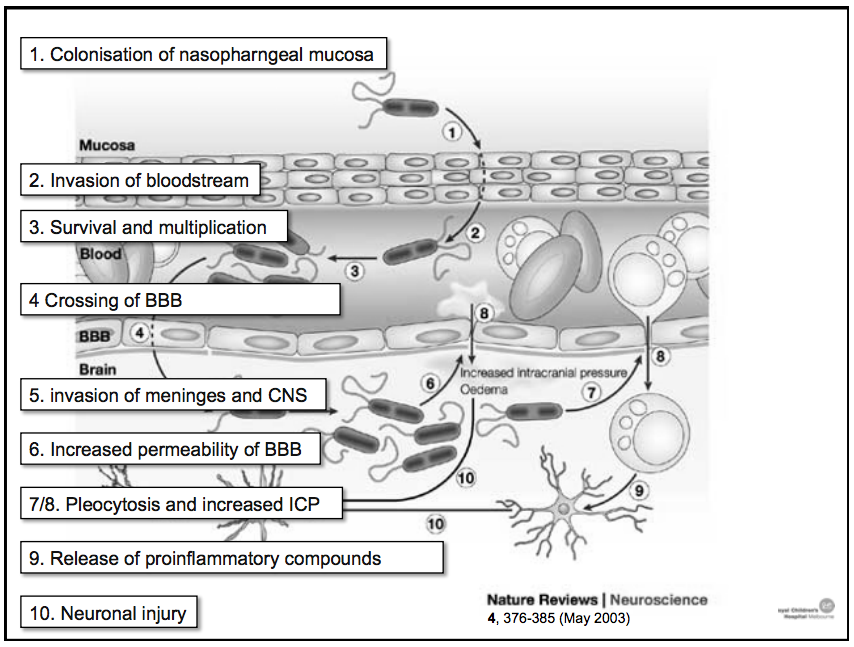
Describe how pathogens are able to penetrate defences and cause CNS infection?
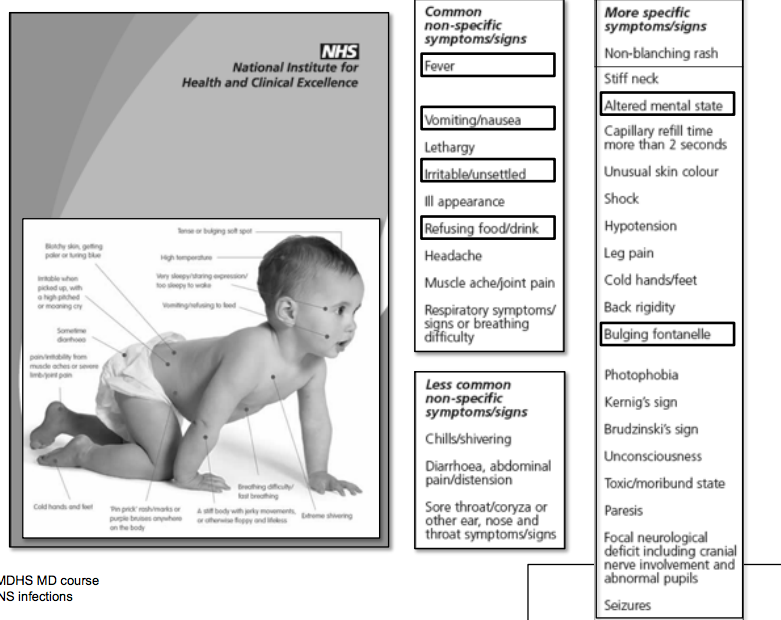
What are the major clinical features of meningitis?
Non-specific: fever, vomiting/nausea, headache, irritable and stop feeding (children)
More specific: stiff neck, altered mental state, bulging fontanelle, photophobia, seizures
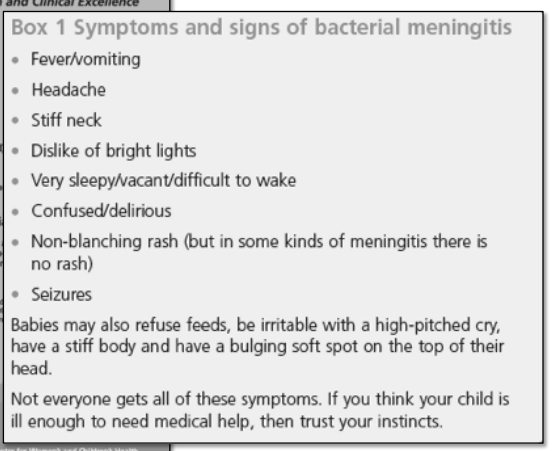
What are the major signs and symptoms of bacterial meningitis?
Fever
Vomiting
Stiff neck
Photophobia
Difficult to wake
Confused
Non-blanching rash
Seizures
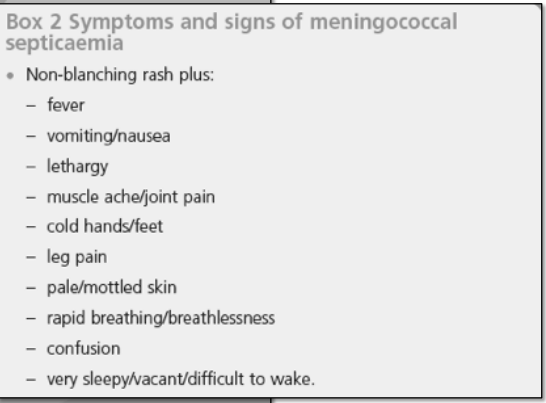
What are the signs and symptoms of meningococcal septicaemia?
Non-blanching rash plus:
Fever
Vomiting
Lethargy
Muscle ache/joint apin
Cold extremities
Leg pain
Pale/mottled skin
Breathlessness
Confusion
Difficult to wake
Which investigations are usually carried out to diagnose meningitis?
CSF
Skin scraping
?Blood
?Neuroimaging
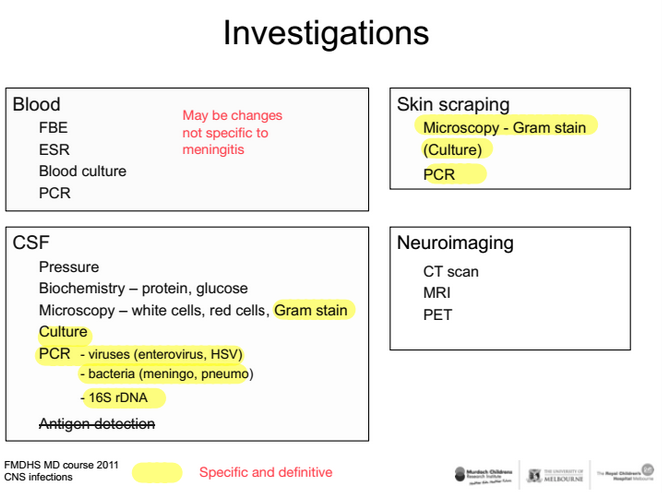
Why don’t blood samples provide a definitive diagnosis for meningitis?
May be changes in blood present that are not specific to meningitis
What are the normal values for CSF?
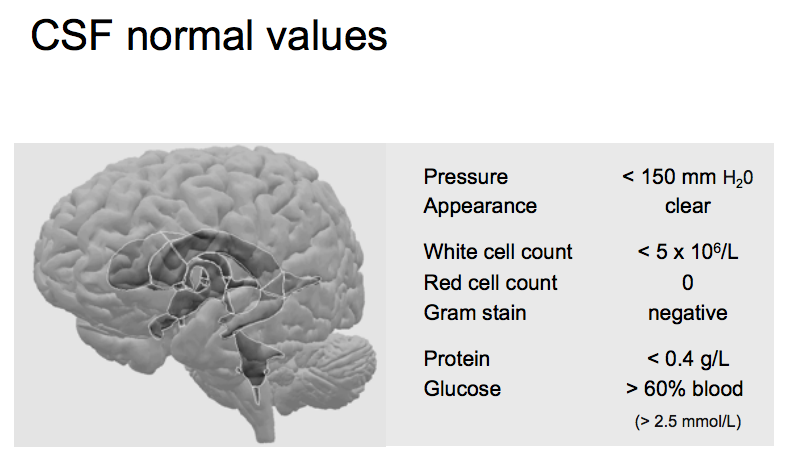
Why can CSF values be unreliable whej diagnosing menigitis?
CSF values differ with age, and meningitis is predominately a paediatric disease
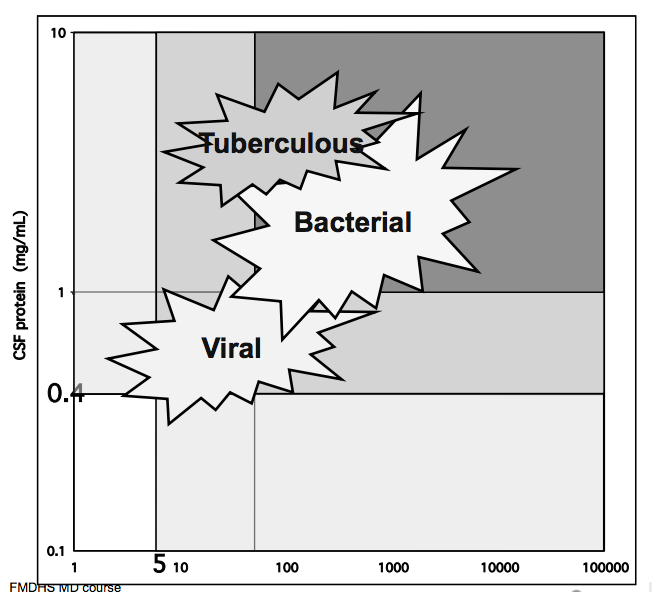
Describe the CSF values for viral, bacterial and tuberculous meningitis?
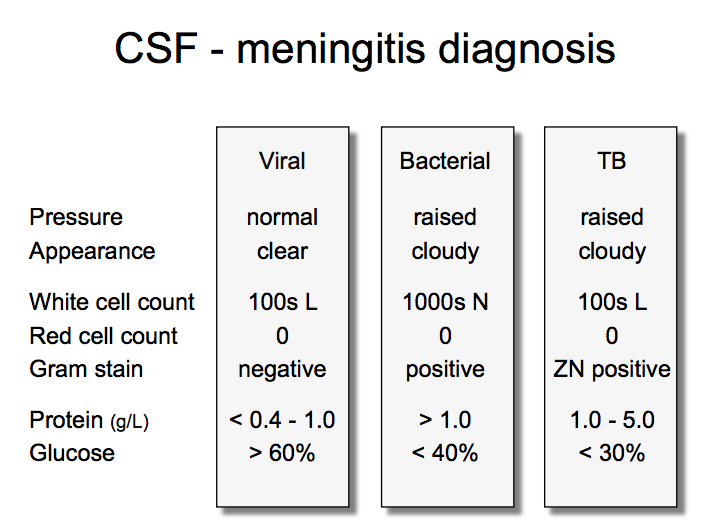
Describe viral, bacterial and tuberculous meningitis in terms of protein and white cell count in the CSF?
Viral: normal-high protein, normal-high white cells
Bacterial: high protein, very high white cells
Tuberculous: very high protein, high white cells
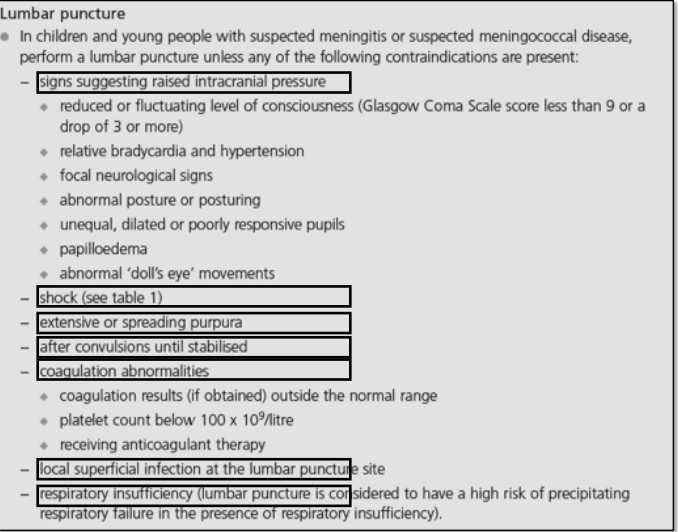
What are the major contraindications for a lumbar puncture?
Raised ICP
Shock
Extensive purpura
Unstable convulsions
Coagulation abnormalities
Loacl superficial infection
Respiratory insufficiency
Is CSF that is normal in appearrance necessarily normal?
No
Need large cell change to change appearance of CSF
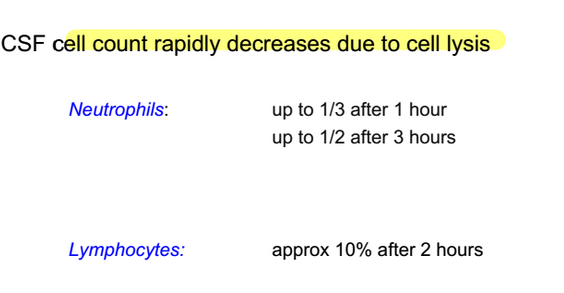
Why is delay in CSF analysis a problem?
CSF cell count rapidly declines due to cell lysis
Unreliable if not measured immediately


-
General structure of the nervous system65
-
Cells of the CNS64
-
Skull anatomy57
-
Chemical transmission in the CNS42
-
Introduction to cognition and emotion45
-
Regulating neuronal excitability51
-
Development of the nervous system50
-
Cranial cavity47
-
Traumatic head and spinal injury45
-
Peripheral sensory mechanisms41
-
Central somatosensory pathways34
-
Functional organisation of spinal cord44
-
Face, scalp and parotid43
-
Overview of brainstem organisation29
-
Neural regeneration33
-
Cranial Nerves54
-
Transmitters and receptors30
-
Prefrontal cortex and executive functioning27
-
Pain32
-
Orbit and eyes52
-
Retina42
-
Imaging of CNS23
-
Autonomic nervous system36
-
Visual pathway23
-
Self non-self discrimination39
-
Ear and auditory tube37
-
CNS infections - cellular pathogens33
-
Eye and head movements28
-
Disorders of language17
-
Higher visual processing30
-
Locomotion and posture33
-
Regulating dopamine levels33
-
Motor cortex26
-
Circulation of the CNS25
-
Hearing38
-
Basal ganglia and cerebellum26
-
Stroke42
-
Nasal cavity and nasopharynx28
-
Memory disorders34
-
DNA testing in diagnosis of neurological disorders30
-
Cellular basis of epilepsy50
-
Cellular basis of behavioural illness22
-
Learning and memory16
-
Introduction to psychological development20
-
Oral cavity and oropharynx36
-
Drugs of dependence and antidepressants44
-
Ageing and frailty21
-
Larynx and laryngopharynx27
-
Viruses affecting the CNS58
-
Clinical presentation of cognitive disorders13
-
Pathogenesis of dementia27



