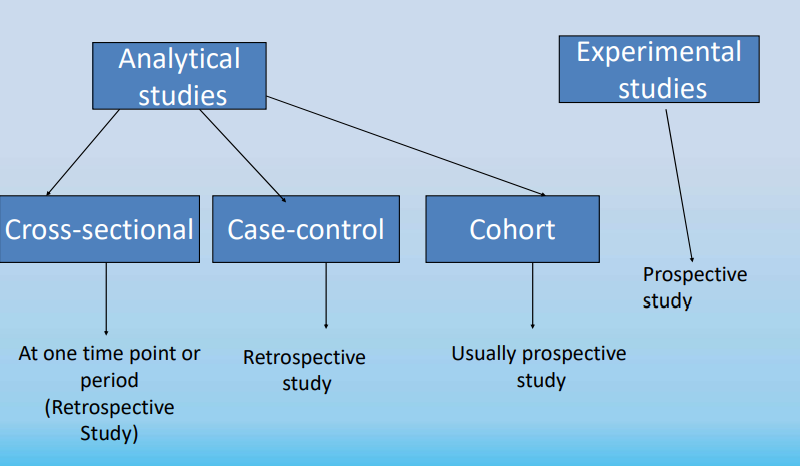
Epidemiologic study
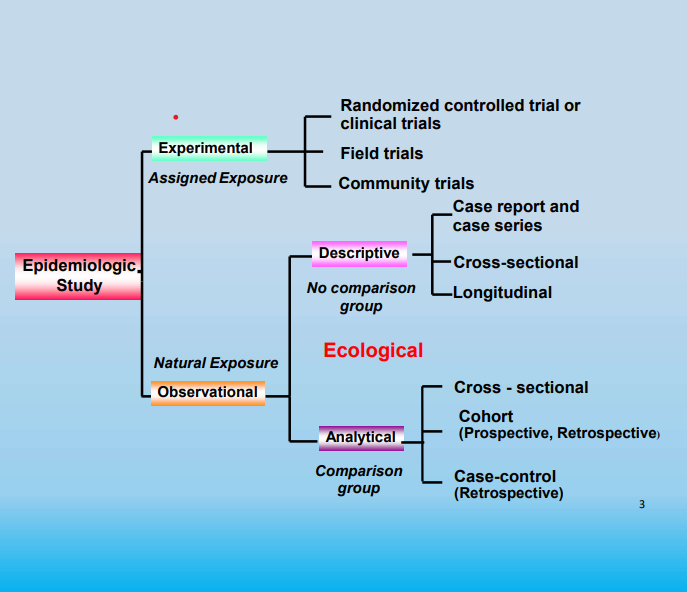
Types of cross-sectional study
- )Descriptive cross-sectional study
- )Analytic cross-sectional study
Descriptive cross-sectional study
Prevalence
Analytic cross-sectional study
Associated factors
Descriptive cross-sectional study
Determine the magnitude & distribution of disease within a population by person, place, & time:
A.)What
B.)Who
C.)Where
D.)When
Disease frequency
Descriptive cross-sectional study
Single examination OR cross section of the population at 1 point in time
Snap shot
Prevalence survey
Designed to determine “What is happening right now?”
Descriptive cross-sectional study
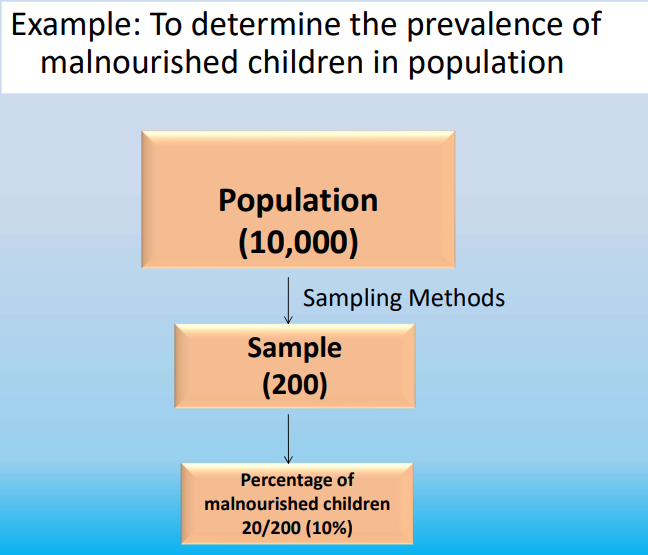
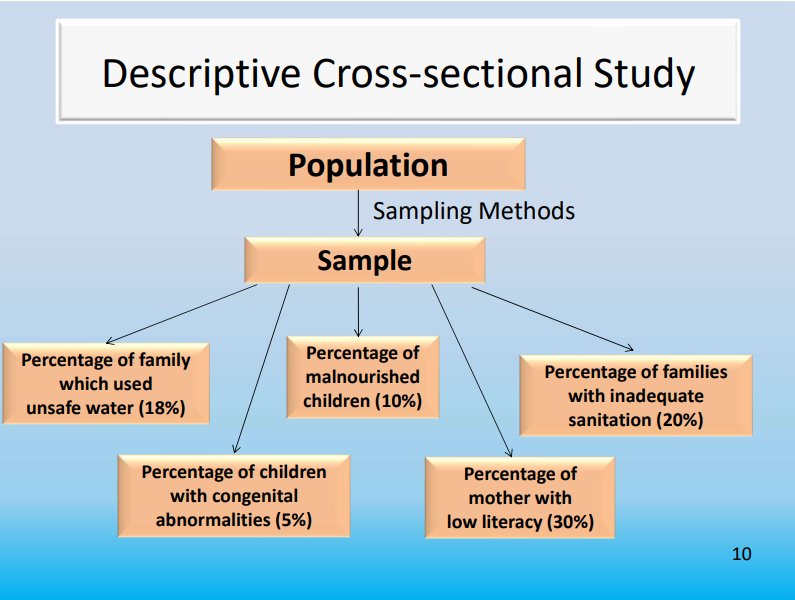
Example: To determine the prevalence of manourished children in population
(General idea of descriptive cross-sectional studies)
Descriptive cross-sectional study
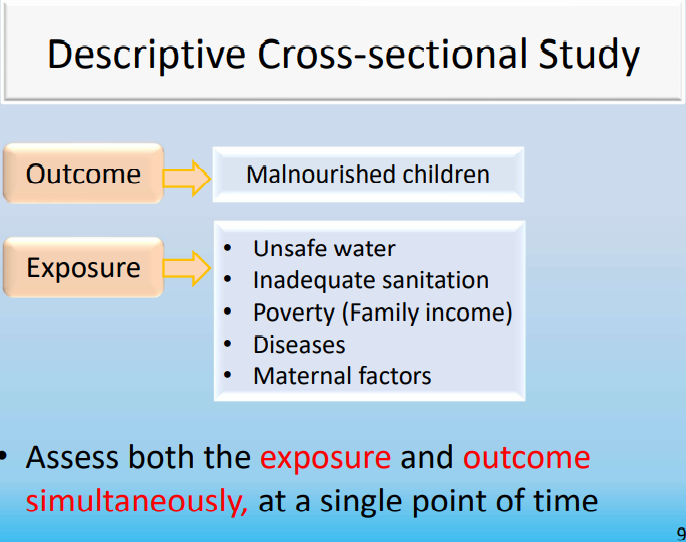
Assess BOTH the EXPOSURE & OUTCOME SIMULTANEOUSLY, at a SINGLE POINT OF TIME
Sometimes, MULTIPLE ASSOCIATED FACTORS/EXPOSURES & OUTCOMES can also be collected at a SINGLE POINT OF TIME
- Malnourished children are measured according to their weight, height, head circumference & BMI
- Diseases are checked with previous & current medical report
- Maternal factors are measured according to the maternal education level
Descriptive cross-sectional study
- Sample from the population selected is analysed as a whole
Descriptive cross-sectional study
A population is defined as the presence OR absence of exposure and the presence OR absence of disease for each individual is determined at the same time; but not compared as they are all considered as the same whole group
- Population indicates children, adults or both but in this case it is children & mother
Calculates prevalence
There are 2 types of Prevalence study
- )Point Prevalence
- )Period Prevalence
1.)Point Prevalence
Prevalence rate at 1 point in time
Number of all current cases (old+new) of a disease at 1 point in time in a defined population
Formula:
Point Prevalence = Number of all current cases (old+new) of a disease at a given point in time / Estimated population at the same point in time * 100
(Which means that at that time of data collection, they have that specific condition)
2.) Period Prevalence
Prevalence rate at over a period of time
Frequency of all current cases (old+new) existing during defined period of time in a defined population
Formula = Number of existing cases (old+new) of a disease during a given period of time / Total population at start of the study * 100
(Eg: Did you have any mammogram over the past 2 years?)
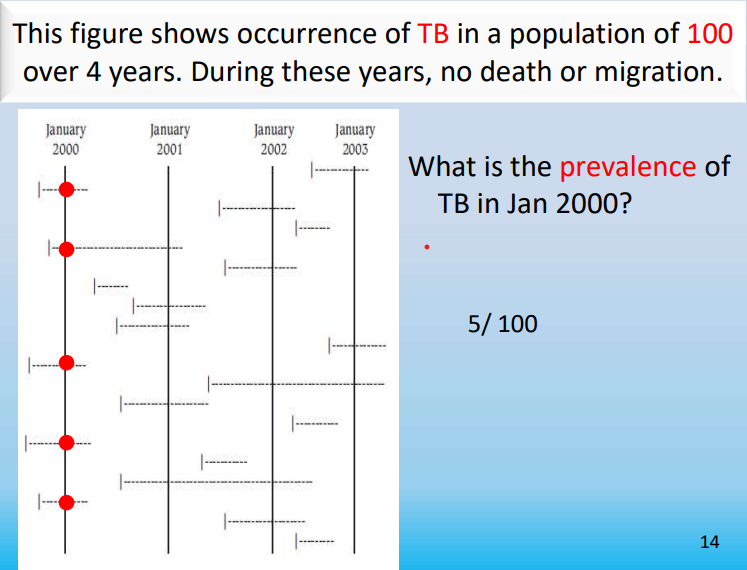
This figure shows occurrence of TB in a population of 100 over 4 years. During these years, no death or migration has occurred.
What is the prevalence of TB in Jan 2000? [Point Prevalence]
5 [Only in January] / 100 [Total population]
(Each horizontal line represents 1 patient)
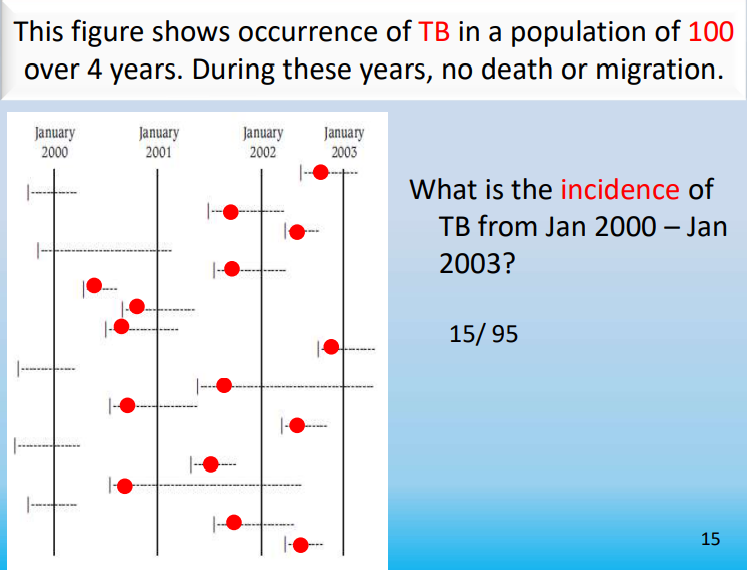
This figure shows occurrence of TB in a population of 100 over 4 years. During these years, no death or migration has occurred.
What is the incidence of TB from Jan 2000 - Jan 2003?
(Incidence means remove all the old cases, involve only the new cases)
15 [New cases only] / 95 [Cut out 5 from 100, which is the old cases from the total population as the current population has to be free of the disease]
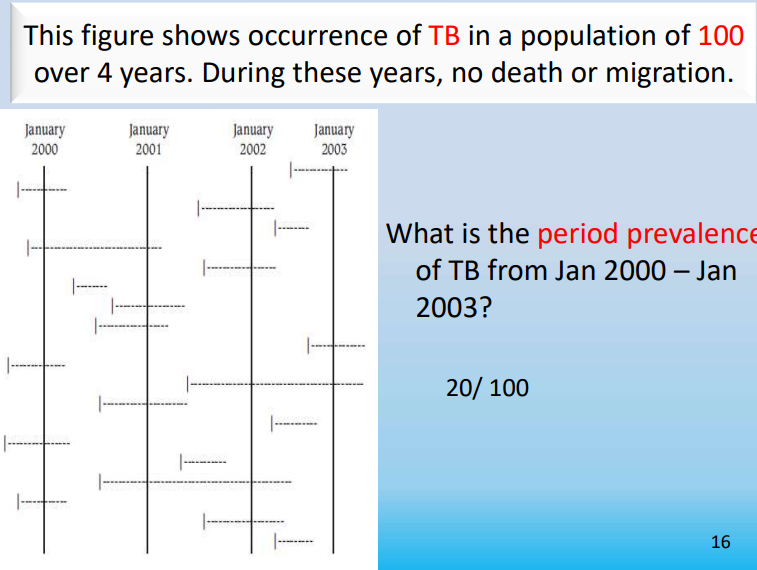
This figure shows occurrence of TB in a population of 100 over 4 years. During these years, no death or migration has occurred.
What is the period prevalence of TB from Jan 2000 - Jan 2003?
(Prevalence means include all the old+new cases)
20 [Include old+new cases] / 100 [Total population]
In conclusion, do take note that
- ) Prevalence = Old + new cases / Total population
- ) Incidence = New cases / Total population [Free from outcome and / or disease]
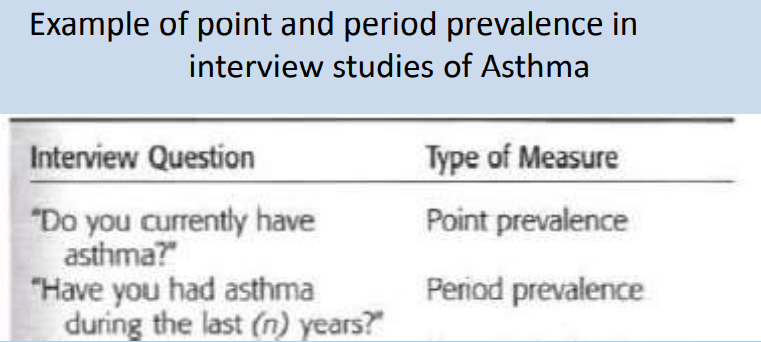
An example of point & period prevalence in interview studies of Asthma
Analytic cross-sectional study
Analytic cross-sectional study is defined as a study that examines the relationship between diseases ( or other health related characteristics ) and other variables of interest as they exist in a defined population at 1 particular time
( Eg: Why are these variable related & how does it affect others? )
Analytic cross-sectional study
Simplest form in observational analytic studies
Prevalence study
Single examination OR cross section of the population at one point in time
Snap shot
A population is defined as the presence OR absence of exposure & the presence & absence of diseases for each individual is determined at the same time and compared
Useful for chronic diseases rather than short-lived diseases
Note: Most cross-sectional studies are prevalence studies
Example: To determine the relationship between Osteoarthritis (OA) & Obesity in Region A
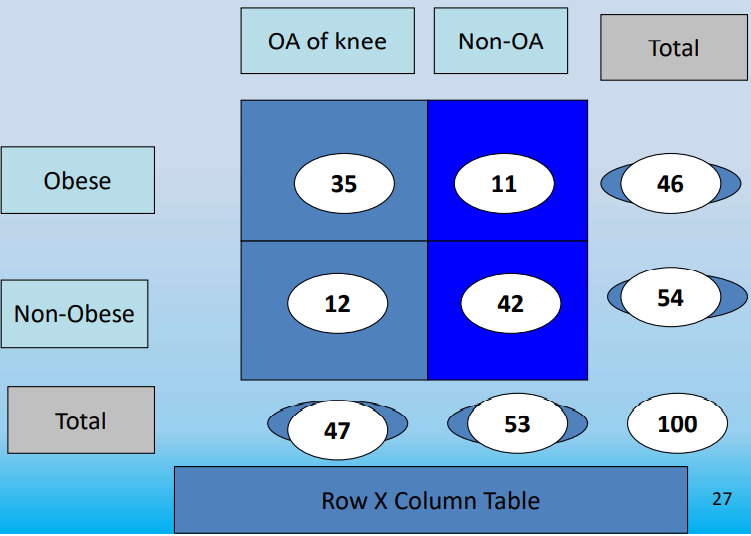
2 * 2 Table is suitable for the most & all types of studies (1 factor in 1 table )
- Obesity is the factor
- Osteoarthritis (OA) is the outcome / disease
Data analysis for analytical cross-sectional study
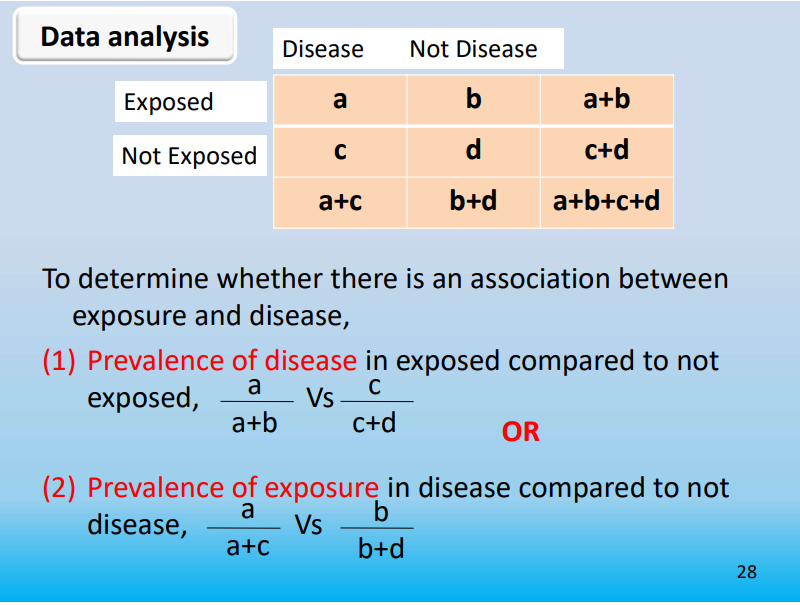
ODD’S RATIO
Further details on Analytical & Experimental Studies
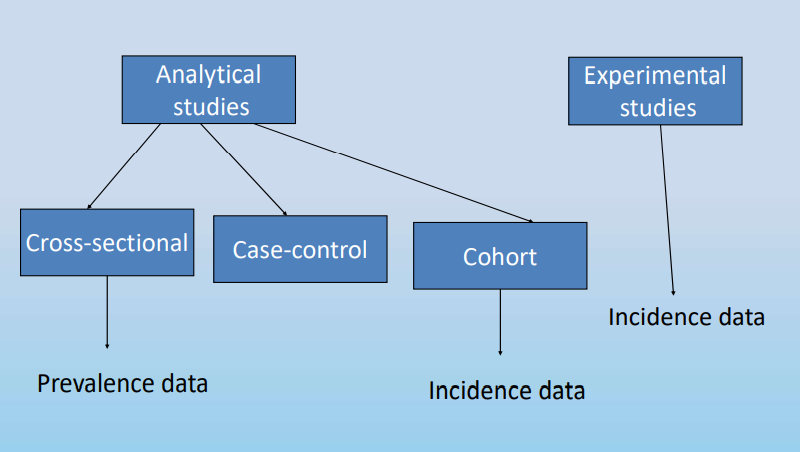
1.) Analytical studies includes 3 types of studies:
A.) Cross-sectional studies
B.) Case-control studies
C.) Cohort studies
- As for cross-sectional studies, prevalence data is collected
- As for case-control studies, no data is collected
- As for cohort studies, incidence data is collected
2. ) As for experimental studies, incidence data is collected
Note: In case-control studies, for instance, smoking which is associated with lung cancer. If the total population is 200, and 100 of them has lung cancer while another 100 is set as control, we cannot conclude that 50% of the whole population is having lung cancer. Thus, case-control studies does not provide any information regarding the population accurately
Further details on Analytical & Experimental Studies
1.) Analytical studies includes 3 types of studies:
A.) Cross-sectional studies
B.) Case-control studies
C.) Cohort studies
- As for cross-sectional studies, at one time point OR period, retrospective study are involved
- As for case-control studies, retrospective study are involved
- As for cohort studies, usually prospective study are involved
2. ) As for experimental studies, prospective studies are involved
Note: In retrospective studies, ask for further previous history