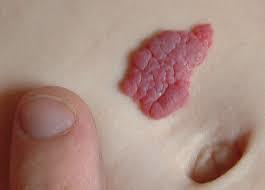
- An 8-year boy presents to the clinic with 8 light-brown, oval macule lesions on his skin. One of those lesion measures 1.6 cm.
What is the child at risk for?
a. Normal finding
b. Neurofibromatosis
c. Melanoma
d. Tinea versicolor
b. Neurofibromatosis
Rationale: Described above is Café au Lait Macule. If a patient has 6 or more or larger than 1.5 cm the patient is at high risk for Neurofibromatosis.
- Isotretinoin (Accutane) is commonly used for the treatment of severe cystic acne that has not responded to standard treatment.
Which of the following considerations is not true for prescribing Isotretinoin?
a. Isotretinoin can be prescribed by any healthcare provider.
b. Isotretinoin is a category X drug and requires 2 forms of contraception, one of which can be abstinence.
c. Before use of Isotretinoin, the patient must sign an informed consent and become enrolled in a monitoring program called iPledge.
d. If a patient’s acne relapses on Isotretinoin, then they may complete a second round of the therapy.
a. Isotretinoin can be prescribed by any healthcare provider.
Rationale: The correct answer is A. Isotretinoin (Accutane) can only be prescribed by providers who are registered with the iPledge program. Providers must be aware of all the potential serious side effects and monitoring that is required for this treatment.
- A 1-month-old female presents to your clinic with her mother for a well child check. The mother reports a bright red, rubbery appearing bump that is located on her daughter’s neck. She says that it started out as a flat red area, but now it has grown and is sticking out. This most likely represents which type of birthmark:
- Mongolian spot
- Port-wine stain
- Hemangioma
- Melanocytic nevi
c. Hemangioma
Rationale: Hemangiomas are often present at birth as a blanched area on the skin, then within a few weeks to a month starts to turn into a vascular, red, rubbery nodule.
Mongolian spots are usually found on the low back near the pelvis and are a dark blue/black. Port-wine stains are a darker red and are flat.
Melanocytic nevi are a very dark brown and are flatter than hemangiomas.
- You are seeing a 6-year-old male who was brought in by his mother. The mother reports they recently took a family vacation last week and stayed in a few different hotels. He developed significant itching and a rash the day of returning home. He is noted to continuously scratch during the visit. The father and older sister also have a similar rash that developed at the same time. On exam, you note linear burrows around his wrists, ankles, in the webbing of his fingers, and axillary folds with excoriations present. There is no facial involvement. He has never had anything like this before. The most likely diagnosis would be:
- Atopic Dermatitis
- Impetigo
- Molluscum Contagiosum
- Scabies
d. Scabies
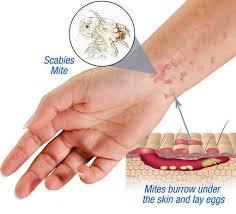
Rationale: Scabies classically presents with linear burrows at the wrists, ankles, webbing of fingers, areola, axillary folds, and genital area and typically does not involve the face except in infants. Excoriations are also a common finding with this. The history of recently travel and other family members with similar presentation also supports scabies as the leading choice.
All other choices are commonly occurring rashes in pediatrics but have different presentations.
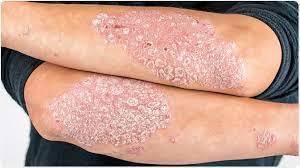
- A 16- year-old female presents to clinic accompanied by her mother. She has a rash that appears as erythematous plaques with thick, white, silvery overlying scales on her elbows, knees, and umbilicus. She reports this has been going on for about 2 years and tends to come and go. The mother reports her father has psoriasis. The patient is not on any medications and she is not currently treating her rash with anything. She has tried various moisturizers in the past but has never had a prescription to treat this. She weighs 130 pounds and has no allergies. You diagnose her with psoriasis with body surface area involvement less than 10%. Which is the best option as first line therapy?
- Ketoconazole (Nizoral) 2% cream
- Clobetasol (Temovate) 0.05% ointment
- Over the counter hydrocortisone (Cortizone-10) 1% cream
- Oral prednisone 40 mg x 3 days, 30 mg x 3 days, 20 mg x 3 days, 10 mg x 3 days
b. Clobetasol (Temovate) 0.05% ointment
Rationale: Potent topical corticosteroids like clobetasol are first line treatment for psoriasis. This is needed to penetrate through the plaques which occur because of epidermal cell proliferation beyond normal turnover.
Ketoconazole is not a topical steroid.
Hydrocortisone 1% is a topical steroid but is low potency.
Systemic steroids like prednisone can cause severe rebound in psoriasis and are not appropriate
- A 3-year-old-boy presents to clinic with his mother with honey-colored crusted sores around his mouth and nose. The mother states her son started attending daycare a couple of weeks ago and noticed the sores starting to develop earlier this week. Which highly contagious childhood illness do you suspect?
- Impetigo
- Varicella
- Herpes Simplex
- Molluscum contagiosum
a. Impetigo
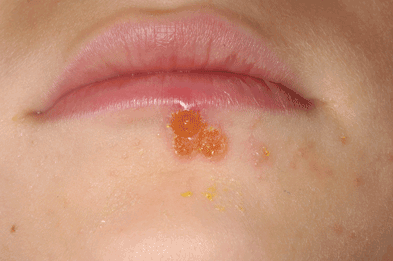
Rationale: Macules, vesicles, pustules, that are often honey-colored and crust over are the tell-tale sign of impetigo.
This highly contagious infection is caused by staphylococcus and streptococci and is common in infants and children as it is spread by skin-to-skin contact.
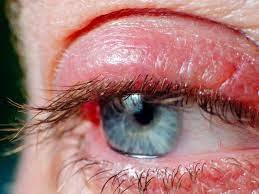
- Blepharitis that occurs in children has a strong correlation with which disease?
- Rosacea
- Eczema
- Psoriasis
- Pityriasis rosea
a. Rosacea
Rationale: Blepharitis is an inflammatory condition that effects the eyelids, usually caused by an overgrowth of bacteria, specifically staphylococci.
Meibomian glandular dysfunction is another cause of blepharitis, which is strongly correlated with rosacea.
Symptoms of blepharitis include redness, tearing, photophobia, and a foreign body sensation that feels dry and gritty.
Treatment usually consists of good eyelid hygiene and washing the eyelids with baby shampoo.
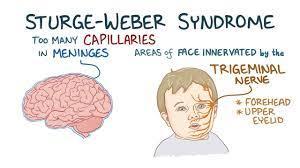
- A child with Sturge-Weber Syndrome (SWS) will most likely have what finding on the physical exam?
- Port wine nevus on the face
- Mongolian spot
- Allergic shiners
- Retractions
a. Port wine nevus on the face
Rationale: Port wine nevus on the face is correct and usually a feature of SWS.
Mongolian spot is incorrect and is a benign darkening of the skin (most often on the buttocks) found in Asian and African descent infants. This is not associated with SWS.
Allergic shiners are dark areas under the eyes usually seen with allergic rhinitis.
Retractions is incorrect as this indicates an acute respiratory issue.
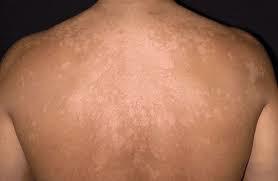
- What skin disorder is seen with short hyphae and yeast on microscopic examination of scales?
- Tinea Versicolor
- Pityriasis Rosea
- Psoriasis
- Atopic Dermatitis
a. Tinea Versicolor
Rationale: KOH test will show large thick-walled spores with blunt hyphae. Yeast is best seen under microscopic examination; cultures are not suggested for they are not useful in diagnosing this yeast disorder.
Tinea versicolor is typically a recurrent problem due to yeast that is a colonizer to all humans making the rate of relapse likely after treatment is completed.
- A mother brings her two-month-old to your clinic to establish care after a recent move. She asks you about a raised red “mole-like” spot on the infant’s forehead that has grown in size over the last few weeks. You determine it is most likely a hemangioma. The mother then asks what the treatment is. What would be an appropriate response?
- Watchful approach is appropriate as these lesions typically fade as the child ages
- Oral steroids can be taken to shrink the size of the lesion
- Topical antibiotics to treat the infection causing the redness
- Surgical intervention to remove the lesion
a.Watchful approach is appropriate as these lesions typically fade as the child ages
Rationale: A hemangioma is a red, rubbery nodule that is becomes noticeable around 2-4 weeks of age and rapidly grows in size within the first 5-7 weeks of life. Growth stabilizes around 9-12 months of age and reaches maximal regression between ages 5-9 years.
Hemangiomas are typically benign tumors of capillary endothelial cells that are superficial, deep or a mixture of both. They can be anywhere on the body and size greatly varies. The term “strawberry” is widely used but can be misleading and should not be used to describe the nodules.
- At the 6-month checkup a mother is inquiring about a bulge in her son’s right groin. She states it comes and goes and seems to disappear when he is fussing. The bulge is non tender when palpated and has a ‘silk glove’ feel. The findings are most consistent with which type of hernia?
- hiatal
- umbilical
- inguinal
- paraoesophageal
c. Inguinal
Rationale: Hiatal and paraoesophageal hernias are disorders of the proximal end of the GI tract and are associated with dysphagia, vomiting, heartburn, regurgitation, failure to thrive, and pulmonary infections.
Umbilical hernias occur more frequent in full term African American infants and most spontaneous regress by age 4, location is as suggested by umbilicus.
Inguinal hernias are most common if male (9:1), preterm, and have a ‘silk glove’ feel when the area is rubbed together and located well below the umbilicus.
- A 62-year-old female with osteoarthritis of her left knee is prescribed meloxicam (Mobic) 7.5mg PO daily for pain; when reviewing the patient’s history and developing the patient’s treatment plan, the nurse practitioner knows to assess for:
- History of GERD and advice the patient to eat bland foods to prevent GI complications
- History of peptic ulcer disease and prescribe a PPI along with an NSAID
- The patient’s pain level and start her on the highest dose of NSAID to knock out the patient’s pain
- History of peptic ulcer disease and advice the patient to take meloxicam on an empty stomach
b. History of peptic ulcer disease and prescribe a PPI along with an NSAID
Rationale: H Pylori infection and NSAID use are the two major causes of peptic ulcer disease.
Risk factors that increase incident of peptic ulcer disease in patients taking NSAIDs includes previous PUD or GI bleed, age over 65 years.
Concomitant use of a daily proton pump inhibitor, such as omeprazole, with NSAIDs is recommended to decrease the risk of PUD.
Meloxicam: Nonsteroidal anti-inflammatory drug. It can treat osteoarthritis (OA) and rheumatoid arthritis (RA).
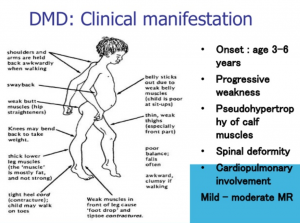
- You are evaluating a 4-year-old child for possible Duchenne muscular dystrophy (DMD). All of the following are characteristic of DMD except:
- Delayed motor milestones
- Excessive lumbar lordosis
- Increased gastrointestinal motility
- Walking on toes
c. Increased gastrointestinal motility
Rationale- Delayed gastrointestinal motility is a consequence of DMD that can induce debilitating constipation, which can limit patients’ mobility, cause pain, and lower their quality of life.
What are the key characteristics of Duchenne muscular dystrophy?
Duchenne Muscular Dystrophy
- Muscle weakness that begins in the hips, pelvis, and legs.
- Difficulty standing.
- Trouble learning to sit independently and walk.
- Unsteady, waddling gait.
- Walking on the toes or balls of the feet.
- Clumsiness, falling often.
- Trouble climbing stairs.
- Difficulty rising from a lying or sitting position
- Your next patient is a 60-year-old female. At the patient’s yearly wellness exam, she mentions that her hands and fingers have started having pain. This pain is usually in the mornings and improve with increased movement as the day goes on. She can hardly open her bottle of water when the pain is more severe, and the joints in her fingers appear swollen. She also says as the months go by, she feels her pain is steadily getting worse. What type of arthritis does the advanced practice nurse suspect?
- Rheumatoid Arthritis
- Old Age
- Psoriatic Arthritis
- Gouty Arthritis
a. Rheumatoid Arthritis
Rational: Rheumatoid arthritis usually has a slow onset and worsens over time. The pain is most often worse in the mornings. It most often affects the joints of the fingers.
Signs and symptoms of RA include:
- Pain or aching in more than one joint.
- Stiffness in more than one joint.
- Tenderness and swelling in more than one joint.
- The same symptoms on both sides of the body (such as in both hands or both knees)
- Weight loss.
- Fever.
- Fatigue or tiredness.
- Weakness.
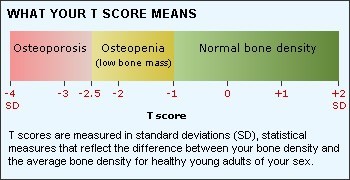
- A bone mineral density T score of -1.5 indicates:
- Osteoporosis
- Normal T score
- Osteopenia
- Severe osteoporosis
c. Osteopenia
Rationale: It is recommended to screening all women over the age of 65 for bone mineral density.
The T score represents the number of standard deviations from the norm.
A normal score is +1 to -1.
Scores between -1.0 and -2.5 indicate osteopenia.
Scores between -2.5 or lower indicate osteoporosis.
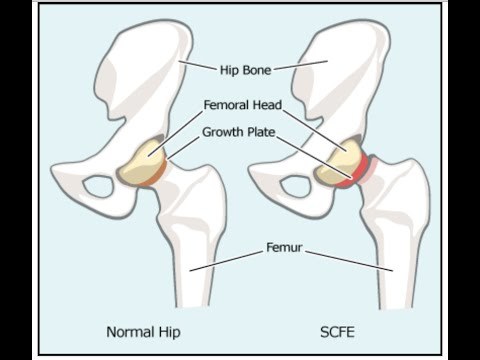
- Which of the following statements about slipped capital femoral epiphysis (SCFE) is TRUE?
- SCFE is caused by the displacement of the distal femoral epiphysis in relation to a disruption in the growth plate.
- SCFE is mostly seen in underweight, adolescent females.
- Initial treatment of SCFE is non-weight bearing status with the use of crutches and a referral to an orthopedic surgeon.
- Upon physical examination, the hip reveals a limited external rotation.
c. Initial treatment of SCFE is non-weight bearing status with the use of crutches and a referral to an orthopedic surgeon.
Rationale: Slipped capital femoral epiphysis (SCFE) refers to the displacement of the proximal femoral epiphysis due to the disturbance of the growth plate.
This condition is usually seen in teenage, overweight males.
It occurs when the proximal femoral physis is strained or resistance to shear is reduced.
Physical inspection regularly reveals a weakness of internal rotation of the hip.
Initial management consists of making the patients use crutches and observe non-weight bearing status. Immediate referral to an orthopedic surgeon is also warranted.
Typically, SCFE occurs in overweight children between 11 and 16 years old and is more common in boys than girls. SCFE occurs more frequently in African Americans and Hispanic children than Caucasians. It is also more likely to occur in children going through rapid growth spurts.
Symptoms of SCFE include pain in your teen’s groin, knee or hip; walking with a limp and inability to bear weight on the leg. Surgery is needed.
- The management of scoliosis depends on all of the following EXCEPT:
- Level of skeletal maturity
- Risk of disease progression
- Serial spinal x-rays, bracing, and frequent observation rather than surgery.
- Magnitude of lateral curvature of the spine measured by the Cobb angle
c. Serial spinal x-rays, bracing, and frequent observation rather than surgery
Rationale: Scoliosis refers to a lateral curvature of the spine that typically affects adolescent girls.
Treatment of scoliosis depends on the degree of curvature of the spine that can be measured by the Cobb angle or a standing PA x-ray.
Curvatures less than 20 degrees typically do not need management unless they show progression.
Bracing is indicated for curvatures of 20-40 degrees in a skeletally immature child.
Bracing will not help curvatures greater than 40 degrees, and curvatures greater than 70 degrees will most likely progress.
Thus, surgical correction is indicated for curvatures between 40-60 degrees.
- A patient presents to clinic with weakness and pain with active range of motion to the right shoulder. The nurse practitioner knows that the recommended diagnostic test for visualizing a rotator cuff tear is:
- A second X-ray
- MRI
- Ultrasound
- CT scan
b. MRI
Rationale: Although ultrasounds are sometimes helpful, an MRI is the best way to visualize a rotator cuff.
An x-ray would not yield sufficient imaging for this type of injury. X-rays are more helpful in visualizing bones.
- A patient presents to clinic with constant, dull pain to the knee. The x-ray reveals advanced osteoarthritis. All of the following are conservative treatments of osteoarthritis of the knee except:
- Activity modification
- Swimming
- Weight loss
- Running on a treadmill
d. Running on a treadmill
Rationale: Treating symptoms along with lifestyle modifications are helpful in improving quality of life in osteoarthritis.
Avoiding high impact activity and wearing proper shoes are key components in lessening pain
- What syndrome is caused by ligamentous laxity, joint pain, and swelling occasionally that occurs a few days post increased physical activity?
- Hypermobility syndrome
- Complex regional pain syndrome
- Raynaud phenomenon
- Fibromyalgia syndrome
a. Hypermobility syndrome
Rationale: Laxity causes improper joint alignment during exercise which causes joint pain
Symptoms of joint hypermobility syndrome
- pain and stiffness in the joints and muscles – particularly towards the end of the day and after physical activity.
- clicking joints.
- back and neck pain.
- fatigue (extreme tiredness)
- night pains – which can disrupt your sleep.
- poor co-ordination.



