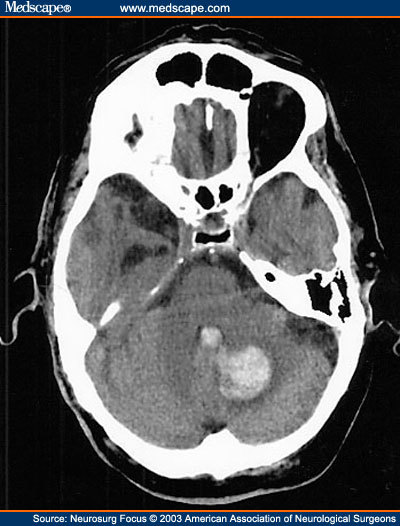
Which intra-cranial lesions are associated with marked surrounding oedema?
Metastasis Abscess Glioblastoma multiforme Radiation necrosis Hematoma (mild)
What is the DDx for a haemorrhagic tumour?

Glioblastoma multiforme: most common overall Metastasis: second most common overall Renal cell carcinoma Thyroid carcinoma Choriocarcinoma Melanoma Oligodendroglioma: second most common primary tumor
DDx for a calcified glial tumour?
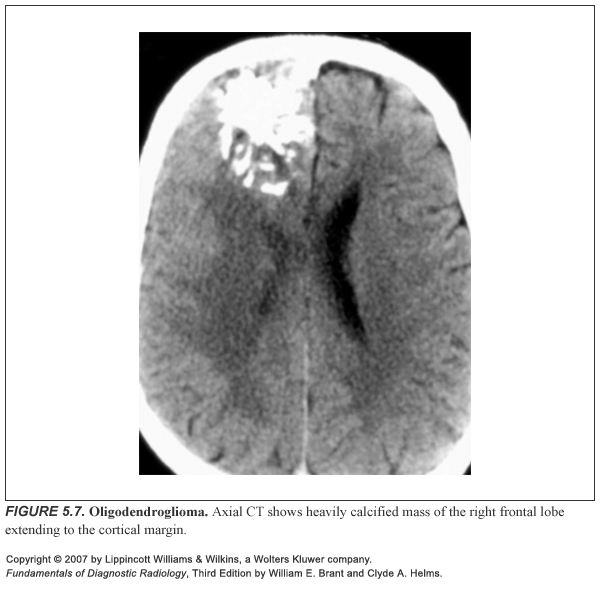
Oligodendroglioma: 75% are Ca++ Ependymoma Astrocytoma (commonest cause, but purely because it is the commonest glial tumour) Glioblastoma multiforme
What primary tumours are associated with a solitary brain met.
1: melanoma 2: lung ca 3: breast ca
DDx for posterior fossa tumour in a child includes?
1: Medulloblastoma 2: Cerebellar astrocytoma 3: Ependymoma 4: Brain stem glioma NB: Haemangioblastoma is the commonest lesion in adults
1: Where do Medulloblastoma’s arise from? 2: How can they be differentiated from an astrocytoma?
1: the Cerebellar vermis 2: They are HYPERdense on an unenhanced CT cf pilocytic astrocytoma which are hypo
What is the management of Medulloblastoma?
- Neurosurgery,
- Chemo and radiotherapy
- MRI of the spine for drop mets.
- ? MR Spectroscopy looking for:
- Elevated choline,
- Reduced NAA,
- Reduced creatine
- Occasionally elevated lipid and lactic acid peaks.
What is the commonest tumour in NF1?
Pilocytic astrocytoma is the most common tumor seen in neurofibromatosis type 1 (NF1) and is present in 15% to 21%.
What is the key imaging fx of a pilocytic astrocytoma?
About 66% are cystlike with an enhancing mural nodule.
DDx for hydrocephalus
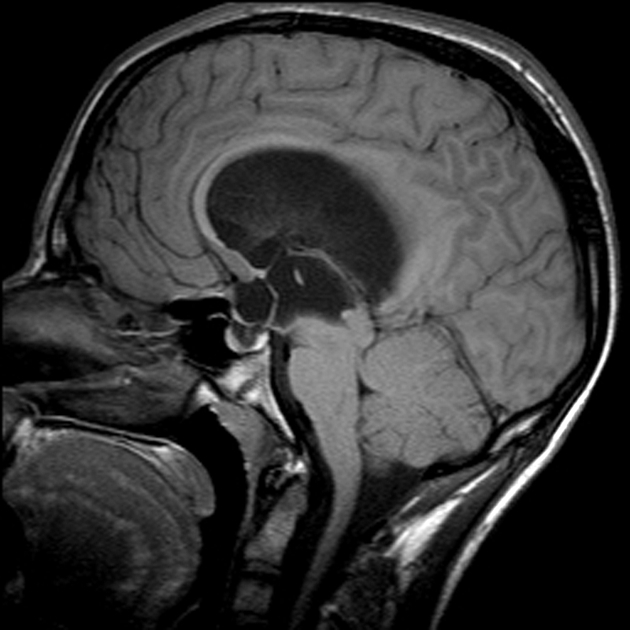
DDx Hydrocephalus
Non-Communicating - Think
- Intraventricular tumours - Ependymoma
- Extraventricular tumours - e.g. colloid cyst, craniopharyngioma; medulloblastoma; haemangioblastoma
- Ventriculitis - leads to encysted CSF collections
- Haemorrhage - clots; delayed adhesive arachnoiditis
Location:
- Foramen of Monro:
- colloid cyst;
- subependymal giant cell astrocytoma
- 3rd ventricle:
- pituitary adenoma;
- craniopharyngioma;
- arachnoid cyst
- Cerebral aqueduct:
- congenital aqueduct stenosis (only 4th vntricle is not dilated - see image);
- pineal tumours
- 4th Ventricle:
- Ependymoma;
- Medulloblastoma
- Metastasis
- Haemangioblastoma
- SAH
Communicating / Extraventricular obstruction
- SAH
- Meningitis
- Malignant - lung, breast
- Infectious
- Granulomatous: TB; Sarcoidosis
- Overproduction of CSF - Choroid plexus papilloma
4.
Which Tumours May Have Ca++?

Tumours with Ca++
- Oligodenroglioma - usu in frontal lobe
- Dysembroplastic neuroepithelial tumour (DNT)
- Meningioma
- Dermoid - may rupture causing chemical meningitis; look for fat droplets
- Central neurocytoma - septum pellucidum
- Mets - adenocarcinoma - breast; gi
- Pineal tumours - germinoma; teratoma
- Choroid plexus papilloma
- Craniopharyngioma
Remember infections:
- TORCH
- Cysticercosis
- TB
Where is the aneurysm likely to be in this patient?
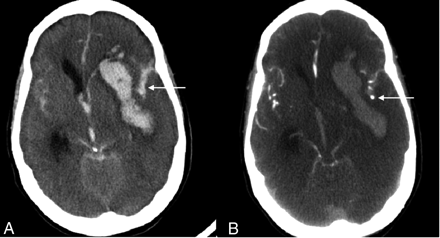
The location of the haemorrhage can help localise the site of the ruptured aneurysm.
Anterior Comm Artery Aneurysm:
- Interhemispheric fissure
- Lateral ventricle
MCA aneurysm: (previous case)
- Sylvian fissure
PCA aneurysm (see below)
- 4th ventricle