How likely is an individual in the US to experience clinical depression at some point in their lifetime?
1/8 chance
“Masked depression”
In general medical settings, many patients with mood disorders present with unexplained somatic complaints, especially pain and insomnia, rather than a clearly stated emotional complaint
Features of depression that are not seen in individuals dealing with external loss
Persistent self-criticism and lowered self-esteem
Depressive bias or negative cognitive bias
Typically, a depressed patient views past events with undue criticism and guilt, feels worthless, and finds the world an unpromising place
The mood disorders consist of ___
The mood disorders consist of the depressive and bipolar disorders
A diagnosis of ___ can be made in the absence of depressive episodes
A diagnosis of bipolar I disorder can be made in the absence of depressive episodes
“Vegetative” symptom
- Loss of apetite
- Insomnia
- Decrease in energy levels
- Decrease in sex drive
Types of insomnia associated with depression
- Sleep-onset insomnia
- Sleep-maintenance insomnia
- Terminal insomnia
While sleep-onset insomnia is common and non-specific, the latter two are classic symptoms of depression.
Atypical vegetative signs
- Sometimes called “reversed” vegetative signs
- 30% of depression patients
- Hypersomnia instead of insomnia
- Increased apetite
Hypersomnia in depression
- More common in:
- Adolescent depression
- Bipolar disorders
- Seasonal affective disorder
Cognitive changes in depression
- Patients may say something along the lines of “I feel as if my mind just isn’t working properly”
- Inability to concentrate on immediate tasks
- Forgetting recent events
- Disorientation to time of day
- Frank confusion - sometimes called “pseudodementia”
- Note that pseudodementia resolves with treatment of the depression
Psychomotor changes in depression
- Usually diminished in depression patients
- Thoughts, speech, and motor movements are often subjectively experienced and objectively observed to be slowed down
- At the extreme, patients can appear mute and virtually immobile
- In contrast, some patients exhibit psychomotor agitation, in which they have rapid, repetitive thoughts and speech and frenzied movements
- unstoppable crying, pacing, or hand wringing may be seen
Persistent Depressive Disorder (aka Dysthymia)
- milder form of depression
- Lasts at least 2 years with little or no remission during that time
- Low mood, lack of energy and interest, low self-esteem, and irritability usually form the clinical picture
- Initial or intermediate insomnia, but rarely ever terminal insomnia
- Psychotic symptoms, such as delusions or hallucinations, are not present
Two “groups” of patients with dysthymia
- Those who have had depressive symptoms since childhood or late adolescence
- Those who appear healthy when young but experience major losses, such as the death of a spouse or child, divorce, financial setback, or medical disability at some point in their adult lives and fall into a chronic state
Premenstrual dysphoric disorder
Markedly depressed mood and anhedonia that present during the last week of the luteal phase, remit within a few days of the follicular phase, and are absent in the week following menses.
The diagnosis of bipolar disorder is made as soon as a patient has ___
The diagnosis of bipolar disorder is made as soon as a patient has one manic episode, even if that person has never had a depressive episode.
Bipolar I
Experience mania and a depressive disorder (although only manic episodes are necessary to establish the diagnosis)
Bipolar II
Experience hypomania and, specifically, major depression
Cyclothymia
Milder illness in which patients have hypomania and mild depressive symptoms that are not sufficiently severe to warrant the diagnosis of major depression.
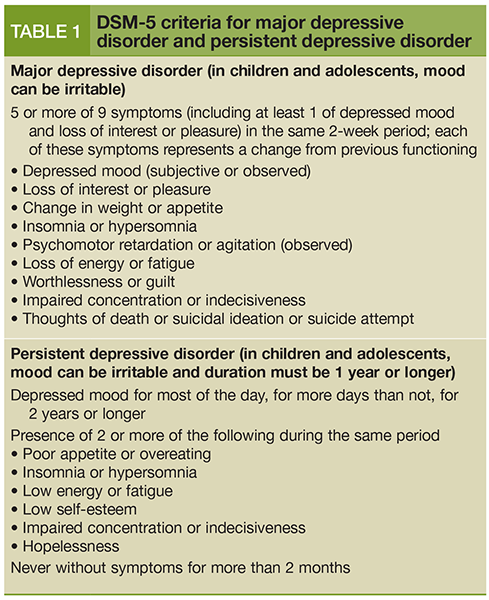
Criteria for a “major depressive episode”
Characteristics of manic episode
Characterized by irritability or abnormal euphoria, and increased goal-directed activity or energy must be present, for one week’s duration (unless the patient requires hospitalization).
Note that people often tend to assocaited euphoria/elevated mood with mania, and this can and does occur, but the feeling of being “uncomfortably wound up” and irritable is what is more commonly described.
Manic elation quickly blends with irritability if their desires are frustrated. Indeed, anger is often the dominant emotion
Features of mania
- Irritability/anger
- Heightened self esteem
- Feeling of being able to do anything, but frustration to any barriers
- Impaired insight (near-delusional, ubiquitous among manic patients)
- Perceived decreased need for sleep (this symptom is specific to bipolar disorder and stimulant use disorder, so clinical suspicion should be high if observed)
- Increased sexual drive and uninhibited social and sexual behavior together with poor judgment may lead to grossly indiscreet behavior
- Cognitive changes: racing thoughts, impulsivity, distractability, difficulty focusing on tasks requiring prolonged attention
Speech changes in mania
One of the first indications that a patient is becoming manic may be a family member’s observation about pressured speech. Typically, they exhibit rapid or pressured speech, frequently interrupt others, and have difficulty listening.
Sequence of thoughts in speech becomes disorganized and illogical, and patients may skip rapidly between topics. Manic patients sometimes exhibit clang associations, when words are used only for their phonetic sound and not their meaning.
Impulsive behavior in manic patients
Many manic patients behave in impulsive ways: spending sprees, extravagant traveling, sexual affairs, and risky business ventures are the hallmarks of their social dysfunction. Catastrophic ruin may result; marriages, jobs, lifetime savings, and reputations may be lost.

-
Basic Neuroanatomy I: The Brain54
-
Headache62
-
Meningitis64
-
Basic Neuroanatomy II: The Spine87
-
Integration I26
-
Intro to Psychiatry25
-
Mood Disorders63
-
Mood Disorders II27
-
The Visual System32
-
Multiple Sclerosis30
-
Cerebral Cortex I and Vascular Territories49
-
Stroke and Intracerebral Hemorrhage46
-
Schizophrenia and Psychosis47
-
Basal Ganglia and Difficulty Walking66
-
Development and Autism58
-
Seizure and Epilepsy54
-
Integration II72
-
Anxiety Disorders and PTSD58
-
Cerebellum and Ataxia48
-
Brainstem and Cranial Nerves64
-
Personality Change70
-
Substance Use Disorders56
-
Eye Movements and Pupillary Reactions57
-
Brainstem Review24
-
Peripheral Nervous System20
-
Weakness30
-
Personality Disorders54
-
Pain6
-
Additional Demyelinating Diseases and Autoimmune Neuropathies14
-
Integration III1



