What can bacteria be classified as medically?
Medically speaking, bacteria can be classified as:
– Frank Pathogens
• Capable of causing disease in any host; always considered a pathogen when isolated
– Opportunistic Pathogens
• Capable of causing disease given the opportunity; often a
commensal and part of the normal host flora, but is capable of causing disease in normally sterile tissues (most pathogens fall into this group)
– Non-pathogens
• However, even weak or non-pathogenic bacteria can cause
disease in hosts with weakened immune systems
What is a frank pathogen?
Capable of causing disease in any host; always considered a pathogen when isolated
What is an opportunistic pathogen?
Capable of causing disease given the opportunity; often a
commensal and part of the normal host flora, but is capable of causing disease in normally sterile tissues (most pathogens fall into this group)
What is a non pathogen?
However, even weak or non-pathogenic bacteria can cause
disease in hosts with weakened immune systems
What is the formula for virulence and resistance?
D= N*V/R
Disease
Number of organisms
Virulence of the organism
Resistance
What is the purpose of artificial classification schemes?
Bacterial classification schemes are artificial in order to:
- speed up the identification process
- identify bacteria using a limited # of characteristics
What is involved in bacterial nomenclature?
Bacterial nomenclature involves use of
- binomial system to assign a genus and species
- specific conventions for naming
- Example: Salmonella cholerasuis
What is bacterial identification normally based on?
- morphological, biochemical and serological “traits”
- other: nucleic acid profile (DNA/RNA)
What are the cell arrangements/ division planes?
- Diplococci
- Streptococci
- Tetrad
- Sarcinae
- Staphylococcus
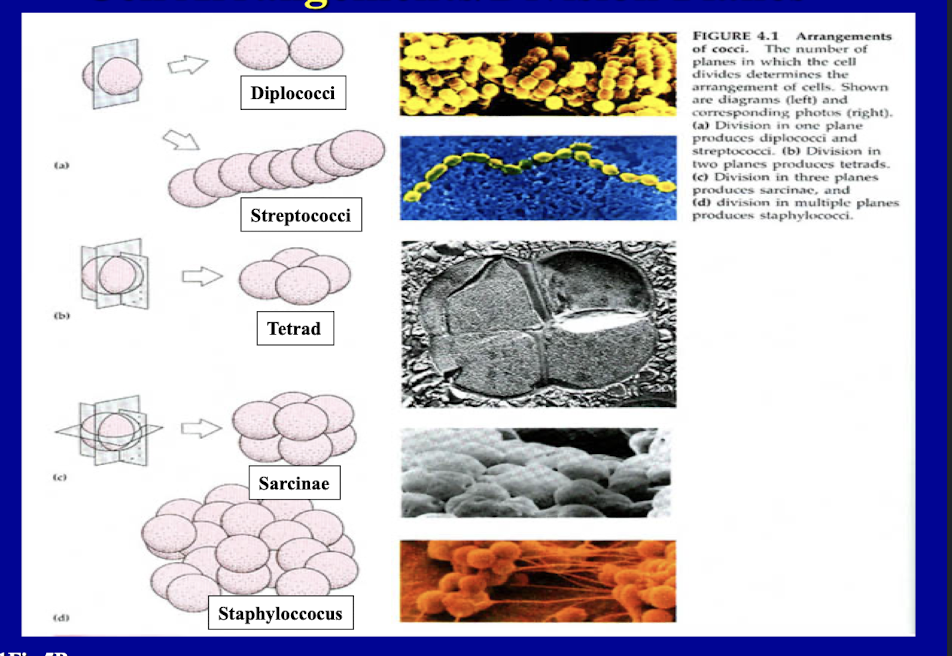
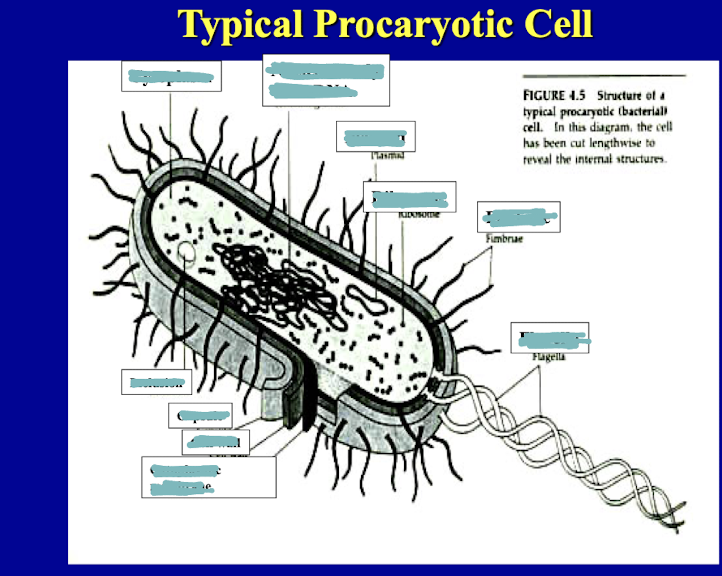
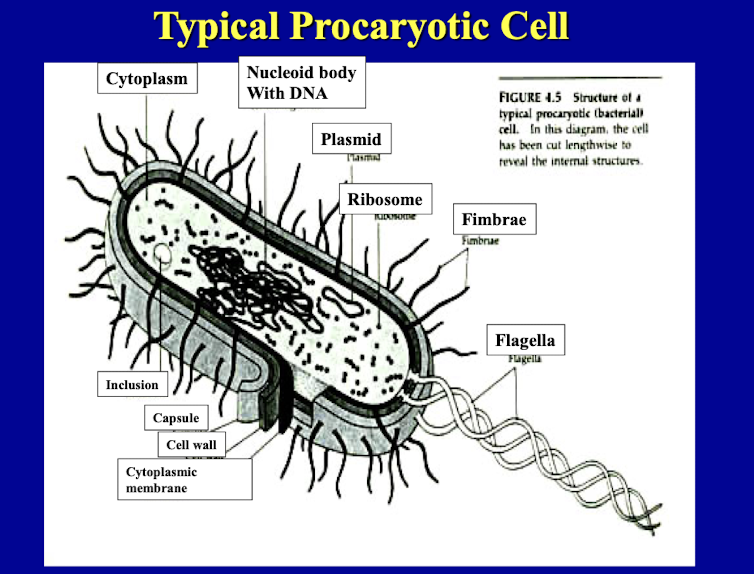
What are the parts of a procaryotic cell?
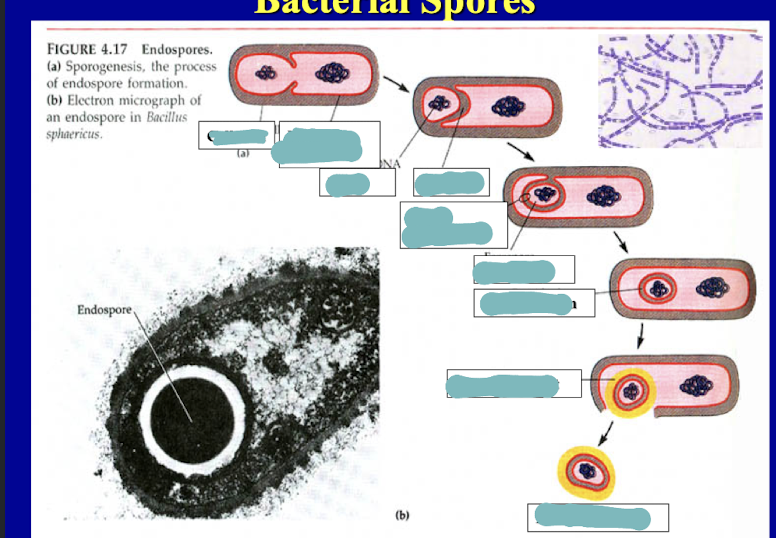
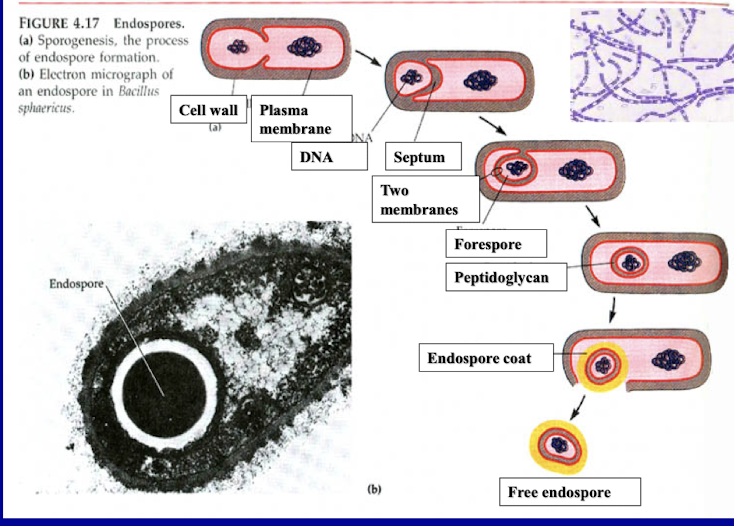
What are the parts/ steps to bacterial spores?
What are gram negative and positive bacteria? What is their characteristic differences?
- The terms gram-positive and gram-negative refer to the color of the bacteria after Gram staining.
- Gram-positive bacteria have a thick peptidoglycan cell wall and appear blue/violet.
- Gram-negative bacteria have a thin peptidoglycan wall, but have a –lipid-rich outer membrane, and appear red after Gram staining.
How do you make a gram stain?
- Make a THIN smear from a pure culture on a slide and heat-fix.
- Cover smear with crystal violet; let stand for 30 sec.-1 min. Rinse.
- Cover smear with Gram’s iodine (mordant); let stand for same amount of time. Rinse.
- Hold slide at an angle and rinse with alcohol or alcohol-acetone until blue runs off. Rinse.
- Cover smear with safranin for 30 sec.-1 min. Rinse, blot dry, and examine under oil immersion at 100X.
What are Lipopolysaccharides?
Lipopolysaccharide (LPS) – LPS is also known as endotoxin, and is the predominant lipid in the outer leaflet of the outer membrane of the Gram-negative cell. LPS acts as the prototypical endotoxin because it binds theCD14/TLR4/MD2 receptor complex, which promotes the secretion of pro-inflammatory cytokines in many cell types, but especially in macrophages.
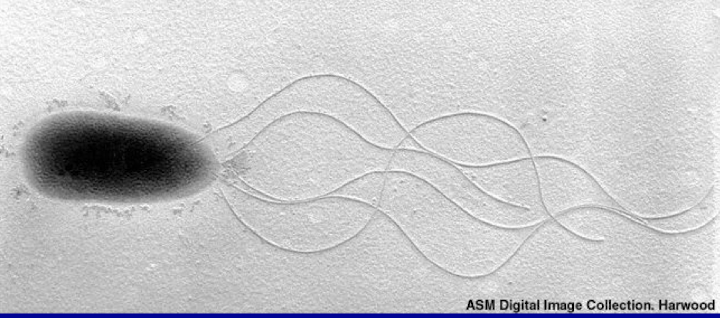
What is flagella?
Flagella - filamentous appendages ( 2-20 um) composed of
flagellin monomers; allow for motility; “H” antigens can be
detected with specific antibodies.
Flagella and pili may be glycosylated proteins.
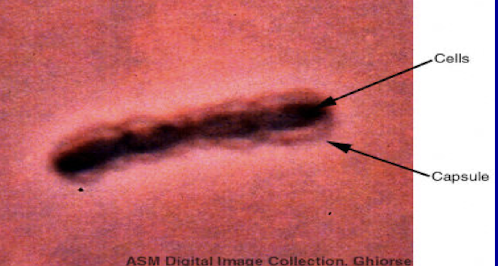
What is a glycocalyx?
Glycocalyx – capsule or slime layer that is composed of
carbohydrates or glycoproteins; not necessary for growth, but
inhibits phagocytosis and antibiotic uptake; antigenic when on
cell and “K” antigens can be detected with specific antibodies.
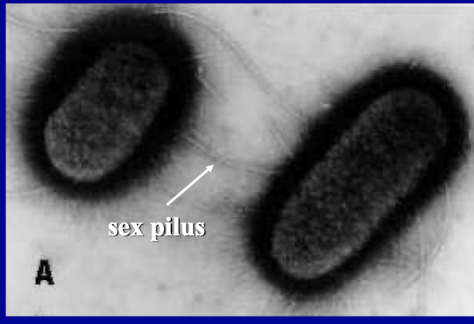
What is pili?
Pili - filamentous appendages (0.5-2.0 um) composed of pilin
monomers; allow for adhesion (fimbriae) and specialized sex pili
allow for transfer of DNA between a donor and a recipient; highly
antigenic and antibodies can be used for sero-diagnosis.
What physical conditions affect growth of an organism?
Temperature
Gaseous Requirement
pH
What are the pathways of energy production in bacteria?
- ) Fermentation (anerobic process) (Glycolysis)
- ) Respiration
- ) Photosynthesis
What are the nutritional classification of organisms?
- Photoautotroph: (self feeding) (light energy source, CO2 carbon source)
- Photoheterotroph: (light compounds energy source, organic nonsulfur compounds carbon source)
- Chemoautotroph: (energy is from inorganic compounds, carbon souce is CO2)
- Chemoheterotroph (energy is from organic compounds, carbon source is organic compounds)
What is an example of photoautotroph?
Photosynthetic bacteria
What is an example of Photoheterotroph?
Purple and green bacteria
What is an example of an Chemoautotroph?
Hydrogen, nitrogen, iron, and nitifying bacteria
What is an example of an Chemoheterotroph ?
Most bacteria, all fungi, protozoans, and animals

-
Taxonomy, Structure, Physiology34
-
Identification, Disinfection62
-
Genetics, Vaccines, Diagnostics52
-
Antimicrobial Resistance86
-
Staphylococcus68
-
Streptococcus80
-
Enterococcus, Listeria, Erysipelothryx131
-
Bacillus Spp. / Neurogenic Clostridium Spp106
-
Histiotoxic/ Enteropathogenic Clostridia56
-
Acinobacteria I54
-
Acinobacteria II39
-
Enterobacteriaceae/ Salmonella41
-
Yersinia & Proteus128
-
Escherichia100
-
Coliforms (CEEK)68
-
Edwardsiella Aeromonas Plesiomonas Vibrio116
-
Pseudomonas & Burkholderia91
-
Bartonella, Chromobacterium, Riemerella, Ornithobacterium, Streptobacillus126
-
Haemophilus, Actinobacillus, Pasteurella54



