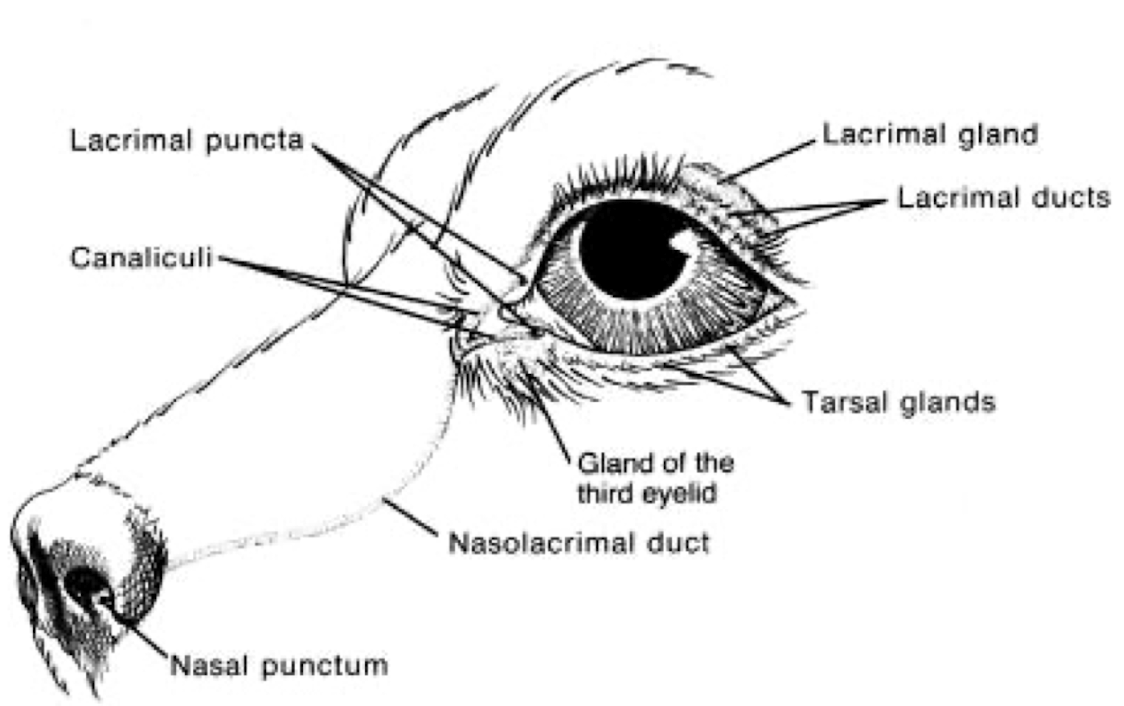
List the components of the lacrymal system
- Lacrimal gland
- Gland of the third eyelid
- Accessorial lacrimal glands
- Preocular tear film
- Lacrimal punctas
- Canaliculi
- Lacrimal sac
- Nasolacrimal duct
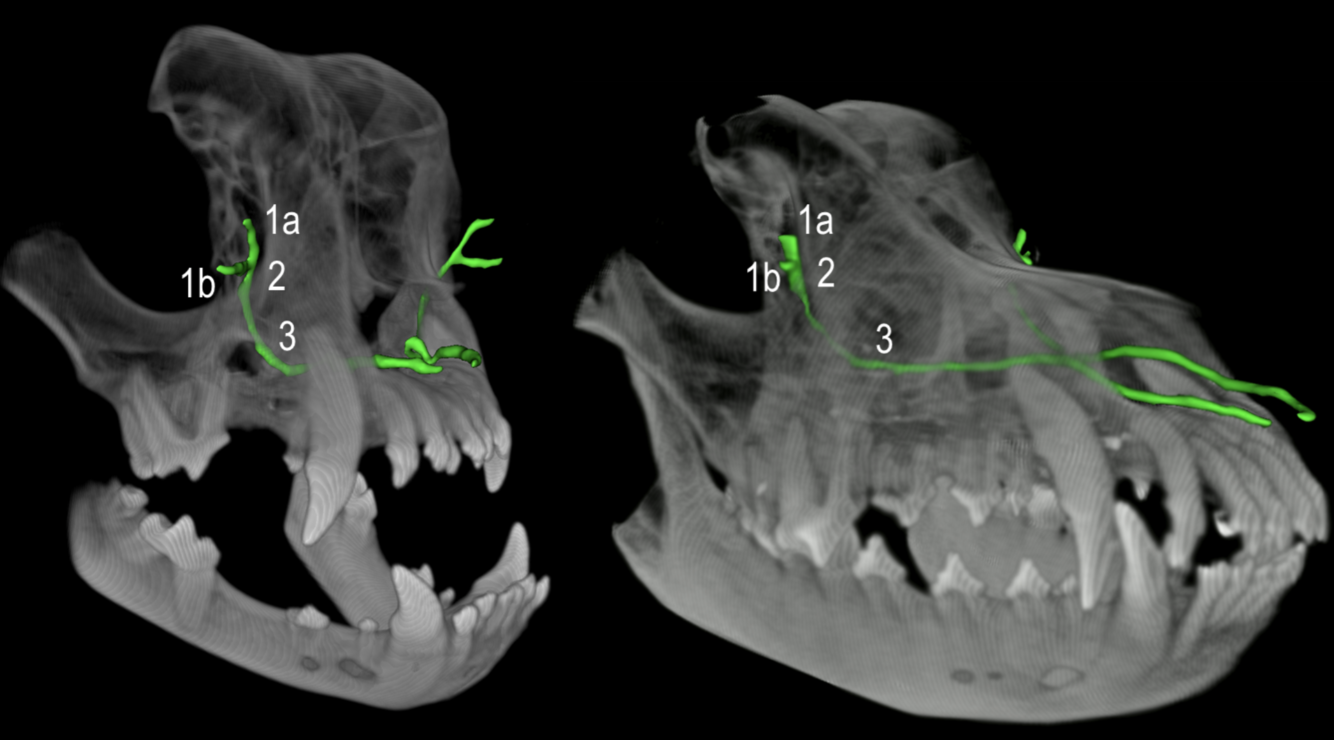
Compare the lacrymal systems of dolichocephalic & brachycephalic dogs
Brachycephalic dogs have a shorter duct, which has an accessory opening at the posterior end of the nasal cavity
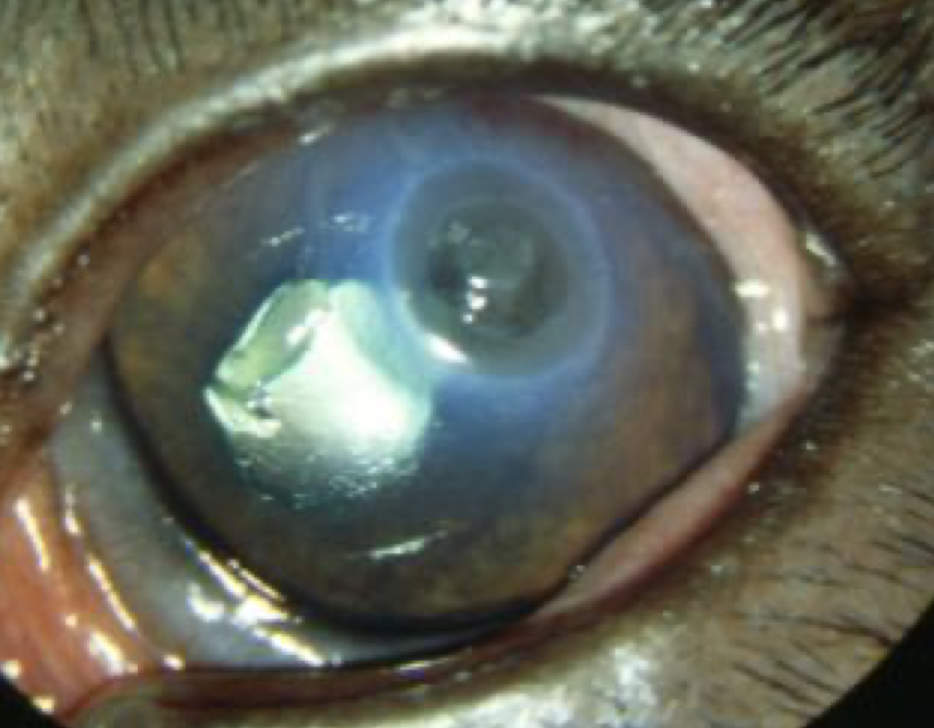
The preocular tear film (PTF)
- Covers cornea & conjunctiva
- Prevents desiccation of the eye
- Allows transport of oxygen & nutrients to the cornea
- Lubrication & cleaning
- Eliminates irregularities - Max. refractive power
Where does the preocular tear film accumulate?
In the ventral fornix
Disturbances of lacrimal function occur by which mechanisms?
By either:
- Failure in the drainage of tears → Epiphora (eye watering)
- Failure to produce normal PTF → KCS
Failure in the drainage of tears: Summary
- Anomaly of the lacrimal punctas & canaliculi
- Dacryocystitis (Inflamm. of lacrimal sac)
- Tear-staining syndrome
Leads to epiphora (watering of the eye)
Failure in the drainage of tears: Aetiology
- Atresia; Imperforation; Ectopy (developmental anomalies)
- Obstruction (inflammation; foreign body)
Failure in the drainage of tears: CSx
- Epiphora (watering of the eyes)
- Lack of the punctum
Failure in the drainage of tears: Treatment
- Flushing; Catheterisation
- Surgery
Failure to produce normal PTF: Summary
May lead to contamination of eye surface with foreign corpusculi
- → Dessication of the eye surface & permanent subsequent inflammation (KCS)
Keratoconjunctivitis Sicca (KCS): Predisposition
Any dog breed, but especially:
- Spaniel
- Pekingese
- Poodle
- Bulldog
- Yorkshire terrier
Keratoconjunctivitis Sicca (KCS): Pathomechanisms
- Change in the volume of PTF (common)
- Change in the quality of PTF (rare)
Keratoconjunctivitis Sicca (KCS): Aetiology
- Unknown/known cause
- Changes in the lacrimal gland/gland of the third eyelid
- Deficiency in the tear production
Keratoconjunctivitis Sicca (KCS): Causes
- Autoimmune
- Chronic blepharoconjunctivitis
- Drug-induced (intoxications)
- Surgically induced
- Trauma
- Canine distemper
- Congenital
- Idiopathic
Keratoconjunctivitis Sicca (KCS) causes: Autoimmune
- KCS without systemic disease
- KCS with systemic disease → Immunocomplexes in the blood destroy the tear gland
- Polyarthritis
- Colitis
- DM
- Hypothyreosis
Keratoconjunctivitis Sicca (KCS) causes: Chronic blepharoconjunctivitis
Scar formation at the site of the opening of the lacrimal gland
Keratoconjunctivitis Sicca (KCS) causes: Drug-induced
- Long-term therapy with sulphonamides
- After local/general anaesthesia
- Exotoxins
Keratoconjunctivitis Sicca (KCS) causes: Surgically induced
After removal of the prolapsed third eyelid gland (or entire third eyelid)
Keratoconjunctivitis Sicca (KCS) causes: Trauma
Which affect the tear gland directly or via their nerve supply
Keratoconjunctivitis Sicca (KCS) causes: Canine distemper
The virus is definitively lacrimotoxic to the lacrimal gland & the gland of the third eyelid
Keratoconjunctivitis Sicca (KCS) causes: Congenital predisposition
- Mops
- Yorkshire terrier
Keratoconjunctivitis Sicca (KCS): Occurance
- Uni-/bilateral
- Intermittent: Some unilateral cases seen in summer (evapouration)
- Acute/chronic
Keratoconjunctivitis Sicca (KCS): CSx (Dacryoadenitis)
- Pain; Blepharospasm; Prolapse of the nictitans
- Conjunctival hyperaemia
- Little, mucopurulent discharge
- Dry, lustless cornea
- Corneal ulceration
- Vision is impaired on the affected eye
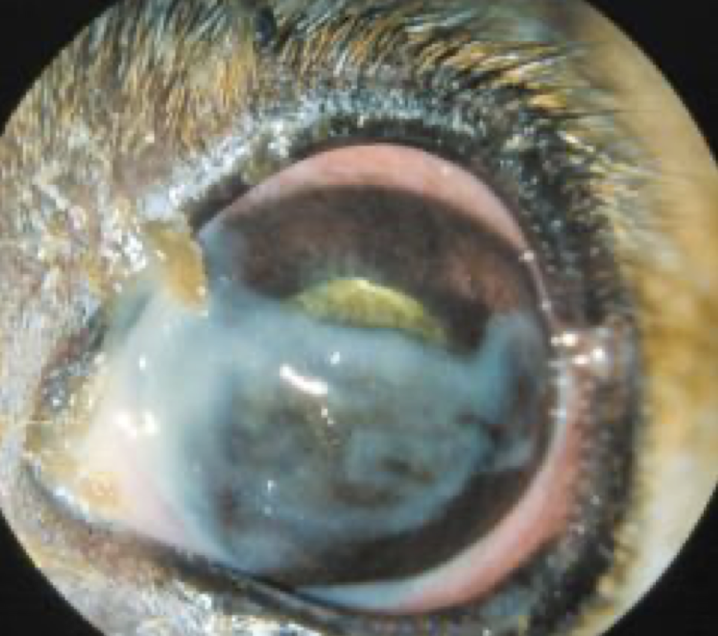
Keratoconjunctivitis Sicca (KCS): CSx (Dacryoadenopathy)
- Hyperaemic & velvet-like conjunctivitis
- Profuse, mucopurulent discharge (adheres to cornea)
- Dried exudate on periocula
- Dry, opaque cornea
- Corneal vascularisation & pigmentation
- Keratinisation of the cornea & conjunctiva
- Dry, ipsilateral nostril
- Chronic Staphylococcus spp. infection