What is a Lumen in relationship to the different types of tubes?
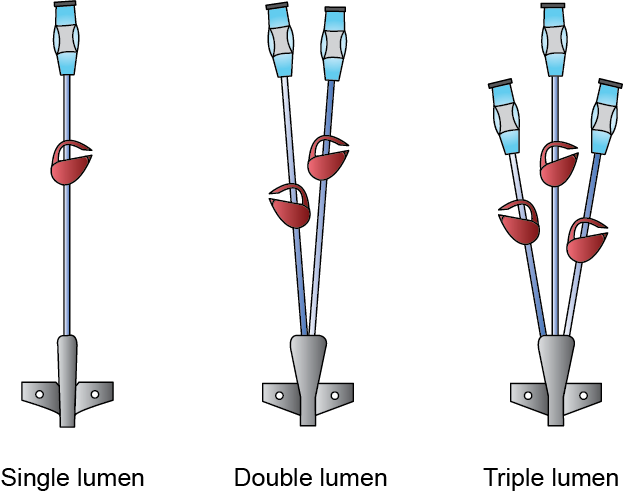
A lumen is a tube:
- some lumens can have multiple tubes
- each tube has a separate function
What is the difference between a single, double, and triple lumen?
- a single lumen has 1 tube
- a double lumen has 2 tubes
- a triple lumen has 3 tubes
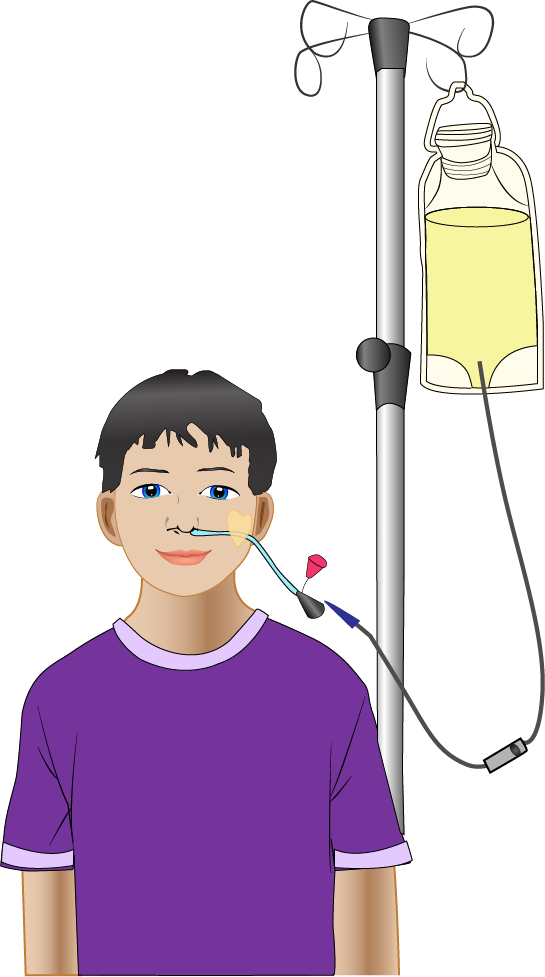
What is a (nasogastric) NG tube and what is its function?
Inserted in the nose and placed in the stomach to:
- remove fluids or gas (called decompression) / suction is turned ON
- give meds and nutrition (called tube feedings) / suction is turned OFF
What is the difference between NG tube feedings and total parenteral nutrition (TPN)?
Both give nutrients to the client but in completely different ways:
- NG tube feedings: liquid food in a tube goes directly into the stomach.
- TPN: nutrients go directly into an IV.
Is the insertion of an NG tube a sterile or non-sterile procedure?
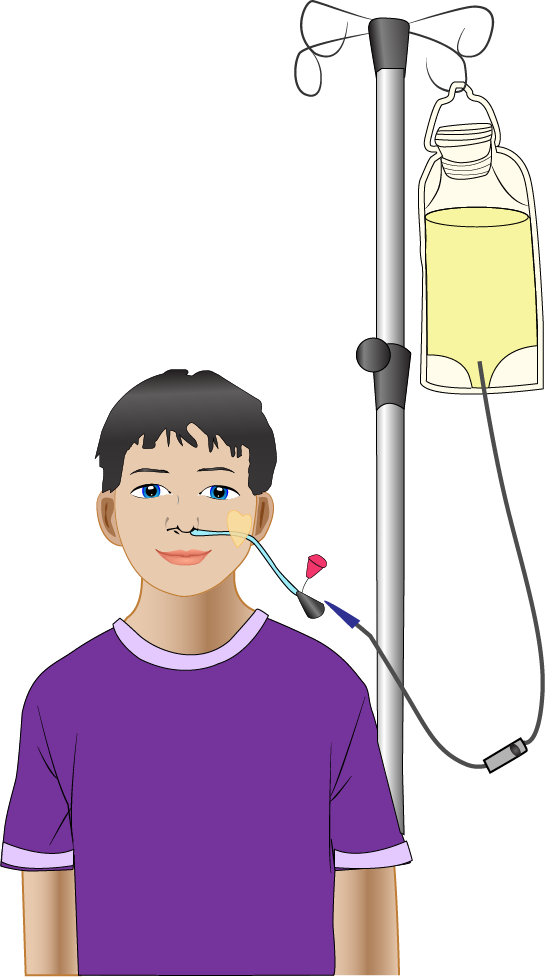
A non-sterile procedure and clean gloves are used.
The nose, mouth, stomach, and colon are not sterile.
How is an NG tube measured before insertion?
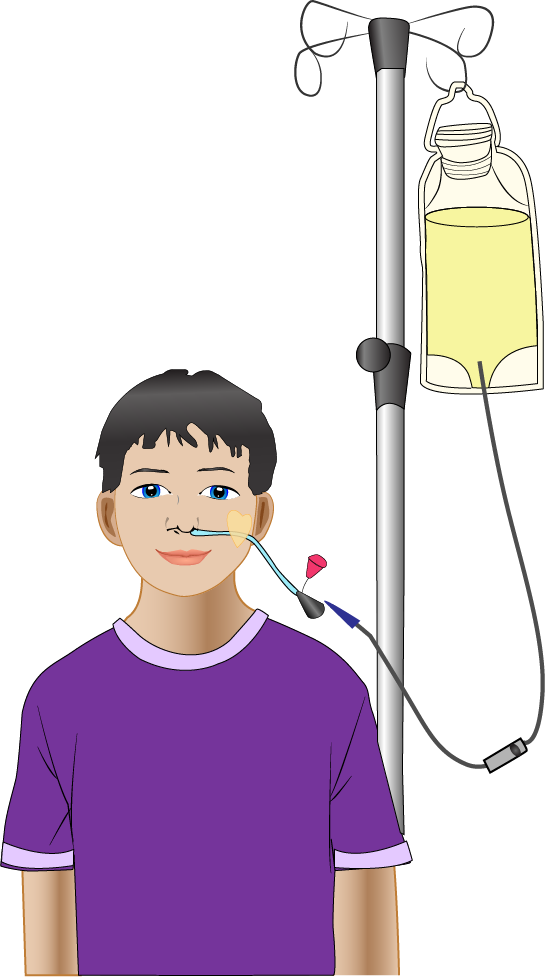
NG tube measurement: NEX (Nose, Earlobe, Xiphoid process):
Measure the length of the tube from:
- the bridge of the nose
- to the earlobe
- to the xiphoid process
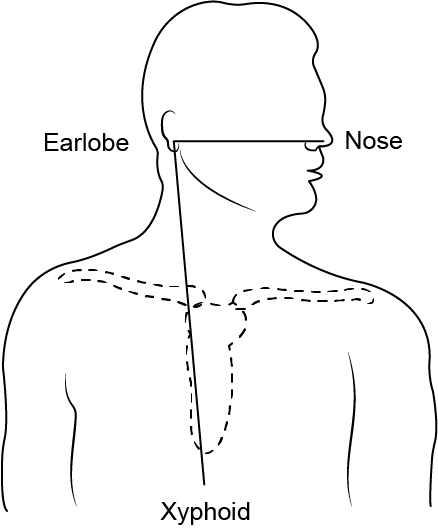
That is the length of tubing that will be inserted.
What are the steps of an NG tube insertion?
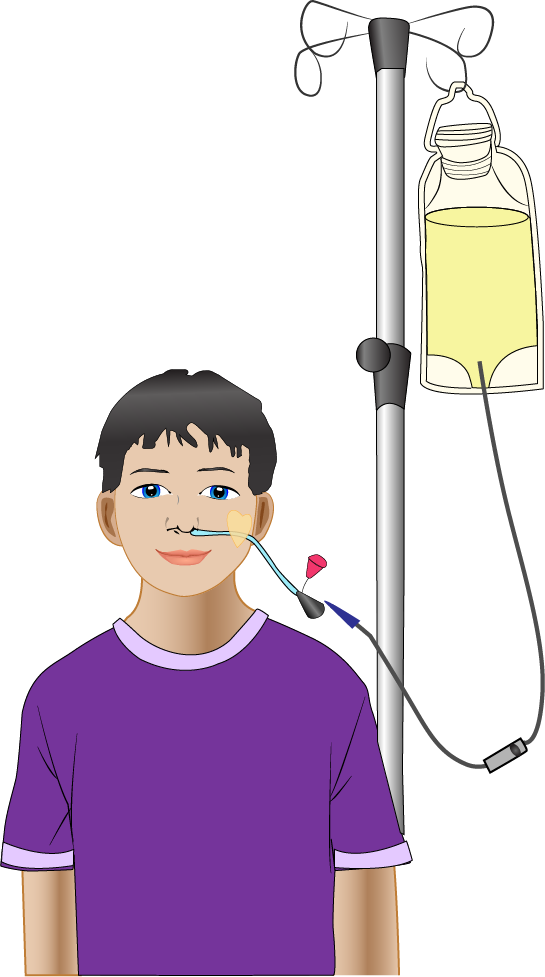
- place client in high-Fowler’s position
- measure tubing (NEX)
- lubricate tip
- insert tube and have client swallow water while head is bent forward
- secure tube to nose with tape
Click HERE to view an example of the NG tube insertion procedure.
What test is done to confirm placement of an NG tube before being used for the first time?
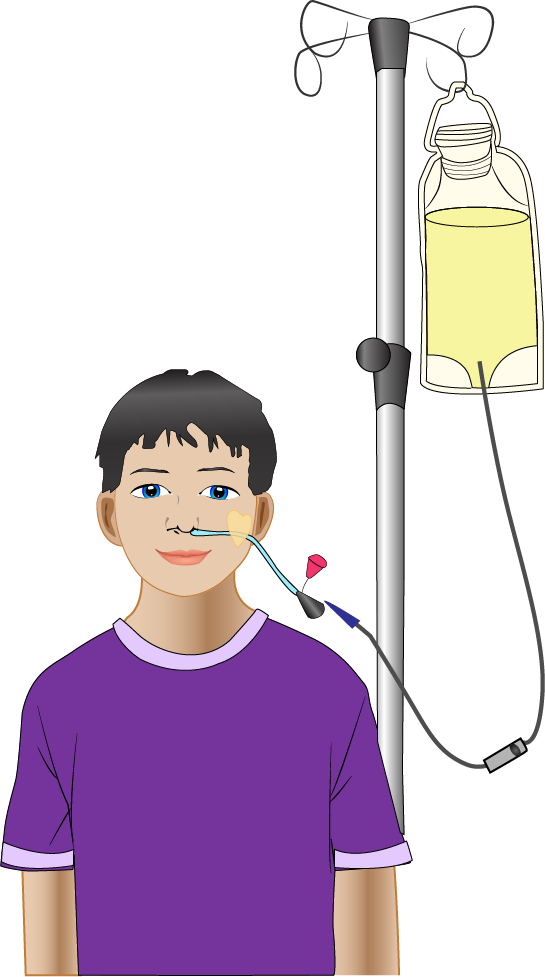
X-ray.
This is to make sure the tube didn’t accidentally go in the lungs, brain or get coiled in the back of the throat.
How is NG tube placement confirmed before meds or a feeding?
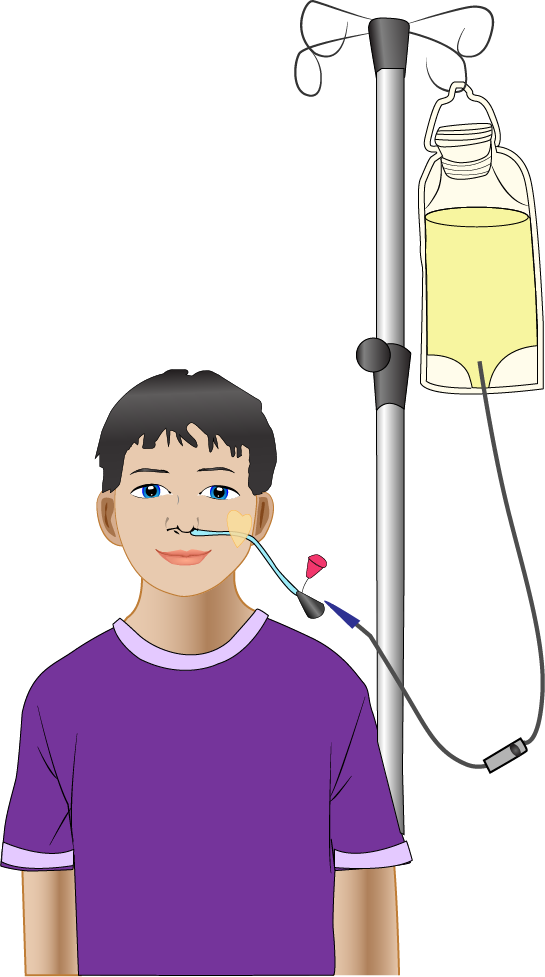
Check the pH of gastric secretions by aspirating a small amount: pH < 3.5 indicates the tube is in the stomach.
What is assessed before starting tube feedings?
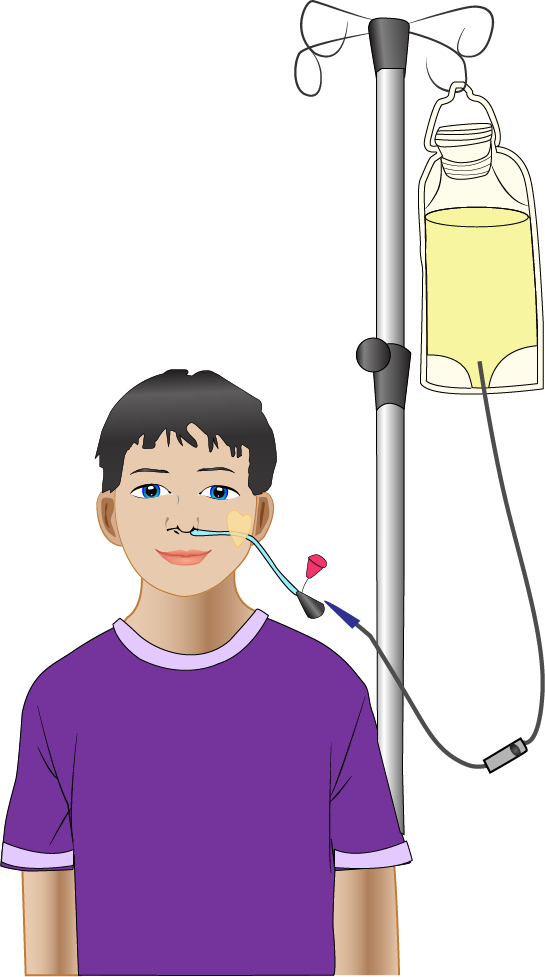
- residual amount of fluid in the stomach by using a syringe to aspirate.
- bowel sounds to make sure they are not hyperactive.
When should a tube feeding be held?
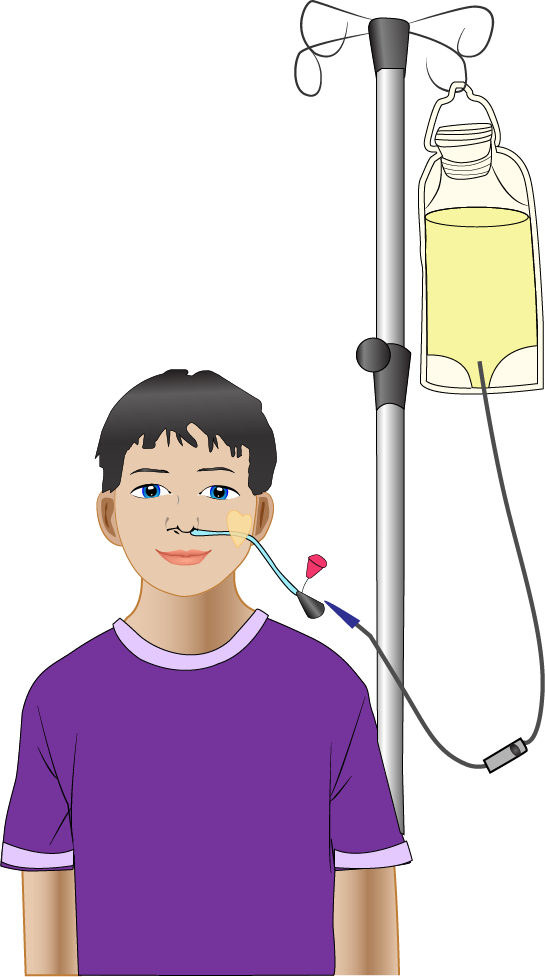
- the residual is > 100 mL (depends on hospital policy)
- there are no bowel sounds
Healthcare providers have different preferences on when it is appropriate to hold an NG tube feeding.
Why should residual fluid from an NG tube always be replaced back into the stomach?
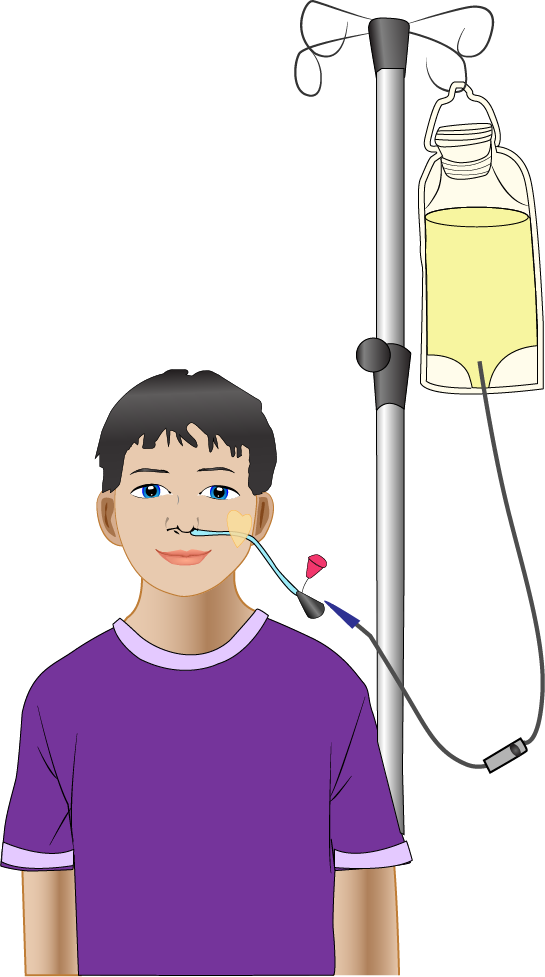
In order to prevent fluid and electrolyte imbalances.
What is the difference between a bolus feeding and continuous tube feeding?
- Bolus feeding: NG tube feedings are given quickly at once and several times throughout the day
- Continuous feeding: NG tube feedings are continuously given throughout the day
What position is a client placed in for bolus and continuous NG tube feedings?
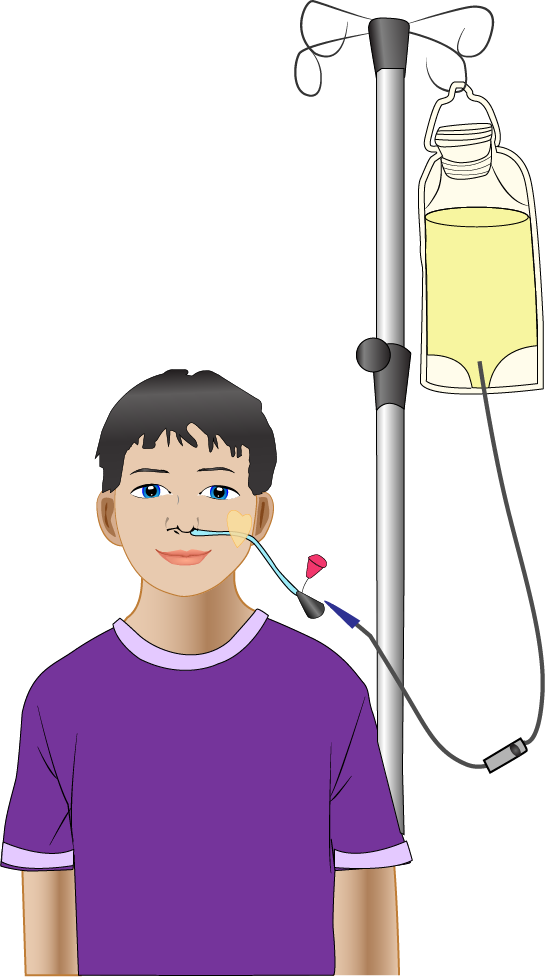
- Bolus feedings: high-Fowlers for 30 minutes afterward.
- Continuous feedings: semi-Fowler’s at all times.
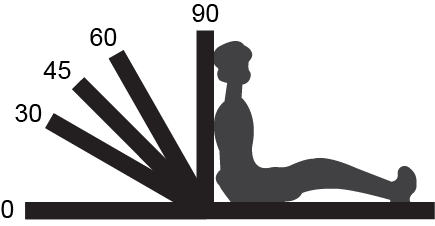
These positions are to prevent aspiration.
What is used to flush before and after NG tube med administration and NG tube feedings?
water or normal saline
Flushing is to assure that the client received all the meds or feeding and to prevent blockage in the tube.
How should meds be given through an NG tube?
Crush meds one at a time and give one med at a time.
This prevents interactions between crushed meds.
Which types of meds should NOT be crushed?
Extended-release or enteric-coated meds.
These meds are designed to be released over a longer time. Crushing the meds causes the client to receive too much of the med too quickly.
What are the steps to remove an NG tube?
- Tell the client to take a deep breath and hold it.
- Gently pull the NG tube out while coiling it around the hand.
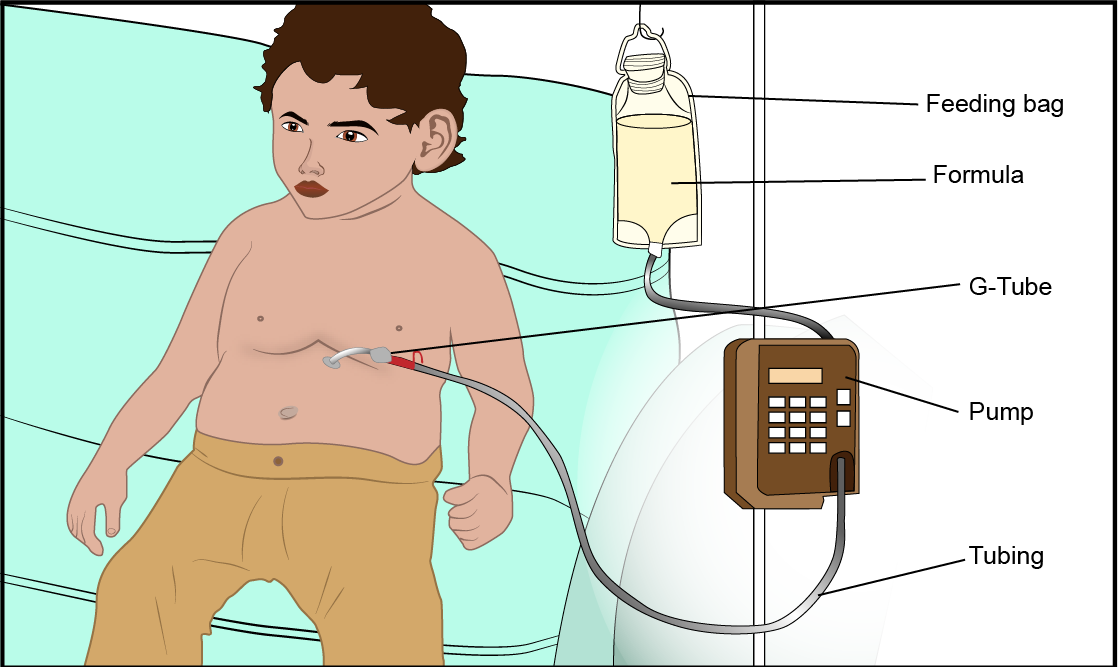
What is a G-tube and J-tube?
They are both long term feeding tubes:
- G-tube: gastrostomy tube - placed in the stomach
- J-tube: jejunostomy tube - placed in the small intestine
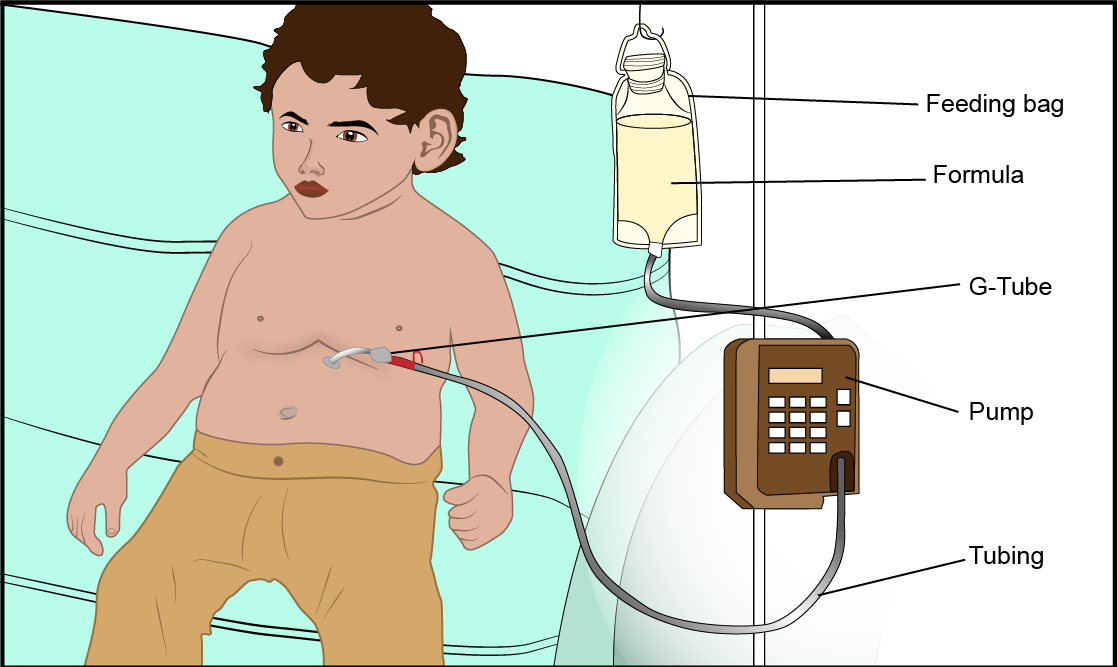
Does placement need to be checked with a G-tube or J-tube?
No.
The tube is permanently placed and comes out through the abdominal wall.
How often is a bolus tube feeding and water bolus done?
Administered about every 4 hours during the day.
Why do water boluses also need to be given for tube feedings?
To prevent dehydration.
How often does the tubing that connects to the NG tube need replacement?
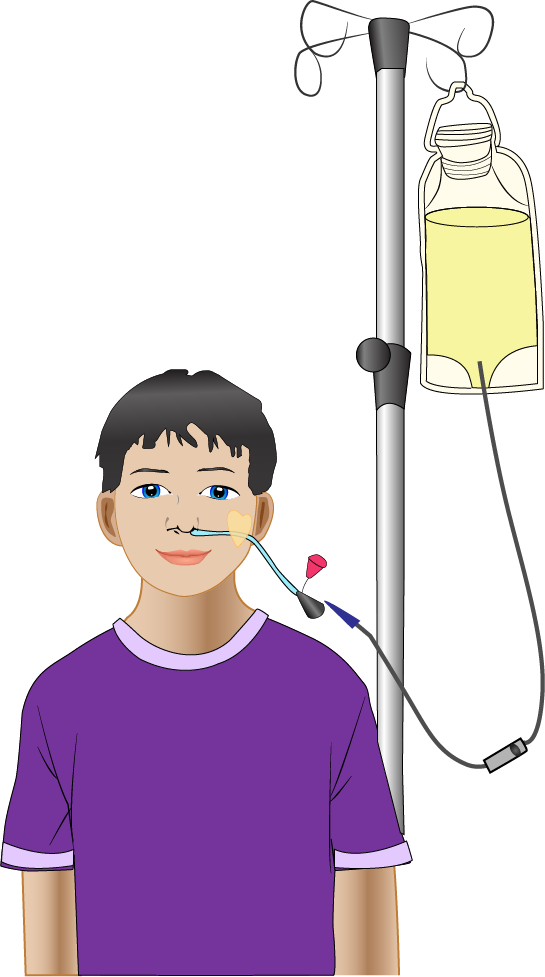
Every 24 hours.
This is to prevent bacterial growth.
What is a lavage tube?
It is used to pump out stomach contents very quickly.
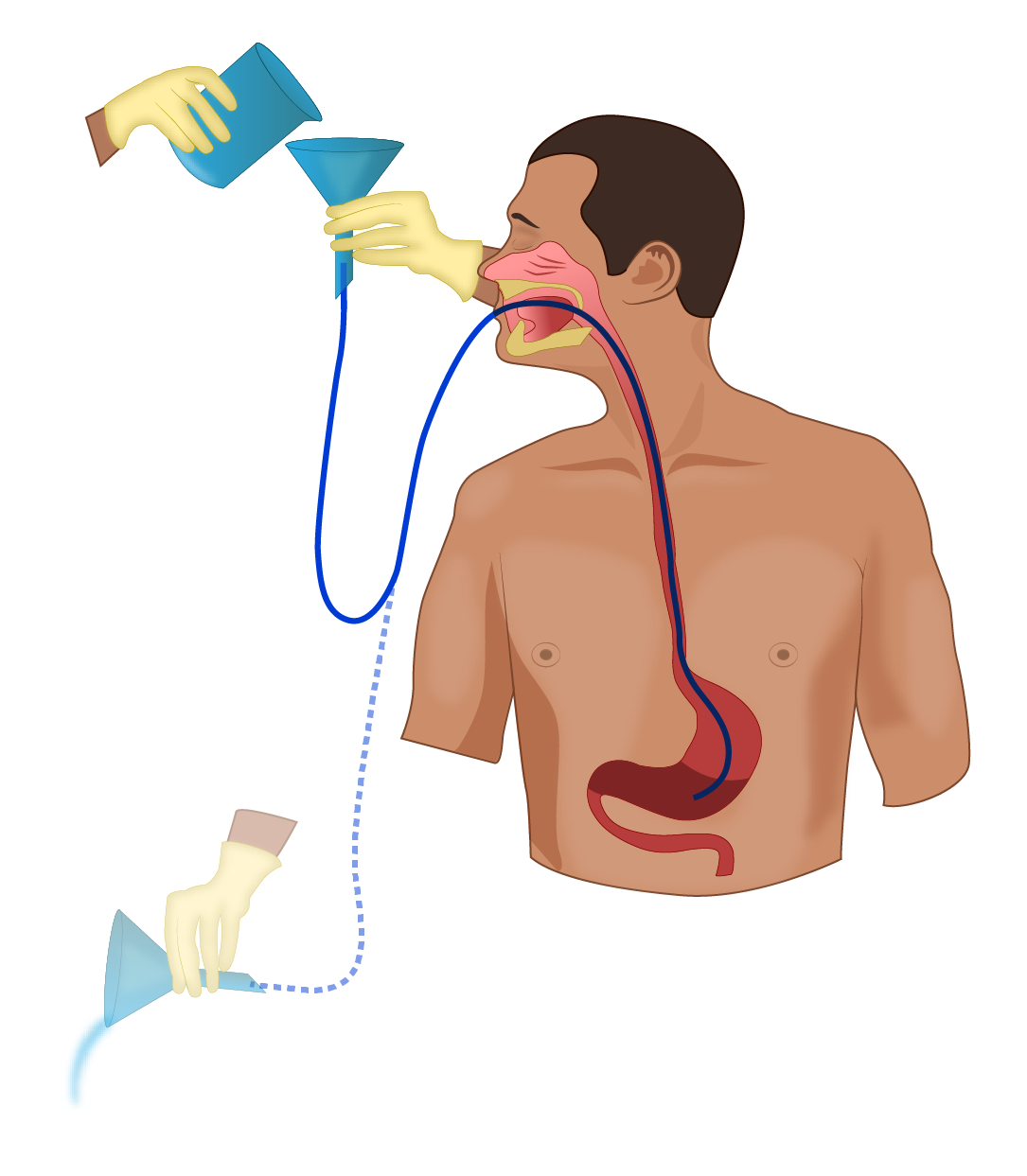
It is usually used when a client has ingested poisons.


-
Positions37
-
Lab Values46
-
Health & Physical Assessment128
-
Lab Interpretation61
-
Fluids23
-
Electrolytes55
-
Acid-Base Imbalance31
-
Diagnostic Tests73
-
Perioperative Nursing47
-
Nutrition and Diets45
-
Tubes56
-
Complementary and Alternative Medicine15
-
Intravenous Therapy88
-
Total Parenteral Nutrition (TPN)28
-
Culture & Religion27
-
Growth and Developmental Theories21
-
Blood Administration38
-
Community Health27



