What is a venous thromboembolism (VTE)?
- a blood clot forms most often in the deep veins of the leg, groin or arm
- referred to as deep vein thrombosis (DVT)
- it can travels in the circulation, lodging in the lungs, known as a pulmonary embolism (PE).
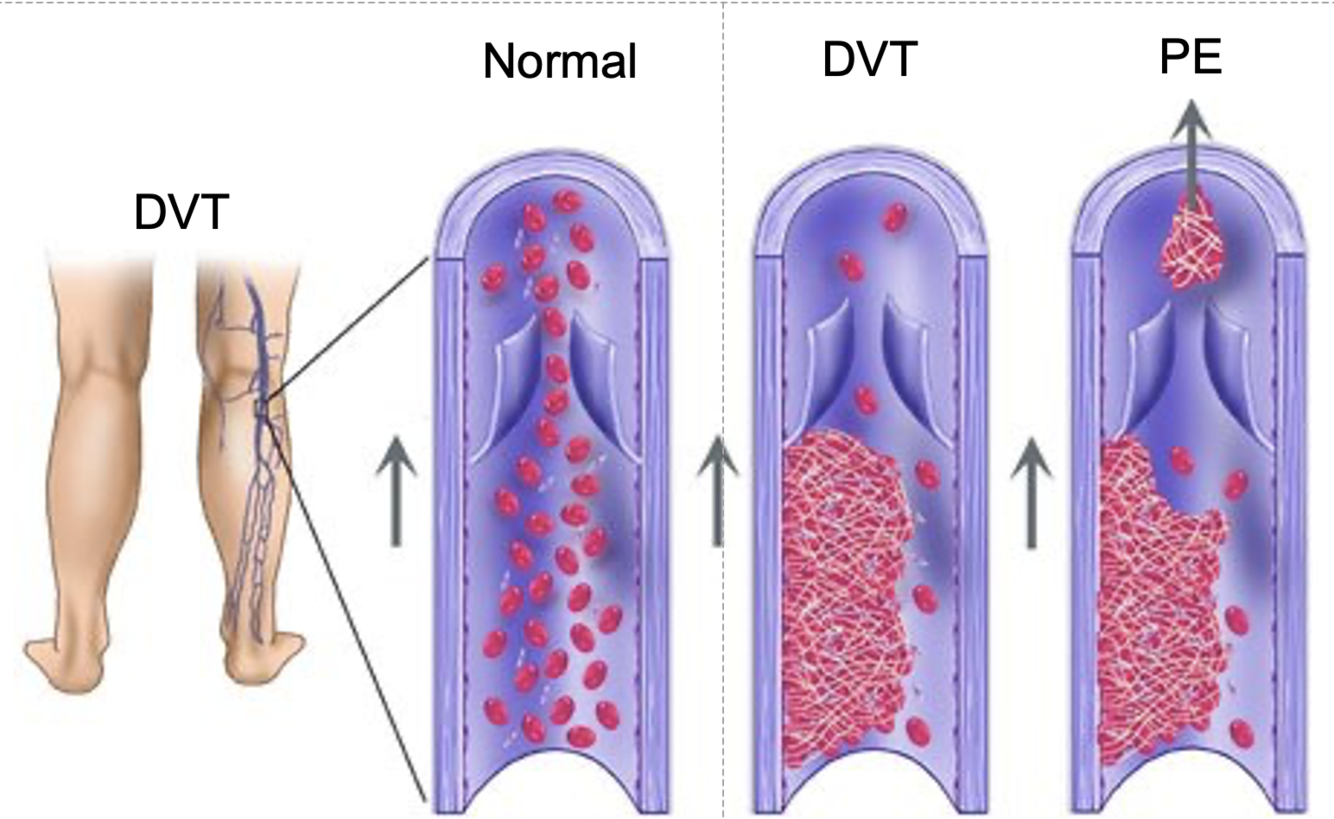
Where are deep vein thrombosis most common?
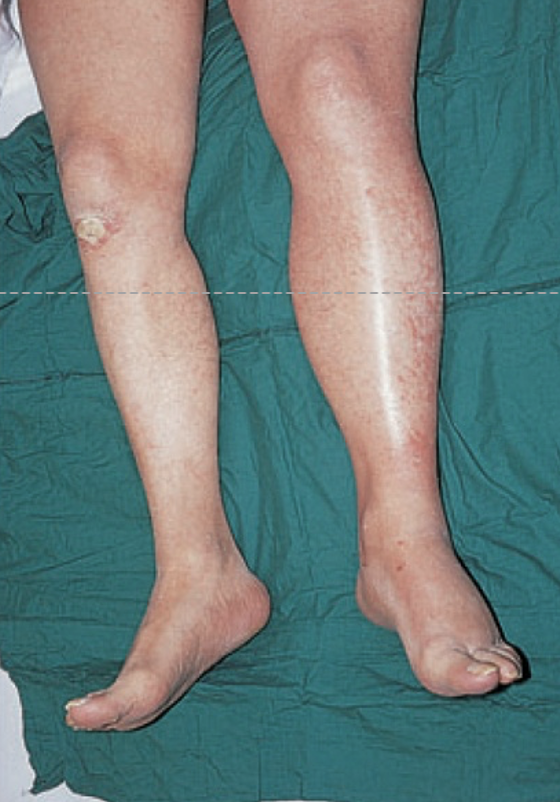
- deep veins and only unilaterally
- most common in the legs
What is Virchows triad?
- a triad of risk factors for developing venous thrombosis
What are the 3 risk factors in Virchows triad?
- circulatory stasis (blood stoping or slowing)
- hypercoagulable state (increased risk of coagulation)
- vascular injury
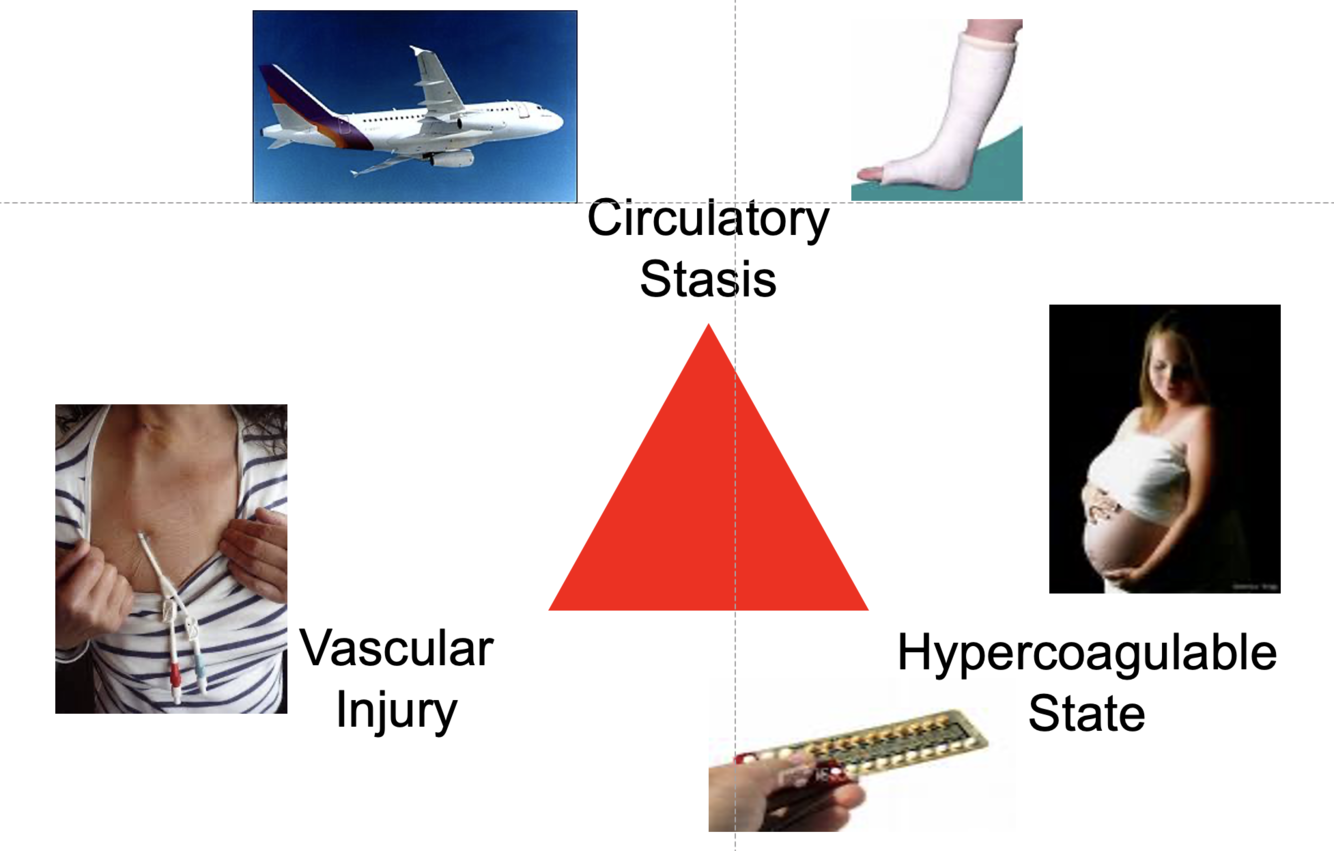
In normal blood flow it is always moving, but if they blood slows or even stops, this is referred to as circulatory stasis. What are some common risk factors for circulatory stasis?
- pregnancy
- long haul flights
- lower limb surgery
- bed rest
Vascular injury is a part of Virchows triad, what are some common risk factors for this?
- surgary
- previous DVT
- sepsis (blood infection)
- cannula, pacemakers
What are some of the most common factors that can induce a hypercoaguable state?
- smoking - MOST COMMON
- oestrogen (oral contraceptives)
- menopause treatment
- active cancer
- inherited and acquired thrombophilias
What is acquired thrombophilia in relation to deep vein thrombosis (DVT)?
- disease that increases the risk of DVT (blood clots)
What is the most common acquired thrombophilia?
- antiphospholipid syndrome
- immune system attacks phospholipids
Antiphospholipid syndrome is the most common acquired thrombophilia, what is it?
- immune disorder
- body produces antibodies attacking phospholipids

Antiphospholipid syndrome is the most common acquired thrombophilia, who is most affected?
- women
- 70% females affected
- increases the risk of pregnancy complications
Dysfibrinogenaemia is the second most common acquired thrombophilia, what is it?
- dysfunction in fibrin is created
- fibrinogen is more likely to form fibrin
- levels of fibrin appear normal
- most common in liver disease as fibrinogen made here
What is the most common cause of inherited thrombophilia, which causes increased risk of blood clot formation?
- Factor V Leiden
- factor V (5) of coagulation is affected
Factor V Leiden is the most common cause of inherited thrombophilia, what is it?
- mutation in factor V (5)
- protein C is anti-coagulating acting on factor V (5)
- in this disease that doesnt happen so coagulation continues
Factor V Leiden is the most common cause of inherited thrombophilia, is it dangerous?
- not generally
- only 10% of people with disease need treatment
Prothrombin thrombophiliais the second most common cause of inherited thrombophilia, what is it?
- mutation of factor II (2) which is prothrombin
-
What happens in inherited thrombophilias when there is protein S and C deficiency?
- these are anti-coagulants
- without these coagulation would increase
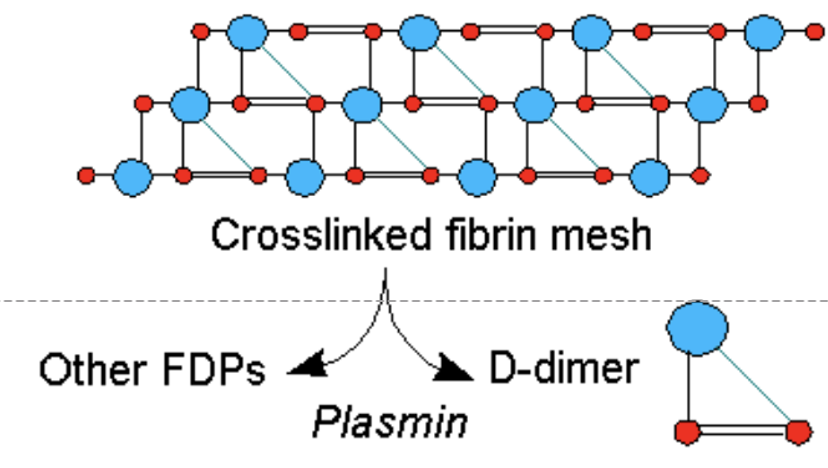
When investigating a DVT we can perform a d-dimer test. What is this?
- d-dimers are a product of fibrin
- only present when coagulation system has been activated
- if levels are high, suggests thrombosis is breaking down
- can be good to rule out DVT
What is the Wells Score used in DVT?
- probablily score for the risk of developing a DVT
- if score is low then low probabily of DVT
- if low wells score and negative d-dimer patient has low risk of DVT
If a patient has had a d-dimer test and a Wells Score calculated and you are still unsure if the patient has a DVT, what imaging technology can you use?
- ultrasound
- ultrasound doppler (blood flow)
- ultrasound compressability (thrombotic veins cannot compress)
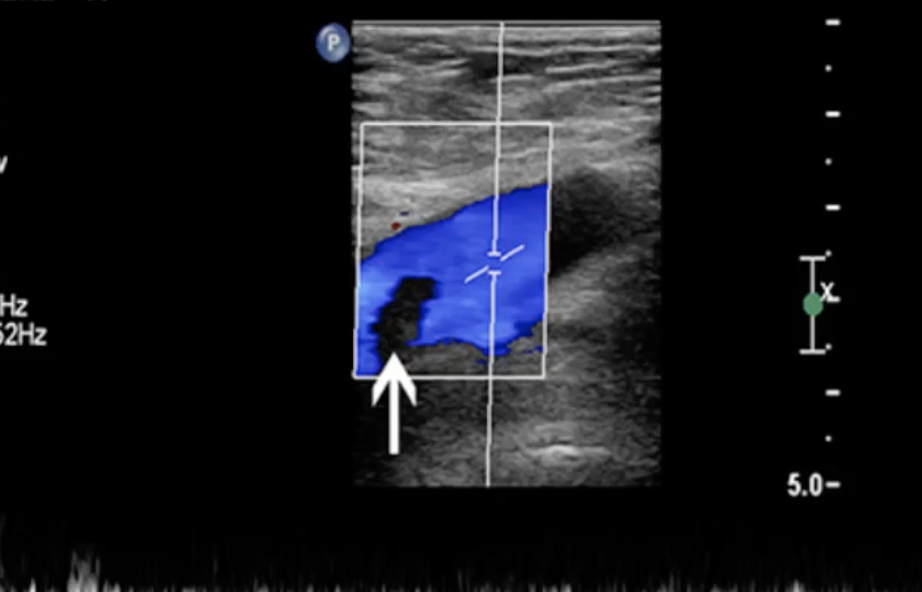
If a patient has had a d-dimer test, wells score and ultrasound and the clinician is still unsure, what test can be performed?
- contrast venography
- dye inserted into veins
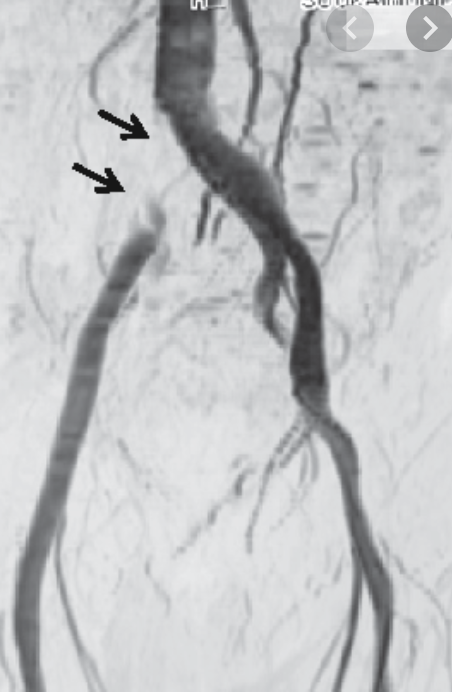
If a patient has a positive d-dimer test, is this diagnositc?
- no
- high sensitivity = correctly identify if patient has DVT
- low specificity = correctly identify if patient does not have DVT
What is the difference between sensitivity and specificity?
- Sensitivity = ability to correctly identify patients with a disease
- Specificity = ability to correctly identify people without the disease
Are patients with a DVT always treated?
- no
- depends on symptoms and location
- calf generally clears itself


-
Mediastinum: Superior, Anterior and Posterior76
-
Heart and Fundamentals of Cardiovascular System (Middle Mediastinum)66
-
Understanding the Physiology of the Cardiovascular System56
-
Drug Treatment for CV Disease Hypertension83
-
Blood Pressure - Physiology and Pathology81
-
Lipid Metabolism89
-
Atherogenesis69
-
Dyslipidaemias: diagnosis, pharmacotherapy and prevention83
-
Haemostasis88
-
Physiology of Normal White Blood Cells82
-
Blood Groups and Blood Transfusion72
-
Anatomy Definition Lists167
-
The Cardiac Cycle50
-
Anaemia70
-
Haematological Cancer64
-
Bleeding Disorders49
-
Venous Thromboembolism41
-
Pharmacotherapy of Haemostasis and Thrombosis37
-
Valvular Dysfunction71
-
Ischaemic Heart Disease62
-
Heart Failure51
-
Drug Treatment for IHD and HF32
-
Cardiac Rehabilitation38
-
Acute Coronary Syndrome and Sudden Death63



