How do you treat Seminal Vesiculitis in stallions?
long term antibiotics
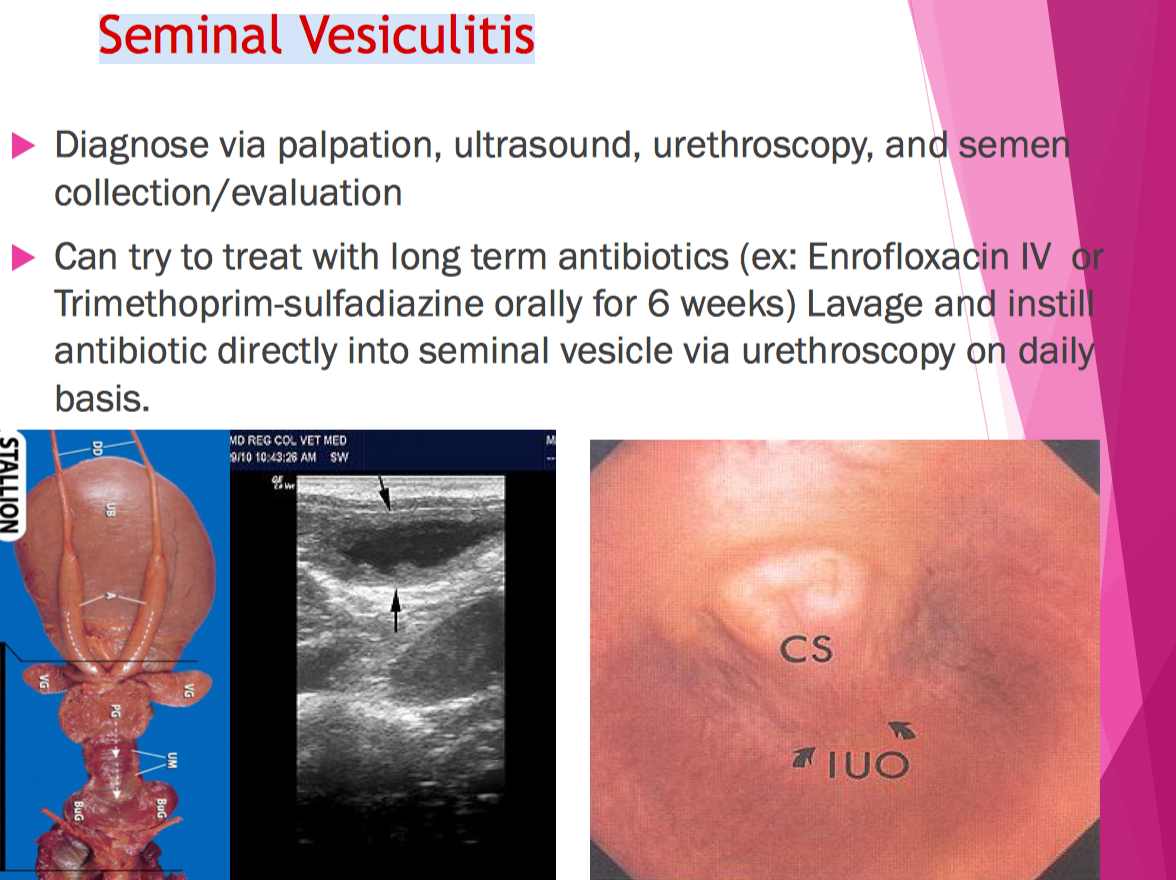
Seminal vesiculitis (inflammation of the seminal vesicles) is a cause of pyospermia in stallions. Diagnose via palpation, ultrasound, urethroscopy, and semen collection/evaluation. Treat with Enrofloxacin IV or Trimethoprim-sulfadiazine orally for 6 weeks
When there are no sperm present in the ejaculate, this is termed:
azoospermia
Oligospermia in the stallion is when there are <____ sperm per ejaculate
<500 million
Summer Sores in horses are caused by:
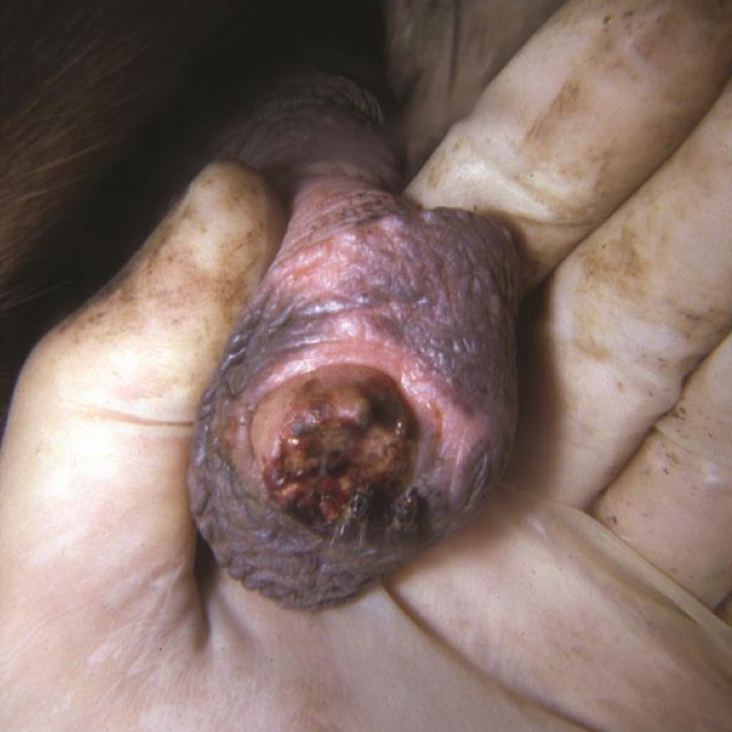
Habronema muscae larva
- Habronema muscae larval lesions
- Urethral process or preputial orifice
- Larva stimulate granulomatous reaction
- Yellow caseous granules
- May impede urination
- Ivermectin is effective treatment
Seminal plasma AlkP <100 IU/L suggests:
ejaculatory failure or blockage
Sperm in the stallion are the final product of a ____ day process that starts at the base of the seminiferous tubule.
57 day
The tail of the epididymis is the major storage area for mature sperm, along with __________ and __________
The tail of the epididymis is the major storage area for mature sperm along with the ductus deferens and ampullae.
Oligospermia and azoospermia in the stallion are diagnosed by measuring:
seminal plasma Alkaline Phosphatase
- >1000 IU/L suggests true ejaculation
- 100 to 1000 IU/L partial ejaculate or partial blockage
- <100 IU/L suggests ejaculatory failure or blockage
- Most normal stallions - >3000 IU/L
The most common neoplasia of the equine penis/prepuce is __________
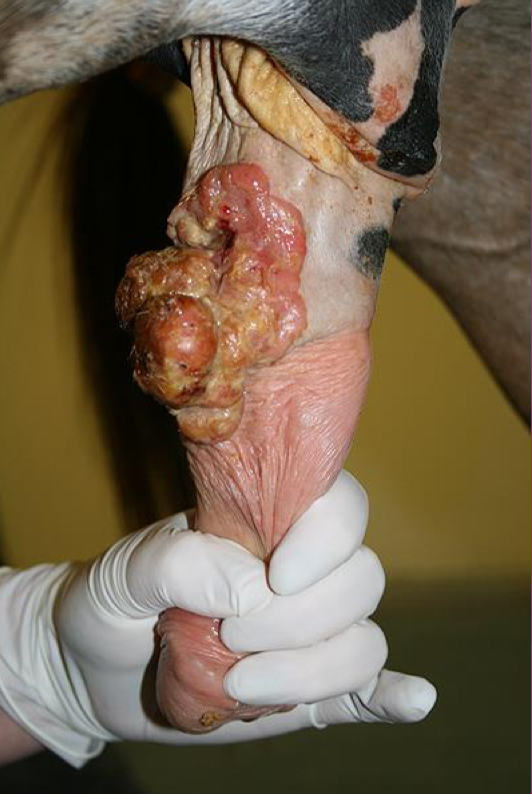
Squamous Cell Carcinoma (SCC)
- More common in geldings
- Small plaque to shallow roughened ulcerated neoplasia
- Possible cryosurgery, surgical removal, reefing, penile amputation, topical medication
- Sarcoid next most common preputial tumor
Spermatogenesis is a 57 day process that can be divided into three phases. What are the three phases?
- Spermatocytogenesis (mitosis)
- Meiosis (BT barrier)
- Spermiogenesis (elongation)
What is an effective treatment for Summer Sores in horses?
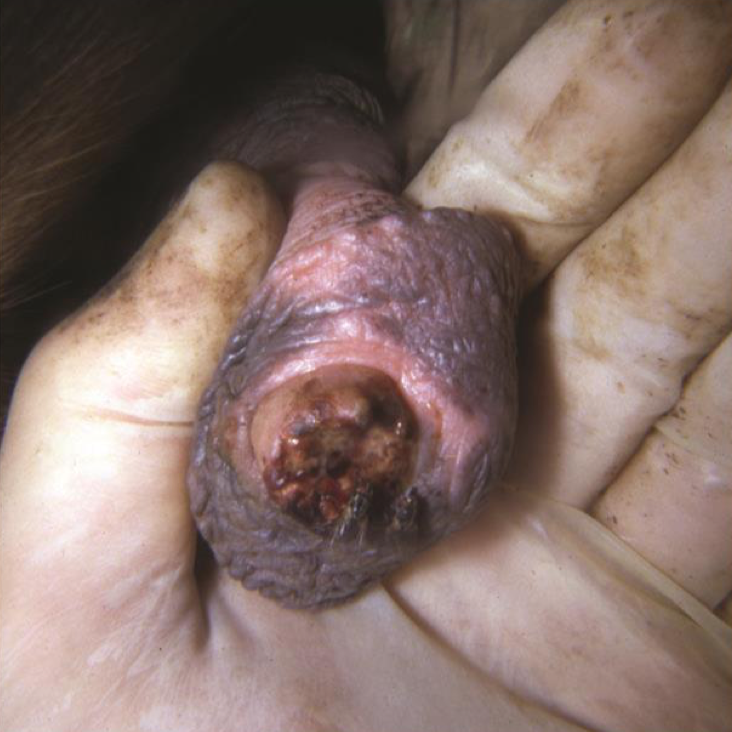
Ivermectin
Testicular degeneration in the stallion can be monitored with hormone profiles over three consecutive days. What abnormalities would be seen?
↑ FSH, ↓ Inhibin, ↓ Estrogen
Normal LH, normal testosterone
__________ is the inability to ejaculate semen despite stimulation of the penis
Anejaculation
- Behavioral or physical
- Look at each component of breeding
- Improper AV preparation
- Improper phantom height, width
- How is stallion handled?
- Try breeding to submissive mare showing prominent estrus
- Do PE/lameness exam on stallion
- Try different techniques
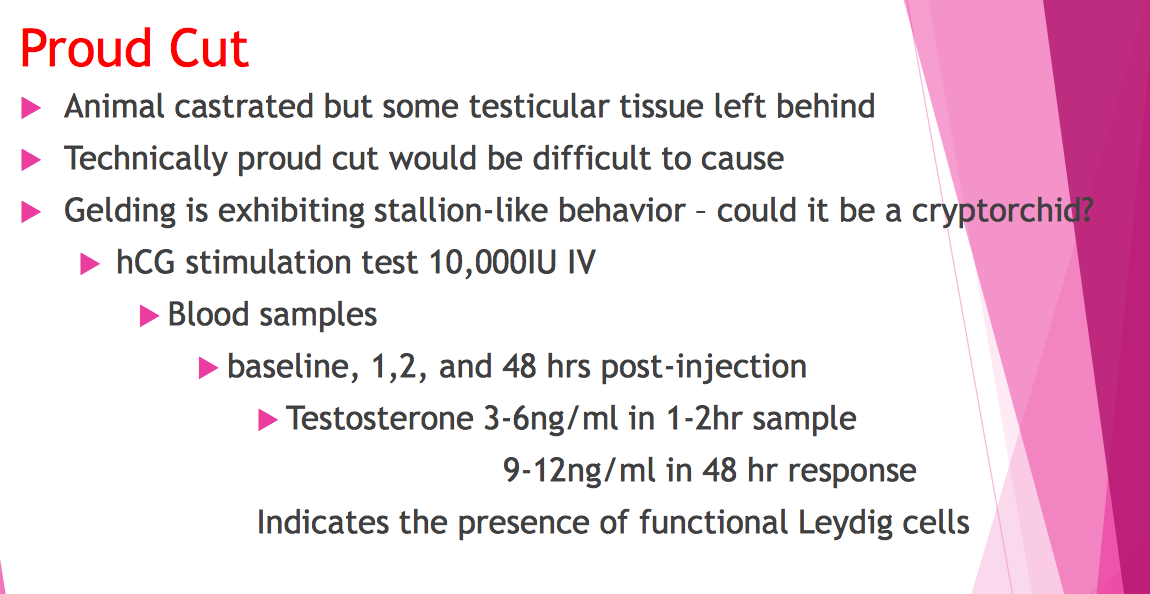
What is meant by the creepy term “proud cut” in horses?
Animal castrated but some testicular tissue left behind
How do you treat oligospermia/azoospermia?
- Rectal massage of the ampullae
- Oxytocin 20 IU immediately before collection
- Frequent collection
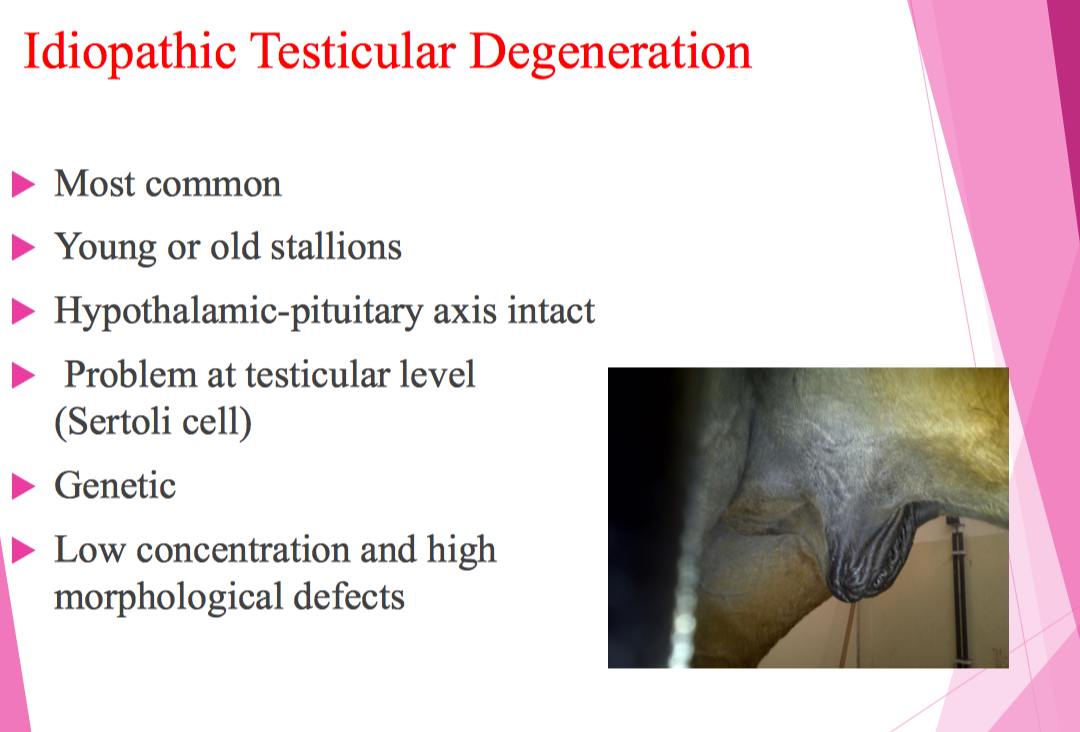
T/F: Idiopathic Testicular Degeneration is genetic
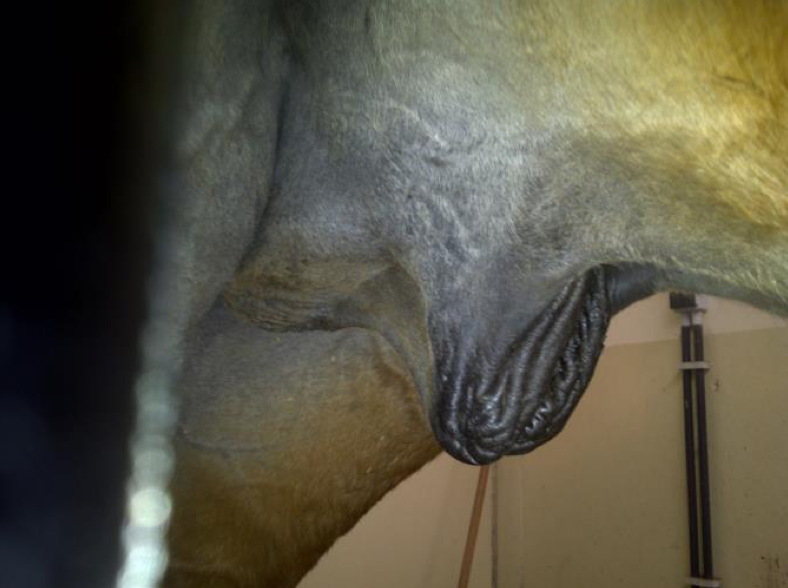
True
T/F: Good semen quality is a guarantee of adequate fertility
False
Good semen quality is not a guarantee of adequate fertility
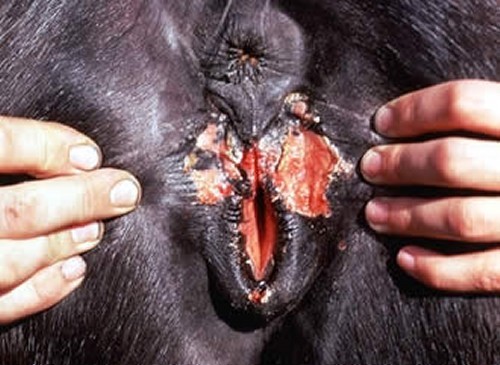
You have been called to a farm and have correctly diagnosed a mare with coital exanthema. This disease is caused by:
Equine herpesvirus 3
Equine coital exanthema is a benign venereal disease of horses that is caused by equine herpesvirus type 3 (EHV-3). Sexual rest is essential to allow ulcers to heal and prevent spread of the disease. The use of antibiotic ointments to prevent secondary infections is also advisable.
T/F: Poor semen quality is a good predictor of inadequate fertility
True

-
Male & Female Reproductive Anatomy & Physiology31
-
Puberty and Development of Male and Female Systems24
-
Bovine Pregnancy Diagnosis19
-
Reproduction Endocrinology17
-
Follicular Physiology, Ovulation, Luteinization, Luteolysis30
-
Eutocia, Dystocia, Dystocia Management33
-
Fertilization, MRP, Placentation38
-
Bovine Breeding Management and Synchronization, Female Cyclicity46
-
Bovine Obstetrics - Fetotomy and C-Section15
-
Bovine Periparturient Period17
-
Bovine Non-infectious Infertility20
-
Bovine Infectious Infertility and Abortion43
-
Reproductive Toxicants, Induced Abortion, Pregnancy Termination23
-
Bull BSE, Reproductive Diseases of the Bull29
-
Sheep & Goat Reproduction41
-
Swine Reproduction49
-
Canine Estrous Cycle & Breeding Management32
-
Canine Pregnancy & Postpartum Diseases40
-
Canine Estrus Control/Drug Therapy19
-
Canine Reproductive Infectious Diseases32
-
Feline Theriogenology36
-
Reproductive Anatomy & Physiology of the Mare (meh, mostly done)27
-
Mare Breeding Soundness Exam (BSE)19
-
Mare Pregnancy Diagnosis & Twin Pregnancy20
-
Mare Disorders of the Gravid Uterus20
-
Mare Eutocia, Induction of Parturition18
-
Equine Postpartum Disorders18
-
Equine Dystocia & Fetotomy21
-
Equine - Stallion BSE26
-
Equine Infertility/Subfertility19
-
Camelid Theriogenology15



