Coronal section
vertical slice
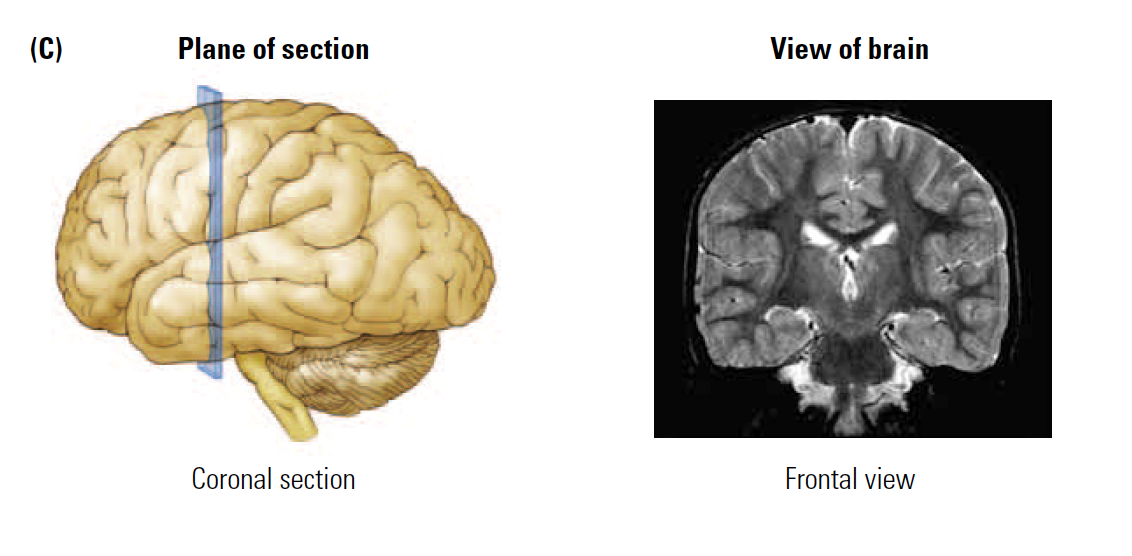
Horizontal Section
You guessed it.
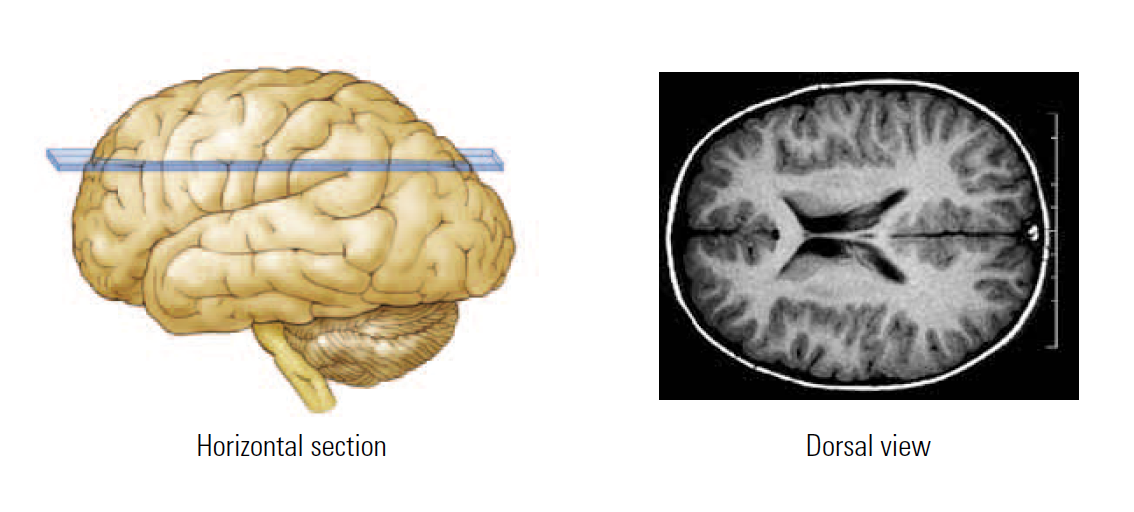
Sagittal Section
Anterior to posterior slice
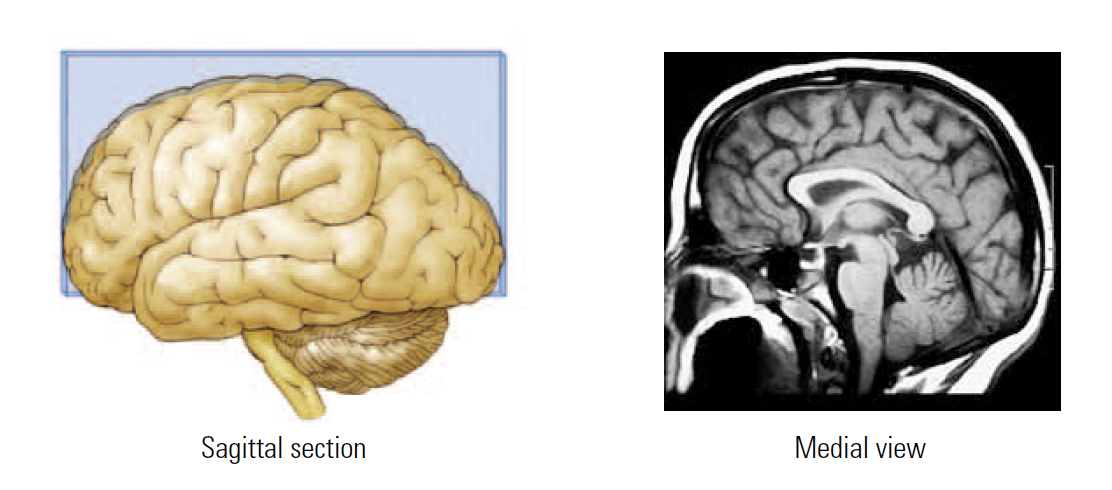
Describe direction of these terms (point of reference = face):
- Dorsal
- Medial
- Lateral
- Anterior
- Posterior
- Ventra
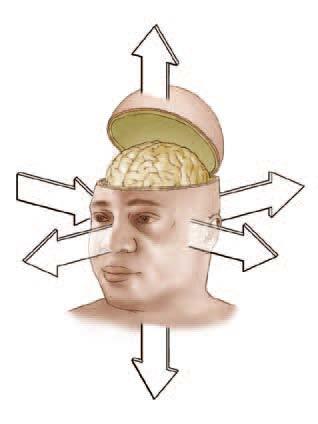
- Dorsal (up; topside)
- Medial (toward the midline)
- Lateral (away from the midline)
- Anterior (front end)
- Posterior (hind end)
- Ventral (bottom side)
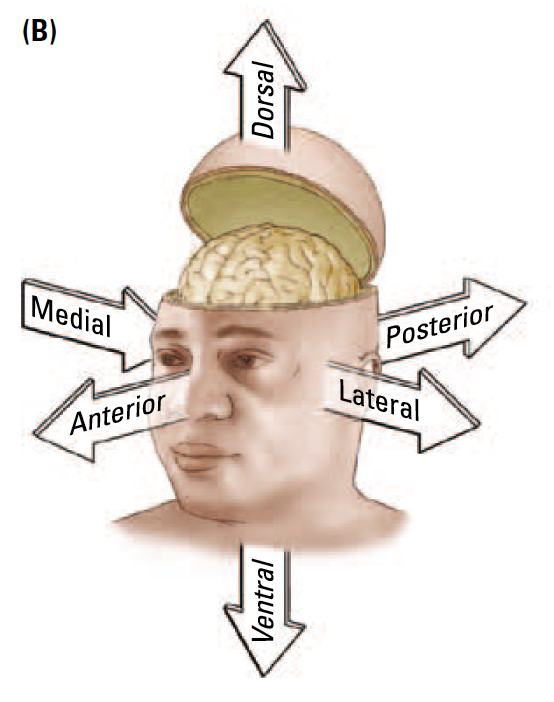
Describe direction of these terms (point of reference = body):
- Rostral
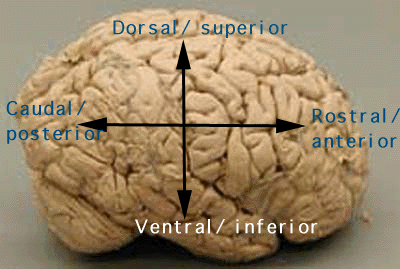
- Dorsal (superior)
- Ventral (inferior)
- Caudal
- Rostral: head end
- Dorsal (superior): back or top side
- Ventral (inferior): belly or bottom side
- Caudal: tail end
Define:
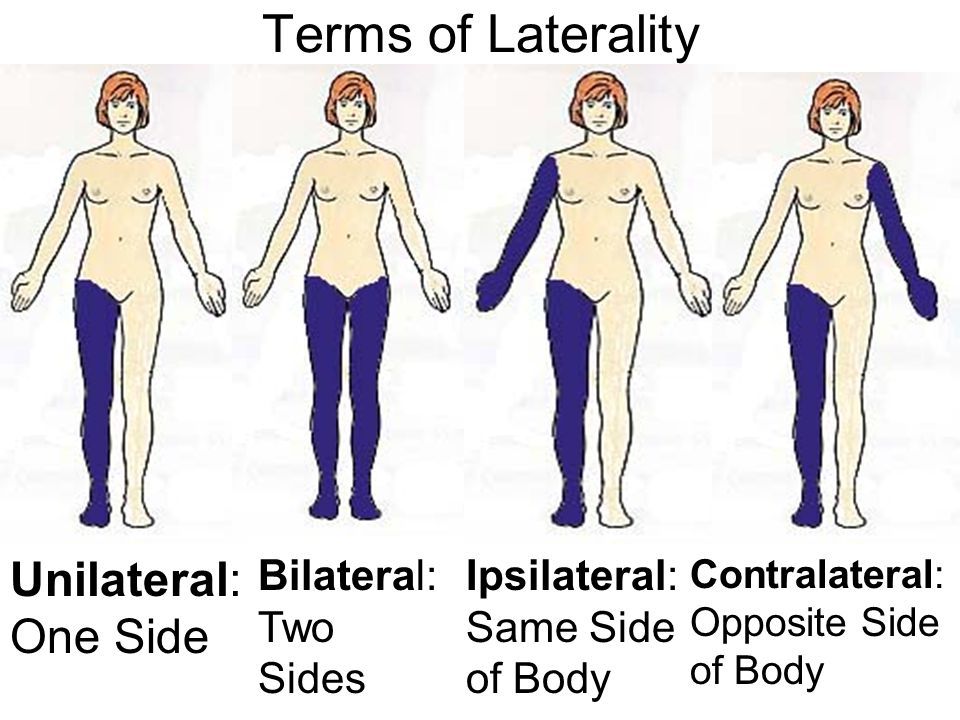
- Ipsilateral
- Contralateral
- Bilateral
- Ipsilateral (structures that lie on the same sides)
- Contralateral (structures that lie on opposite sides)
- Bilateral (if one lies in each hemisphere)
Define stroke
interruption of blood flow to brain that kills brain cells & suddenly causes neurological symptoms
hemorrhagic: burst vessel bleeding into the brain (more severe)
Tissue plasminogen activator
Tissue plasminogen activator (t-PA):
breaks up clots and allows normal blood flow to return to the affected region
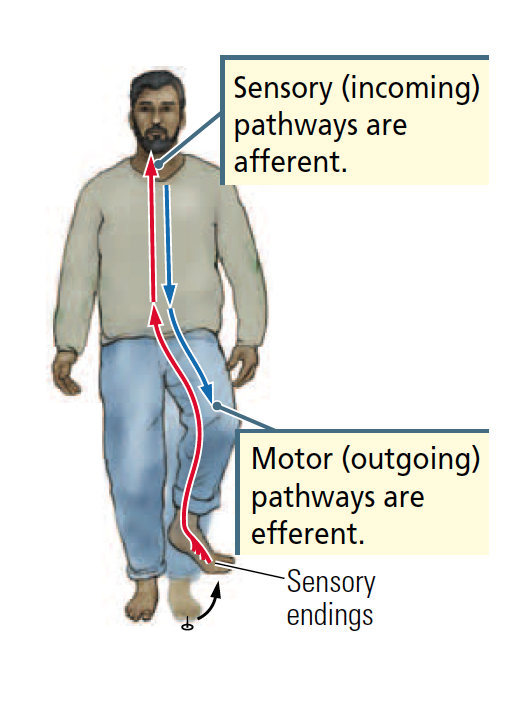
afferent vs. efferent
afferent (any movement toward a brain structure) vs.
efferent (any movement away from a brain structure)
autonomic (automatic) nervous system (ANS)
acts via ganglia either to activate (sympathetic nerves; arousing, “fight and flee”) or to inhibit (parasympathetic nerves; calming, “rest and digest”) the body’s internal organs
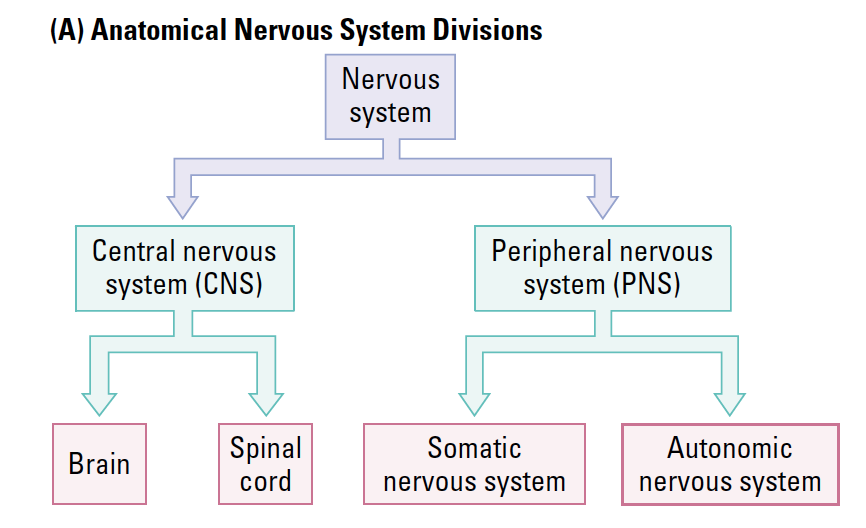
Name the Anatomical Nervous System Divisions
Nervous Systems
- Central Nervous System (CNS)
- Brain
- Spinal cord
- Peripheral Nervous System (PNS)
- Somatic nervous system
- Autonomic nervous system
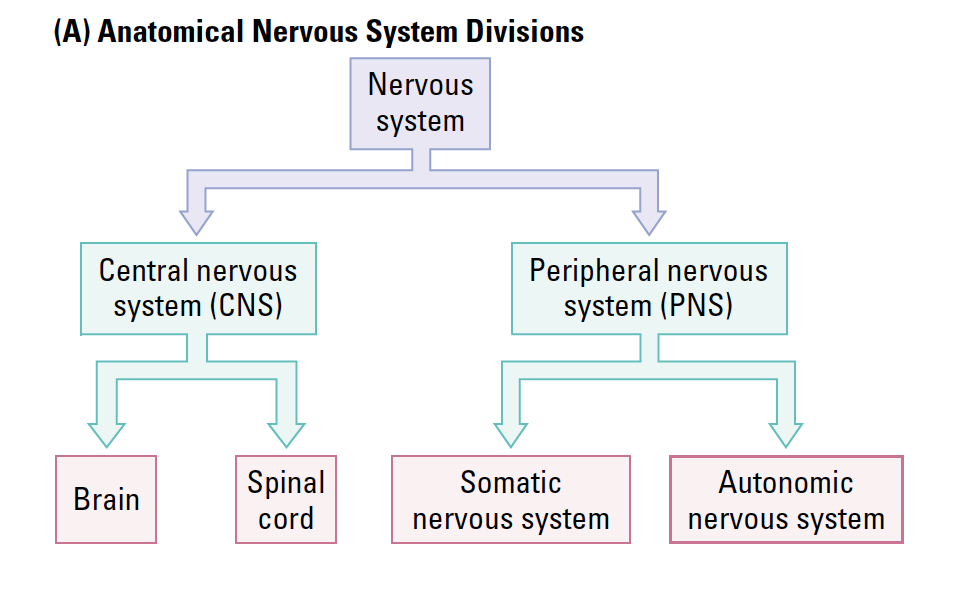
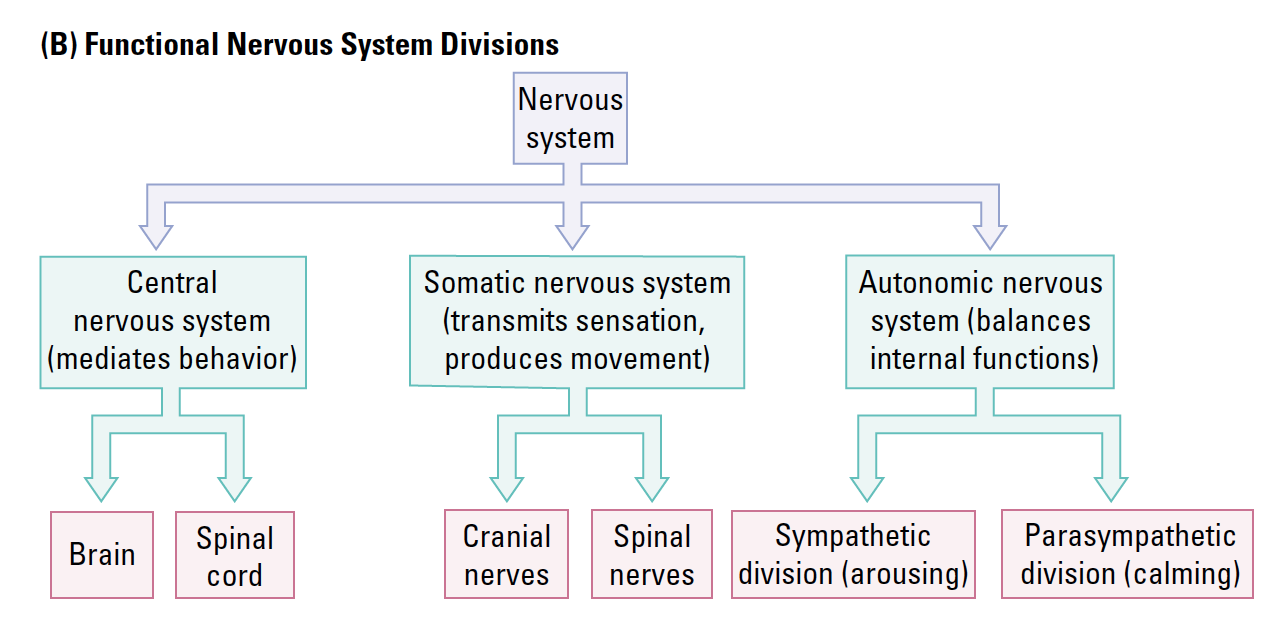
Functional Nervous System Divisions
Nervous system:
- Central nervous system (mediates behavior)
- Brain
- Spinal cord
- Somatic nervous system (transmitts sensation, produces movement)
- Cranial nerves
- Spinal nerves
- Autonomic nervous systems (ANS; balances internal functions)
- Sympathetic division (arousing)
- Parasympathetic division (calming)
parasympathetic nerves
i.e., calming nerves
“rest and digest”
sympathetic nerves
i.e., arousing nerves
“flight or flight”
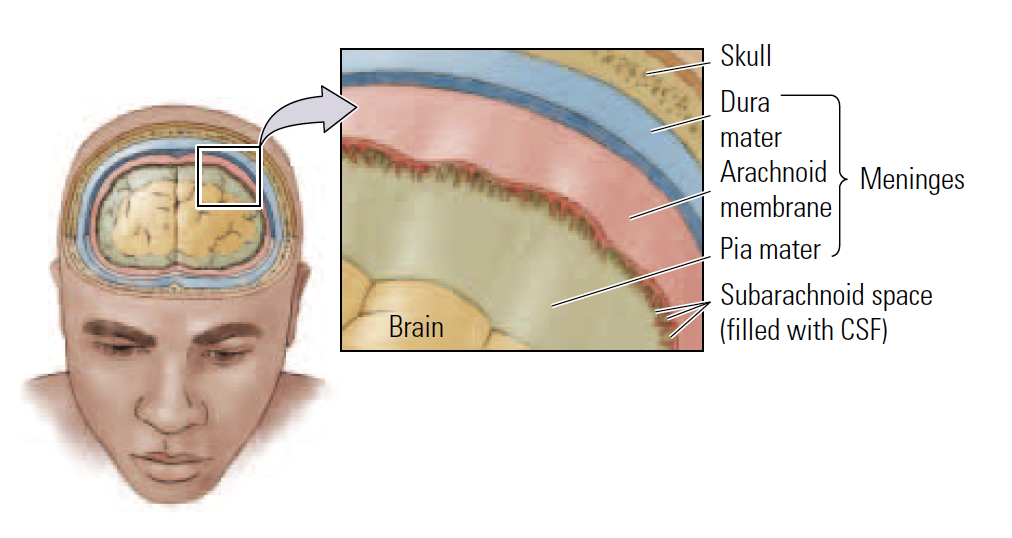
Cerebral Security
- Skull
- Meninges
- Dura mater
- Arachnoid membrane
- Pia mater
- Subarachnoid space (filled w/ CSF)
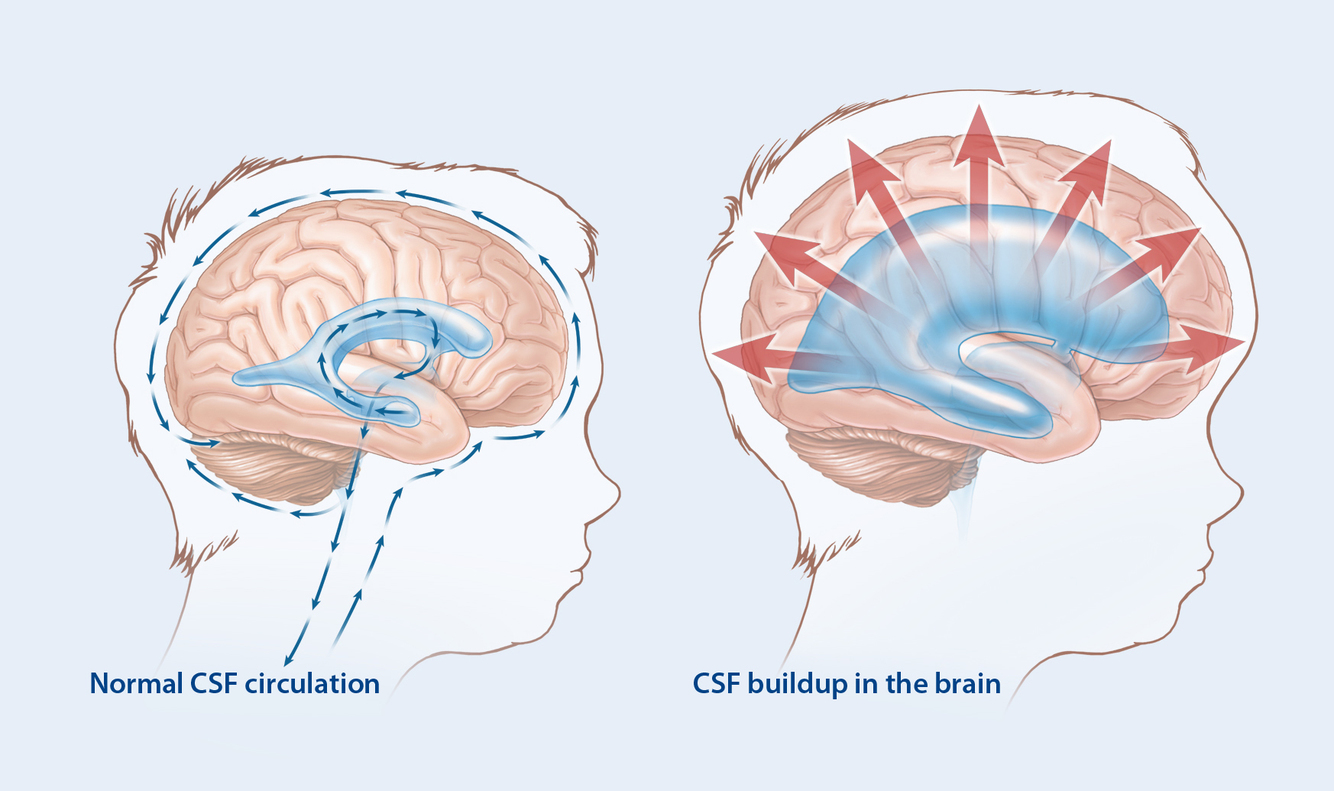
hydrocephalus
literally, “water brain;” severe intellectual impairments and even death can result from the built-up cerebrospinal fluid (CSF) pressure.
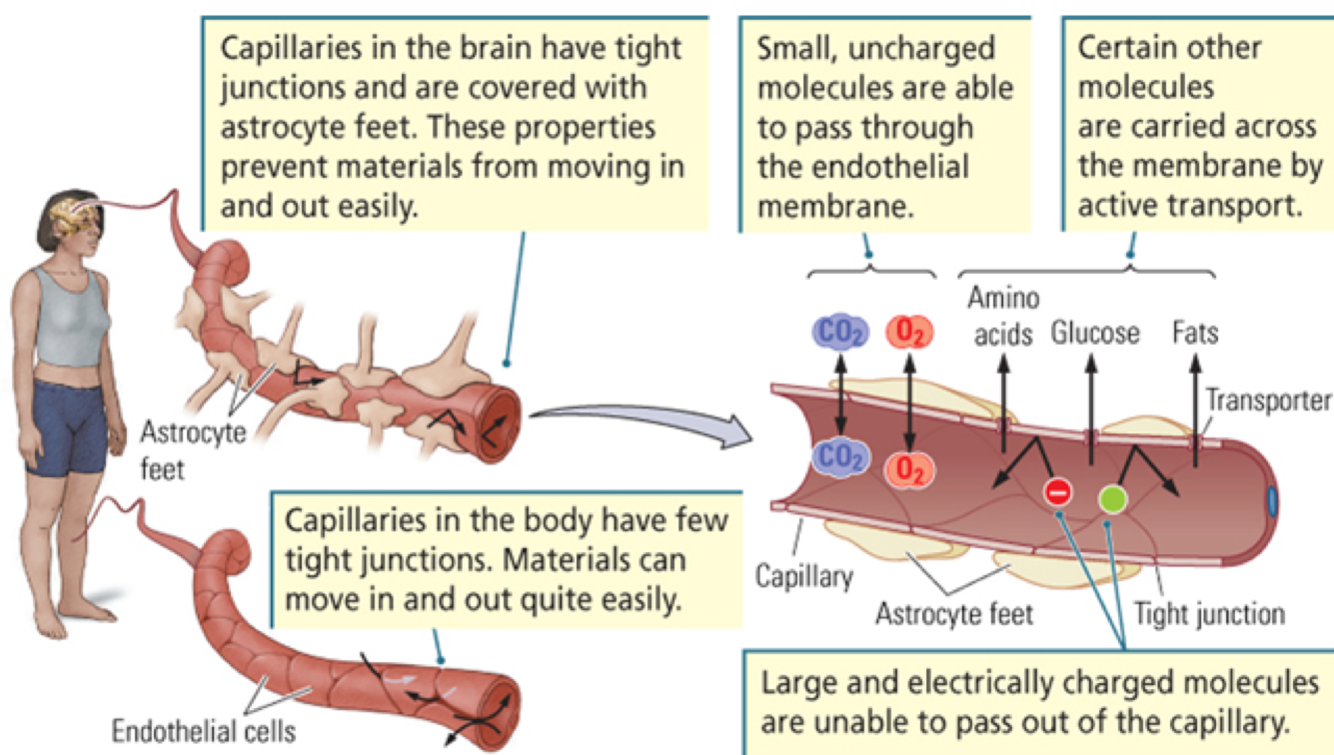
Blood-brain barrier
Protects brain and spinal cord by limiting movement of chemicals from the rest of the body into the CNS and by protecting it from toxic substances and infection.
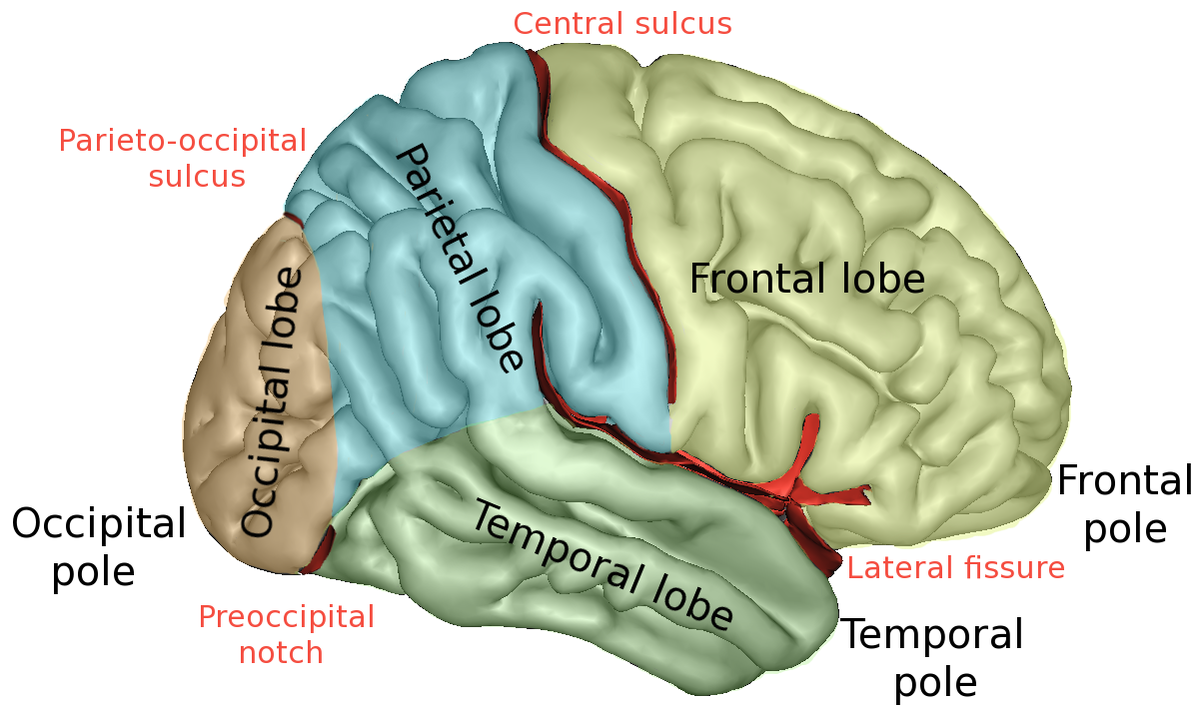
Sulci and gyri of neocortex
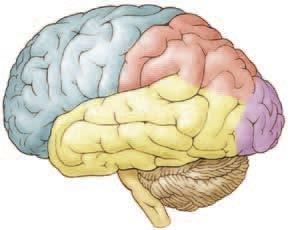
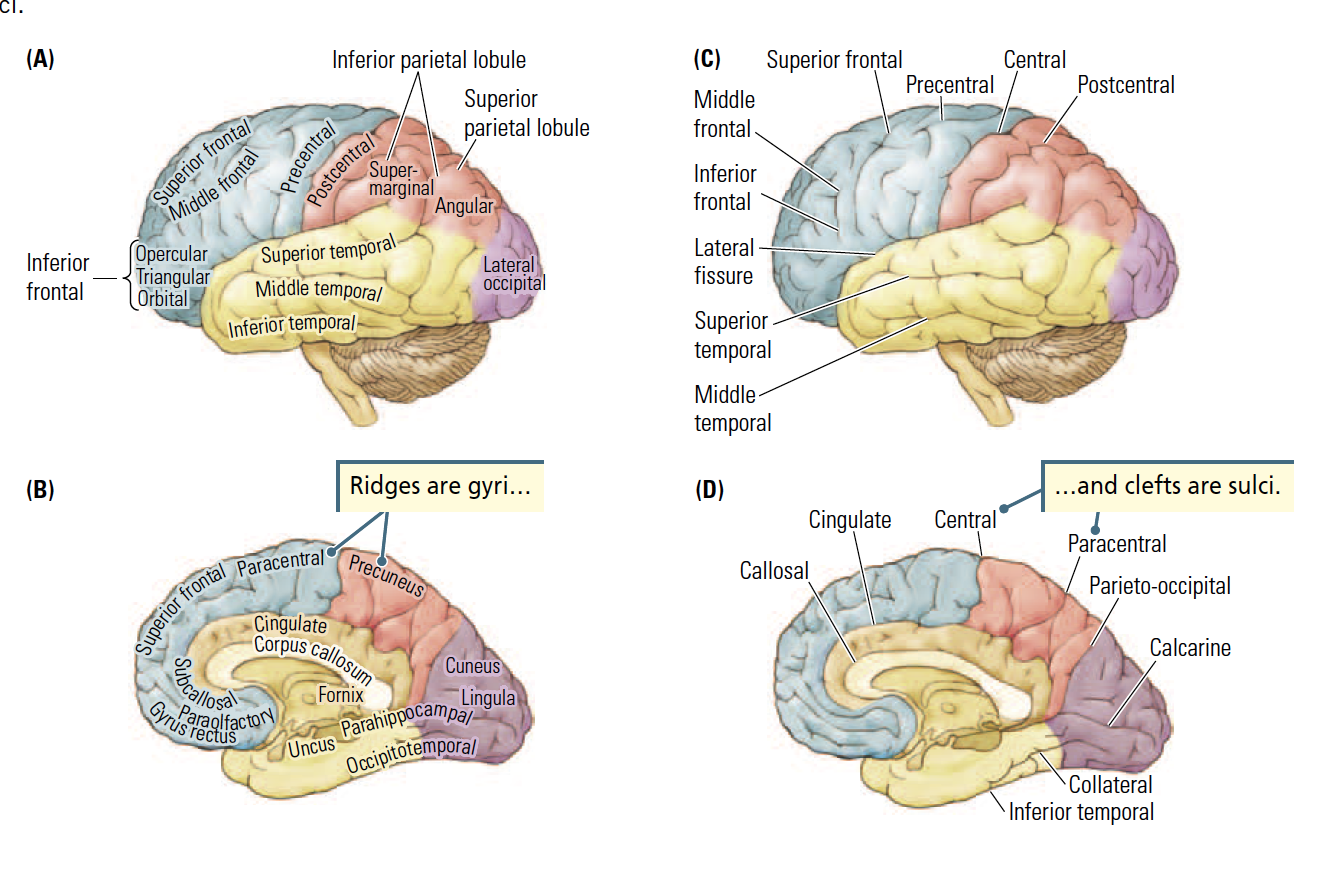
Brain Lobes
- Frontal
- Parietal
- Occipital
- Temporal
Cingulate gyrus
part of the limbic system located just above the corpus callosum, spans the inner surface of all four neocortical lobes
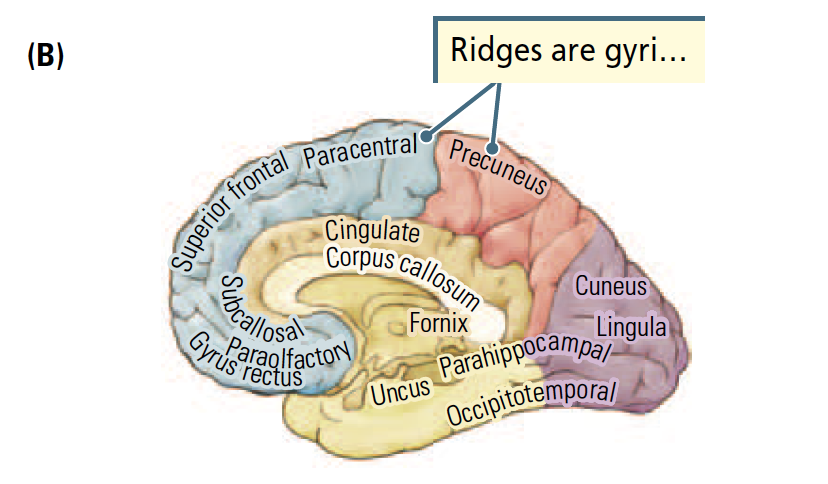
Sulci and gyri of neocortex
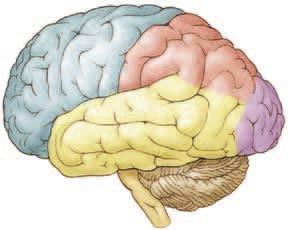
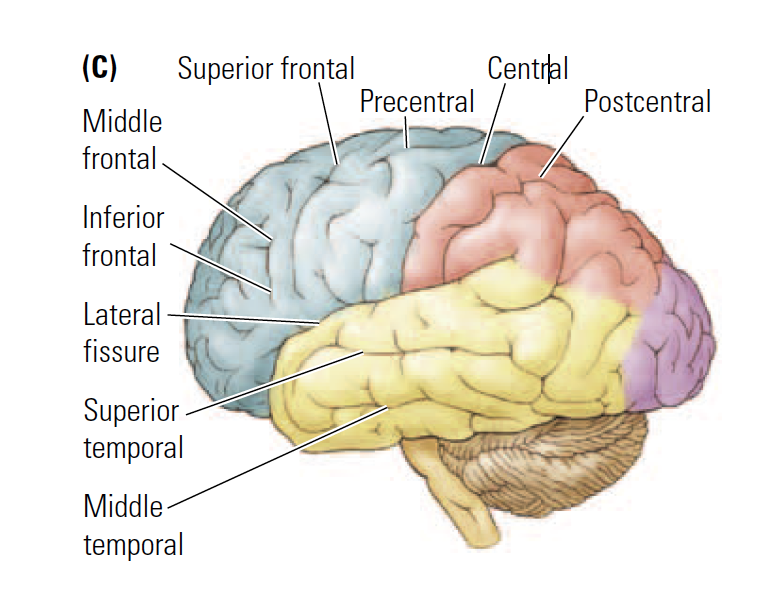
Brain lobe functions
- Frontal
- Parietal
- Occipital
- Temporal
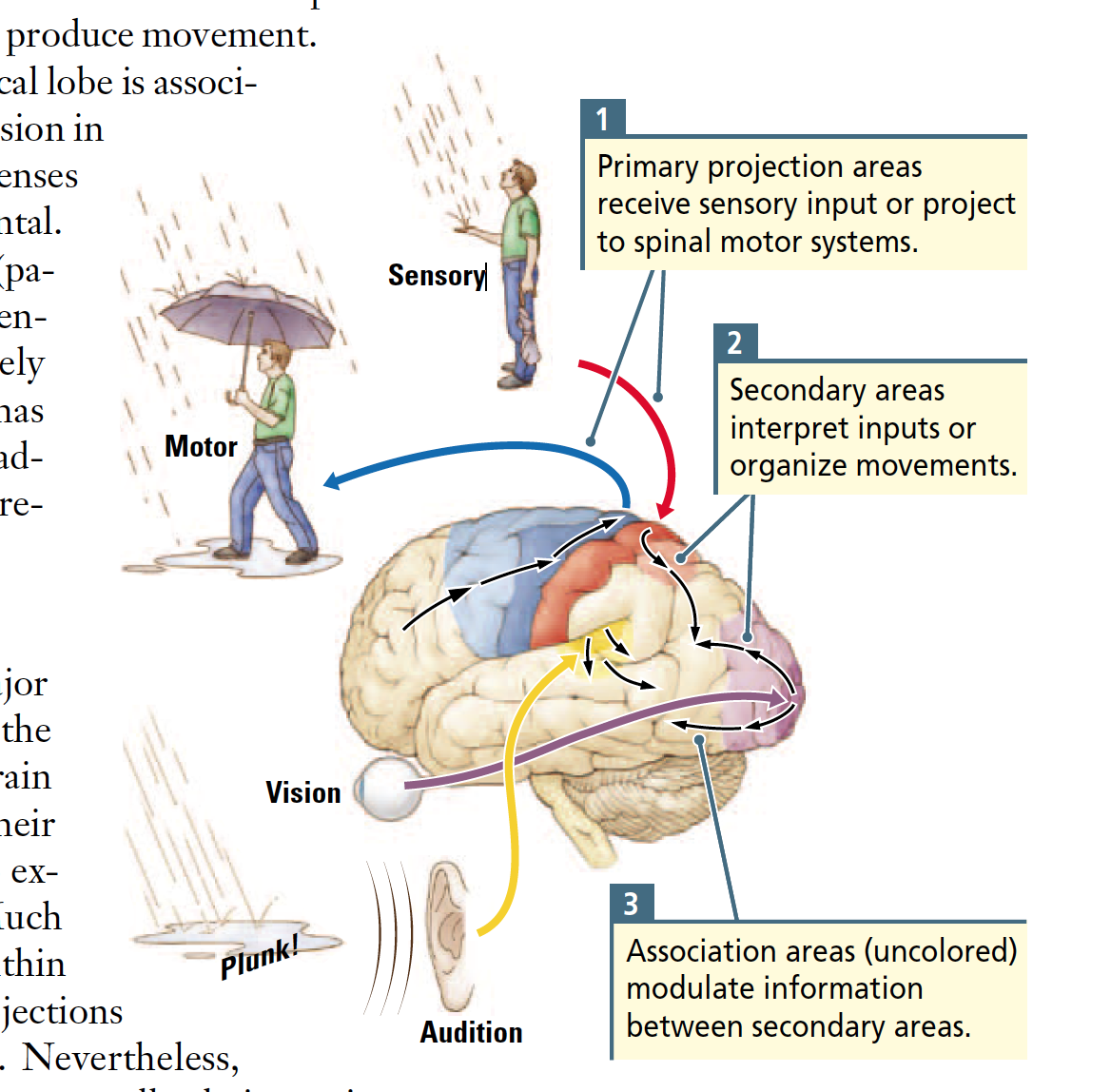
- Frontal (motor functions)
- Parietal (body senses)
- Occipital (vision)
- Temporal (audition)
Choroid plexus
- Produces CSF
- (location wise) moves downward toward the fourth ventricle
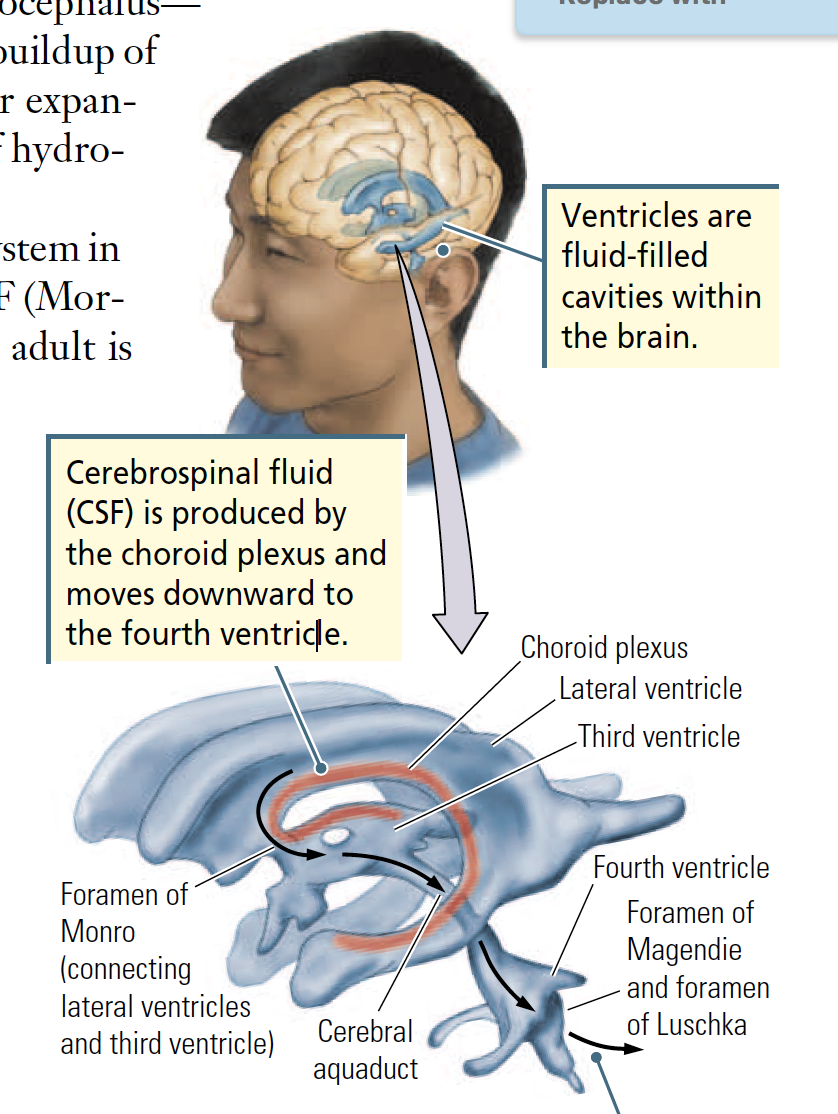
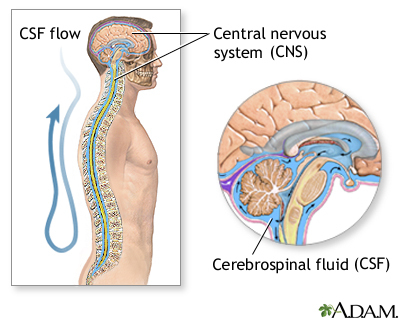
cerebrospinal fluid (CSF)
- cushions brain and spinal cord from shock and sudden pressure changes
- circulates through brain’s four ventricles, the spinal column, and within the subarachnoid space in the brain’s meninges
- CSF continually made and drained off into the circulatory system through connecting channels among the ventricles.