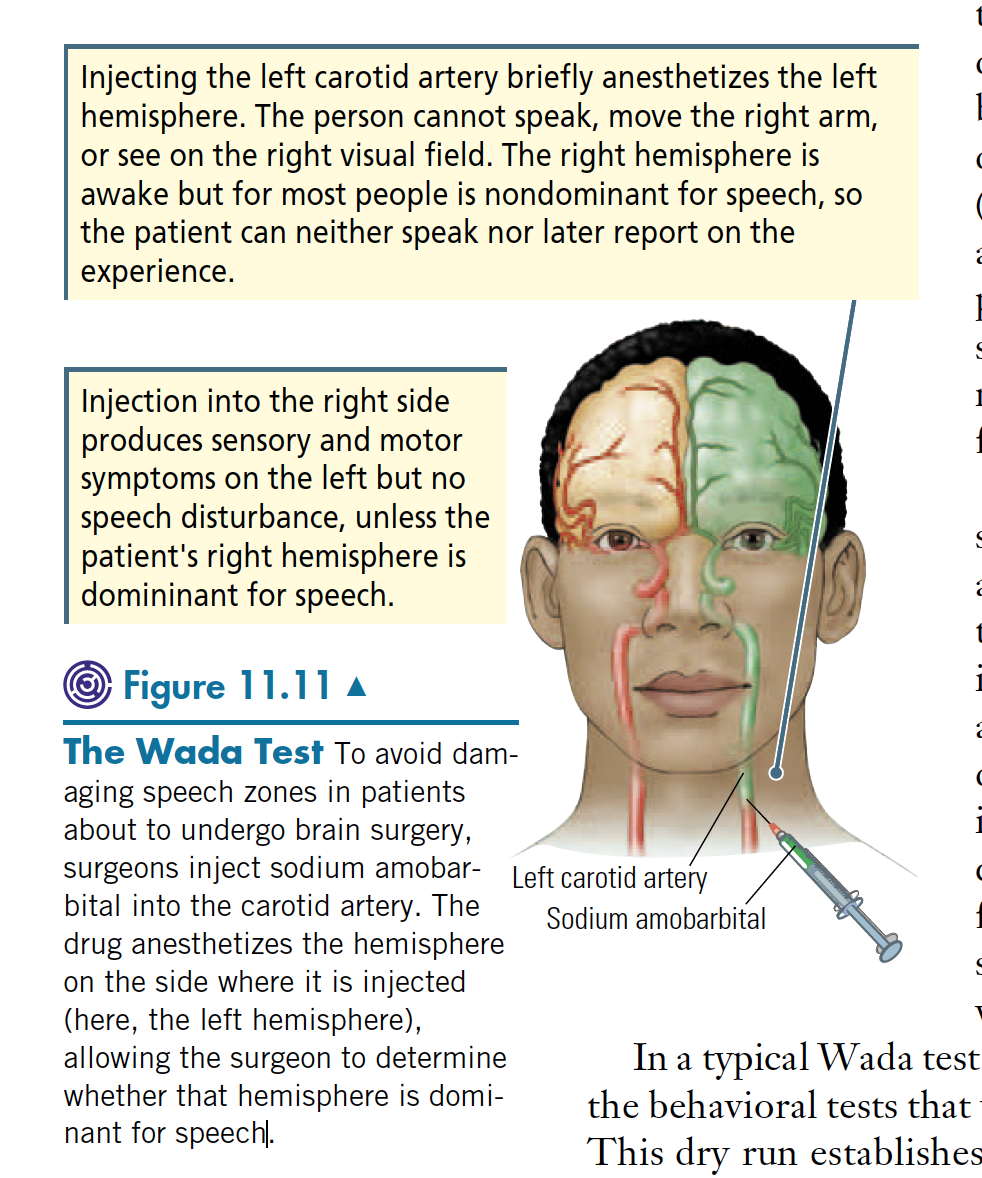
Symptoms of Kluver Bucy Syndrome. What is it associated with?
Bilateral medial temporal lesions; sometimes seen with herpes encephalitis.
- HYperorality
- HYpersexuality
- Stimulus bound
- Visual agnosia
- Lack of fear response
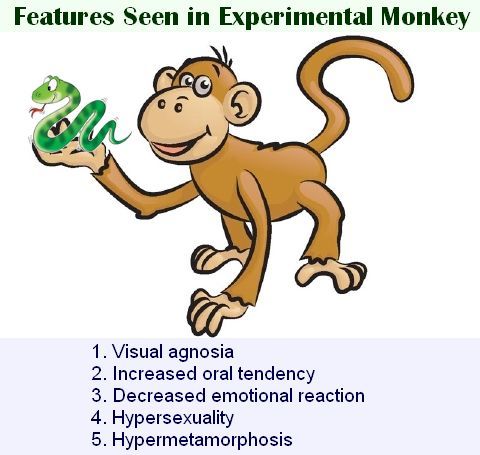
Be able to identify the brain regions (and functions) included in the above figure.
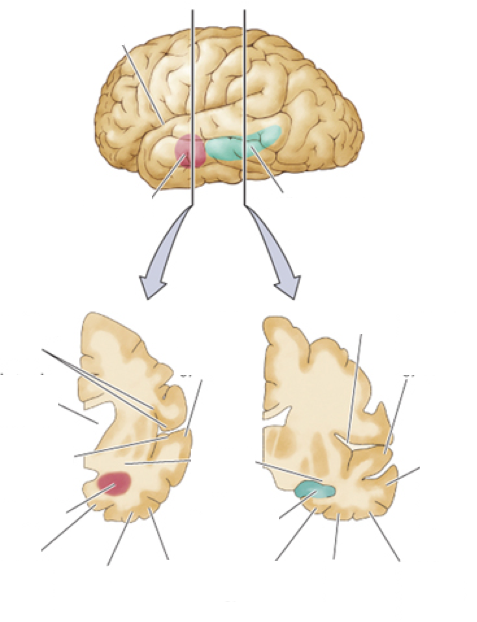
Functions:
- Lateral fissure: ?
- Amygdala: emotion, fear
- Hippocampus:
- Function: associated mainly w/ memory, in particularly long-term memory.
- Location: Part of the limbic system, in the medial temporal lobe, under cerebral cortex
- Gustatory cortex: take a guess
- Lateral ventrical: CSF
- Auditory association cortex: Take a guess
- Uncus:
- Function: function does not seem well defined but is part of olfactory cortex and concerned with olfaction.
- Location: a bulbous cortical tissue located just below the amygdala (mesial temporal lobe)
- Inferior temporal gyrus: object perception (including color and faces) and perceiving certain types of movements?
- Medial Temporal gyrus: contemplating distance, facial recognition, and accessing word meaning while reading.
- Temporal stem: forms a white matter bridge between the temporal & frontal lobes, and as such, it plays an important role in a # of disorders. It is a route of tumor, infection, & seizure spread.
- Hippocampal gyrus:?
- Fusiform gyrus: faces?
- Superior temporal gyrus: contains the primary auditory cortex, which is responsible for processing sounds
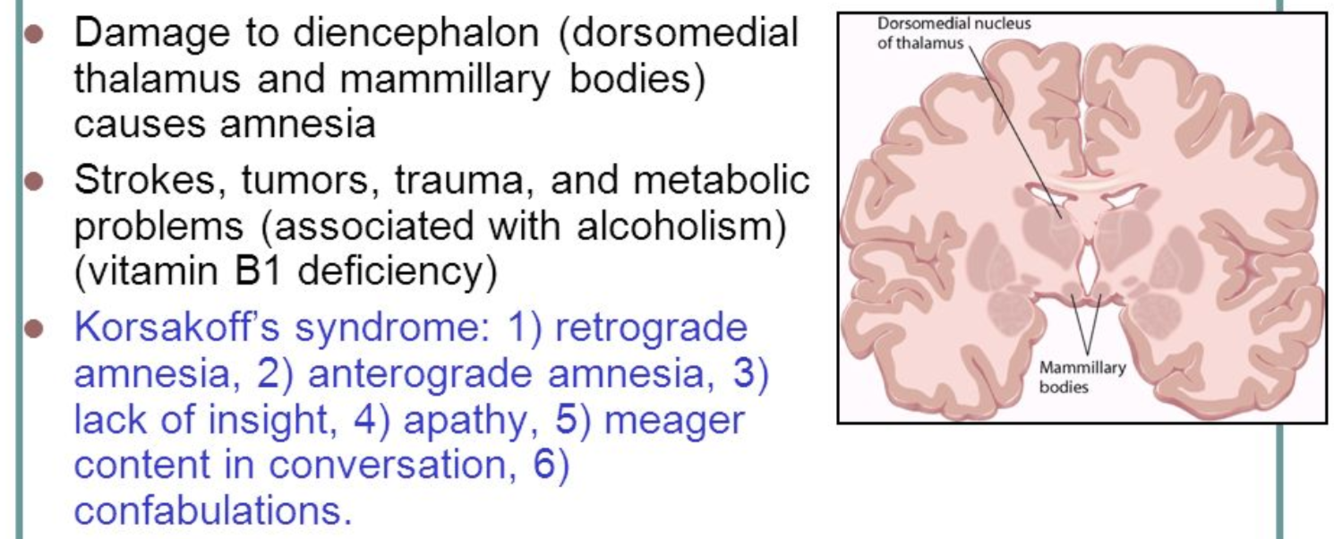
Describe symptoms of Korsakoff’s Syndrome. What structural brain regions are involved and what causes the disease?
Symptoms:
- Confabulation (rather than admit memory loss)
- Lack of insight
- Apathy
- Meager content in conversation
- Anterograde amnesia
- Reterograde amnesa
They CLAMAR(ed) to get the booze (those alcoholics).
B1 vitamin deficiency kills cells in:
- damage to medial part of the diencephalon (i.e., “between brain” at top of brainstem); including
- dorsomedial thalamus, &
- mammillary bodies
- dorsomedial thalamus, &
- frontal lobes of 80% of patients show atrophy
Metabolic disorder of CNS often associated w/ chronic alcoholism.
Perform poorly on the Wisconsin Card-Sorting Test and on tests of spatial memory (e.g., delayed response).
Describe the function and structure of the ventral and dorsal auditory streams.
Dorsal Auditory Stream: How or Where pathway
- Responsible for locating sounds
- Directing movements with respect to auditory information
- I heard a siren from behind me-turn to look
- Projects from the auditory areas to the posterior parietal cortex
Ventral Auditory Stream: What pathway
- Six cortical and subcortical pathways comprise the stream
- Responsible for identifying sounds
Cross-Modal Matching
- Process of matching visual and auditory information
- Depends on cortex of STS
- Memory ltM
Describe the 3 basic sensory functions of the temporal lobes
- Processing auditory input
- Visual object recognition
- Long-term storage of sensory input—memory
Pavol
- Sensory Processing (ltM)
- Identification and categorization of stimuli (object recognition) ventral visual pathway
- Developing object categories is crucial to perception and memory (intertemporal cortex)
- Cross-Modal Matching
- Spatial Navigation
- Spatial memory
- Hippocampus contains cells that code places in space
- Affective Responses
- Emotional response is associated with a particular stimulus
- Amygdala
Lt. Affr SpaN
Which part of the temporal lobes are associated with perception of biological motion?
Superior Temporal Sulcus is activated during perception of biological motion (allow us to guess others’ intentions)
- STS cells are maximally responsive to the following types of biological motion:
- Direction of eye gaze
- Head movement and facial expression
- Mouth movement-vocalizations
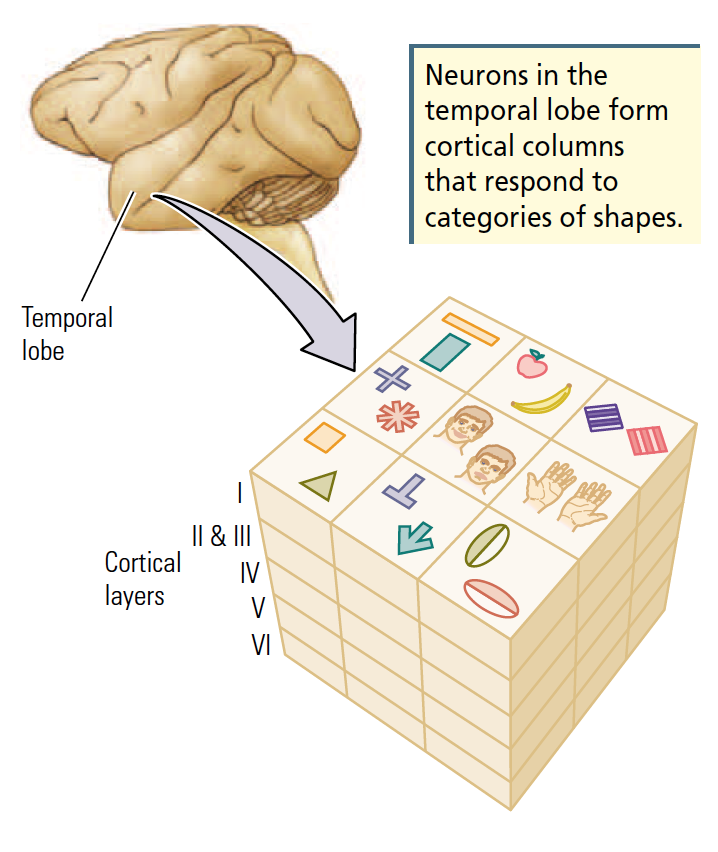
Describe the columnar organization of the ventral stream.
Describe the columnar organization of the ventral stream (p. 408-409) (need help with this)
- Cells with similar selectivity tend to cluster vertically in columns
- An object is likely represented by the actively of many cells within a columnar module
Describe the functional importance of the fusiform gyrus and how this is related by the “thatcher” illusion.
- Inverted faces are processed by the same cortical regions as other visual stimuli.
- Upright faces are processed in a separate face perception.
Describe the functional asymmetries of the right and left temporal lobes.
- Left temporal lobe
- Verbal memory
- Speech processing
- Right temporal lobe
- Nonverbal memory
- Musical processing
- Facial processing
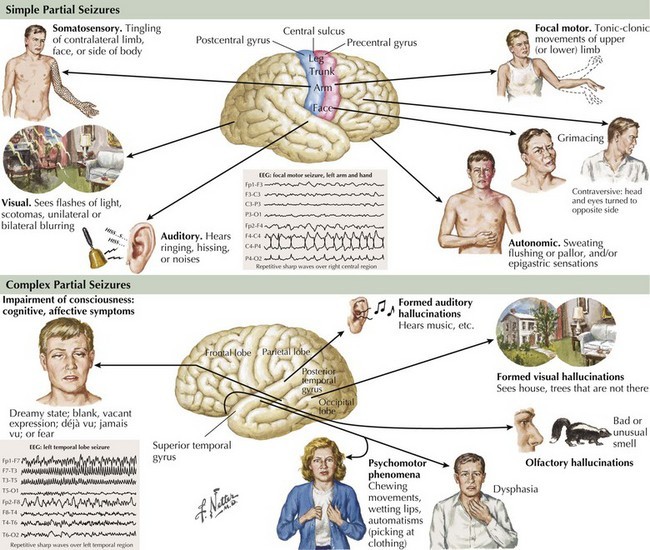
Describe the difference between a simple partial, complex partial, and generalized seizure. What is status epilepticus?
- Generalized: involve whole brain, therefore the whole body; many types (e.g., convulsive, nonconvulsive).
- Simple partial: begins in one side of the brain
- Complex partial: type of focal seizure that originates most commonly in the temporal lobe (less frequently in the frontal lobe), characterized by
- (1) subjective experiences that presage the attack;
- (2) automatisms,
- and (3) postural changes
- Status epilepticus: seizure lasts too long or when occurs close together & person doesn’t recover between seizures; there are also different types of status epilepticus.
Describe the ideal circumstances for anterior temporal lobectomy for uncontrollable seizure disorders, regarding: right versus left lobe, mesial sclerosis, memory profile, WADA procedure.
for those in whom anticonvulsant medications do not control epileptic seizures
- Right vs. left
- best outcome group includes patients with MRI evidence of mesial temporal sclerosis
- Memory Profile:
- Wada
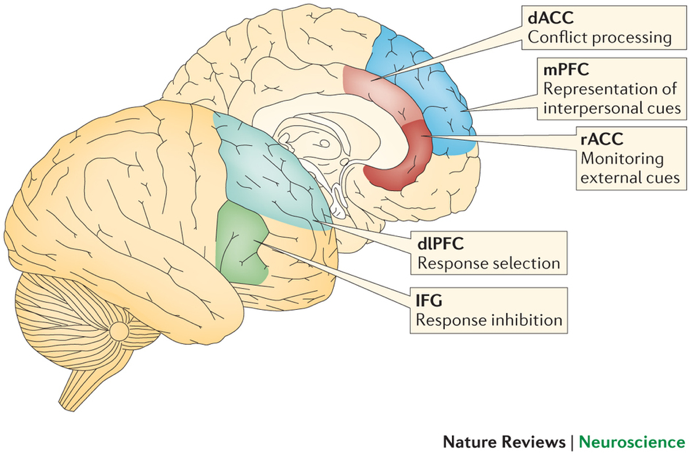
Draw and denote the primary functions of:
- mPFC :
- Cingulate cortex
- dACC:
- rACC:
- Dorsolateral (dlPFC):
- IFG:
- Ventromedial PFC (VMPFC):
- Orbitofrontal:
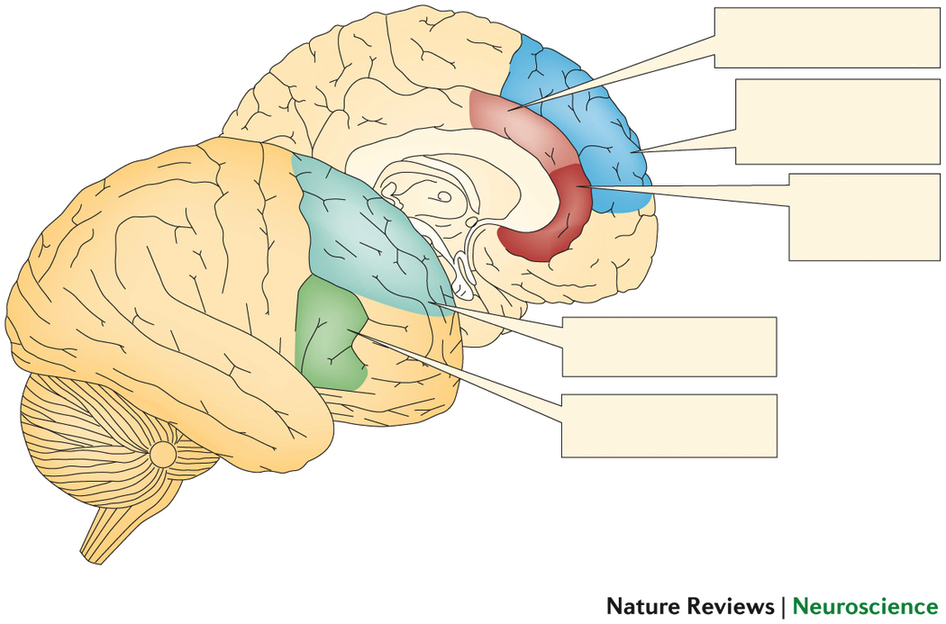
- mPFC: representation of interpersonal cues
- Cingulate
- dACC: conflict process
- rACC: monitoring external cues
- Dorsolateral prefrontal: Response selection
- IFG: response inhibition
- Orbitofrontal: Gains input from all sensory modalities
- Ventromedial PFC (vmPFC): Links with emotional behavior bodywide
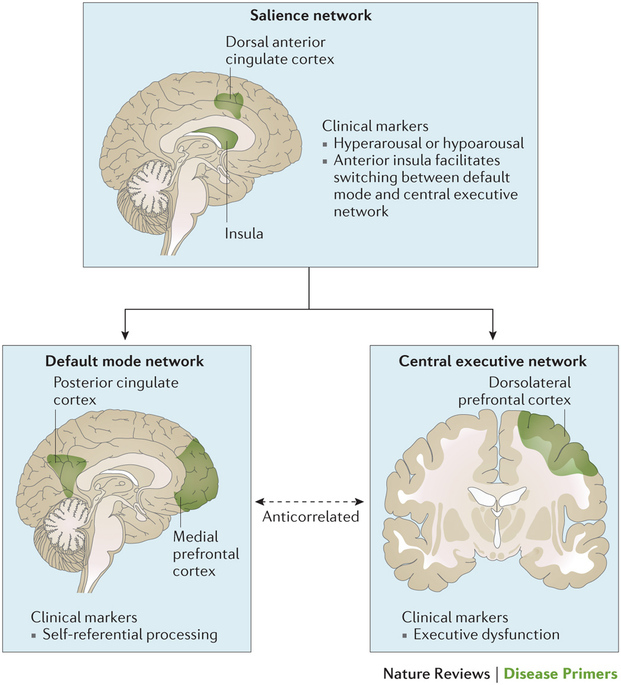
Describe the functional and structural differences between the Salience & Default Networks.
Salience: Most active when beh. change needed; when something need immediate attention.
- Anterior insula & Anterior Cingulate Cortex (ACC).
Default:“resting,” & when thinking about one’s past, future, “wanders.”
- Posterior Cingulate Cortex (PCC), mPFC.
Describe the Iowa Gambling Task & how it is related to OFC and emotional functioning.
Iowa Gambling test:
- Task thought to simulate real-life decision making; the participant needs to choose 1 out of 4 card decks (named A,B,C, and D). Participant can win or lose money w/each card.
- Appears after OFC damage
- More OFC volume relates to better emotional decision-making in schizophrenia patients.
- Unlike patients, controls found the ambiguous tasks more aversive; activated OFC & amygdala in test of 50/50 probability
Most people figure that out and begin exclusively sticking to “good decks”, but even before they are consciously aware of this, the “bad decks” begin generating higher stress responses, e.g., in terms of galvanic skin conductance when the computer cursor hovers over a “bad deck.” In contrast, people with frontal lobe dysfunction will continue to play the “bad decks” even though they are aware they are losing money by playing those decks, and fail to show the stress responses associated w/ “bad decks”.
Name 3 times of executive functioning measured by the Wisconsin Card Sorting Test.
- Set-switching
- Novel problems solving
- Preservation (tendency to repeat same verbal or motor behavior).
Describe at least 4 diagnostic features of possible behavioral variant FTD. How does this become probable bvFTD? Definite bvFTD?
- Behavioral Disinhibition
- Apathy/Inertia
- Lose of empathy/sympathy
- Preservation
- Hyperorality
How does this become probable bvFTD?
- Meets criteria for possible bvFTS
- Exhibits significant functional decline (by caregiver report)
- Imaging results consistent with bvFTD (one of the following must be present):
- Frontal and/or anterior temporal atrophy bvFTD
- Frontal and/or anterior temporal hypoperfusion or hypometabolism on PET or SPECT
Definite bvFTD?
- Criterion A and either Criterion B or C must be present to meet criteria
- Meets criteria for possible or probably bvFTD
- Histopathological evidence of FTLD on biopsy or at post-mortem
- Presence of known pathogenic mutation
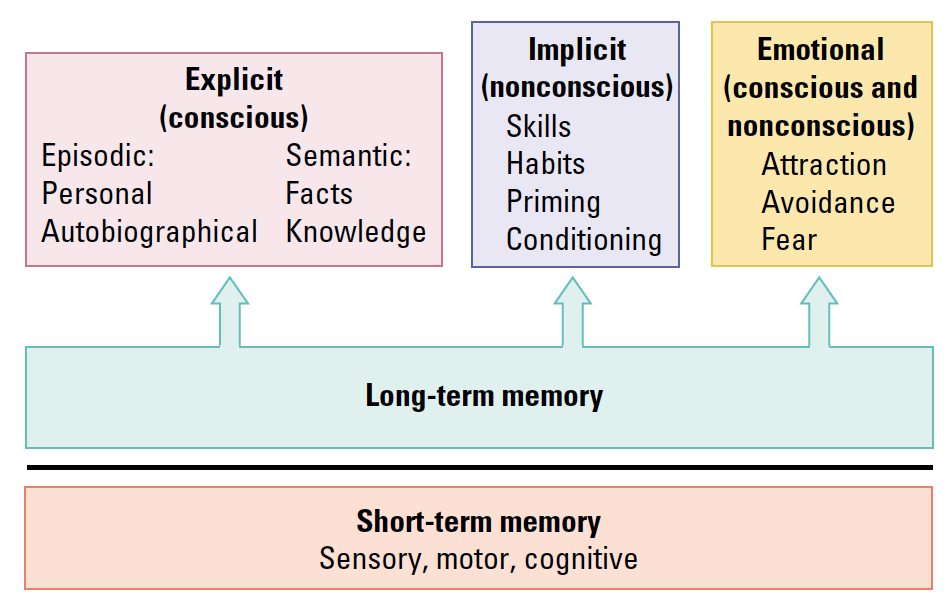
Differentiate Implicit, Explicit, Episodic, Semantic, short-term, and Procedural Memory.
- Implicit: (nonconscious), skills, habits, priming, conditioning
- Explicit: Conscious
- Episodic: personal, autobiographical
- Semantic: facts, knowledge
- Short-term: sensory, motor, cognitive
- Procedural: star mirror, drawing
What types of memory are most commonly impacted by hippocampal damage?
Studies of hippocampal patients demonstrate four conclusions:
- Anterograde deficits are more severe than retrograde
- Episodic memories are more affected than semantic memories
- Autobiographic memory is especially severely affected
- Time “travel” is diminished
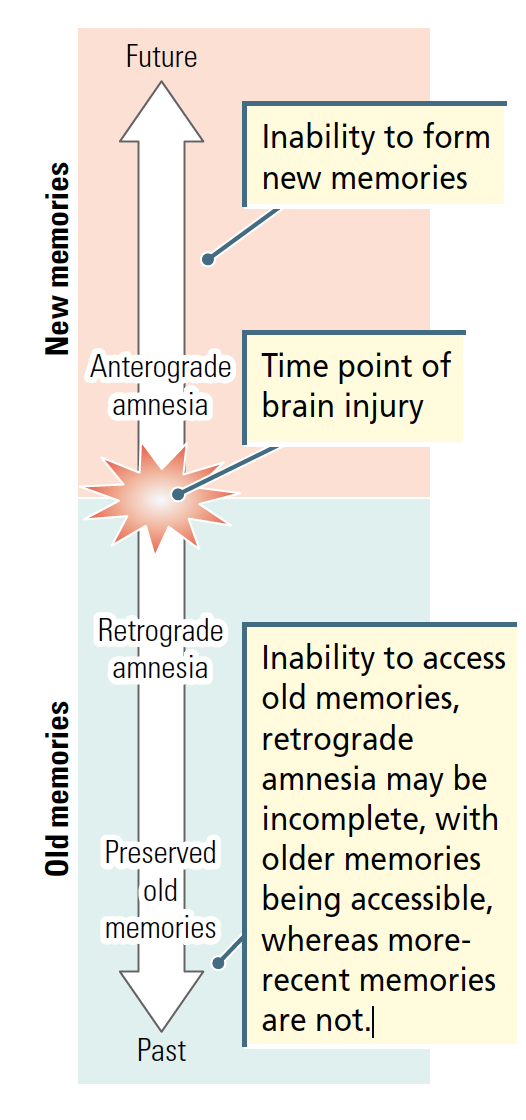
Differentiate childhood, anterograde, retrograde, and dissociative amnesia.
- Childhood amensia: inability to remember events from infancy or early childhood.
- Anterograde: Inability to form new memories
- Retrograde: Inability to access old memories; may be incomplete with older memories being accessible, but more recent memories are not.
- dissociative amnesia:
- Contrasted against “fugue,” which seems to occur after a traumatic event.
Describe and contrast system consolidation theory and multiple trace theory.
System consolidation theory: Hippocampus consolidates new memories (a process that makes them permanent); when complete, memories stored elsewhere in brain (neocortex).
Multiple trace theory:
- Three kinds of memory
- Autobiographic memory: hippocampus
- Factual semantic memory: temporal
- General semantic memory: rest
- Memories change as they are recalled, reevaluated, & restored
- Old memories are more resistant to amnesia because they change location in the brain as they are recalled
- In any learning event memories of many types are encoded in parallel in different brain locations.
- Different kinds of memory, being stored in different locations, are differentially susceptible to brain injury.
How does the case of HM help us understand the difference between procedural and episodic memory?
HM was able to learn to complete a mirror-drawing task, yet had no explicit memory of ever having performed the task.
ltM
Also:
- Help us recognize there are different systems between short-term/long-term memory.
- That the hippocampus plays a role in creating ltm.
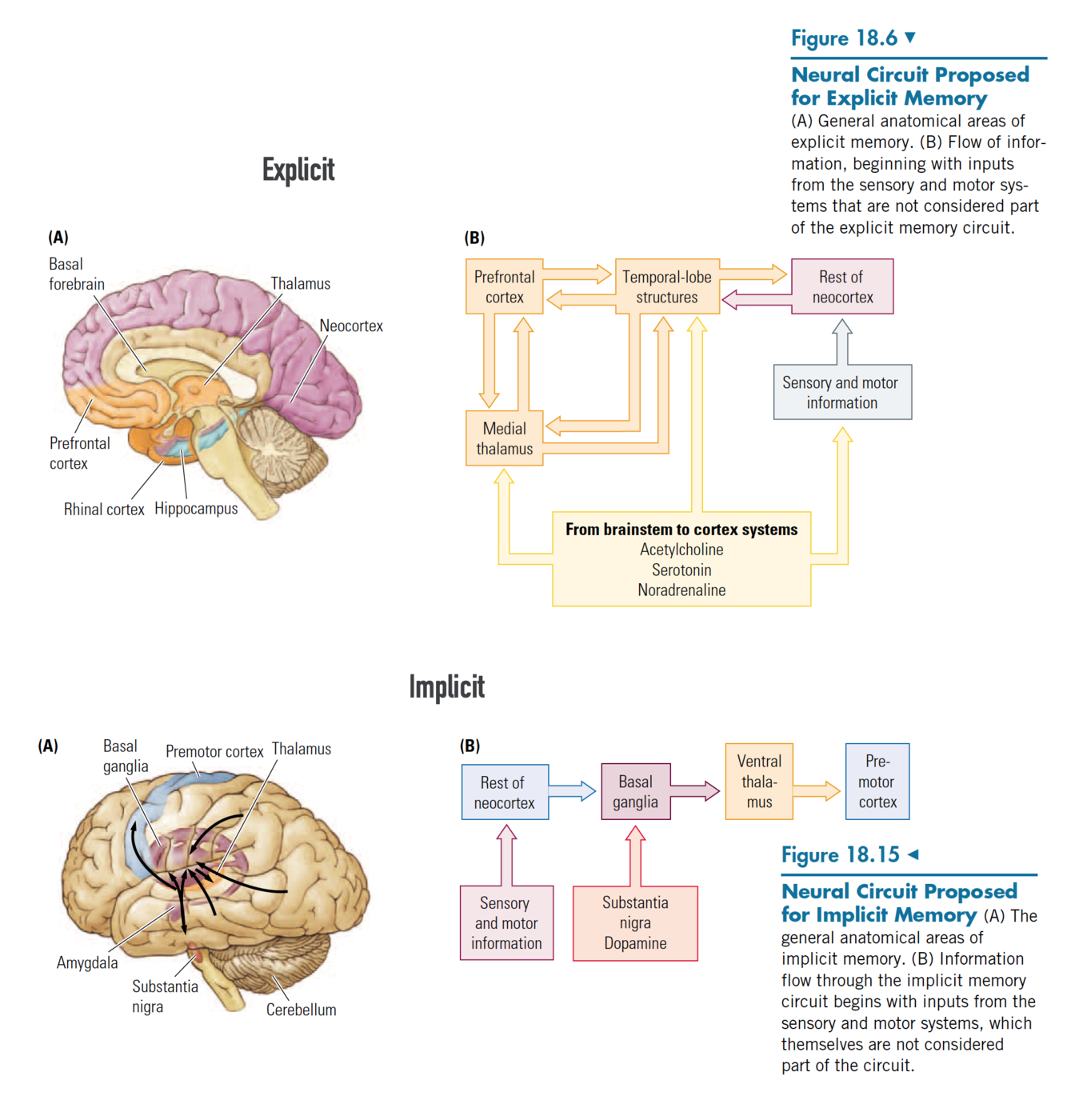
Describe differences in the structural brain circuits in explicit versus implicit memory.
No back and forth between regions for implicit memory.
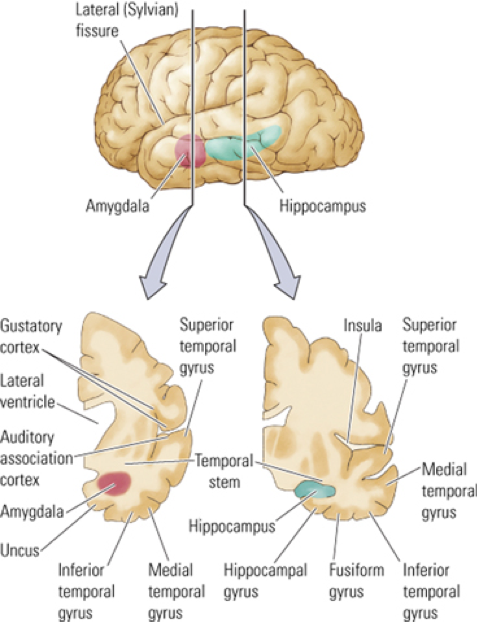
WADA test
To avoid damaging speech zones in patients about to undergo brain surgery, surgeons inject sodium amobarbital into the carotid artery. The drug anesthetizes the hemisphere on the side where it is injected (here, the left hemisphere), allowing the surgeon to determine whether that hemisphere is dominant for speech.