Glycogenesis
- To start the process of glycogenesis, glucose is phosphorylated by glucokinase (liver) or hexokinase (muscle) to produce glucose-6-phosphate (glucose6P).
- After a meal, glucose is diverted to the synthesis of hepatic glycogen to replace what has been lost since the last meal.
- This response is controlled largely by increased amounts of insulin in the blood as well as by the marked increased concentration of glucose6P in the liver cell that occurs after a carbohydrate meal.
- In muscle, glycogen is replaced after intense exercise during which glycogen has been used.
- The glucose6P is then converted to glucose-1-phosphate (reverse of the reaction used during glycogenolysis).
- glucose 1P + uridine monophosphate (UMP —> UDP - glucose
-The UMP is derived from UTP.
•UDP-glucose is the substrate for glycogen synthase, the principal and regulated enzyme of glycogenesis.
- Glycogen synthase is active in its dephosphorylated state by the action of protein phosphatase, which is activated by insulin.
- Any glycogen synthase that remains phosphorylated is activated allosterically by glucose6P.
•These combined effects ensure that glycogen, which had been utilized to maintain glucose homeostasis since the last meal or for driving muscle contractions is replenished.
Glycogenesis - Adding Branches
- The highly branched structure of glycogen permits exclusion of water to decrease a tissue osmotic effect and to increases its efficiency as a substrate for glycogen phosphorylase, which catalyzes the removal of glucose units from the ends of branches.
- The formation of branches is catalyzed by branching enzyme that moves seven glucose residues from the end of a growing chain to an interior area where a branch can be attached.
Glycogenolysis
- Glycogen phosphorylase [GP] is the key regulated enzyme that removes sugar residues from glycogen.
- GP catalyzes hydrolysis of glucose residues from the ends of branches and phosphorylation of these residues.
- This enzyme contains binding sites for its substrates (glycogen, Pi), a cofactor (pyridoxal phosphate), an allosteric activator (AMP), and allosteric inhibitors (ATP, glucose, glucose-6-phosphate).
- Certain hormone signals [i.e., glucagon, epinephrine] activate GP by phosphorylation of the enzyme.
- The product of the reaction is glucose-1-phosphate that is rearranged to glucose6P.
- In liver, to ensure the glucose6P is dephosphorylated to glucose via glucose 6-phosphatase (G6Pase), glycolysis is inhibited by fructose-2,6-bisphosphate (F2,6BP) at phosphofructokinase-1 (PFK-1) under conditions of food deprivation.
- Glucose-6-phosphatase is unique to tissues producing glucose (i.e., liver and kidney).
- Other tissues, such as muscle, lack G6Pase so that glucose6P from glycogenolysis proceeds directly through glycolysis to produce pyruvate that is either converted to lactate via lactate dehydrogenase (LDH) under anaerobic conditions or aerobically to CO2 via pyruvate dehydrogenase (PDH) and the citric acid cycle (CAC)
Glcogenolysis - Debranching
- The combined actions of a debranching enzyme and a transferase move the final four residues of a branch to the end of a chain so that they can be removed by glycogen phosphorylase.
- Glucose-1-phosphate, the product from glycogen phosphorylase, is converted to glucose6P via phosphoglucomutase.
- The final residue that forms the alpha-1,6 linkage is removed by a 1,6-glucosidase enzyme releasing free glucose directly.
Glycogenolysis in the Lysosome
- Lysosomes can store some glycogen. Its conversion to glucose is catalyzed by the lysosomal acid maltase (alpha-1,4-glucosidase).
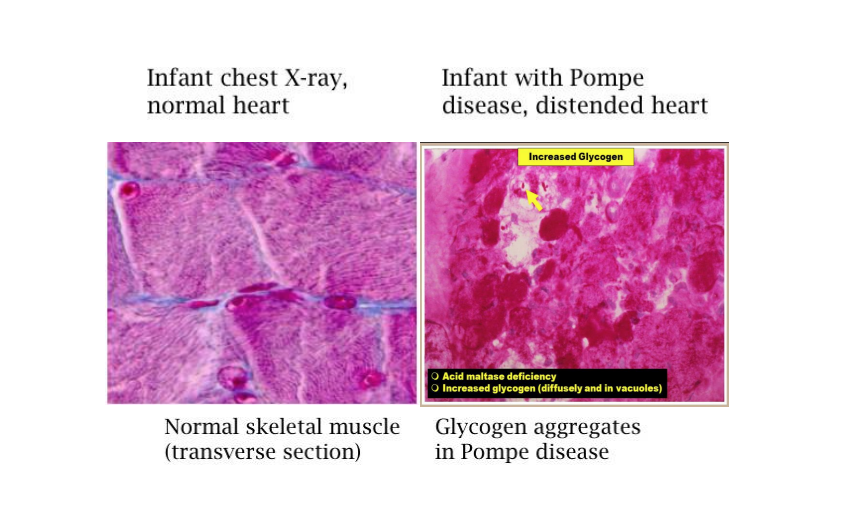
- Homozygous deficiency of this enzyme causes accumulation of lysosomal glycogen in all types of cells.
Glycogen Storage Diseases
- Type II - Pompe disease – lysosomal glucosidase
- Type I – Von Gierke disease – glucose-6-Pase
- Type III – Cori disease – debranching enzyme
- Type V – McArdle disease – muscle phosphorylase
- Type VI – Hers disease – liver phosphorylase
- Type 0 – glycogen synthase
- Type IV – Andersen disease – branching enzyme
GSD Type II Pompe Disease
*Defect of lysosomal storage of glycogen; acid maltase: alpha-1,4-glucosidase
*Affects wide range of cell types
- Infants: hypotonia, weakness, areflexia, cardiomegaly, hypertrophic cardiomyopathy, some hepatomegaly [no hypoglycemia]
- Juvenile/adult form: motor delay; progressive myopathy – skeletal muscle only
- Heart failure leads to early death
- Enzyme replacement therapy - alglucosidase alfa [lumizyme]*
*For 2016, Lumizyme was ranked the costliest drug per patient, average of $630,159
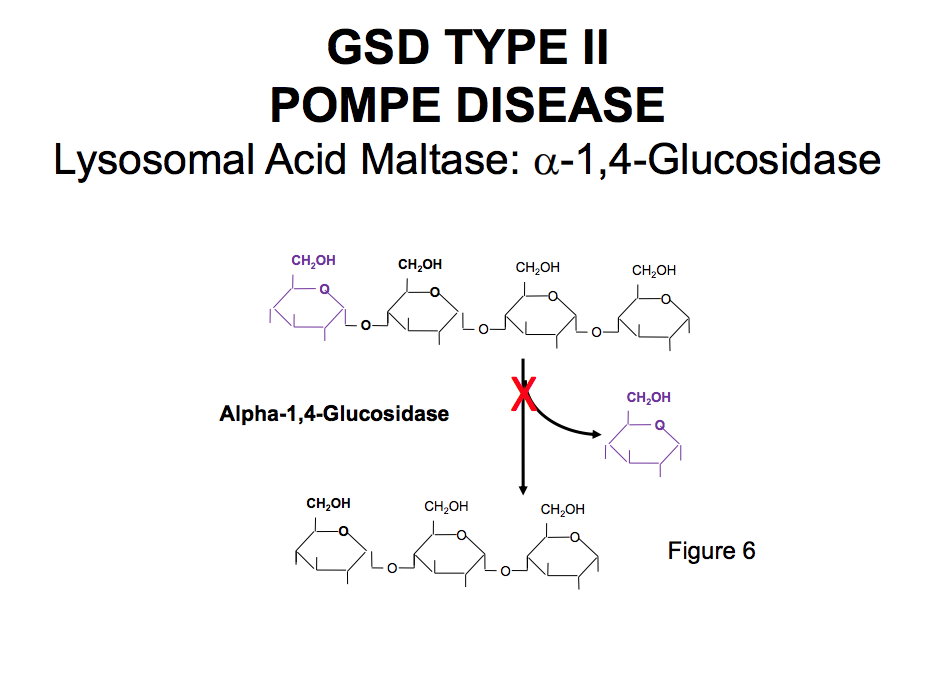
Type II Pompe Disease Histology
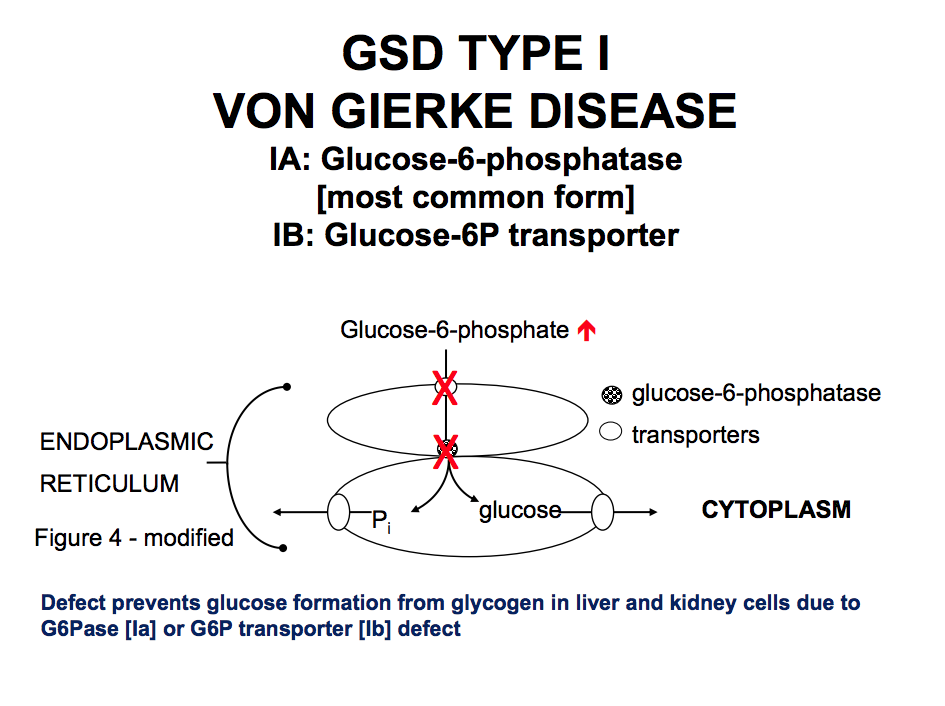
GSD Type I Von Gierke Disease
- IA: Glucose-6-phosphatase [most common form]
- IB: Glucose-6P transporter
Workup for GSD Type I Von Gierke Disease
- Glucose (fasting hypoglycemia; monitoring therapy)
- Liver enzymes – AST and ALT (hepatomegaly)
- Plasma lactate elevated (lactic acidosis)
- Plasma bicarbonate (decreased due to acidosis)
- Uric acid (decreased due to acidosis)
- Plasma lipids (elevated cholesterol and triglyceride)
- Hb/Hct (anemia due to chronic hepatic disease)
- Serum alpha-fetoprotein (hepatocellular carcinoma marker - adenoma)
- Imaging:
- Hepatic ultrasonography (diagnosis and monitoring therapy)
- Renal ultrasonography (nephrolithiasis)
- CT/MRI (monitor adenomas)
GSD Type I Von Gierke Disease Overview
- GSD Type I (von Gierke disease) usually involves a lack or reduced activity of glucose-6- phosphatase (Type Ia) that is located in the endoplasmic reticulum).
- Less frequently the disease can be a consequence of a deficiency in the transporter for glucose6P (Type Ib).
-In Type Ib the substrate fails to reach the glucose-6-phosphatase enzyme in the ER lumen.
- Overall GSD type I occurs in about 1 per 100,000 live births.
- The disease is inherited as an autosomal recessive disorder.
- A variety of mutations have been identified in Caucasians, Hispanics, Chinese, and the Ashkenazi Jews; the most common being a R83C mutation found to be prevalent in all groups listed except Chinese. Amongst the non-Ashkenazi Jews in North Africa the incidence is reportedly as much as 1 in 5500. Overall about 25% of the cases of GSD are type I.
GSD Type I Von Gierke Disease Clinical Features
The disease presents in infants with major symptoms that include:
•Hepatomegaly leading to a protruding abdomen.
-The hepatomegaly contributes to development of at least one hepatic adenoma, usually in the teen years, in as high as 75% of the patients but less commonly do these adenomas become malignant (10% of adenomas).
- Hepatomegaly may also lead to pancreatitis that is another factor which, along with hepatomegaly and nephrolithiasis, can cause abdominal pain.
- Metabolic derangements are common and include hypoglycemia, lactic acidosis and hyperuricemia.
-The extent of hypoglycemia varies but can lead to serious complications ranging from seizures to coma and death.
•Recall that the kidney contains glucose-6-phosphatase activity, so that glycogen accumulates in this organ as well.
-Elevated uric acid (90% of patients) due to the acidosis leads to gouty arthritis.
•Type Ia patients almost always exhibit dyslipidemia with markedly elevated serum triacylglycerol (hypertriglyceridemia – nearly 100%), and moderately increased VLDL, LDL and cholesterol (hypercholesterolemia – 75%).
-The elevated lipids can manifest as xanthomas and contribute to pancreatitis.
•Patients often exhibit platelet dysfunction.
- Anemia is found in ~80% of patients.
- Type Ib patients may have neutropenia and neutrophil abnormalities.
• GI:
-Infections, abscesses and inflammatory bowel disease are common in type Ib but less so in type Ia patients.
• Endocrine:
- Growth failure, even in treated patients is common (90%) with final height being in the 5th -10th percentiles.
- Less commonly features can include muscle hypotonia, delayed psychomotor development and recurrent infections, the latter being most common in type Ib (41%) compared to type Ia (3%).
- Hormonal imbalances also can lead to bone disorders (osteopenia or fractures – 25%). These imbalances likely also account for delayed onset of puberty and subsequent development.
- Polycystic ovary disease may also be present in females.
• Renal:
- Nephrolithiasis is common. Kidney damage (focal segmental glomerulosclerosis) can lead to further complications of proteinuria (65%), hypertension and chronic renal failure.
- Damage due to both uric acid stones and kidney accumulation of glycogen leads to decreased creatinine clearance.
• Mortality has become less of an issue with the development of therapies that help reduce the severe complications.
Biochemistry of GSD Type I Von Gierke Disease
- Glucose-6-phosphatase is an essential enzyme for both glycogenolysis and gluconeogenesis.
- In GSD Type I, glycogenolysis occurs up to the production of glucose6P; carbons are then pushed through the glycolytic pathway.
- So why does glycogen accumulate leading to hepatomegaly?
- The capacity for glycolysis to process glucose6P following food deprivation is limited by the hormonal controls that decrease glycolysis and enhance gluconeogenesis.
- This capacity is not zero because there is always residual enzymatic activity even in an ‘inhibited’ state.
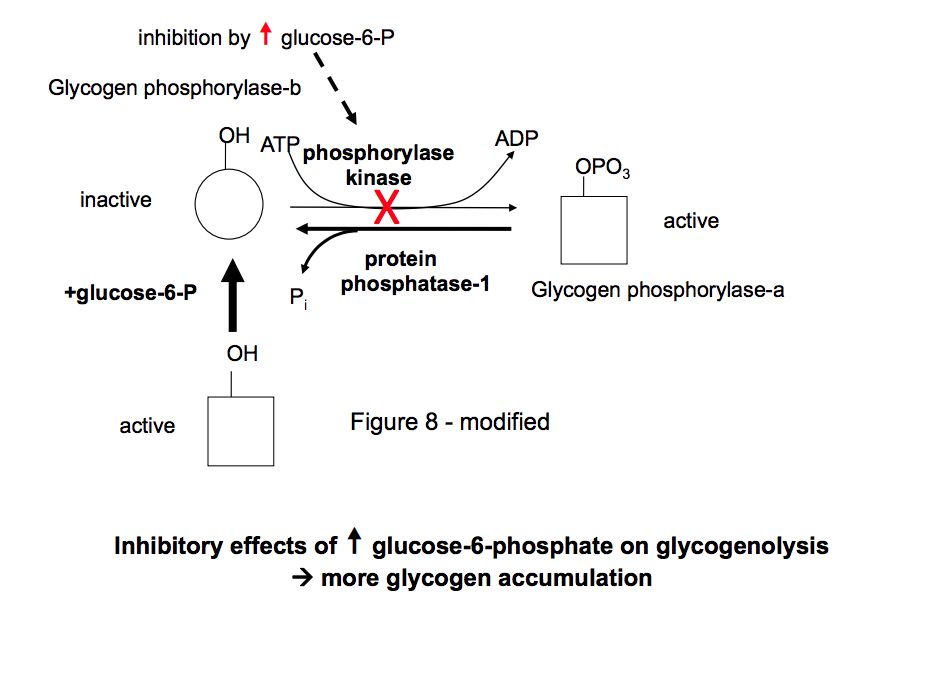
•The limitation of glycolysis causes an increase in the concentration of glucose6P, which counteracts to some extent for the activation of glycogenolysis by glucagon following food deprivation.
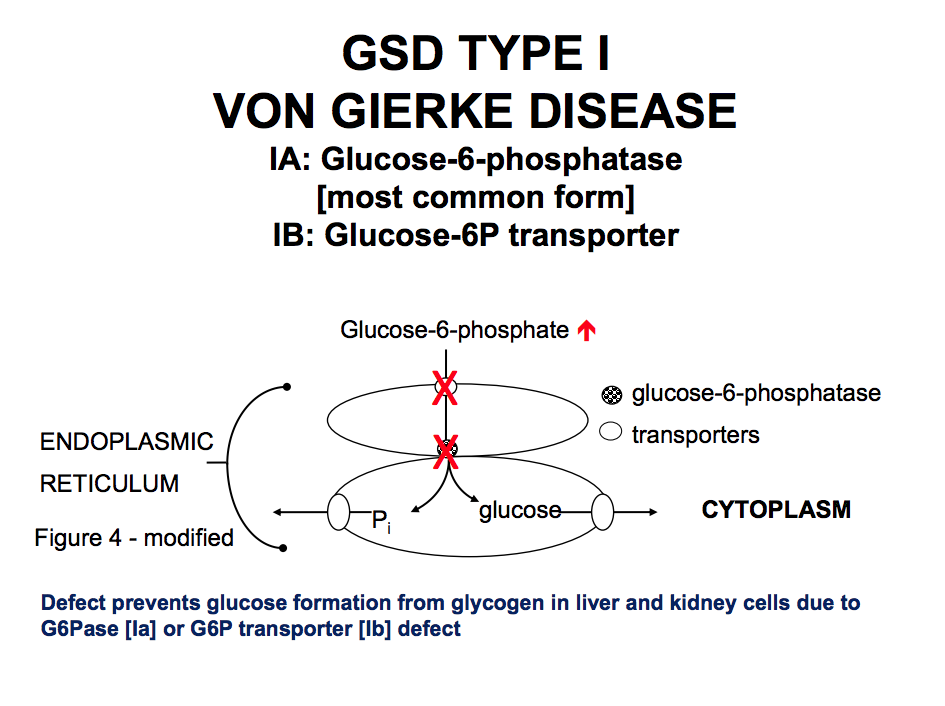
Biochemistry of GSD Type I Von Gierke Disease Part II
The limitation of glycolysis causes an increase in the concentration of glucose6P, which counteracts to some extent for the activation of glycogenolysis by glucagon following food deprivation.
Biochemistry of GSD Type I Von Gierke Disease Part III
- The inability to convert lactate or alanine to glucose means that lactic acidemia and hyperalaninemia become a consequence of food deprivation.
- The acidosis created by the lactic acid lowers the solubility and hence excretion of uric acid by the kidney; hence the development of hyperuricemia.
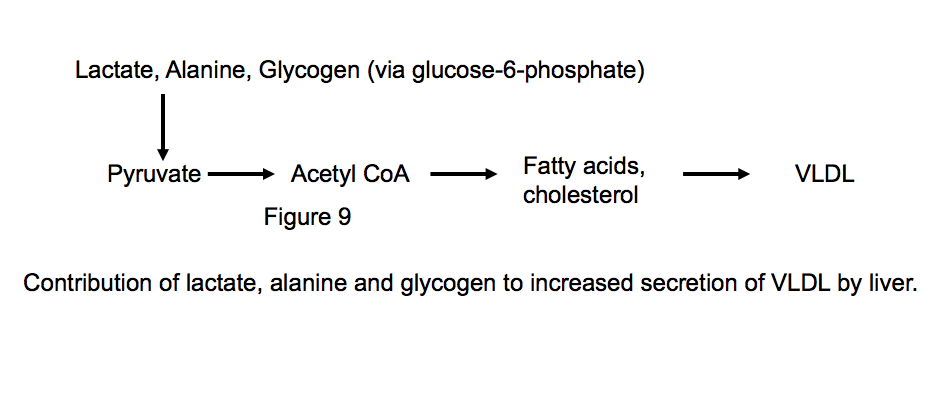
- Lactate, alanine and carbons from limited glycogen breakdown all will end up as pyruvate that is converted to acetyl CoA.
-Acetyl CoA is a precursor to synthesis of fatty acids and cholesterol that contribute to the formation and secretion of VLDL; hence the development of hypertriglyceridemia and hypercholesterolemia
GSD Type I Von Gierke Disease and Growth Failure
- In terms of growth failure, hypoglycemia reduces the secretion of insulin-like growth factor (IGF) by liver.
- IGF production and secretion is controlled by growth hormone, whose primary role is metabolic in promoting an increase of blood glucose.
- In the face of fasting hypoglycemia, the metabolic effects of growth hormone are retained in an attempt to maintain glucose homeostasis.
- Concurrently its stimulation of IGF-I secretion is curtailed because of the energy costs associated with growth; a second measure to preserve blood glucose.
GSD Type I Von Gierke Disease Histology
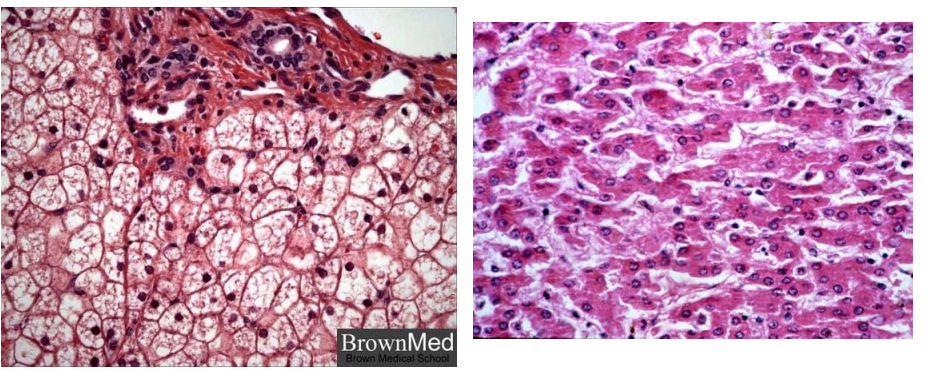
- Deficiency of glucose-6-phosphatase results in accumulation of glycogen in hepatocytes (left – compare to normal on right).
- The liver is enlarged. The hepatocytes are swollen and a mosaic histological pattern with compression of the sinusoids is seen.
GSD Type I Von Gierke Disease Treatment
- Avoid fasting
- Nasogastric tube feeding – young infants
- Avoiding excessive carb intake to prevent lactic acidemia.
- Uncooked cornstarch
-The raw cornstarch is a complex glucose polymer, which is acted on slowly by pancreatic amylase over about a 6-hour period
- Avoid sat. fats/cholesterol because of hyperlipidemia
- Surgical removal of adenomas
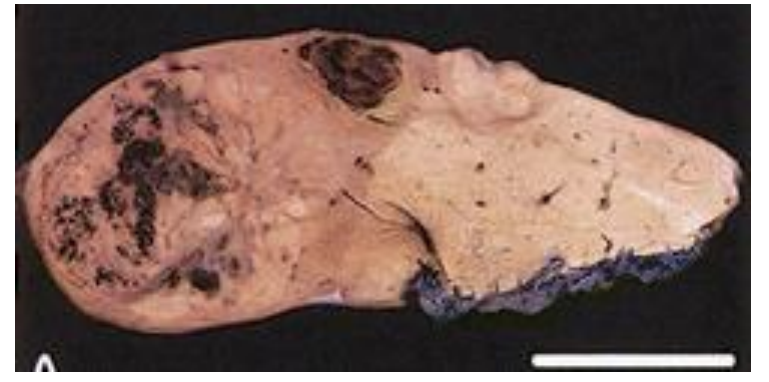
Liver resection in glycogen storage disease type Ia. Multiple tumor nodules with smooth borders; uninvolved parenchyma pale ; bar = 5cm
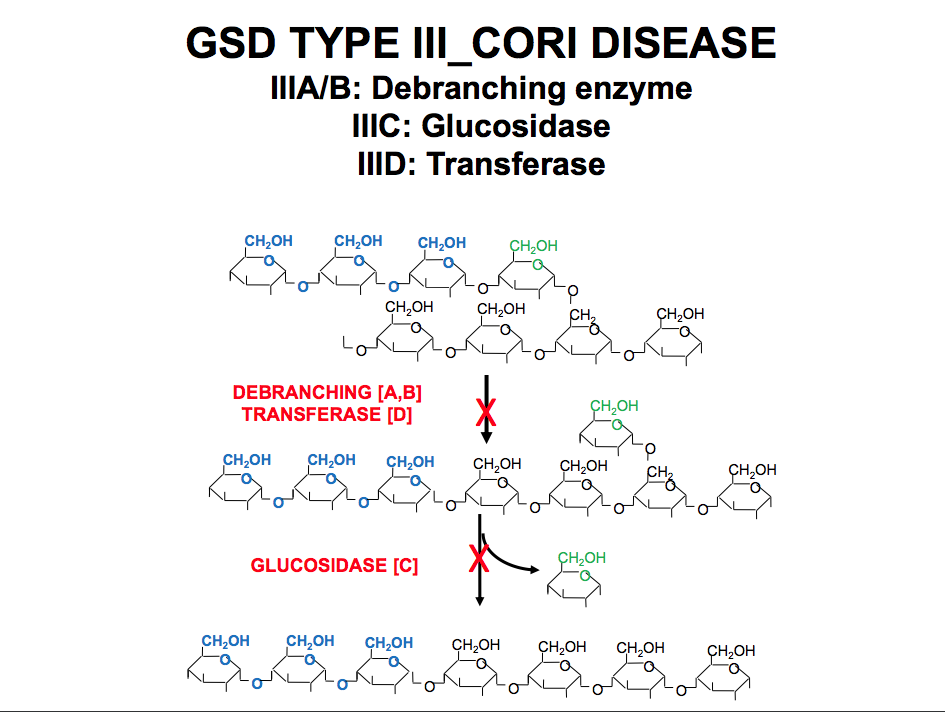
GSD Type III Cori Disease
- IIIA/B: Debranching enzyme
- IIIC: Glucosidase
- IIID: Transferase
- GSD Type III (Cori disease) is caused by a lack or reduced activity of the debranching enzyme leaving glycogen with short branches of 2-4 glucose residues.
- There are four types of clinical manifestations.
- Most patients (80%) have type IIIa that affects both liver and muscle.
- Type IIIb affects liver only.
- Type IIIc is associated with a defect of the glucosidase activity
- Type IIId a defect of the transferase activity.
- The disease is inherited as an autosomal recessive disorder.
- The incidence is about 1 in 25,000 births. GSD Type III accounts for about 25% of all GSD cases. Frequency of the disease is high in the following populations: Inuits and Sephardic Jews originating in North Africa (~1:5000).
GSD Type III Cori Disease Clinical Features
- The disease is diagnosed in infancy or early childhood with hepatomegaly and hypoglycemia as characteristics.
- Ketoacidosis can also occur.
- Some patients present with hyperlipidemia and growth retardation but not to the extent seen in GSD Type I.
-A key difference from GSD Type I is the muscle involvement in GSD Type III leading to hypotonia and muscle wasting though this feature is more likely seen in adults than children.
- Adult patients with GSD Type IIIa may also present with cardiomyopathy.
- Female adult patients may exhibit polycystic ovaries.
Biochemistry of GSD Type III Cori Disease
- Because branches cannot be fully removed from the glycogen molecule, the short branches can interfere with glycogen phosphorylase action.
- Following food deprivation, limited glycogenolysis can occur leaving a glycogen molecule with stubby branches and incomplete hydrolysis.
- Consequently, hypoglycemia occurs. However, because the glycogen molecule is partially degraded, hypoglycemia is less severe.
- The presence of ketoacidosis, hyperlipidemia and growth retardation are less characteristic.
- Excessive storage of glycogen in muscle causes damage to the tissue leading to leakage of creatine kinase into the circulation.
GSD Type III Cori Disease Workop
- Glucose (fasting hypoglycemia - mild)
- Liver enzymes – AST/ALT (hepatomegaly)
- Serum CK (muscle damage in type IIIa)
- Fibroblast enzyme activity
- Imaging:
- Hepatic ultrasonography (liver size)
- Female pelvic ultrasonography (polycystic ovaries)
- Abdominal CT (hepatocellular carcinoma)
- Ischemic forearm muscle test (decreased lactate output)
- Electromyography (myopathy changes)
Growth and Development GSD Type III Cori Disease
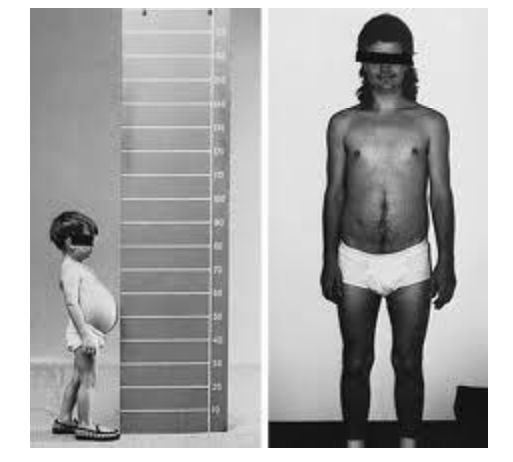
- Growth and development in a patient with type IIIb glycogen storage disease.
- Debrancher deficiency in liver but normal activity in muscle.
- Child: hepatomegaly, hypoglycemia, and growth retardation.
- After puberty: no hepatomegaly or hypoglycemia
- No muscle weakness or atrophy in contrast to type IIIa patients, who exhibit progressive myopathy in adulthood.
GSD Type III Cori Disease Treatment
- Avoid fasting
- High protein diet – favors gluconeogenesis


-
Oral Cavity Histology45
-
Abdominal Wall and Inguinal Region77
-
Oral Cavity and Salivary Gland Diseases49
-
Oral Cavity/Salivary Gland Diseases47
-
Neuro-Endocrine Regulation of GI37
-
Salivary/Gastric Secretion31
-
Gastric Mucosal Barrier and Peptic Ulcer Disease19
-
Disorders of the Esophagus and Stomach91
-
Esophagus and Stomach Histology41
-
Intestines Histology48
-
Hormones etc...29
-
Cells26
-
GI Development67
-
Structures of the Abdomen140
-
Motility and Gastric Reflux Disease44
-
Secretions of the Intestines/Ion Transport51
-
The Splanchnic Circulation23
-
Pancreatic and Biliary Secretions29
-
Pancreas, Gall Bladder, Liver Histology55
-
Digestion and Absorption: Carbohydrate, Lipid, Protein50
-
Endocrine Pancreas - Hormone Biosynthesis and Neoplasms27
-
Insulin Action26
-
Glucose Homeostasis22
-
Disorders of the Exocrine Pancreas46
-
Disorders of the Gall Bladder and Extra Hepatic Ducts37
-
Metabolic Changes in Trauma21
-
Gastroenteritis and Peritonitis33
-
Liver and Hepatobiliary Viral and Bacterial Infections52
-
Radiographs19
-
Drugs29
-
Heme Metabolism35
-
Liver and Adipose Carbohydrate Regulation25
-
Glycogen Storage Diseases45
-
Cholesterol Processing and Lipid Transport36
-
Alcohol46



