Insulin Actions
- promote anabolism
- inhibit catabolism
- A primary overall function of insulin is to sustain normal blood glucose concentrations (glucose homeostasis).
Insulin Anabolic Roles
- Insulin’s anabolic roles include fostering the synthesis and storage of glycogen, fats and triglycerides. I
- Insulin increases the uptake of glucose into muscle and adipose cells via GLUT-4, induces and activates lipoprotein lipase in the capillaries that supply blood to muscle and adipose tissue, and increases the formation in liver of VLDL.
- It increases both the amount and activity of glucokinase in liver glycolysis and boosts the activity of glycogen synthase in liver and muscle.
Insulin Inhibitory Roles
•Insulin inhibits processes such as glycogenolysis, gluconeogenesis from amino acids and lactate, lipolysis, and protein degradation.
Diabetes Mellitus
- The cardinal manifestation of diabetes mellitus is hyperglycemia.
- This clinical condition is a consequence of the loss of insulin’s normal control in:
a) promoting entry of glucose into muscle and adipose cells
b) increasing utilization and storage of glucose by various tissues
c) decreasing gluconeogenesis by liver
Glucagon
- Insulin’s actions are counter regulated by glucagon, which responds to lowered blood glucose by mobilizing glycogen and promoting gluconeogenesis to raise blood glucose to normal concentrations.
- Thus, the ratio of insulin to glucagon is a critical determinant of glucose homeostasis.
Structural Features of the Insulin Receptor
- The insulin receptor (IR) is a dimeric protein in the plasma membrane of target cells (e.g., muscle, adipose cells, liver).
- Each monomer contains a alpha-subunit and a beta-subunit.
- The alpha-subunits are linked to each other and to the beta-subunits by disulfide bonds, and are entirely on the extracellular side of the plasma membrane.
- Although each alpha-subunit contains a binding site for insulin, binding of one insulin molecule decreases the affinity for binding of a second molecule (negative cooperativity).
- The beta-subunits traverse the membrane with the tyrosine kinase domains on the cytoplasmic side. Thus, these subunits anchor the receptor in the membrane.
Interchain Autophosphorylation
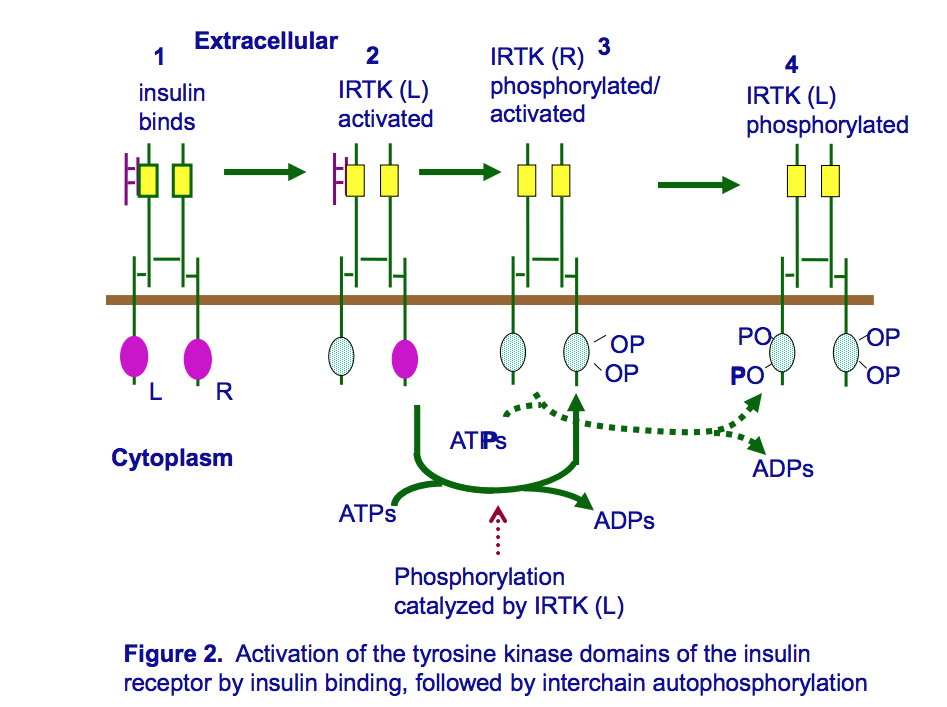
- The binding of insulin to an alpha-subunit of the receptor switches on the catalytic activity of the tyrosine kinase domain.
- This binding causes the receptor to undergo a conformational change that causes the insulin receptor tyrosine kinase (IRTK), on the same half of the receptor to which insulin binds, to become active.
- Once this IRTK is activated, it phosphorylates, via interchain autophosphorylation, the tyrosine kinase domain on the opposing beta-subunit (R).
- Phosphorylation of tyrosine residues on the latter beta-subunit (R) activates that tyrosine kinase domain which in turn phosphorylates the first beta-subunit (L).
- Thus, phosphorylation of the tyrosine kinase domains leads to enhanced catalytic activity of the tyrosine kinase, independent of insulin binding.
- The fully activated receptor transmits the insulin signal by catalyzing the phosphorylation of proteins in the cytoplasm.
Control of the Insulin Receptor
•Control of the insulin receptor occurs by:
1) ligand binding
2) autophosphorylation of tyrosine residues
3) phosphorylation of serine residues
4) dephosphorylation of the tyrosine residues.
- Cessation of these events occurs with insulin destruction, primarily in liver and kidney, with a plasma half-life of 4 to 6 minutes.
- These and some other tissues contain a protease specific for insulin.
-In the liver, a second mechanism involves reduction of the disulfide bonds allowing the separated A and B chains to be degraded rapidly.
Increased GLUT 4 Availability on Muscle and Adipose Tissue
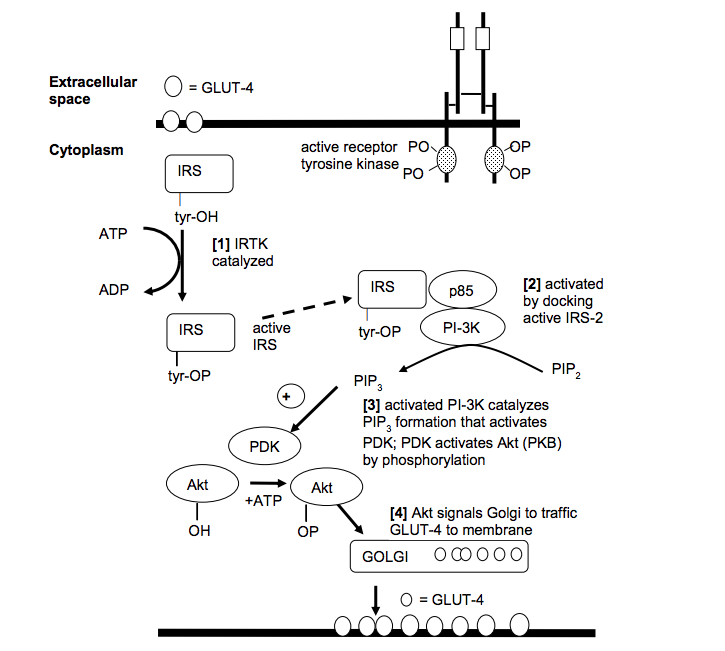
- IRTK activated
- IRS phosphorylated - catalyzed by IRTK
- IRS docks onto p85, activating PI-3K
- PI-3K catalyzes PIP2 —> PIP3
- PIP3 activates PDK
- PDK activates Akt by phsphorylation
- Akt signals Golgi to traffic more GLUT 4 to membrane
Akt
- It is important to note that Akt in general regulates cell proliferation, growth, and programmed cell death. PTEN (phosphatase and tensin homolog) is a tumor suppressor that negatively regulates the PI3/Akt pathway by inhibiting the formation of PIP3. The PTEN gene is deleted in many cancers leading to decreased apoptosis and uncontrolled cell proliferation. Therefore, this pathway is important in both cancer and diabetes as it is a signaling pathway common to both.
- Another serine/threonine kinase relevant to Akt is mTOR. mTOR is a master growth regulator that senses and integrates diverse nutritional and environmental cues, including growth factors, energy levels, cellular stress, and amino acids. Most upstream inputs are funneled through Akt. Altered regulation of the pathway has been associated with a variety of diseases besides cancer and diabetes, including obesity, neurological diseases and certain genetic disorders. This signaling pathway, initiated by mTOR, is a target for rapamycin (sirolimus) that has immunosuppressant function
Insulin Regulation of DNA Synthesis and Cell Growth
- Activated IRTK catalyzes Shc phosphorylation
- Shc activates RAS via Grb2
- RAS actovates a MAP signaling pathway leading to increased DNA synthesis and cell growth.
DM
- Diabetes mellitus (DM) is not a single disease entity, but rather a group of metabolic disorders sharing the common underlying feature of hyperglycemia.
- The disease results from defects in insulin secretion, insulin action or most commonly, both.
- Chronic hyperglycemia and associated metabolic dysregulation may be associated with secondary organ damage, frequently involving the kidneys, eyes, nerves and blood vessels.
- DM affects >20 million children and adults in the U.S. and approximately 1.5 million new cases are diagnosed each year.
- DM is the leading cause of end-stage renal disease, adult-onset blindness, and non-traumatic lower extremity amputation.
- Therefore, DM is a cause of major morbidity and mortality in the US.
- Approximately 54 million adults are pre-diabetic and have elevated blood sugar concentrations that do not meet the criteria for a diagnosis of DM.
Diagnosis of DM
Diabetes is diagnosed by laboratory tests meeting any one of the following criteria:
- Hemoglobin A1c ≥ 6.5%
- Random blood glucose >200 mg/dl with classical signs and symptoms
- Fasting blood glucose > 126 mg/dl more than once or
- A 2-hour plasma glucose >200 mg/dl after a standard carbohydrate load.
Type 1 DM
- Occurs at any age.
- “Honeymoon” period with ongoing endogenous insulin secretion for 1-2 years.
- Polyuria, polydipsia, polyphagia and ketoacidosis are the dominant clinical features.
- Insulin deficiency results in a catabolic state with decreased assimilation of glucose into muscle and adipose tissue.
- Glycogen storage in the liver ceases with glycogen reserves are depleted by glycogenolysis.
- Hyperglycemia leads to glucosuria and osmotic polyuria.
- Intracellular hyperosmolality triggers polydipsia.
- Catabolism of proteins and fats causes polyphagia.
- The combination of polyphagia and weight loss is paradoxical and should always raise the suspicion of diabetes.
Type 2 DM
- Although T2DM involves a decrease in glucose-stimulated insulin secretion, which is accounted for by various defects in the beta-cell, it does not involve complete destruction of beta-cells.
- The hallmark of T2DM is insulin resistance at peripheral target tissues, though insulin resistance does not necessarily lead to type 2 DM. Insulin resistance, in theory, could be caused by a variety of issues.
- Patients with Type 2 DM are older (usually >40 yrs), although now children and adolescents are presenting with this disease.
- These patients are usually obese.
- The diagnosis is usually made after routine blood or urine testing in an asymptomatic patient.
- Ketoacidosis is infrequent. Higher portal vein insulin concentration usually prevents unchecked fatty acid oxidation, thus reducing formation of ketone bodies
Sufonylureas
- As T2DM progresses, the ability of the pancreatic -cells to produce insulin may diminish. Sulfonylureas are medications that aid patients with diabetes who have sluggish insulin release.
- The first-generation sulfonylureas included tolbutamide (Orinase) and chlorpropamide (Diabinese).
- The second-generation group included glimepiride (Amaryl), glyburide (DiaBeta), and glipizide (Glucotrol).
- These drugs mimic ATP effects by binding to receptors that close potassium channels and thereby allow calcium to enter and stimulate insulin release.
Diabetic Ketoacidosis
- Diabetic ketoacidosis results from marked insulin deficiency (an absolute deficiency secondary to β-cell destruction by antibodies).
- Decreased peripheral glucose consumption and increased gluconeogenesis, due to elevated glucagon and lack of insulin, results in marked hyperglycemia.
- An osmotic diuresis and dehydration ensue.
- Lack of secretion of insulin and glucagon leads to excess lipolysis in fat cells leading to increased release of fatty acids.
- In the liver the resulting fatty acyl coenzyme A is oxidized to ketone bodies (acetoacetic acid and β-hydroxybutyric acid) resulting in ketonemia, ketonuria and ketoacidosis.
Hyperosmotic Nonketotic Coma
- Hyperosmotic nonketotic coma develops when the patient is decompensated. This occurs with severe dehydration from hyperglycemic polyuria.
- The patients do not develop nausea, vomiting, respiratory symptoms which occur in ketoacidosis, and therefore do not seek earlier medical attention.
Advanced Glycation End Products
- Advanced Glycation End (AGE) products form when nonenzymatic reactions occur between intracellular glucose and the amino groups of both intra- and extracellular proteins.
- The rate of AGE formation is accelerated in patients who are hyperglycemic.
- Hemoglobin A1c (HbA1c, an AGE) measures glycosylated hemoglobin and provides the best assessment of glycemic control.
- HgbA1c indicates the extent of glycemic control over the lifespan of a red blood cell.
- In non-diabetic individuals, the fraction is less than 7%.
- AGE receptor mediated effects include the release of pro-inflammatory cytokines, the generation of reactive oxygen species, increased procoagulant activity, and proliferation of vascular endothelium and extracellular matrix.
- AGEs can directly cross-link to extracellular matrix proteins resulting in decreased vascular elasticity, enhanced protein deposition, and entrapment of non-glycolated plasma and interstitial proteins (contributing to thickening of basement membranes).
Metabolic Syndrome
- key to development of diabetes
- also called syndrome X or insulin resistance syndrome
- assortment of metabolic pertubations
- potential risk to develop Type 2 Diabetes + CV disease
- essential factors
- glucose intolerance
- obesity
- hypertension
- hyperlipidemia
- strong eveidence that obesity precedes teh metabolic changes associated with the syndrome
- a complex issue with specifics that remain controversial
Metabolic Susceptibility
•Metabolic syndrome requires one or more susceptibility factors:
- defective insulin signaling
- adipose tissue disorders
- sedentary lifestyle
- mitochondrial defects
- aging
- polygenic variations
- drugs
- decreased Insulin sensitivity (insulin resistance) is common
- By decreasing excess fat patient decreases likelihood of syndrome despite presence of susceptibility factors
- Important note: syndrome develops generally in combo with excess fat
Factors Affecting Insulin Sensitivity - Role of Fatty Acids
- Circulating fats = major causal factor for insulin resistance
- Induce resistance by replacing glucose as key fuel: alter downstream signaling
Factors Affecting Insulin Sensitivity - Role of Cytokines
- Proinflammatory cytokines: trigger inflammation associated with metabolic syndrome
- Tumor Necrosis Factor (TNF-alpha): causes hypertriglyceridemia in obesity —> elevated Fas (increased VLDL)
- Interleukin-6: linked to increased hepatic output of VLDL (contain TAGs)
- Resistin: prevents adipocytes from becoming larger causes insulin resistance; lowers glucose tolerance
Progression of Type 2 Diabetes - Inadequate Insulin Secretion
- It is ironic that despite the early hyperinsulinemia associated with type 2 diabetes, a consequence of the continuing metabolic events is the eventual decreased ability of the patient to secrete sufficient amounts of insulin. Therefore, in some respects the patient with type 2 diabetes begins to take on some characteristics of an individual with type 1 diabetes, what some may refer to as a “mixed diabetes”.
- In essence, the pancreatic beta-cells fail to adapt to the demands of the hyperglycemia and insulin resistance. For that reason, many patients with type 2 DM need to be treated with insulin to elevate the circulating insulin concentration sufficiently to at least partly offset the reduced responsiveness to insulin.
- As insulin resistance first develops, the rise in blood glucose initially is balanced by an increased secretion of insulin.
- As resistance worsens, the demands on the pancreatic beta-cell increase. This demand leads first to a mild decreased response to glucose for secretion of insulin ultimately becoming a wholly inadequate response.
- In these earlier stages, treatment with sulfonylureas can augment the glucose response by binding to receptors that close potassium channels and thereby allow calcium to enter and stimulate insulin release.
- Eventually only insulin treatments suffice to ameliorate the hyperglycemia.

-
Oral Cavity Histology45
-
Abdominal Wall and Inguinal Region77
-
Oral Cavity and Salivary Gland Diseases49
-
Oral Cavity/Salivary Gland Diseases47
-
Neuro-Endocrine Regulation of GI37
-
Salivary/Gastric Secretion31
-
Gastric Mucosal Barrier and Peptic Ulcer Disease19
-
Disorders of the Esophagus and Stomach91
-
Esophagus and Stomach Histology41
-
Intestines Histology48
-
Hormones etc...29
-
Cells26
-
GI Development67
-
Structures of the Abdomen140
-
Motility and Gastric Reflux Disease44
-
Secretions of the Intestines/Ion Transport51
-
The Splanchnic Circulation23
-
Pancreatic and Biliary Secretions29
-
Pancreas, Gall Bladder, Liver Histology55
-
Digestion and Absorption: Carbohydrate, Lipid, Protein50
-
Endocrine Pancreas - Hormone Biosynthesis and Neoplasms27
-
Insulin Action26
-
Glucose Homeostasis22
-
Disorders of the Exocrine Pancreas46
-
Disorders of the Gall Bladder and Extra Hepatic Ducts37
-
Metabolic Changes in Trauma21
-
Gastroenteritis and Peritonitis33
-
Liver and Hepatobiliary Viral and Bacterial Infections52
-
Radiographs19
-
Drugs29
-
Heme Metabolism35
-
Liver and Adipose Carbohydrate Regulation25
-
Glycogen Storage Diseases45
-
Cholesterol Processing and Lipid Transport36
-
Alcohol46



