In normal pleural cavity there is tightly controlled
production and absorption of pleural fluid.
pleural cavity lined by
mesothelial cells
pleural fluid is absorbed by the
lymphatic stoma
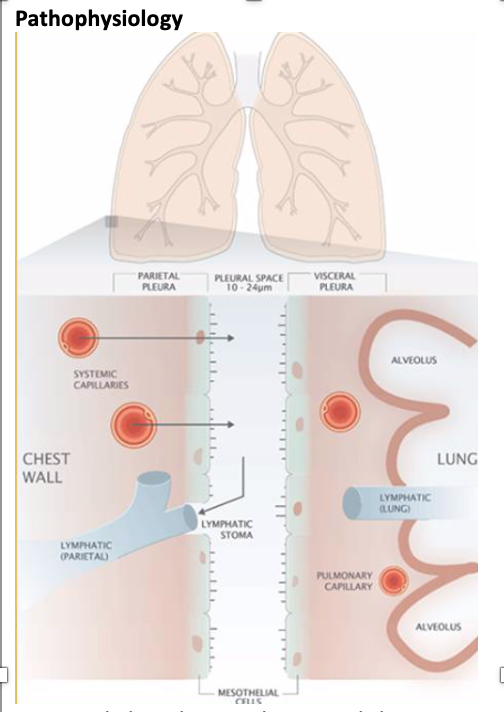
- Excess fluid in the pleural cavity
Imbalance between rate of production and absorption
types of pleural effusion
- simple effusion
- haemothorax
- chylothorax
- empyema
Simple effusion:
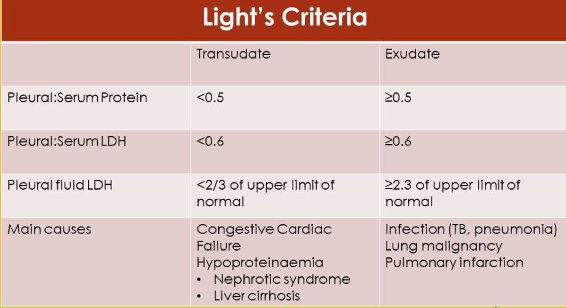
when there is fluid in the pleural fluid- can be transudate or exudate
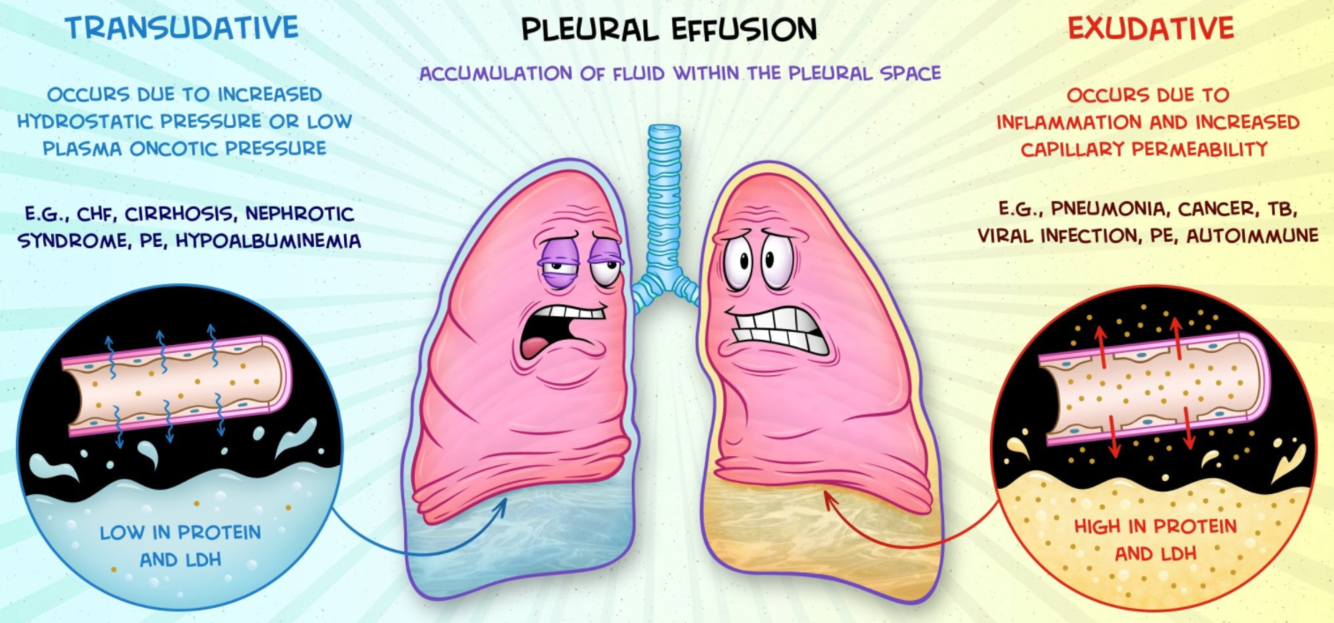
transudate
occurs due to icnrease hdyrostatic pressure and low onctoic pressure
i.e. low protein and LDH
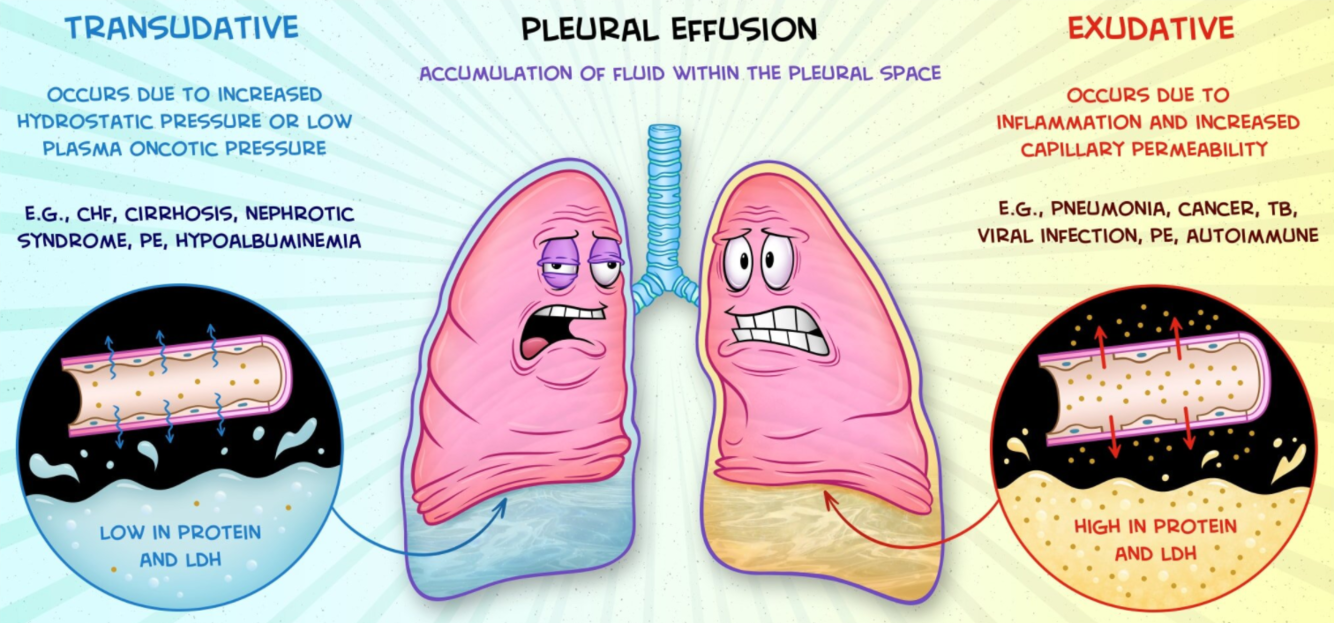
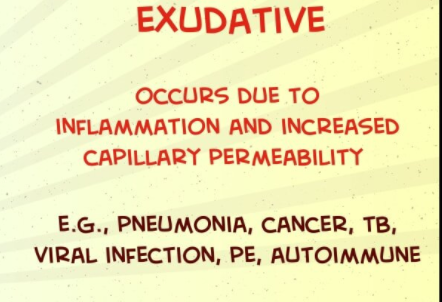
exudate
occurs due to ifnlamamtiona nd icnreased capillary permeability
i.e. fluid is high protein and LDH
Haemothorax: §
when the fluid is blood e.g. trauma
Chylothorax:
when the fluid is lymph (e.g. leak from lymphatic duct)
Empyema:
when the fluid is pus (secondary to resistant infection)
Presenting symptoms and signs
*
- SOB (gradual onset)
- Pleuritic chest pain – irritation of pleural lining to the fluid e.g. blood or lymph
- Features of clinical disease
- Congestive cardiac failure – pulmonary oedema
- Lung malignancy
Signs
- Trachea deviation
- Away from the affected side
- Chest movement
- Reduced on affected side
- Percussion notes
- Stony dull on affected side
- Breath sounds
- (Vesicular) reduced/ absent on affected side
- Vocal resonance
- Reduced on affected side
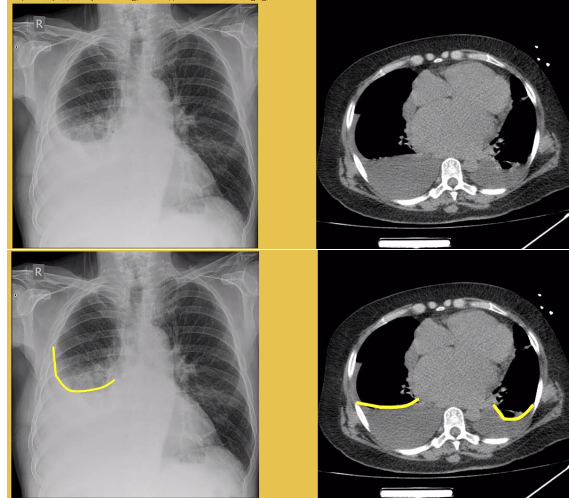
radiological findings: CXR and CT
Meniscus showing fluid in the pleural cavity (right base)
- Beneath the yellow line= fluid
causes of a simple effusion
- Pleural fluid
- Transudate or exudate
- Investigations
- Pleural aspiration
- USS guided procedure
- Pleural fluid should be colourless
- Pleural aspiration
causes
Haemothorax:
*
when the fluid is blood
- Trauma
- After pleural aspiration
- Red
causes Chylothorax
when the fluid is lymph (e.g. leak from lymphatic duct
- Trauma
- After pleural aspiration
- Cloudy
causes of Empyema
when fluid is pus
- infective cause
- After pleural aspiration
- Hard to tell
- Send fluid off for:
- Protein levels
- Glucose levels
- LDH (lactate dehydrogenase)
- MC and S
- pH <7
- Send fluid off for:
- Hard to tell
Treatment
- Depending on the cause
- In very symptomatic pts: chest aspiration
- Recurrent effusions (particularly malignant) may require
Indwelling pleural catheter (IPC) for intermittent drainage
Pleurodesis
Aim to allow adequate oxygenation of the lungs for the rest of the body
Pleurodesis
obliteration of the pleural space
main causes of transudate in simple efussion
congestive cardiac failure
- Hypoproteinaemia
- Nephrotic syndrome
- Liver cirrhosis
main causes of exudate in simple efussion
infection (TB, pneumonia), lung malignancy, pulmonary infarction
lights criteria of transudate vs exudate

-
Lecture 1 & 2- Anatomy of the lungs47
-
Lecture 3- Mechanics underlying ventilation of the lungs58
-
Lecture 4- Clinical application in ventilation and lung mechanics88
-
Lecture 5- Gas exchange65
-
Lecture 5- V/ Q mismatch25
-
Lecture 6- Oxygen in blood and tissues28
-
Lecture 6- Other mechanisms facilitating oxygen delivery to tissues25
-
Lecture 7- CO2 transport in the blood45
-
Lecture 8- Chemical control of breathing: peripheral and central chemoreceptors29
-
Questions: V/Q mismatch and oxygen in the blood12
-
Lecture 9 - Respiratory and Urinary Unit Acid-Base Balance61
-
Lecture 10- Obstructive airway diseases68
-
Lecture 11- Chest X-ray part 166
-
Lecture 12- Pulmonary embolism61
-
Lecture 13- Pulmonary lung function tests50
-
Lecture 14- Lower respiratory tract infections and pneumonia68
-
Lecture 15- Bronchiectasis and Cystic fibrosis64
-
Tuberculosis and lung cancer quiz13
-
Lecture 16- Pneumothorax27
-
Lecture 17- Pleural effusion26
-
Lecture 18- CXR part 260
-
Lecture 19- Tuberculosis47
-
Lecture 20- Lung cancer38
-
Respiratory failure clinical signs and symptoms quiz13
-
Lecture 21- Respiratory failure60
-
Lecture 22- Symptoms and signs of respiratory disease58
-
Lecture 23- treating tobacco addiction11



