what are the 4 layers of the trachea?
- mucosa: ciliated pseudo. columnar epithelium and elastic rich lamina propria
- submucosa: serous and mucous glands, BV and nerve fibres
- cartilaginous layer: c shaped hyaline cartilage (!). joined posteriorly by bands of SM called trachealis muscle
- adventitia- CT that binds trachea
difference between bronchi and bronchioles?
bronchi = **cartilage present**
bronchiole = **no cartilage**
what do bronchioles have instead of cartilage?
what is the epithelial layer of bronchioles like?
are there goblet cells?
cartilage = NO. instead = thick layer of smooth muscle cell & folded mucosa
epithelial layer = simple ciliated columnar / cuboidal epitheliam
NO GOBLET CELLS
what are the true vocal fold / cords histology like? what is the underlying skeltal muscles called?
a) non-keratinised stratified squamous epithelium
b) ciliated columnar epithlium cells
- underlying layer: vocalis muscles
at which point do clara cells replace goblet cells?
name three functions of clara celsl
bronchioles
- *watery surface**. prevents luminal adhesian if wall of airway collapses
- secretory protein C16 - associated with pathologies like COPD and asthma
- detoxyifying compound, cytochrome p450 - regenerates epithelium of small airways when damaged
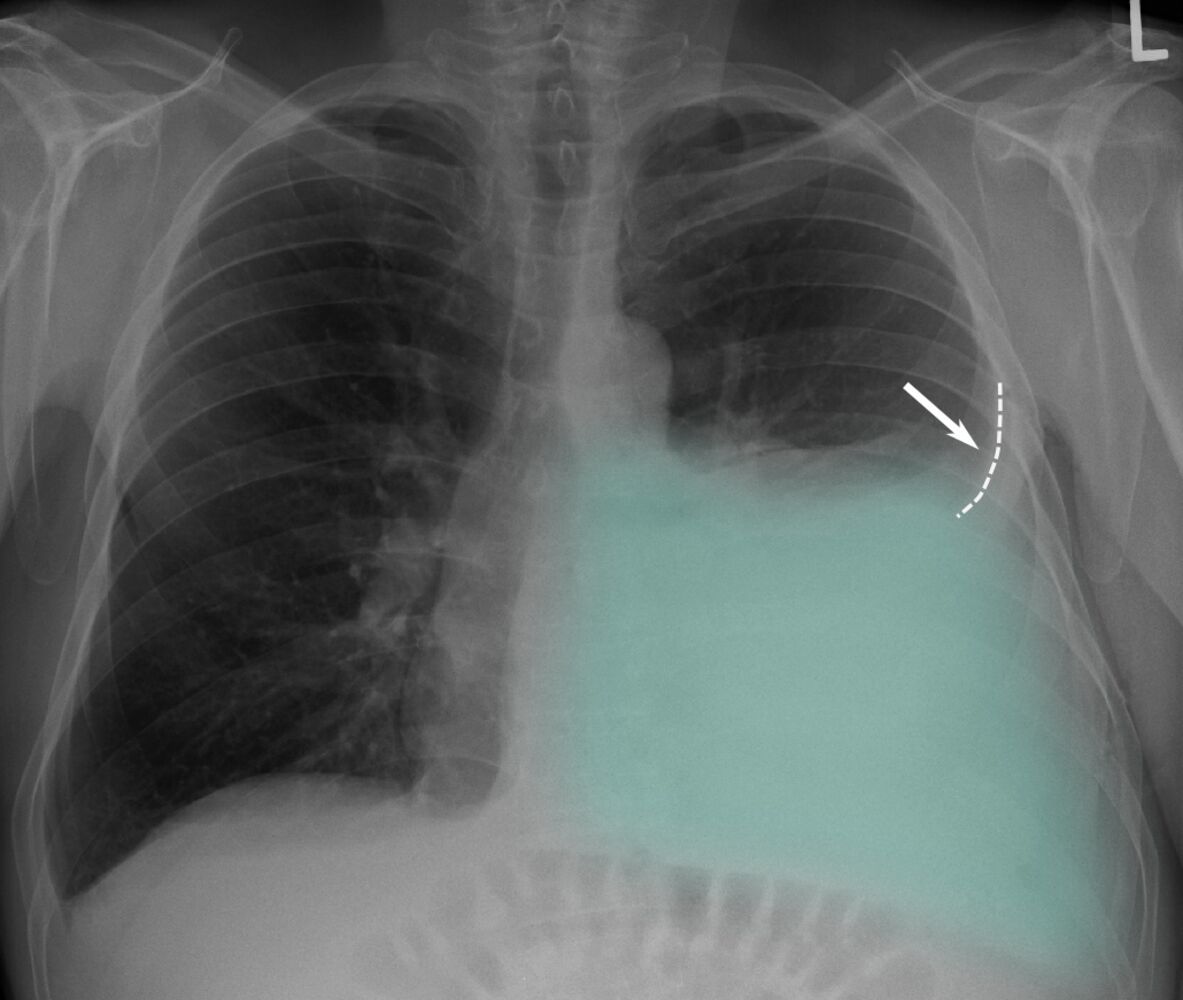
* what is an indication of pleural effusion on a chest xray? * [1]
blunted costophrenic angles
what happens when you hyperventilate to oxygen and co2 uptake?
When you hyperventilate a healthy lung, you do not effect oxygen intake yet you do effect CO2, as CO2 can easily be breathed out via hyperventilation
During hyperventilation the rate of removal of carbon dioxide from the blood is increased. As the partial pressure of carbon dioxide in the blood decreases, respiratory alkalosis, characterized by decreased acidity or increased alkalinity of the blood, ensues. I
what are the 4 different type of surfactants?
four different lipoproteins: (type A, B, C, D) which make different forms of surfactant with different properties:
Surfactant containing lipoproteins B &C (the ‘classic’ form): reduces surface tension and ensure proper lung function.
Surfactants containing lipoproteins A & D: coat bacteria and viruses and help the immune system deal with them. (surfactant D deficiency is a particular risk factor for pulmonary tuberculosis)
Peak flow measurement is usually used for which patients?
how do you do it?
- peak flow rate: assesses airway resistance. The test is useful in patients with obstructive lung disease (e.g. asthma and COPD)
- how:
a) patient taking a full inspiration
b) then giving a short sharp blow into the peak flow meter
c) and the average of three attempts is usually taken
explain how do you measure the efficiency of oxygen transport across the alveolar membrane?
comparing alveolar oxygen levels (PAO2) with arterial levels (PaO2)
- alveolar oxygen partial pressure can be obtained by analysis with an oxygen meter of the ‘end tidal ‘expired gas, i.e. the last portion of expired gas, which will have the same composition as alveolar gas
- arterial oxygen partial pressure can be measured with a pulse oximeter which measures the saturation of the haemoglobin with oxygen. The haemoglobin oxygen saturation is related to the oxygen partial pressure by the oxygen-haemoglobin saturation curve
what idoes chronic lung disease (like COPD) do to ventilation / perfusion? why
Chronic lung disease: reduces compliance of airways; this particularly affects the gas exchange at the base of the lungs as it reduces airflow into alveoli at the base of the lungs and thus reduces V/Q ratio
How do you measure total lung capacity (TLC?)
- inspiration of a fixed volume of a gas mixture which includes helium, followed by rebreathing the mixture until the helium is evenly distributed in the lung gases.
- Helium does not get absorbed into the blood, so if we sample the rebreathed gas it will contain a lower concentration of helium than the original inspired gas as it has penetrated the residual volume
- Let C1 be concentration of helium in inspired gas & V1 volume of inspired gas. Similarly, let C2 be concentration in rebreathed gas and V2 the volume (i.e. V2 = TLC)
what is persistant fetal circulation?
what is persistant fetal circulation associated with?
pulmonary vascular smooth muscle does not relax completely after the first breaths and so blood from the right heart stays shunted into the left. This leads to severe hypoxaemia as there is very little lungs perfusion.
often associated with pulmonary hypertension. Because of this, the condition is also widely known as persistent pulmonary hypertension of the newborn (PPHN)

-
The Mediastinum27
-
CR Anatomy: Question Bank17
-
The Heart and Coronary Arteries34
-
Clinical Skills: CV1
-
The Conducting System of the Heart & ECG43
-
Anatomy: Practical 1 - Mediastinum43
-
Smooth and Cardiac Muscle32
-
CVS Histology48
-
Anatomy: Practical 2 - Thorax and the Lungs41
-
Heart as a Pump40
-
Haemodynamics35
-
Carriage of Oxygen in the Blood24
-
Review of the Sympathetic Nervous System34
-
Neural Control of Blood Pressure28
-
Renal Function 128
-
Renal Function 227
-
Blood volume & pressure control after Haemorrhage0
-
Microcirculation & Oedema35
-
Microanatomy - Histology of Hematopoietic System29
-
Peripheral Vasculature of the Limbs39
-
Drug Treatments for CVD24
-
Anatomy of the respiratory system27
-
Hormonal Control of BP32
-
Introduction to Respiratory System29
-
Anatomy of the upper airway41
-
Anatomy: Practical 2 - Thorax and the Lungs (Part 2)36
-
Pulmonary Circulation25
-
Chest X-rays28
-
Respiratory Physiology I17
-
Respiratory Physiology II25
-
:)51
-
Histology of Resp. System34
-
Pharmacology of the Airways14
-
Histology Qs7
-
Acid-Base Control of Respiration28
-
Gas Exchange and Lung Function Tests27
-
big boys29
-
::)53
-
:O50
-
:L54
-
:D13



