what is osmolarity of NaCl? explain
what is osmolarity of blood plasma?
- *- NaCl** dissociates fully in water to become two separate particles: an Na+ ion and a Cl− ion.
- each mole of NaCl becomes two osmols in solution, one mole of Na+ and one mole of Cl−.
- Blood plasma has an osmolarity of about 300 mOsmol.
which part of brain detects osmotic pressure - what are the receptors called?
specifically in ^, what are the two main bits/
- hypothalamus detects osmotic pressure: osmoreceptors
- within hypothalamus: series of tightly packed nuclei: supraoptic and paraventricular nuclei
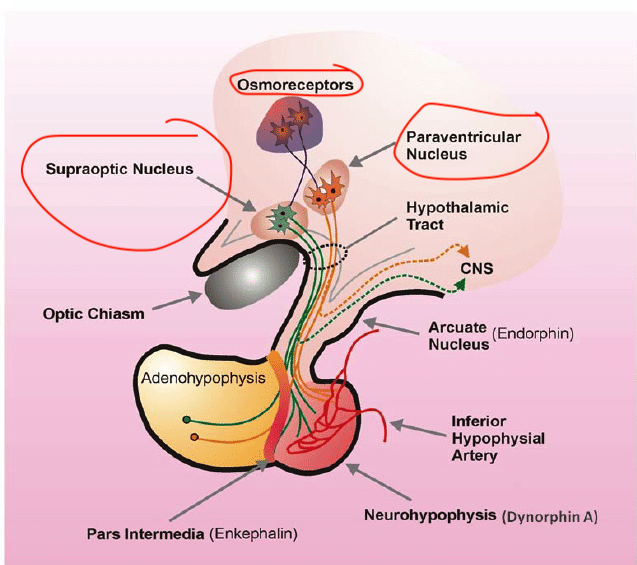
describe the pathway that occurs for supraoptic and paraventricular nuclei
- supraoptic and paraventricular nuclei send axons down to capillaries within posterior pituitary
- axons secrete antidiuretic hormone (ADH) into pituitary capillaries
- goes into venous blood
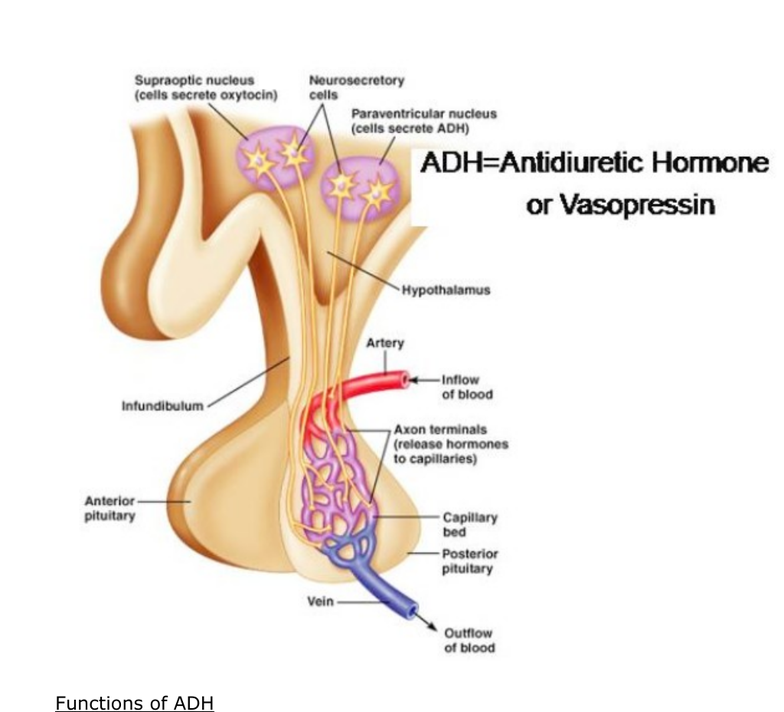
ADH aka ? (2)
vasopressin
or
arginine vasopressin
what happens (basic) if:
- osmoreceptors detect higher than normal omsolarity
- osmoreceptors detect lower than normal omsolarity
osmoreceptors detect higher than normal omsolarity (blood is too conc)
- **stimulates ADH release
- **stops water from being lost
- activates thirst: drink more
- osmoreceptors detect lower than normal omsolarity (blood not conc enough)
- **inhibits ADH release
- **more water lost
- activates not thirst: drink lesss
explain whats going on in nephron xox
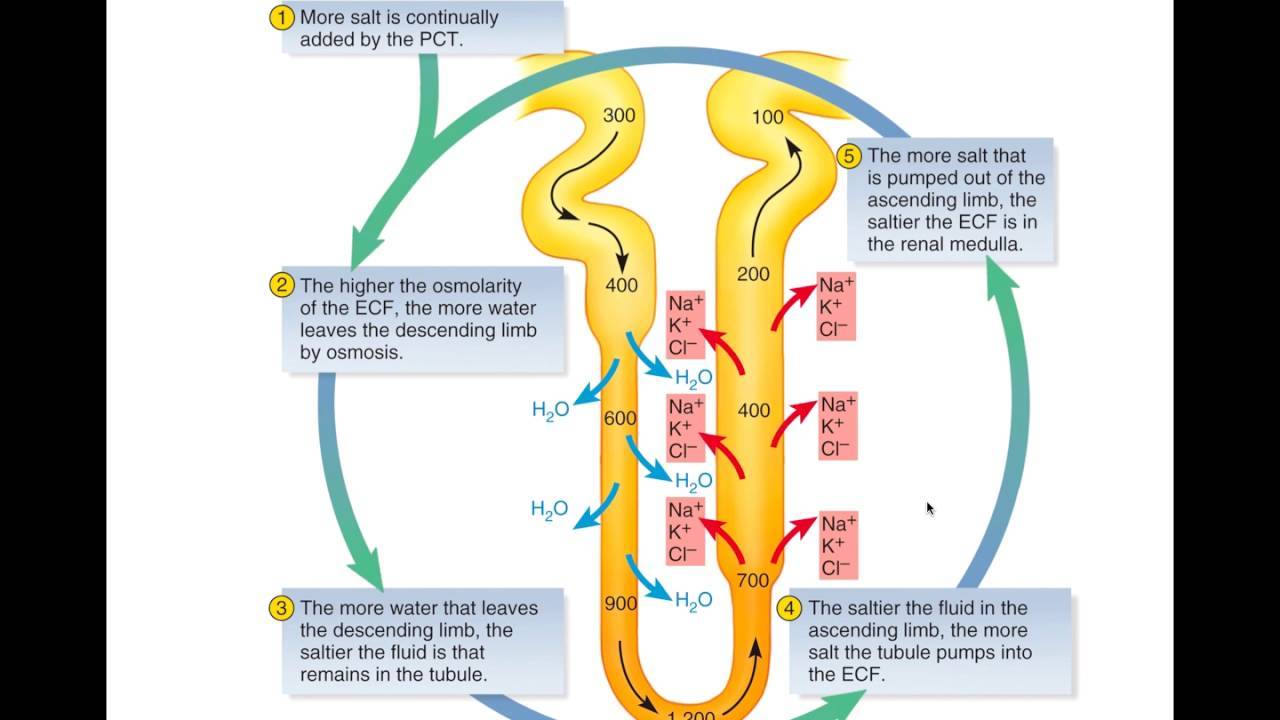
- extracellular fluid in renal medulla is much higher than plasma (1200 mm /lt c.f. 300 mm /lt
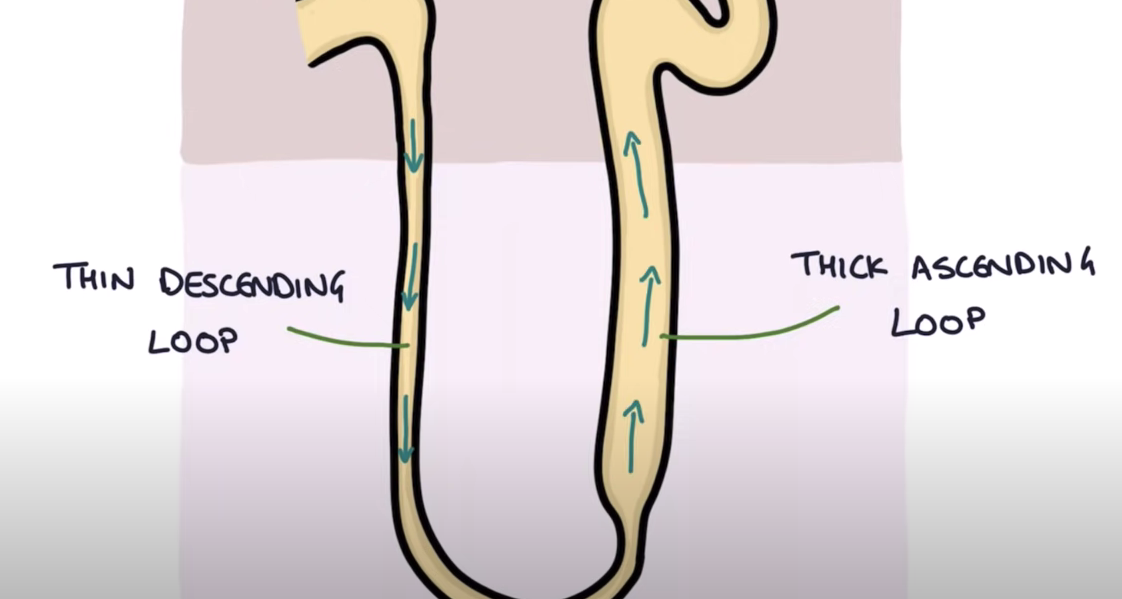
(- Fluid: proximal tubule –> thin descending loop of Henle –> thick part of the ascending limb)
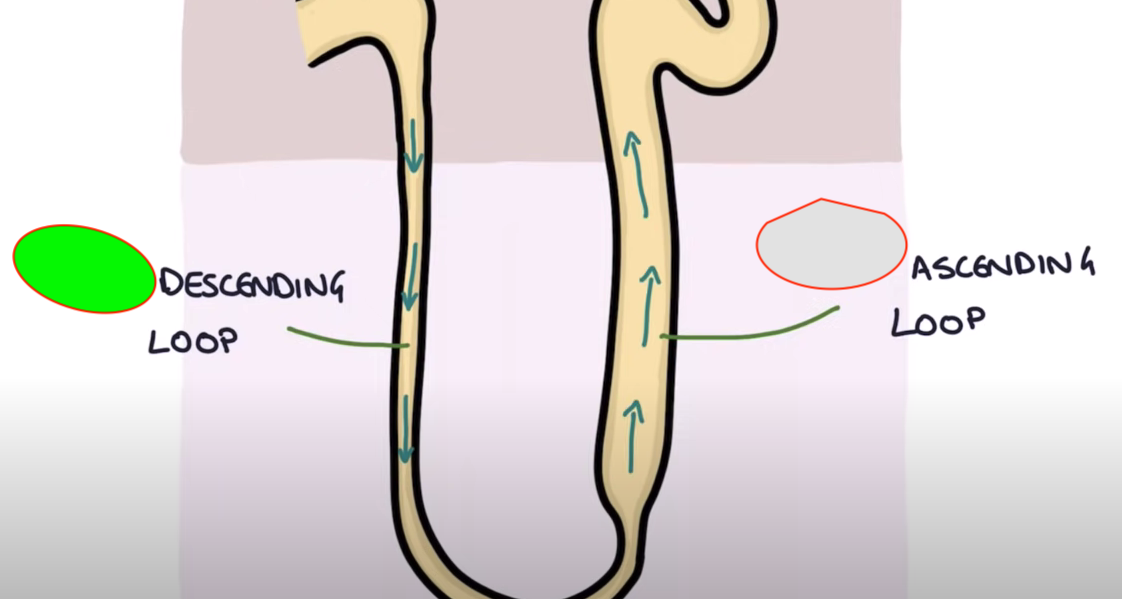
As the fluid descends DLH:
- water moves out (via aquaporins), which makes the fluid more and more concentrated because it is in equilibrium with the high concentration in the extracellular fluid in the renal medulla.
fluid moves up the ALH:
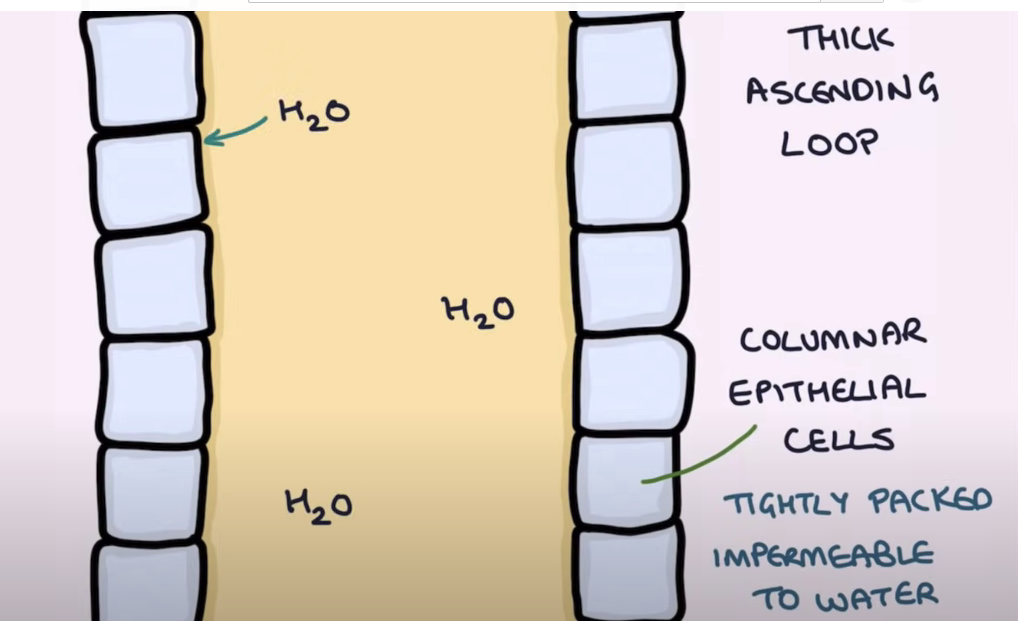
- the thick ascending wall is impermeable to water
- Na+ & Cl- are pumped out of tube into extracellular space: active transport by ATP-ase
- makes the fluid v. dilute (most of Na / Cl has been removed)
fluid moves to distal tubule:
- aldosterone acts to increase Na reabsorbtion (and other materials)
fluid moves to collecting duct:
- fluid passes down from here to ureter and ladders
- CD has aquaporins that are opened by ADH
- if channels are open: water is reabsorbed & urine is same osmolarity as renal medullary fluid
- if channels are closed: water not reabsorbed & dilute urine produced
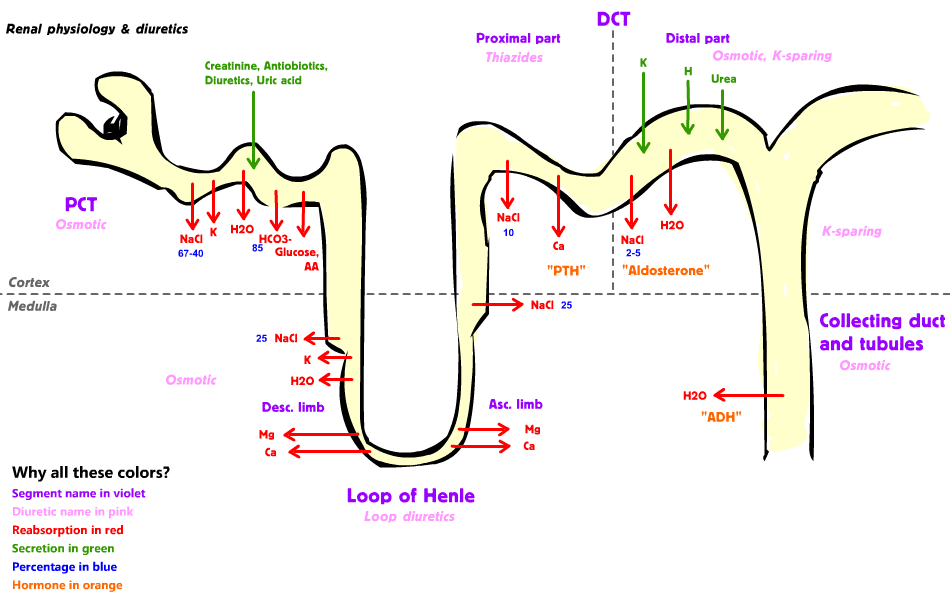
how is oxygen supplied to pumps in loop of Henle?
where in nephron is the fluid most dilute? AND least dilute?
oxygen supplied by capillaries of the vasa recta
most dilute: at start of distal tubule (~ 100 mOsmol) (lots of Na / Cl has been removed)
least dilute: at bottom of loop of Henle ( ~ 1200 mOsmol) (lots water removed, Na / Cl yet to be removed) . also in the collecting duct, depending on water reabsortion
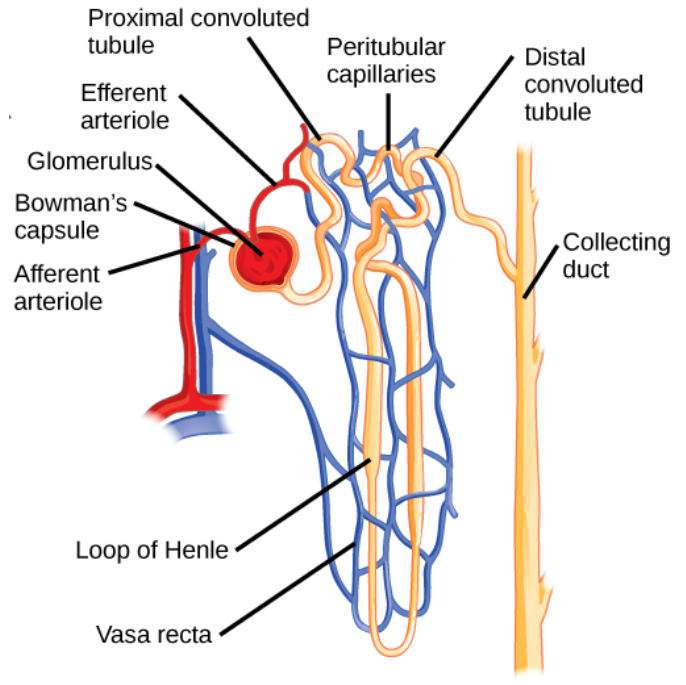
what is name for the process of pumping out salt into the extracellular fluid around the loop of Henle?
countercurrent multiplier mechanism of urine concentration
what is the location, function and mechanism of action for the NKCC2 channels?
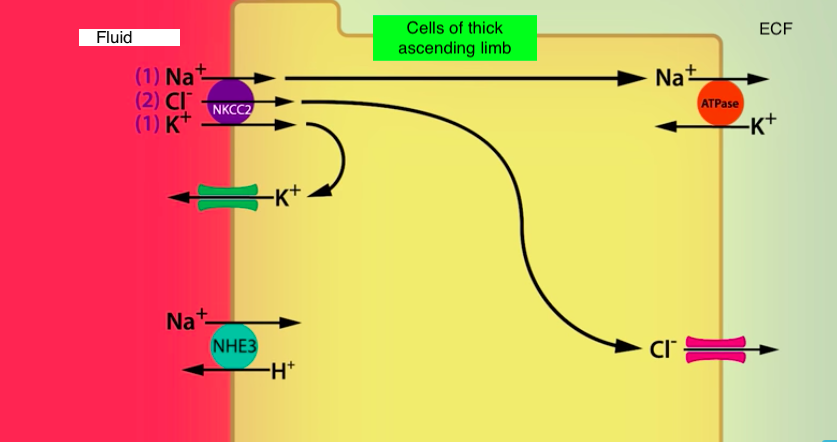
NKCC2 (Na-K-Cl cotransporter channel
- location: thick ascending limb of the loop of Henle
- function: to get Na / Cl out of the ascending limb and into extracellular fluid
- mechanism of action:
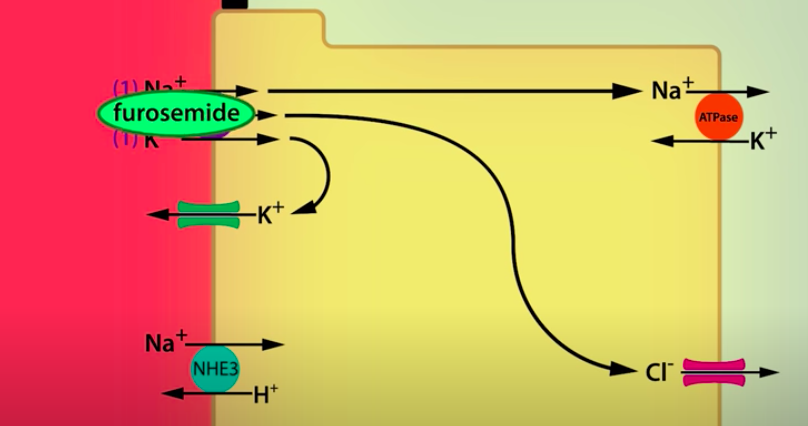
i) luminal walls of the epithelial cells allows sodium, potassium & chloride ions to move passively together down their concentration gradient into the cells that make thick ascending limb
ii) then, sodium is actively transported out into extracellular space by Na/K ATP-ase
iii) Cl- moves passively with the sodium
iv) most of K+ ions diffuse back into the lumen via K ion channels
https://www.youtube.com/watch?v=sapTNUtrPdY
what would happen if you blocked NKCC2, Cl- or K+ channels in ascending loop of Henle??
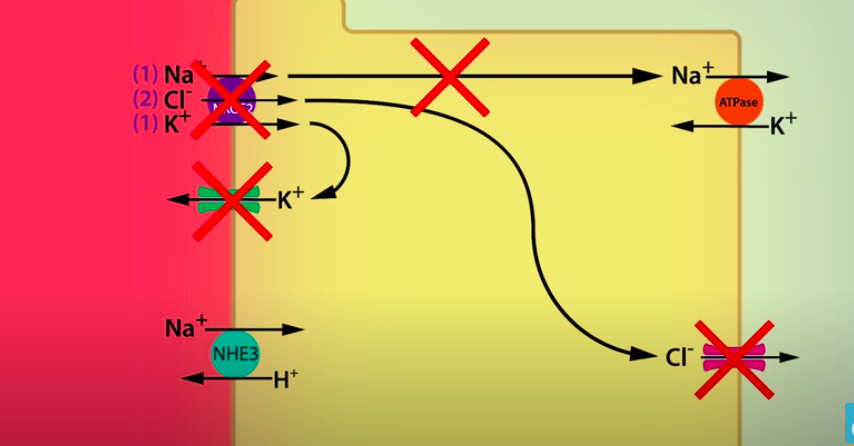
- leads to reduction of Na / Cl reabsorbtion
- decreases **interstitial osmolality
- get less waterereabsorbtion** in descending limb of Loop of Henle
- causes an increased excretion of water = diuresis
Diuresis is a condition in which the kidneys filter too much bodily fluid. That increases your urine production and the frequency with which you need to use the bathroom.
which pump assists the NKCC2 pump?
explain how xix
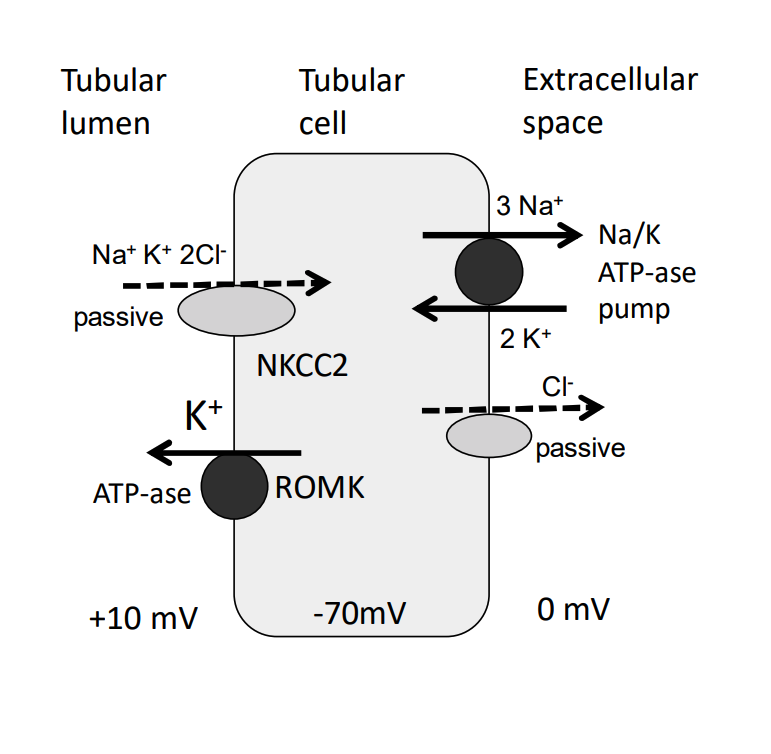
Renal Outer Medullary potassium channel or ROMK (royal orders make knights)
- K+ out of the tubule cells into the lumen (where fluid is)
- generates postive voltage: 10mV in tubular lumen
- creates an overall voltage difference of 80mV between tubular lumen and tubular cell
- this voltage difference helps propel sodium via NCKK2 transporter into tubular cells
what does the countercurrent exchange mechanism ensure? (2)
basic:
what happens in descending loop of H?
what happens in ascending loop of H??
why is countercurrent multiplication called countercurrent multiplication?
- *-** adequate blood flow and oxygen supply to the medulla
- without causing a washout of the high concentration of solutes needed for concentration of urine.
descending loop of H: water moves out. impermeable to ion movement. by the end = v concentrated
ascending loop of H: (opposite). impermbeable to water. ions move out
^ this process = countercurrent multiplcation
-countercurrent = bc the descending and ascending limb go in opposite directions.
- multiplication = when we rebabsorb ions in ascending limb and make the medulla salty, this drives the passive water absorbtion on descedning limb. bc have used energy to AT ions out, dont need to use energy for water, as gradient already exists
https://www.khanacademy.org/test-prep/mcat/organ-systems/the-renal-system/v/countercurrent-multiplication-in-the-kidney
which part of nephron controls blood pressure?
juxtaglomerular apparatus
define:
Water diuresis
diabetes insipidus
osmotic diuresis
water diuresis: (is increased urination and the physiologic process that produces such an increase)
blood becomes dilute; ADH release inhibited: result high volume of dilute urine
Diabetes insipidus; damage to the hypothalamus or posterior pituitary leading to loss of ADH secretion. Result high volume of dilute urine.
osmotic diuresis is caused by an excess of urinary solute, typically nonreabsorbable, like glucose.
Sugars like glucose are normally completely reabsorbed in the proximal tubule; if they are not, due to excess glucose in the blood, then the glucose passing through the collecting duct provides an osmotic force tending to pull water into the urine, opposing the osmotic force of the medulla which is tending to pull water out. Result; high volume of sugary urine. this condition = diabetes mellitus
why do cells in the renal medulla have high metabolic rate?
what should u do after trauma / haemorrhage?
- high metabolic rate: constantly active Na pumps
- bc of this ^, reduced blood & o2 can causes severe damage to kidneys: should do renal function (creatinine clearance) after trauma / haemoorage
what does a diuretic do?
diuretics = increase urine flow. help rid your body of salt (sodium) and water
loop of henle is responsible for filtering what % of Na and H20, from urine -> blood?
20% Na
15% H20
back into blood
Furosemide:
indications?
MoA?
_Furosemide removes excess water in the body
indications:_
- oedema
- resistant hypertension
mechanism of action:
- blocks the transport of sodium (and chloride) out of the loop of Henle and into interstitial fluid of medulla
- causes a lower concentration of sodium & other solutes in interstial fluid
- SO, less water is reabsorbed in descending loop of Henle (remember, water follows Na)
- means Na, & water is kept in the urine: prevents reabsorbtion of 20% Na & 15% H20
- SO, more water excreted
* furosemide, and other loop, diuretics act independently of ADH *
what type (e.g. cuboidal etc) make up cells of
i) thick ascending loop of henle?
ii) thin descedning loop?
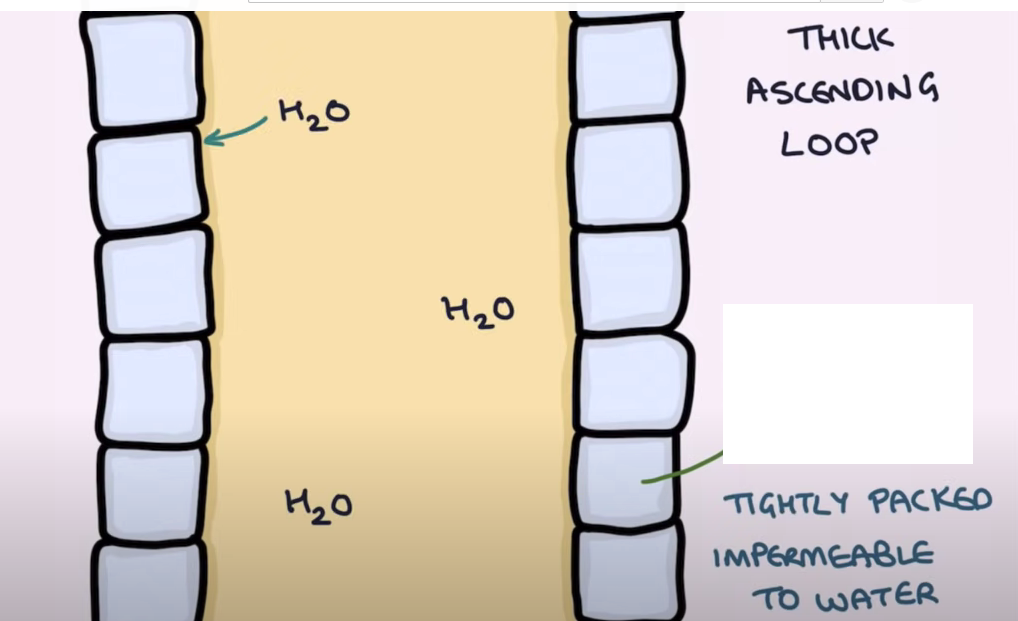
i) thick ascending loop of henle: cuboidal cells
ii) thin descedning loop: squamous cells (permeable to water)
how do Thiazide diuretics work?
what is an AE of using Thiazide diuretics long term?
Thiazide diuretics like bendroflumethiazide (Aprinox) inhibit reabsorption of sodium and chloride ions from the _distal convoluted tubule_s in the kidneys by blocking a Na+/Cl− cotransporter.
The increased sodium concentration in the collecting ducts prevents water reabsorption and hence increases urine output.
Thiazides also have a moderate stimulating effect on aldosterone secretion, which again increases sodium reabsorption.
One important adverse effect of long-term thiazide use is loss of potassium resulting in hypokalaemia.
Spironolactone works by?
Spironolactone and similar drugs block the mineralocorticoid receptor that aldosterone binds to in the distal tubule. It is thus an aldosterone antagonist
where in body are cells that detect stretch - and what does this cause a release of?
Specialised muscle cells: right atrium and inferior vena cava.
In response to stretch (indicating increased preload) these cells release atrial natriuretic peptide (ANP)
explain mechanism of action of ANP ?
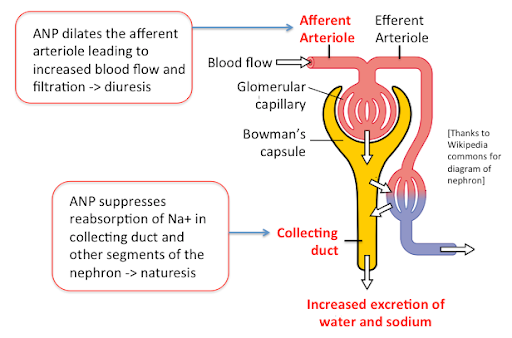
ANP decreases Na+ reabsorption in the distal tubule and collecting duct of the kidney.
This leads to increased Na+ loss in urine and (by osmosis) also increased water loss.
The increased fluid and sodium loss reduces the circulating blood volume and brings it back to normal
Increased sympathetic activity can also stimulate ANP release via an action on β-adrenoceptors

-
The Mediastinum27
-
CR Anatomy: Question Bank17
-
The Heart and Coronary Arteries34
-
Clinical Skills: CV1
-
The Conducting System of the Heart & ECG43
-
Anatomy: Practical 1 - Mediastinum43
-
Smooth and Cardiac Muscle32
-
CVS Histology48
-
Anatomy: Practical 2 - Thorax and the Lungs41
-
Heart as a Pump40
-
Haemodynamics35
-
Carriage of Oxygen in the Blood24
-
Review of the Sympathetic Nervous System34
-
Neural Control of Blood Pressure28
-
Renal Function 128
-
Renal Function 227
-
Blood volume & pressure control after Haemorrhage0
-
Microcirculation & Oedema35
-
Microanatomy - Histology of Hematopoietic System29
-
Peripheral Vasculature of the Limbs39
-
Drug Treatments for CVD24
-
Anatomy of the respiratory system27
-
Hormonal Control of BP32
-
Introduction to Respiratory System29
-
Anatomy of the upper airway41
-
Anatomy: Practical 2 - Thorax and the Lungs (Part 2)36
-
Pulmonary Circulation25
-
Chest X-rays28
-
Respiratory Physiology I17
-
Respiratory Physiology II25
-
:)51
-
Histology of Resp. System34
-
Pharmacology of the Airways14
-
Histology Qs7
-
Acid-Base Control of Respiration28
-
Gas Exchange and Lung Function Tests27
-
big boys29
-
::)53
-
:O50
-
:L54
-
:D13



