EM Spectrum
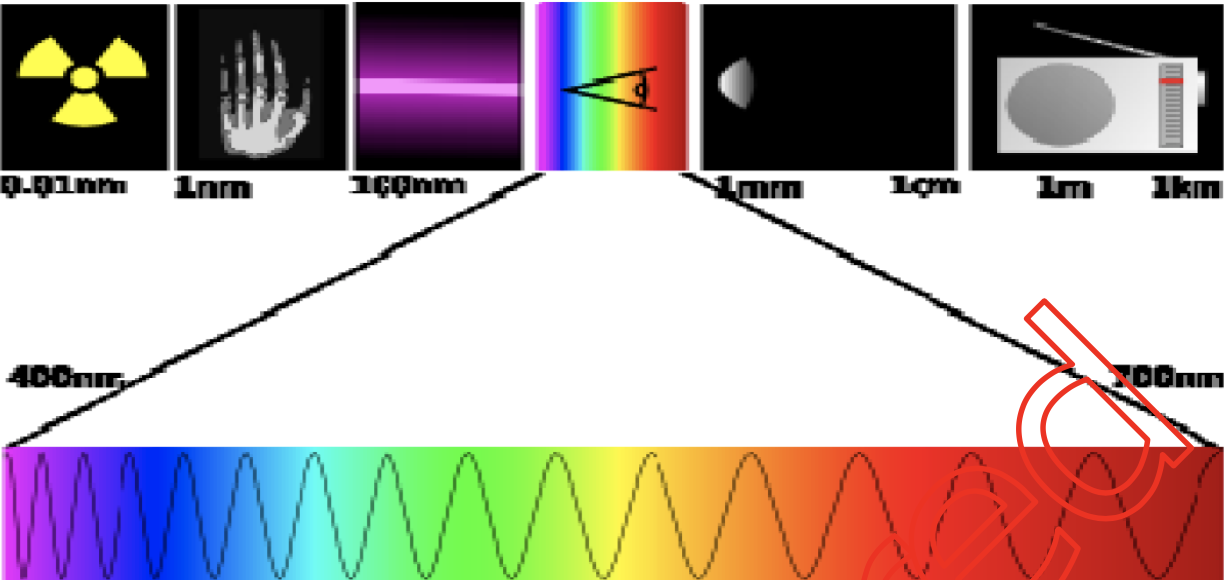
- Electro-magnetic (EM) spectrum includes few zones
- The first two ranges form ionizing radiation (the left part of the spectrum)
- The optical range is spread from UV to IR region
- The third range of EM waves includes microwaves and radio waves. The VISIBLE light is narrow region of EM waves which can be perceived of human eye.
Wave-particle duality
- The most important feature of light
- represents simultaneously manifestation of properties as both wave and flux of particles by light
- light behavior as wave is described by means of quantities: λ , c , ν , and T
- The propagation of wave responses to following relation
λ = c / ν
- Otherwise – the light is emitted and interacts with matter as energy portions quants/photons – each photon carries energy of
E= h . ν
- light related quantities in the formula E= h . c / λ
How does light propagate?
- The light propagates with velocity which depends only on the properties of the given matter medium (similarly to the mechanical waves)
- The velocity is directly estimated by quantity of refractive index – the RI is determined by electric permittivity and magnetic permeability
V is max in vacuum (there n = 1) velocity C = 300000 km per sec.
In other media the speed is lower.
Nature of light
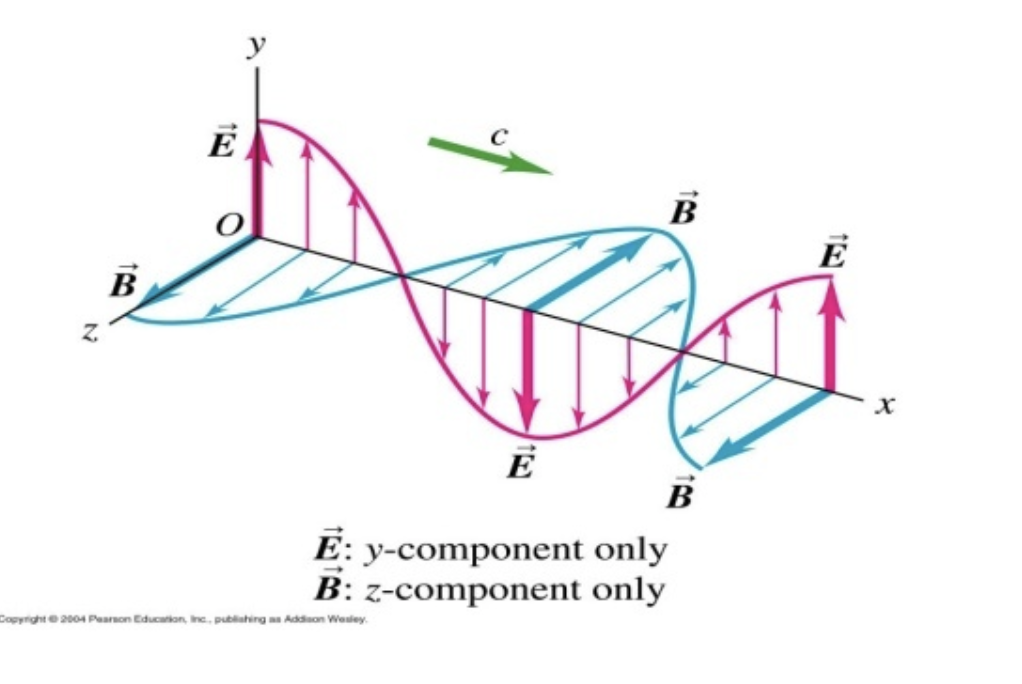
- light is transversal EM wave consisting of two perpendicular fields – electric with strength E and magnetic with strength H
- These fields vibrate simultaneously in two perpendicular planes
- The vibration is harmonic – it means that vectors alter the magnitude in sinus manner
Alteration of light during propagation
- When during its spreading, the light passes through different matter media
- it causes alteration of the direction of propagation
- Encountering a borderline between two matter media, the light will change its direction due to the difference in optical density
- The reflected light turns back to the first medium
- The part of light may pass into the second medium with some change of direction.
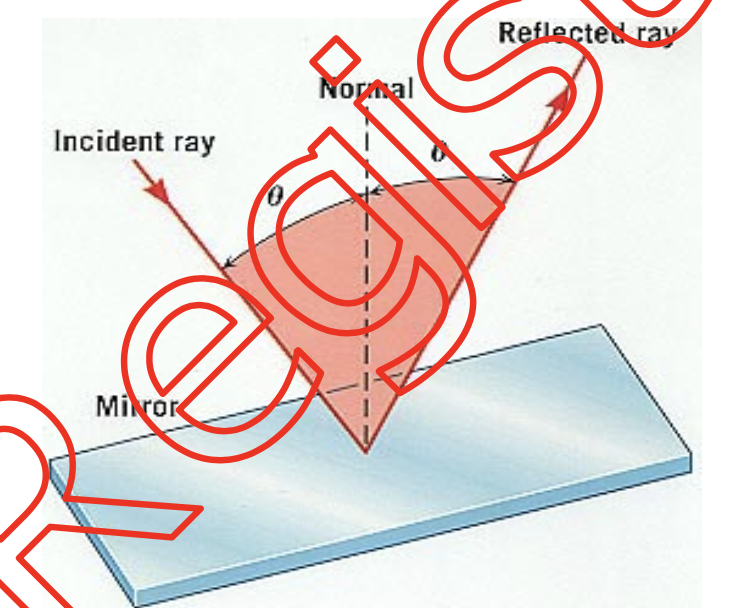
2 laws of reflected light
- the incident ray, the reflected ray and normal (perpendicular), form a plane
- the angle of reflection is equal to the angle of incidence
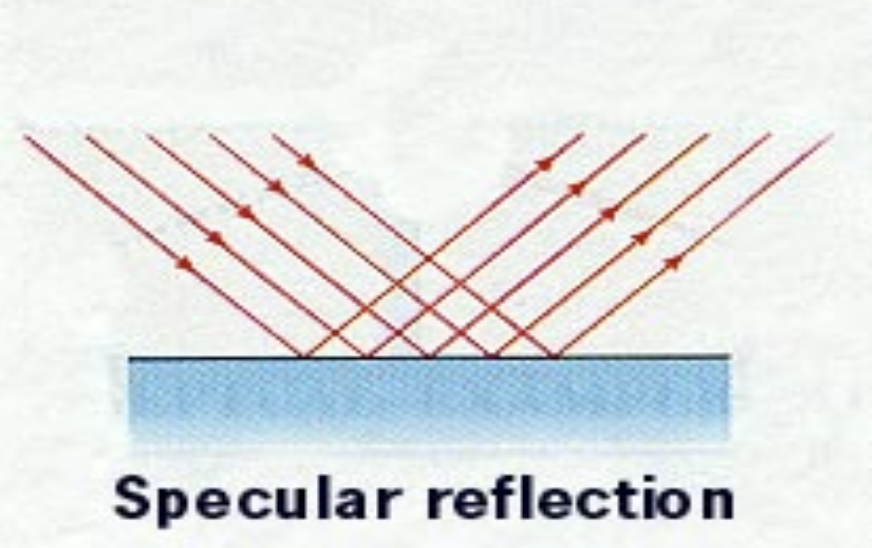
Specular (mirror) reflection
- light hits smooth surface
- irregularities of the surface are smaller than wavelength
- typical for glass, mirror
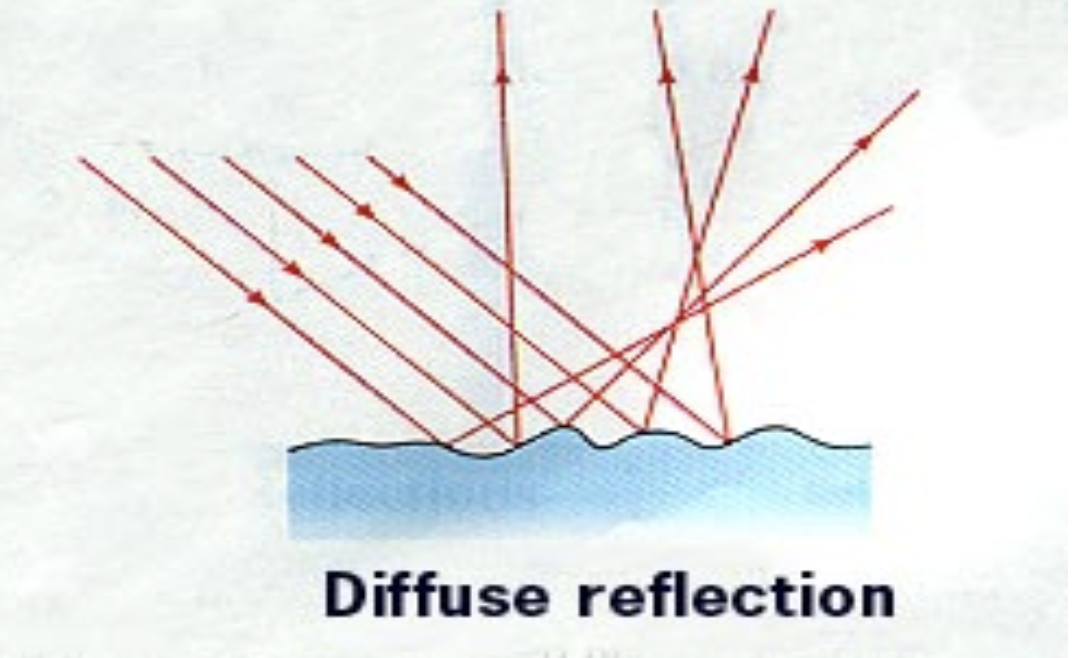
Diffuse reflection
- light hits rough surface
- irregularities are consistent or bigger than the wavelength
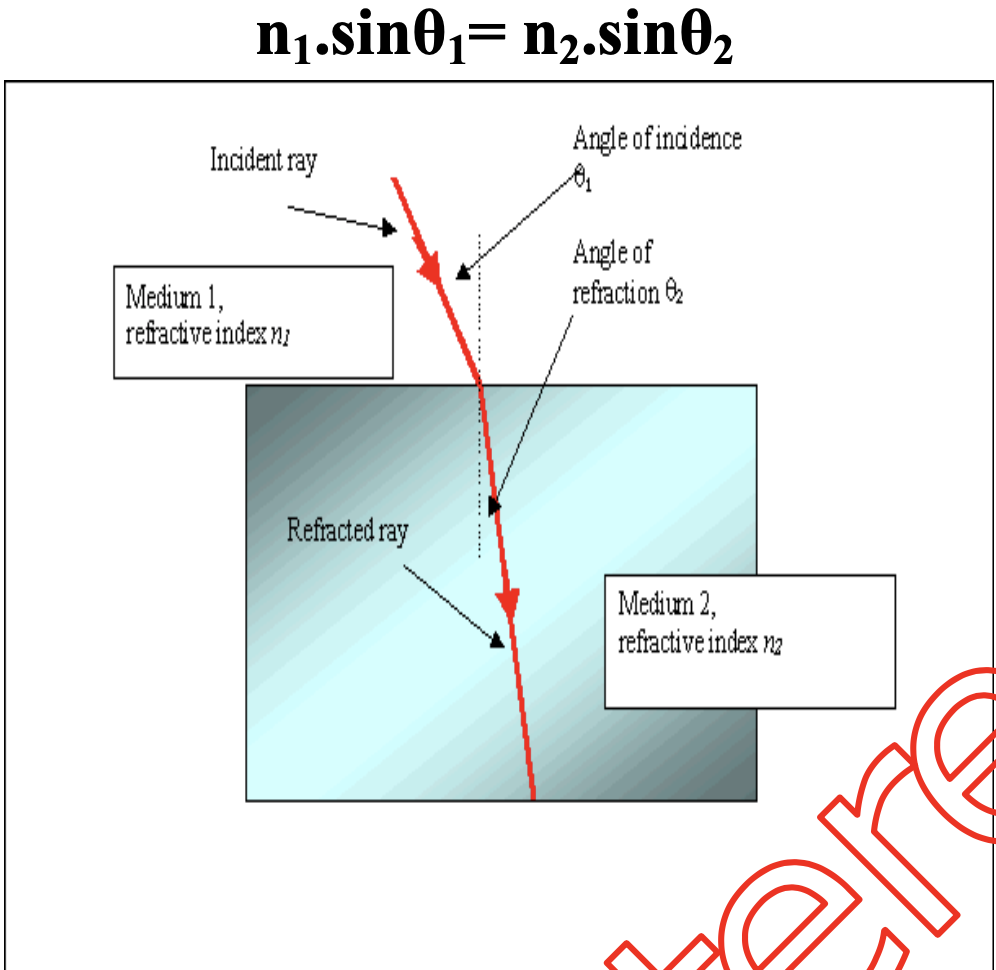
Snellius law
- product of refractive index and sinus of angle in two media are equal
- light crosses the borderline between two media it changes the direction of propagation
- The relation which determines the manner of further propagation is called Snellius law
- Such as in the case of reflection, the incident ray, the refracted ray as well as the normal (perpendicular), form a plane (lie on one and the same plane).
- the angle of refraction is smaller than the angle of incidence if the second medium is more dense
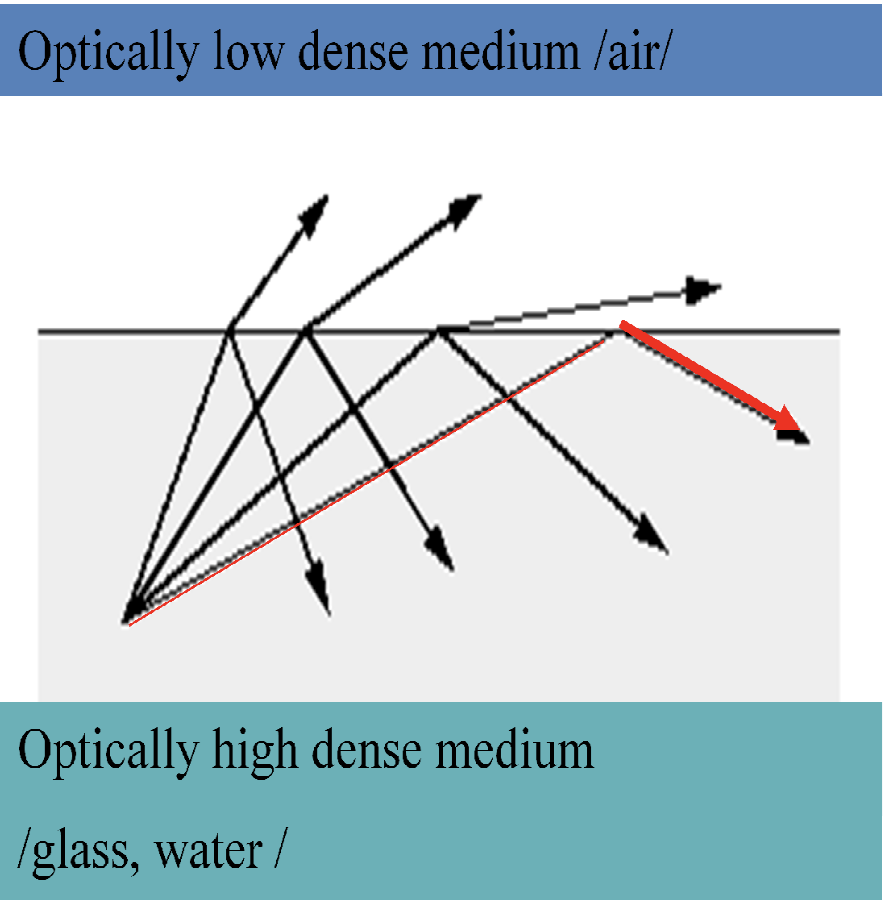
Total internal reflection
- occurs when the light propagates from optically high dense medium to optically low dense medium
- Let the light propagates through a glass toward air with gradually increased angle
- Initially both refraction and reflection occur
- But when the angle of incidence reaches a certain value a reflection of light occurs only. It can be explained by means of Snellius law:
at a given angle of incidence (called critical angle) the angle of refraction acquire the value of 90 degree which means that the light refracted skims along the surface.
Further increase of the angle of incidence causes complete return of the light in the first glass medium (the angle of refraction acquire a value bigger than 90 degree).
Conditions for TIR occurrence
- Light passage from optically high-density medium to optically low-density medium
- The angle of incidence – bigger than the critical angle
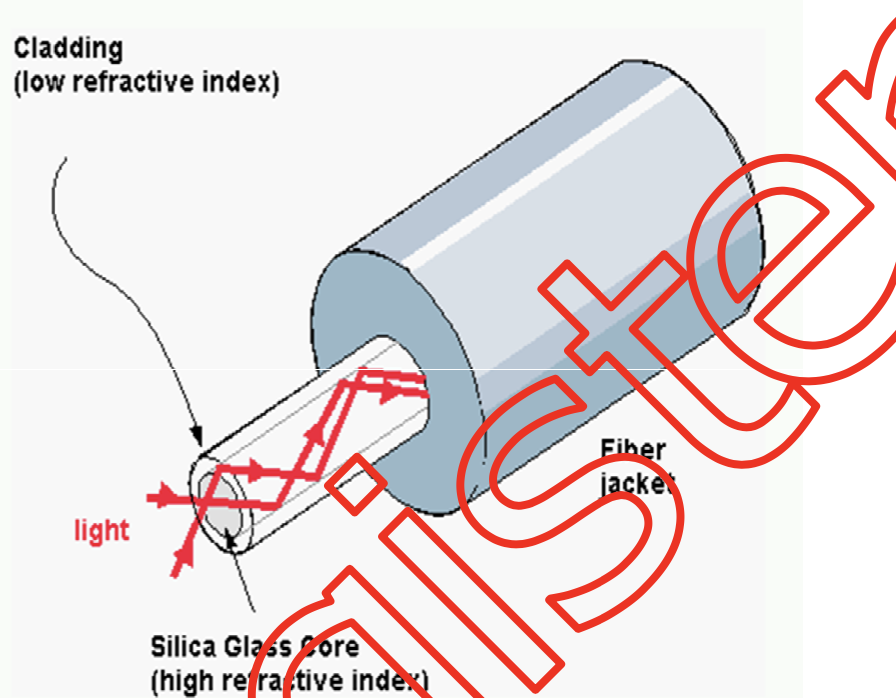
Applications of TIR: Optical Fiber
- The single optical fiber is built up of few glass layers with particular refractive indexes
- the inner core possesses the higher n and it is covered with less dense coating
- The bundle of many single optical fibers is formed in order to transmit the light. The light beam transmitted passes at angle bigger than critical and propagates along the fiber
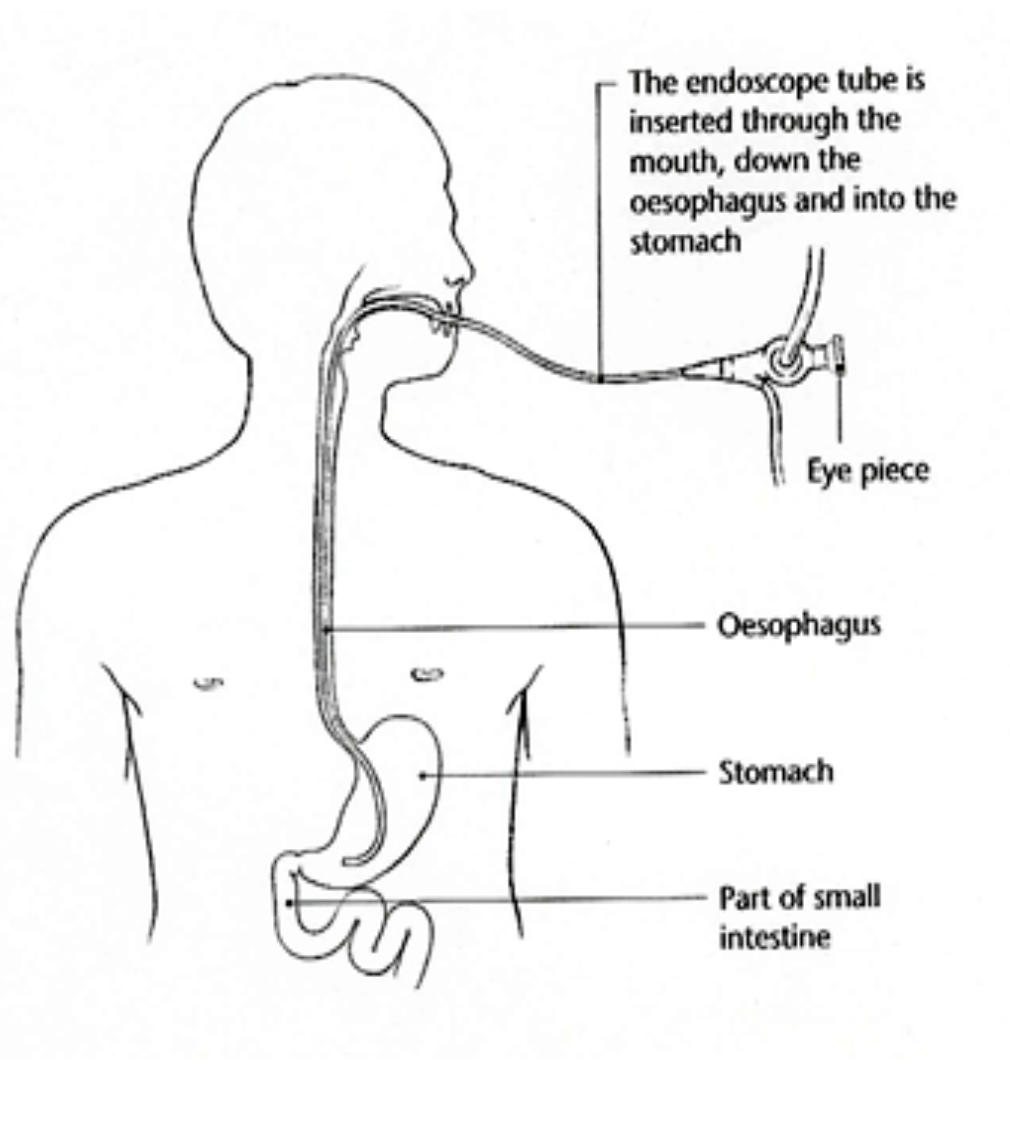
Applications of TIR: Endoscope
- Optical fiber device for examination of hollow body structures/organs (GI tract, airway paths, and other)
- The endoscope is designed as composition of illuminating optical fiber, OF transmitted the image obtained, laser fiber.
Beer-Lambert-Bouger law
- during light propagation through a given matter, a loss of light energy occurs due to absorption of EM energy from medium particles
- The radiant light flux decreases in exponential manner during the passage through medium with linear absorption coefficient α and thickness d
- Ψ is passed radiant flux, Ψ0 is incident flux
Ψ = Ψ0e–αd
α in Beer-lambert-bouger law
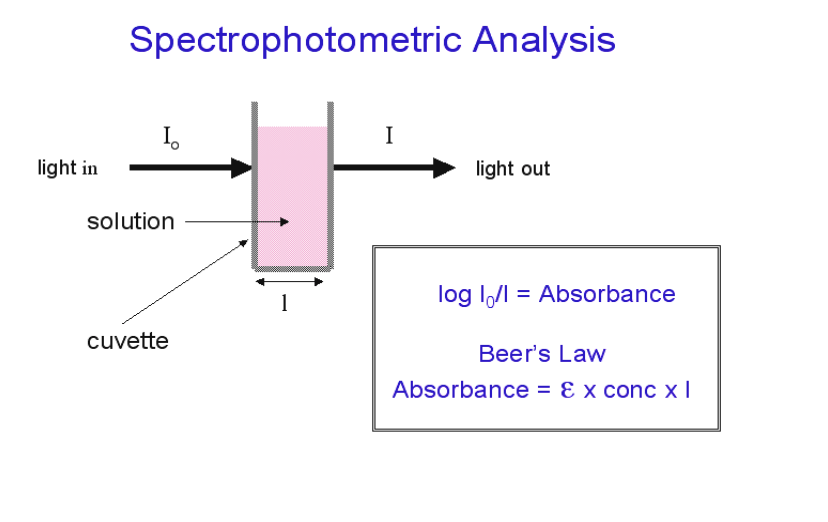
- α is determined by molar absorptivity coefficient ε and concentration: α= ε.c
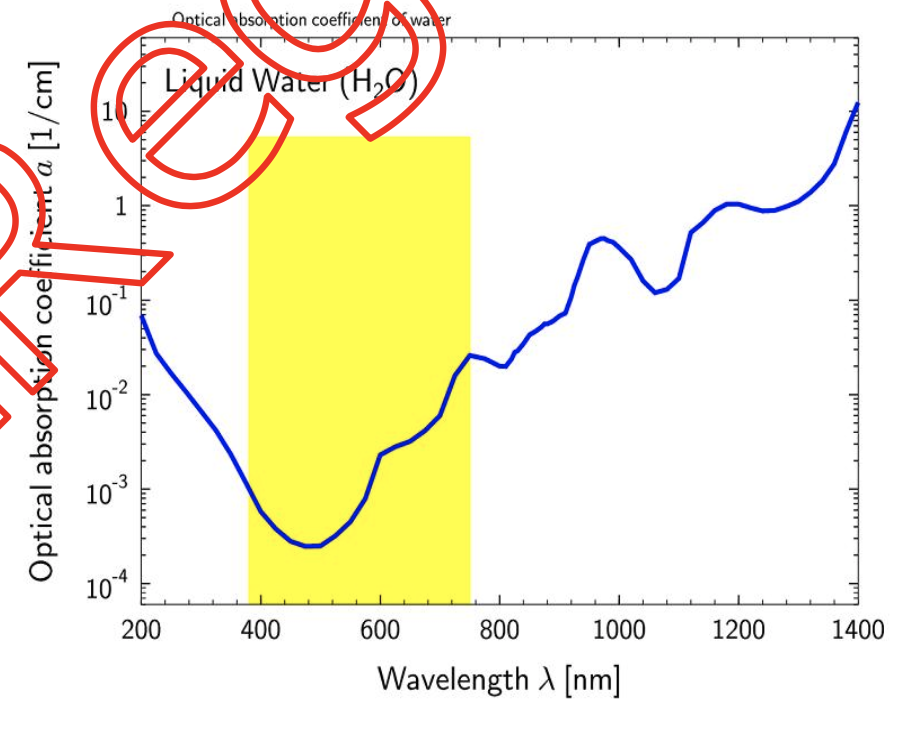
- Evaluation of light absorption from body liquids is performed in some diagnostics
- methods based on evaluation of α
- α is specific for the given substance and its dependence on the light wavelength is called absorption spectrum
Spectrophotometry
- Light absorption based method for identification and investigation of dissolved substances
Light diffraction
- fundamental phenomenon which determines the manner of light propagation
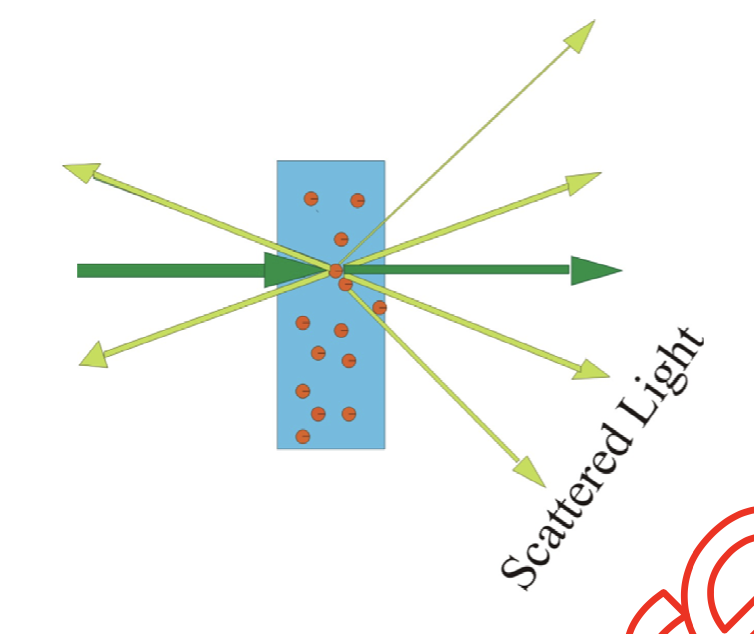
- a part of photons interact with particles of medium and the latter begin to vibrate due to transfer of energy
- Reemission of photon energy is launched randomly and the light is scattered
- Generally it resulting in change of wave front direction – the light rays appear at angles
Why does diffraction occur?
- if the light encounters small optical non-homogeneitities i.e. particles with refractive index different from that of the surrounding medium
What is diffraction dependent on?
- The diffraction depends on wavelength and on dimension of particles:
d << λ (~0,05 μm) - Diffracted flux Ψ~ λ-4 d ~ λ (~ 1⁄4 λ) - Diffracted flux Ψ~ λ-2
d > λ - Diffracted flux
Ultraviolet radiation
- (10 - 400 nm)
- UV radiation includes electromagnetic waves with wavelength shorter than that of the visible light
- UV photons carry more energy compared to visible light photons.
- UV waves with wavelength of 200 – 400 nm are important for medicine
- UV radiation interacts with skin and eye. In human eye cornea, lens and retina are mostly involved.
The range is divided into UV bands:
zone А 315–400nm
zone B 280 – 315 nm
zone C 200–280nm
most significant UV source
- sunlight
- due to filtering action of atomosphere, only UV long-wave >200nm pass through the atmosphere
- thunderbolts
- artifical - lamps with gas mixture (mercury etc.)
Positive UV radiation effects
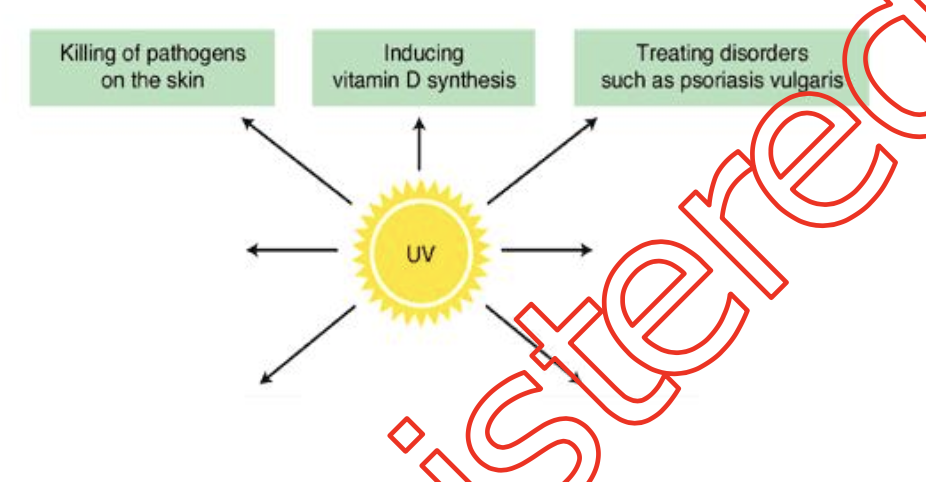
- A-type and B-type UV radiation have positive influence
- A - catalyzes the vitamin D synthesis
- B - causes improvement of fluorite and calcium assimilation which has eventually anti-rachitic effect
High dose of A/B UV: negative effects
A-Type UV produces:
- skin sensitization in terms of harmful action of B-zone UV radiation 2. Skin photo-aging effect due to damaging of collagen by photons.
- Burn skin (weak effect), skin cancer induction, cataract of the eye.
- B-band radiation is many times more aggressive than A-band
- It produces the most active photochemical effect at 297 nm - skin erythema, and skin burning, photo-aging of the skin – strongly quicken degenerative processes within the skin; the skin becomes harden and rough. Immunosuppressive effect – decrease white blood cell functionality
- Eye lens cataract
Skin cancer induction
- C-band UV radiation does not reach the earth surface
- produced by lamps
- C-UV photons are powerful sufficient to damage bacteria
- It is used for sterilization of laboratory, vessels, instruments
- But if C-UV light is absorbed from the transparent tissues in human eye and it causes strong damage
- B-UV light can cause direct DNA damage



