1
Q
Radionuclide
A
- radioactive nucleus
2
Q
Radioactivity
A
- spontaneous transformation of an unstable isotope of a chemical element into an isotope of another element
- accompanied by the emission of particles, photons or both, resulting in a change of mass, electrical charge, energy state or a combo
3
Q
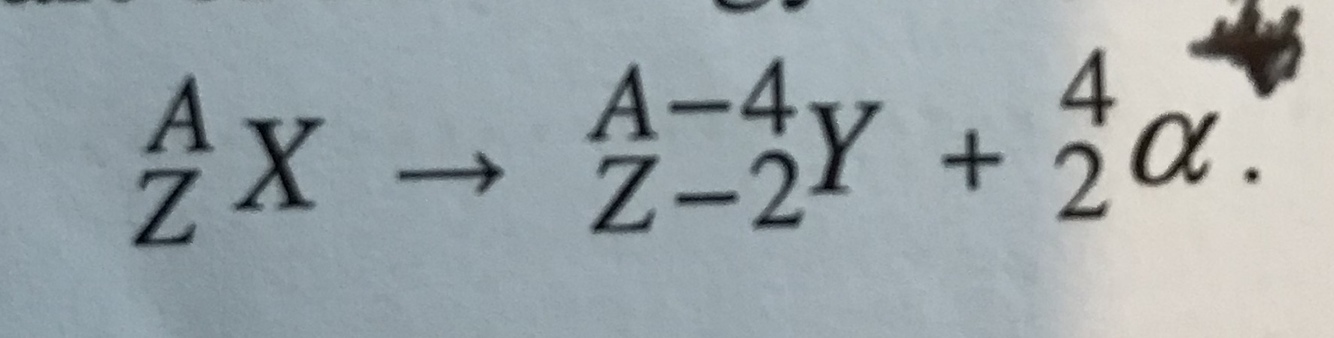
Alpha decay
A
- radionuclides emit heavy charged alpha particles composed of two protons and two neutrons
4
Q
Beta Decay
A
B-, B+ and e- capture
5
Q
B- decay
A
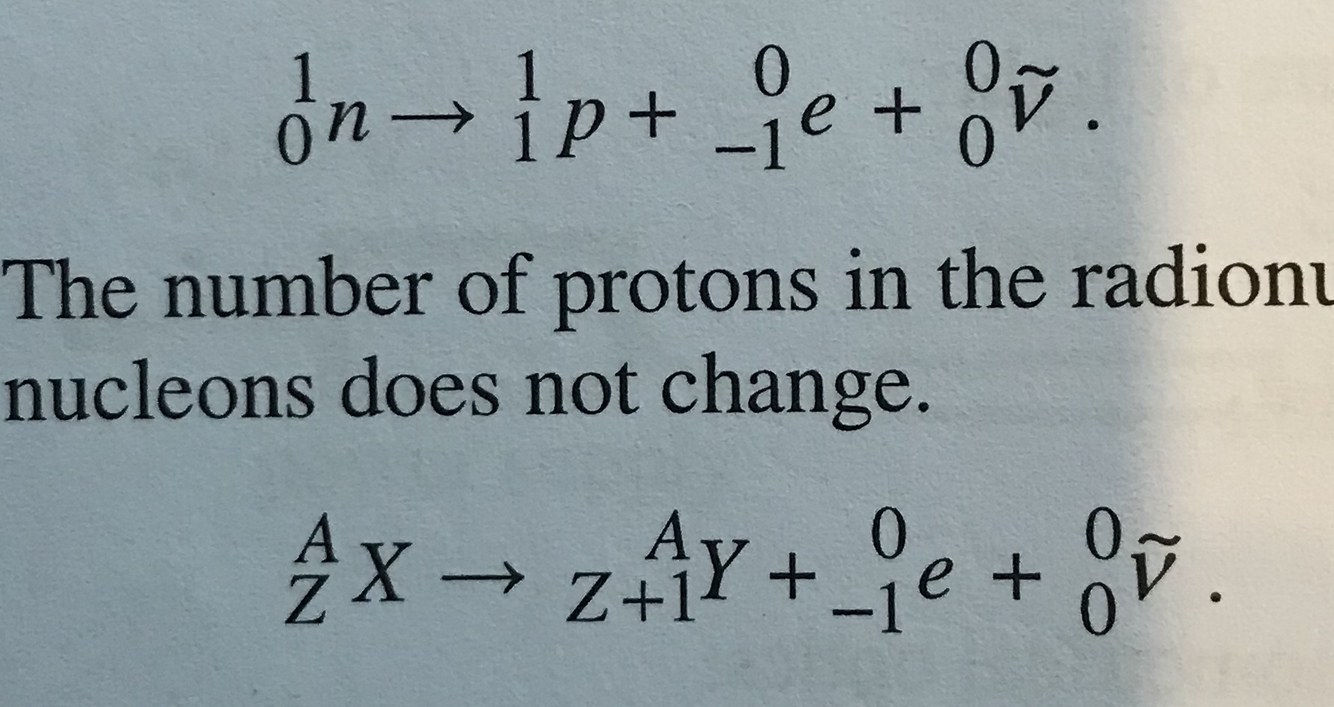
- emitted particle is an e-
- electron-beta-radioactive transformation
- electron appears during the spontaneous transformation of a neutron into a proton inside the nucleus
- simultaneous emission of a particle called antineutrino (e-)
- proton number increases by 1
6
Q
B+ decay
A
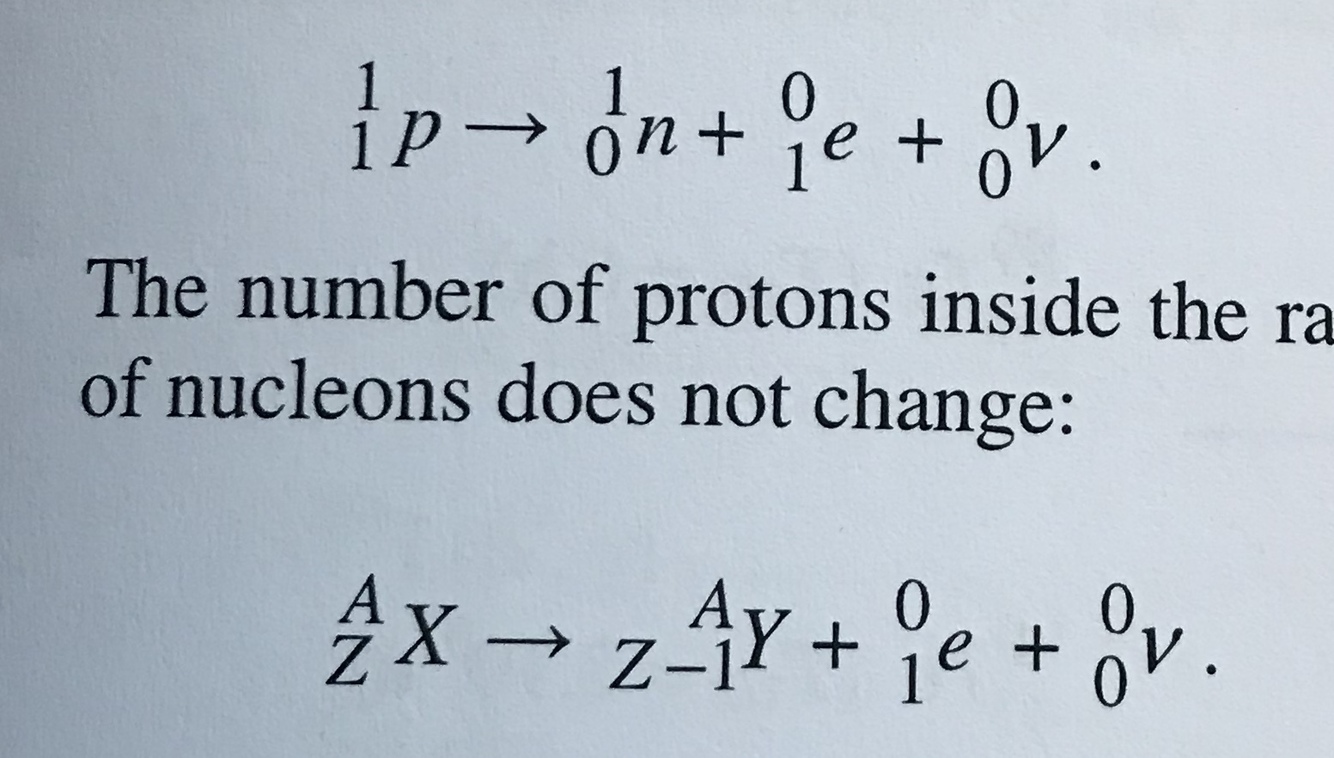
- emitted particle is a positron
- appears during the spontaneous transformation of a proton into a neutron inside the nucleus and the simultaneous emission of a particle called neutrino
- number of protons decreases by one
7
Q
Gamma radioactive transformation
A
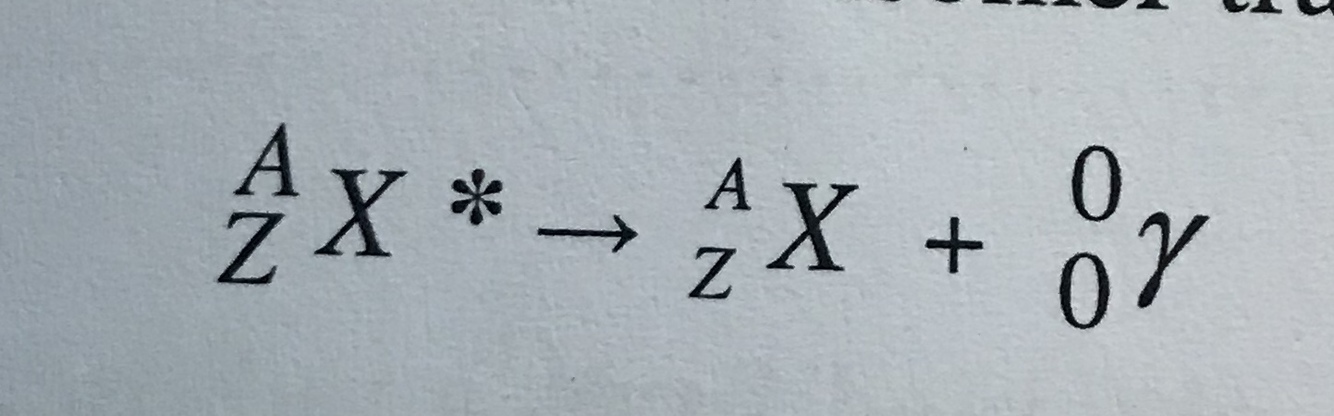
- typical for nuclei after beta or alpha decay are in an excited state
- release excess energy by emitting one or two gamma particles (high energy photons)
- emission of excitation energy occuring within 1 us
- later than that, isomer transition
- excited state which lasts longer than 1 us is called metastable and it is denoted by a symbol ‘m’ after mass number
8
Q
Important characteristics of radionuclides used in nuclear medicine
A
- only beta and gamma used
- max energy Eβmax of beta-emission spectrum and energies Eγ1, Eγ2 of gamma rays
- half-life T1/2 - short half-life used
- activity, A, rate of decay of substance
- A= -λN - where n is number of radioactive atoms and λ is the decay constant
9
Q
Radiopharmaceutics
A
- chemical compounds in which one of the chemical elements participates with its radioactive isotope
- technetium-99 is included in a big number of radio-pharmaceuticals
- inserted via intravenous injection and more rarely orally
- they are accumulated selectively in different tissues, organs and systems

Medical Physics
flashcards
Decks in class (10)
# Cards



