The CNS is normally sterile so how do microorganisms gain entry to cause infections?
- Direct spread (from middle ear, basal skull fracture, even through ethmoid bone)
- Blood bourne (in sepsis or infective endocarditis)
- Iatrogenic (post neurosurgery, ventriculoperitoneal shunt, lumbar puncture)
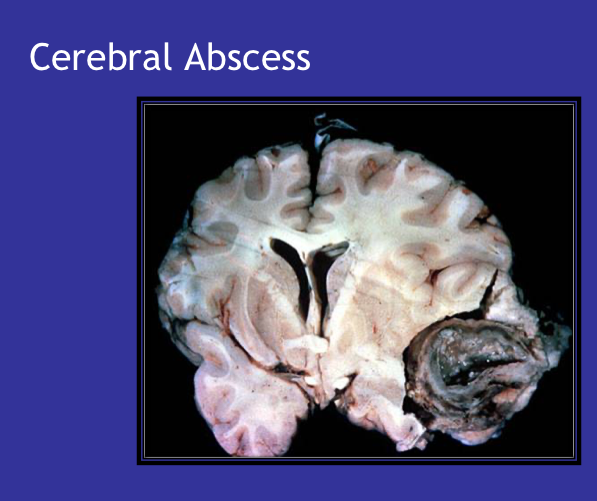
What is the pathophysiology of acute meningitis and what are the causative organisms?
- Inflammation of the leptomeninges (pia and arachnoid) +/- a non blanching rash (if meningococcal septicaemia)
- Most common in 5-30, rarely HiB due to vaccine

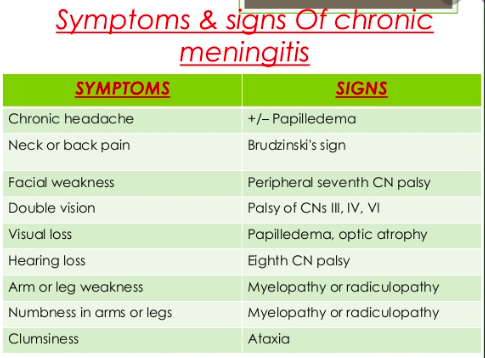
What is chronic meningitis?
- Caused by M. tuberculosis and lasts at least 4 weeks
- Granulomas
- Meningeal fibrosis
- Cranial nerve entrapment in fibrosis so facial nerve palsie and headaches
- Bilateral adrenal haemorrhage (Waterhouse-Friederichsen
syndrome) can occur as a complication
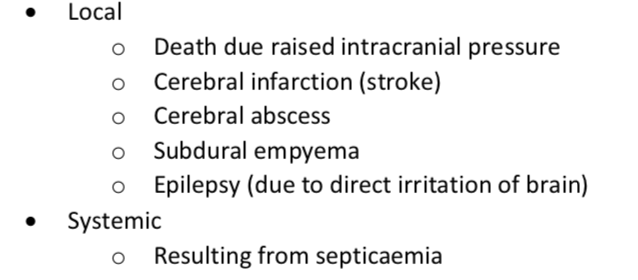
What are some of the complications of meningitis?
What is the pathophysiology of encephalitis?
- Usually viral
- Inflammation of brain parenchyma not meninges (but can be a complication of meningitis)
- Virus kills neurones causing inflammation and presence of intracellular viral inclusions
- Often get lymphocytes infiltrating
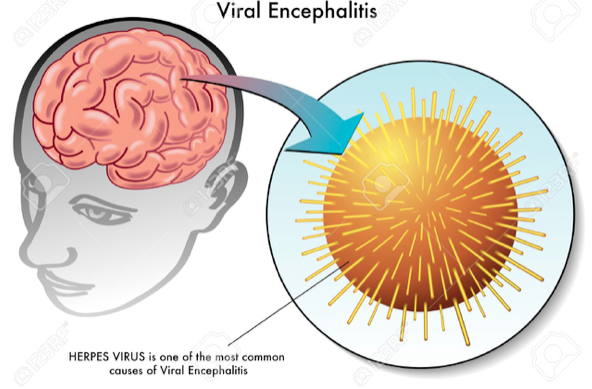
What are some of the common organisms causing encephalitis?
Different viruses affect different lobes. As chronic inflammation usually presents as headaches. Often self-limiting
Temporal lobe: Herpes viruses (most common)
Spinal cord: Polio (now eradicated)
Brainstem: Rabies (very rare)
What is a prion and how can it cause disease?
- Normal protein needed for synaptic function
- PrP can become mutated themselves (sporadic) or familial or ingested to PrPSC
- PrPsc interacts with normal prions and cause them to aggregate together causing cell death of grey matter and causes brain to have a spongiform appearance
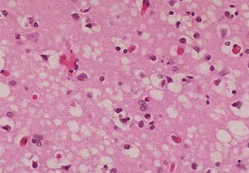
What virus is this?
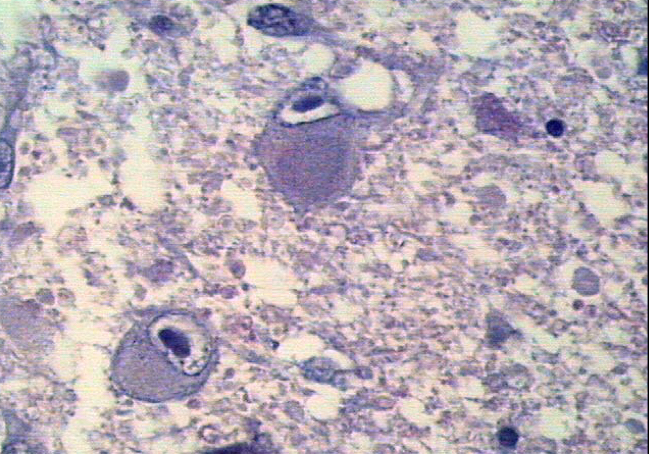
CMV - can see ‘owl eyes’ which are inclusions of the virus replicating
Why are mutated prions so ‘dangerous’ and more than certain to cause disease?
- PrPsc can convert PrP into itself (i.e. induce a conformational change) by protein-protein interactions alone
- PrPsc is extremely stable (resistant to disinfectants, irradiation) and not susceptible to immune attack as it is essentially a ‘self’ protein
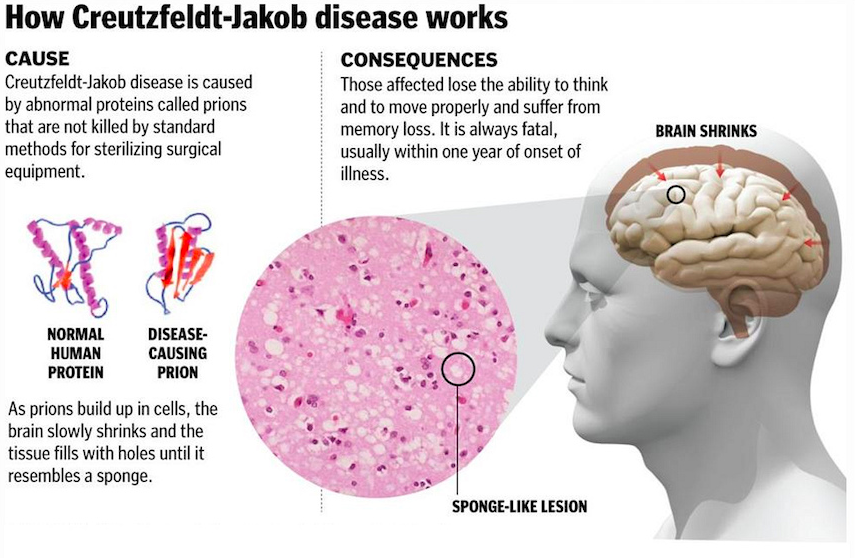
What are some spongiform encephalopathies caused by prions?
- Scrapie in sheep
- BSE in Cows
- Kuru in tribes of New Guinea (ingested)
- vCJD
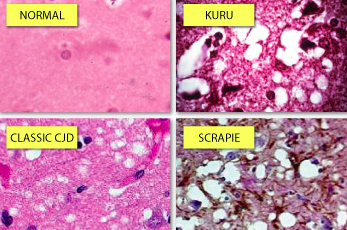
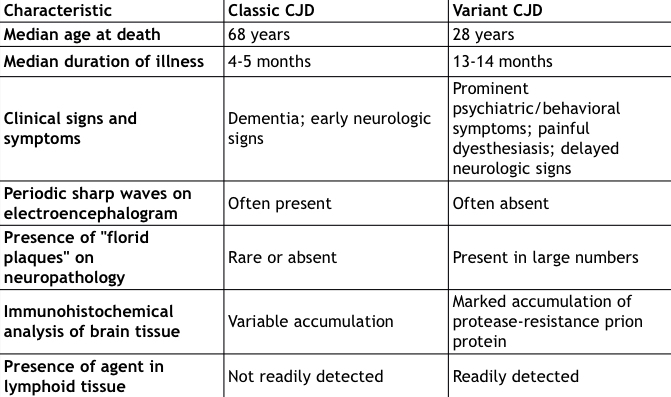
What is variant CJD and how does it differ to classic CJD?
- Strongly linked to BSE through ingestion of prions e.g eating spinal cord of cow from butchers
- Essential difference compared to classical CJD is that there seems to be a much higher prion load associated with earlier age at death and more prominent psychiatric symptoms (e.g seizures and vision loss)
- Classic CJD is a form of dementia
Are prion diseases infections?
Unclear as does not completely fulfil all of Koch’s postulates as found in healthy organisms!!!
What is the definition of dementia and what are the different types?
Acquired global impairment of intellect, reason and personality without impairment of consciousness (delirium would affect consciouness)
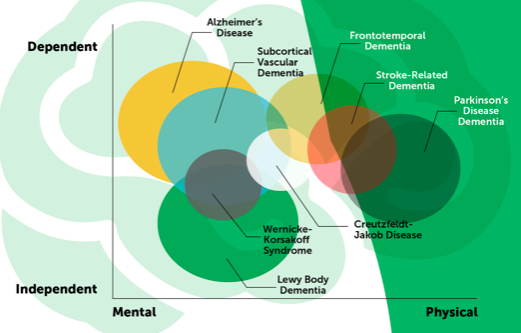
What are the different categories of Alzheimer’s disease?
- Early/Late
- Sporadic/Familial
- Most are late sporadic
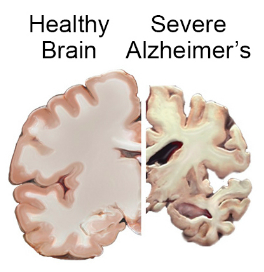
What is the pathophysiology behind Alzheimer’s disease?
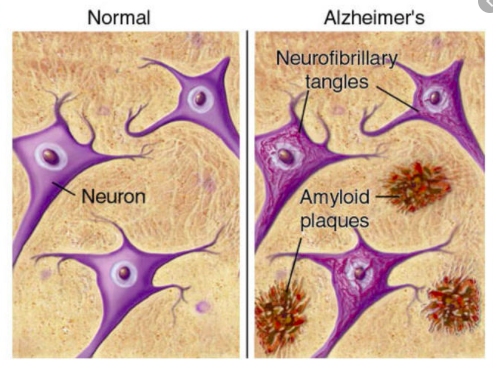
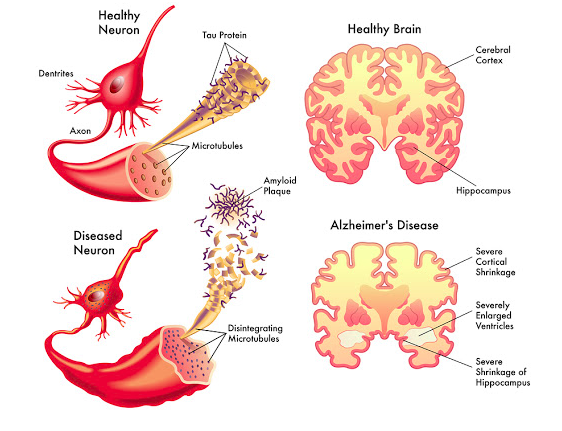
- Loss of cortical neurones due to neuronal damage by neurofibrillary tangles and amyloid plaques. Leads to cortical atrophy and decreased brain weight
Neurofibrillary tangles: intracellular twisted filaments of Tau protein that normally binds to microtubules. Hyperphosphorylation of tau is thought to lead to tangle formation and form a plaque
Senile Plaques: foci of enlarged axons, synaptic terminals and dendrites. Amyloid deposition in centre of tau plaque associated with vessels. (cotton wool balls)
What are some genes associated with Alzheimer’s disease?
o APP
o Presenelin genes 1 and 2
- Lack of presenelin means lack of secretase so APP cannot be broken down so amyloid deposited
- These genes are found on chromosome 21 so this is why Down’s syndrome have early onset familial dementia as they have three of these genes so extra dose
What is normal intracranial pressure and what compensatory mechanisms does the CNS have when the ICP is increased?
- 0-10 mmHg but this increases during coughing and sneezing to around 20mmHg
- Reduced blood flow, reduced CSF volume, brain atrophy (long term)
- Cerebral blood flow can be maintained as long as ICP<60mmHg
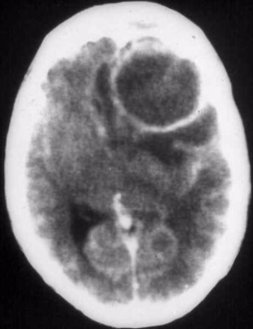
What are the consequences of a space occupying lesion in the brain?
- Lesion could be tumour, haemorraghe or oedema
- Deforms or destroys the surrounding brain
- Displaces midline structures so loss of symmetry
- Herniation
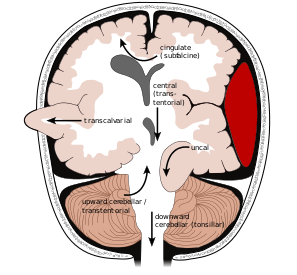
What are three different types of herniation that can occur in the brain when there is increased intracranial pressure?
- Subfalcine: cingulate gyrus pushed under the falx cerebri and herniated brain can become ischaemic due to compression of ACA that normally loops over corpus callosum and can get pinched
- Tentorial: medial temporal lobe (uncus) pushed through tentorial notch and can compress ipisilateral oculomotor nerve andipsilateral cerebral peduncle causing ipsilateral third nerve palsy but contralateral UMN signs in limbs.
Can be complicated by secondary brainstem haemorraghe (Duret Haemorraghe). Usual mode of death for those with large brain tumour and intracranial haemorraghe
Tonsillar: cerebella tonsils can be pushed in F.Magnum compressing the brainstem
What would you observe with a patient that has tonsillar herniation?
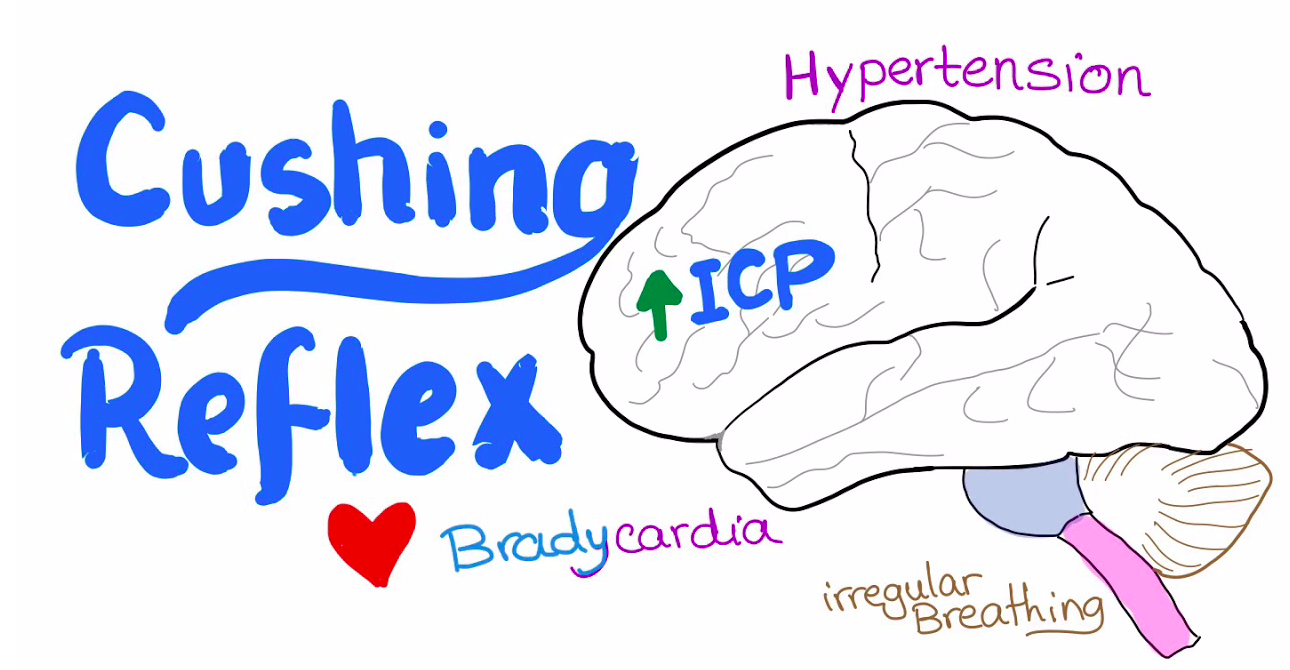
- May have high B.P to maintain cerebral perfusion but bradycardia as tonsils pushing on cardiac centre in medulla
- This is called Cushing’s reflex and is a sign of coning and perideath
What are some tumours that can occur in the brain, even though in general they are very rare?
Benign: meningioma
Malignant:
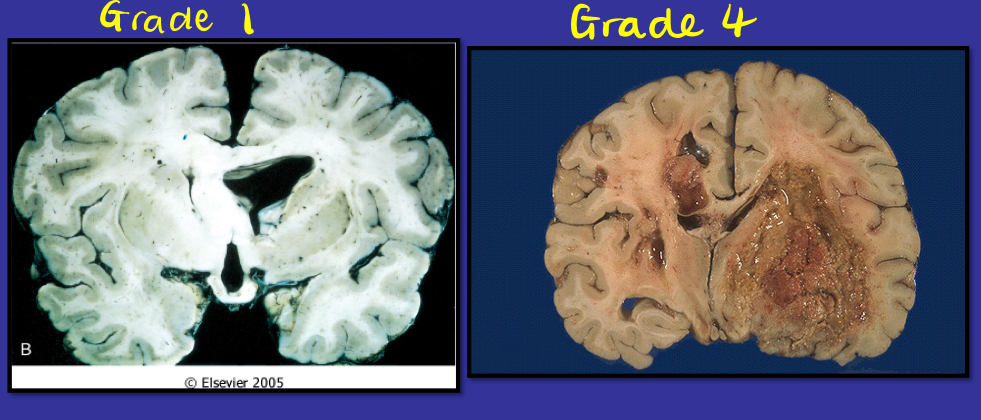
- Astrocytoma: most common. if grade 1 slow growing but difficult to remove. high grade like glioblastoma multiforme is aggressive and can spread by white matter pathways to other parts of CNS and CSF
- Neurofibroma: from schwann cells of peripheral or CN
- Ependymoma: cells lining ventricular system
- Neuronal tumours: very rare
- Lymphomas and metastastes (most common)
What is the definition of a stroke?
- A sudden event producing a disturbance of CNS function due to vascular disease
- 2 per 1000 of the population each year
- Stroke syndromes depend on area of brain affected
What are the risk factors of a stroke and what are the two main categories of stroke?
- Hyperlipidaemia
- Hypertension
- Diabetes
- Smoking
- Anything vascular
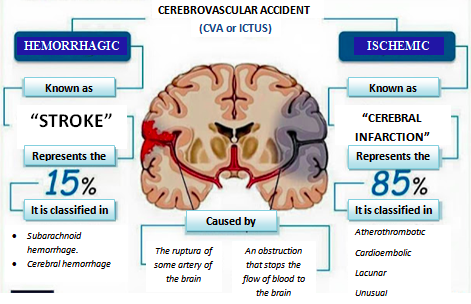
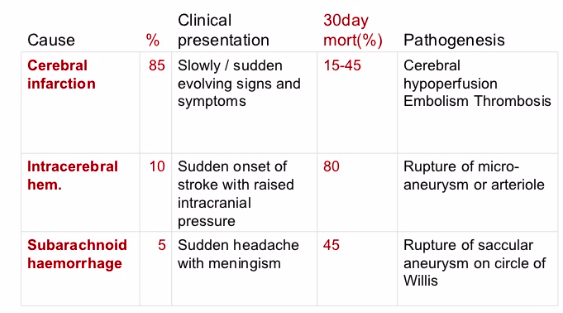
- Cerebral infarction (85%) or cerebral haemorraghe (15%)
What is the pathogenesis behind a stroke?
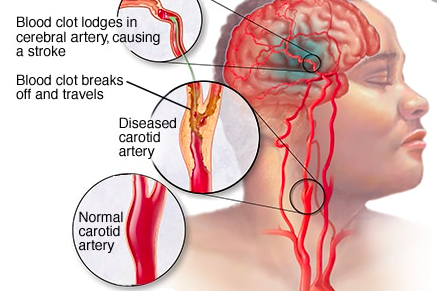
- Embolism (most common): various sources like heart (due to AF, mural thrombus), atheromatous debris (carotids), thrombus over ruptured plaque, aneurysms
- Thrombosis: over atheromatous plaque


-
1 - Topography of the Nervous System30
-
2 - Embryology of the Nervous System18
-
3 - Glia36
-
4 - Somatosensory System32
-
5 - The Eye43
-
6 - Arterial Supply to the Brain17
-
7 - The Motor System40
-
8 - Movement Disorders46
-
9 - Higher Cortical Function22
-
10 - Reticular Formation and Consciousness24
-
11 - Neuropathology35
-
12 - Confusion in the Elderly36
-
13 - Headaches40
-
14 - Stroke27
-
15 - Raised ICP27
-
16 - Meningitis and Subarachnoid Haemorraghe34
-
17 - Anxiety Disorders24
-
18 - Mood Disorders28
-
19 - Psychosis31



