What are the labels?
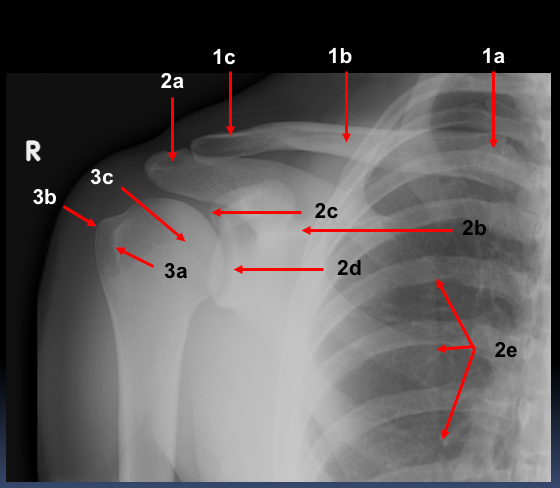
1a - sternal end
1b - mid-shaft
1c - acromial end
2a - acromion
2b - spine
2c - coracoid process
2d - glenoid fossa
2e - medial border
3a - lesser tubercle
3b - greater tubercle
3c - head of humerus
What are the labels?
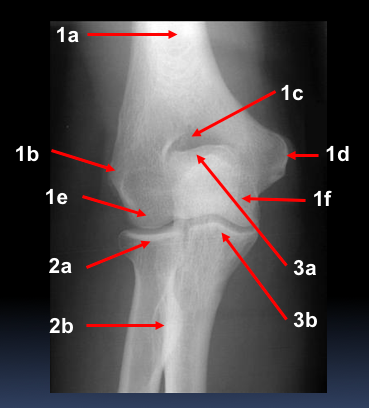
1a - distal shaft
1b - lateral epicondyle
1c - olecranon fossa
1d - medial epicondyle
1e - capitulum
1f - trochlea
2a - radial head
2b - radial tuberosity
3a - olecranon
3b - coronoid process
What are the labels?
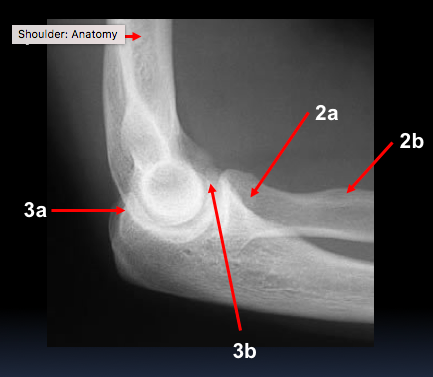
1 - humerus
2a - radial head
2b - radial tuberosity
3a - olecranon
3b - coronoid process
What are the labels?
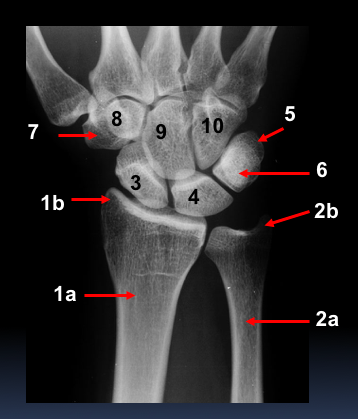
1a - distal shaft of radius
1b - styloid process of radius
2a - ulna distal shaft
2b - styloid process of ulna
3 - scaphoid
4 - lunate
5 - triquetrium
6 - pisiform
7 - trapezium
8 - trapezoid
9 - capitate
10 - hamate
Clinical case: A 46 year old man was thrown from his bike. He had pain and deformity of his right shoulder.
What can you see? What is your diagnosis based on the patient’s presentation? Would you request an X-ray?
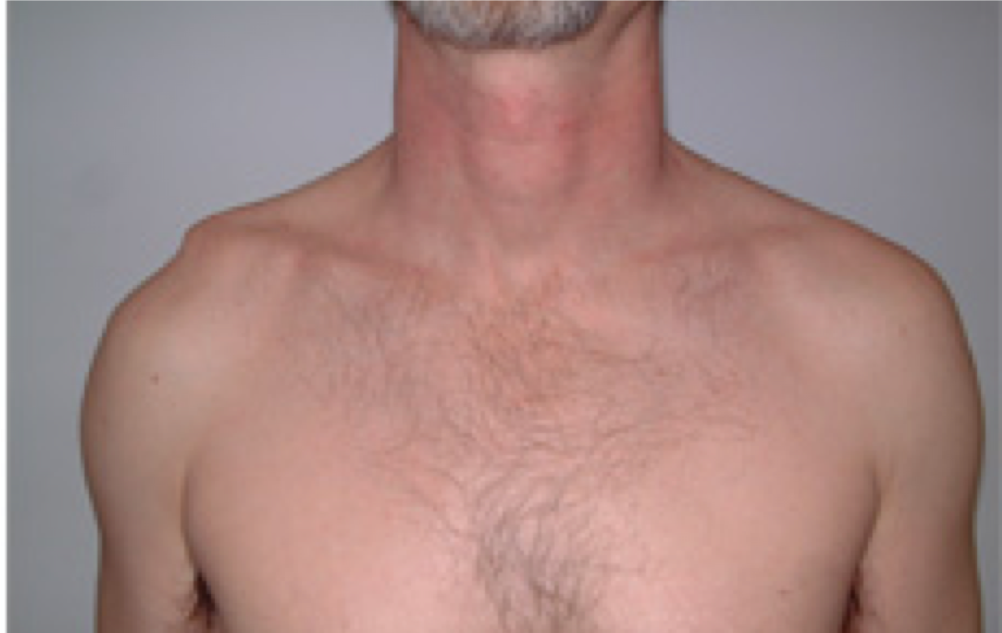
- Protrusion of right clavicle
- Dislocation of acromion from clavicle (AC joint)
- Need to do X-ray
- To see extent of dislocation and confirm diagnosis
Does this x-ray confirm diagnosis of AC dislocation?
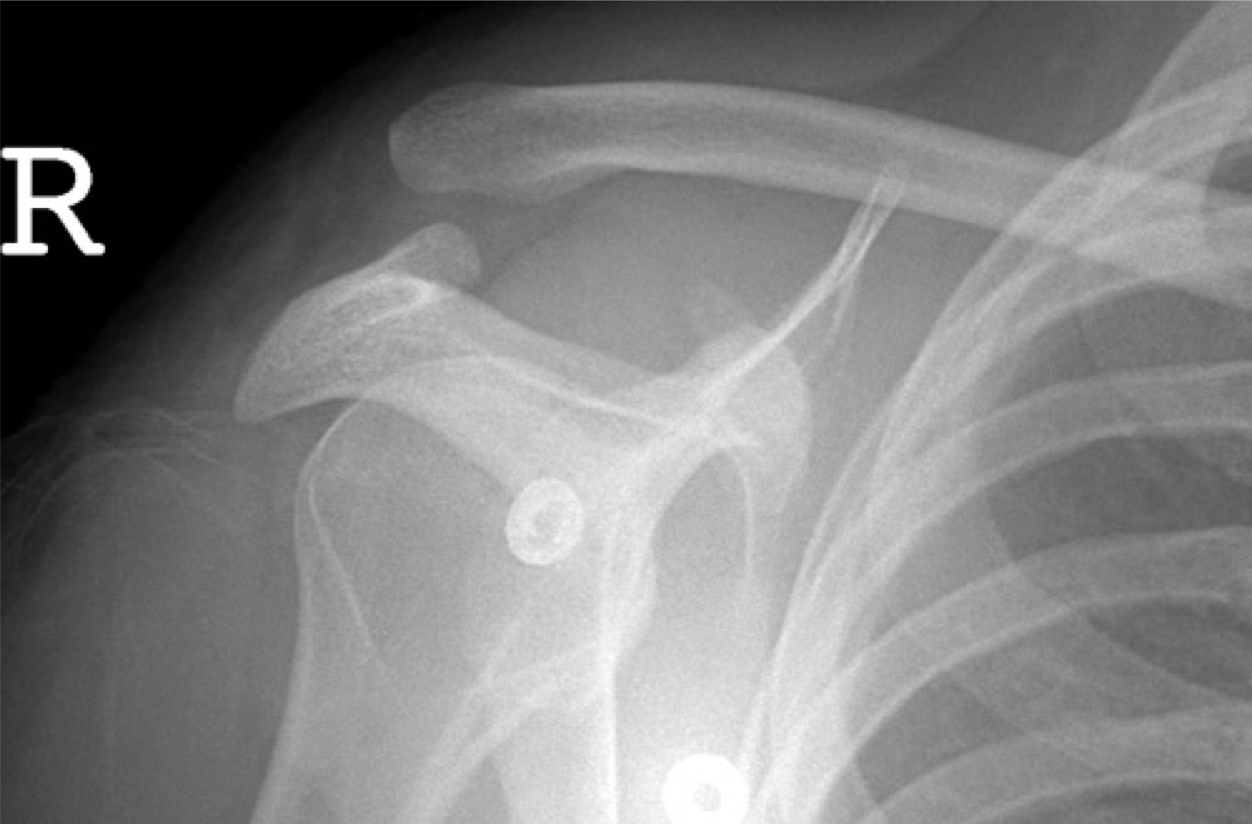
Yes - separation of acromion and clavicle
Clinical case: A 20 year old man fell whilst playing football. He had pain and deformity of his right shoulder. He cannot move it.
What can you see? What is your diagnosis? Do you need to request an X-ray?
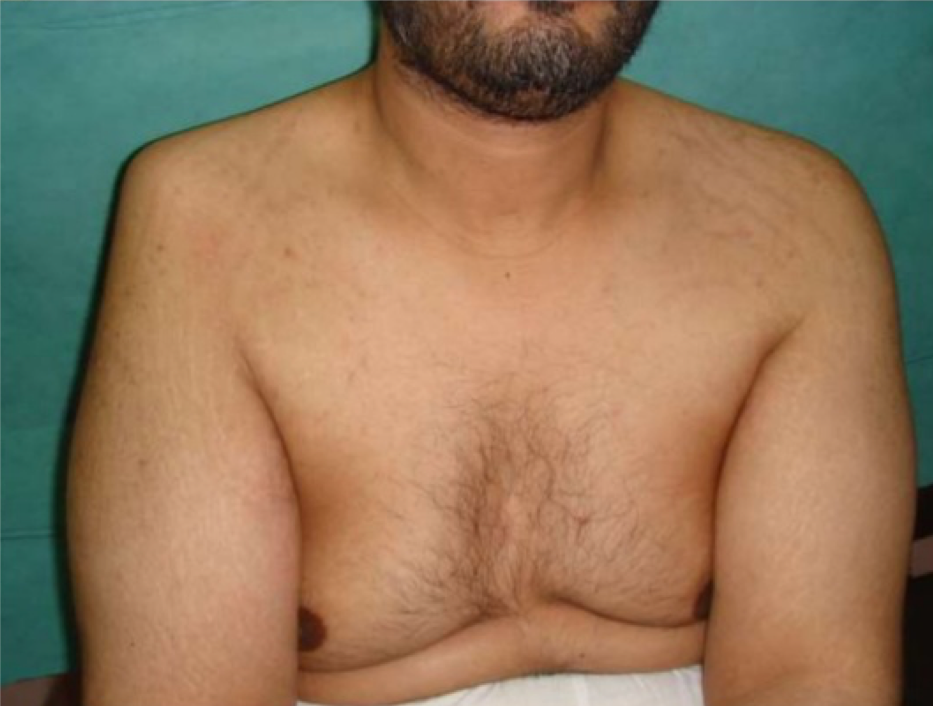
- Angular appearance of right shoulder
- Shoulder dislocation (probably anterior dislocation of humeral head)
- Acromion forming angle due to humeral head not being where it’s supposed to
- Need an x-ray:
- To confirm anterior dislocation
- To confirm extend of injury (can get fractures associated with dislocations)
- Need to do x-ray before and after putting shoulder back into place (in case you have made it worse)
In what dislocations would you need to do a bilateral x-ray (i.e. of the other side)?
Posterior shoulder dislocation - can occur on both sides
X-ray for: A 20 year old man fell whilst playing football. He had pain and deformity of his right shoulder. He cannot move it.
Does the X-ray confirm your diagnosis? What can you see in the X-rays?
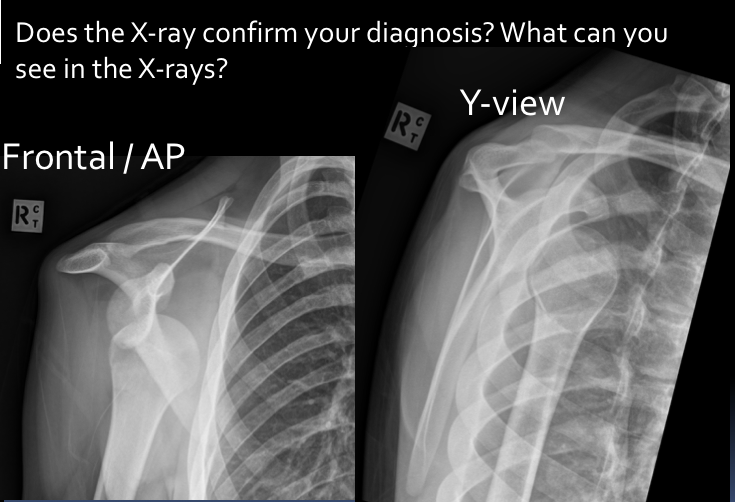
AP view:
- Yes - can see humeral head has been anteriorly dislocated and is not articulating with the glenoid fossa
Need a 2nd view to confirm: Y-view
- Head of humerus isnt sat in middle of Y but instead is sat immediately beneath the coracoid process
What are the 2 blue labels?
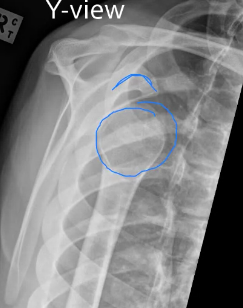
Coracoid process and head of humerus (seen here in anterior shoulder dislocation)
What is an AP view?
Anteroposterior view - the x-ray beam enters through the anterior aspect and exits through the posterior aspect of the chest.
What is a Y-view?
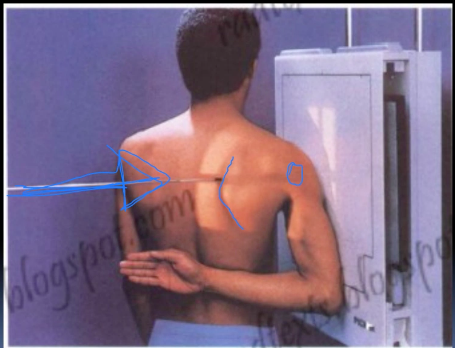
The Y-view is taken by aligning the x-ray beams parallel to the plane of the scapula so that it can be seen “floating” over the thoracic wall. In a healthy patient, the humeral head should be in alignment with the glenoid cavity of the scapula.
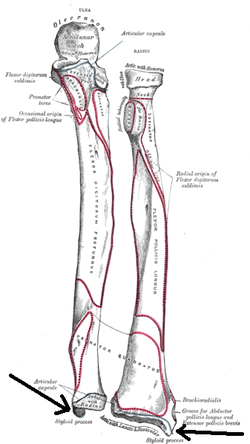
What is the radial styloid? What is the ulna styloid?
Styloid process is found at the distal end of both the ulna and the radius - is a projection of bone
Radial - projection on the lateral surface of the distal radius
Ulna - projection on the medial surface of distal ulna
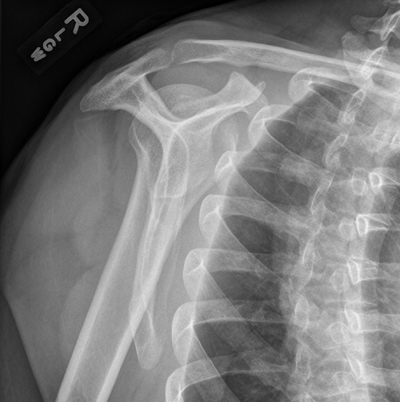
What nerve is most at risk during an anterior shoulder dislocation?
Axillary nerve
Clinical case: A 68 year old man fell whilst out walking his dog. His X-ray is shown.
Which part of the humerus is fractured?
Which nerve is vulnerable to injury and how may this present clinically?
What do you need to examine?
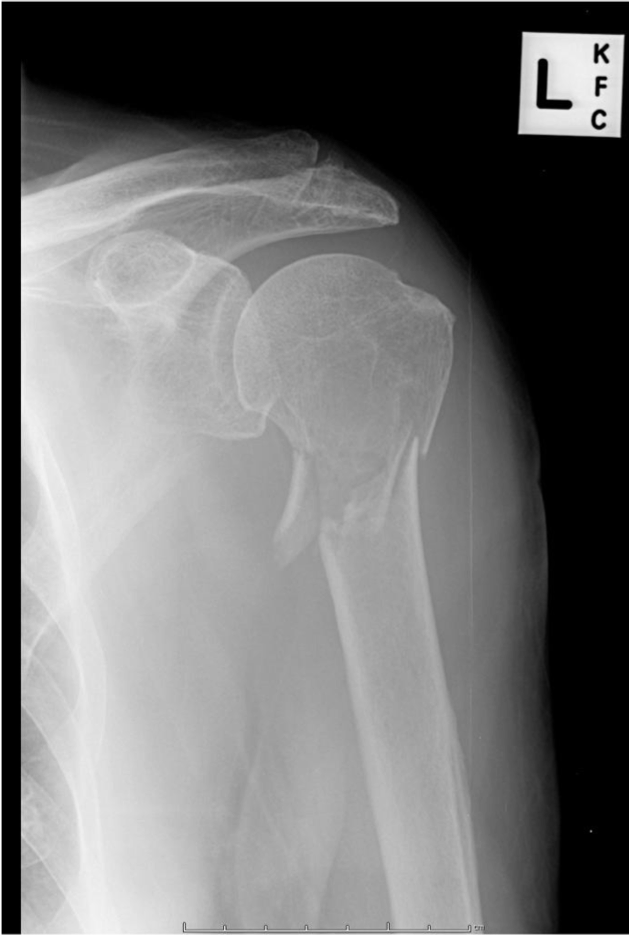
- Surgical neck fracture
- Axillary nerve at risk
- Need to examine motor and sensory function of nerve:
- Motor: deltoid and teres minor
- Sensory: sensation over upper lateral arm
Clinical case: You are asked to review the X-rays of a 30 year old man on the Acute Medicine ward. He was admitted yesterday via A&E with generalised tonic-clonic seizure. Overnight he complained of pain in his right shoulder and the on-call doctor requested X-rays.
What do you make of the patient’s X-rays? What has happened?
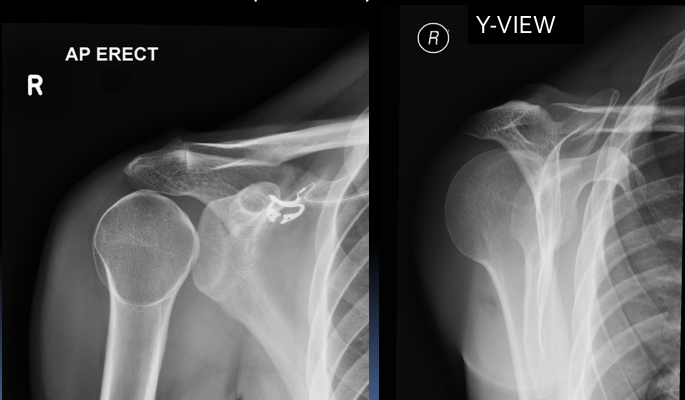
- Posterior dislocation
- Humeral head has rotated
- Be careful as can look like humeral head is sat in glenoid fossa
- In y-view: confirms posterior dislocation
- Humeral head sat under acromion
What are the classic causes of posterior shoulder dislocation?
- Can be caused by trauma
- Mainly caused by seizures; severe muscle contraction which can be enough to posteriorly dislocate the shoulder
- Can cause bilateral shoulder dislocation
- Electrocution can also cause (bilateral) shoulder dislocation
Clinical case: An 87 year old man fell at home. He had pain, deformity and bruising of his left arm. His X-ray is shown.
Which part of the humerus has been fractured?
What do you need to do in your examination of this patient?
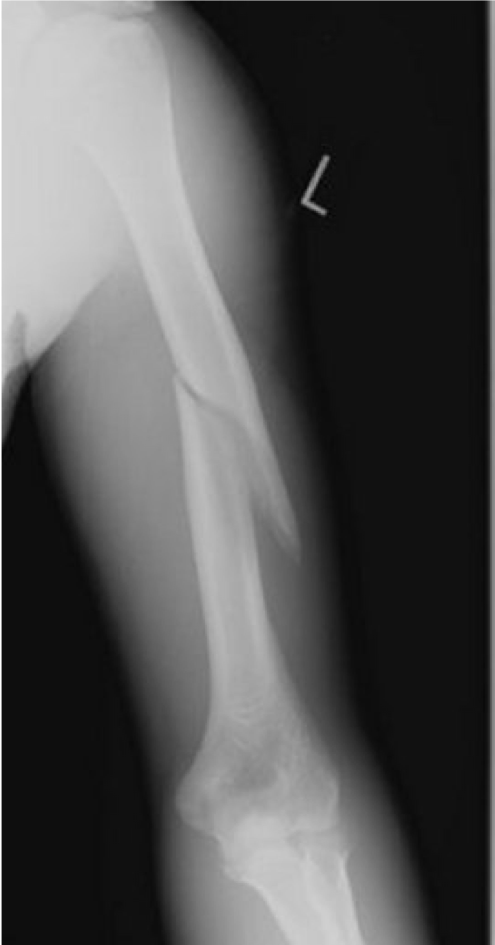
- Oblique fracture of the humerus
- Radial nerve at risk
- To examine motor: extend wrist
- Sensory: sensation over dorsal lateral aspect of hand and over ASB
During humeral shaft fractures that may affect the radial nerve, why is it better to test the motor function of the wrist than elbow?
As radial nerve comes down arm, the radial nerve has already given off some branches to triceps so will still get some extension at the elbow
Clinical case: A 13 year old boy fell whilst playing with friends. His left arm was very painful and swollen.
What injury has been sustained?
What structures are vulnerable to injury?
How would you examine this patient?
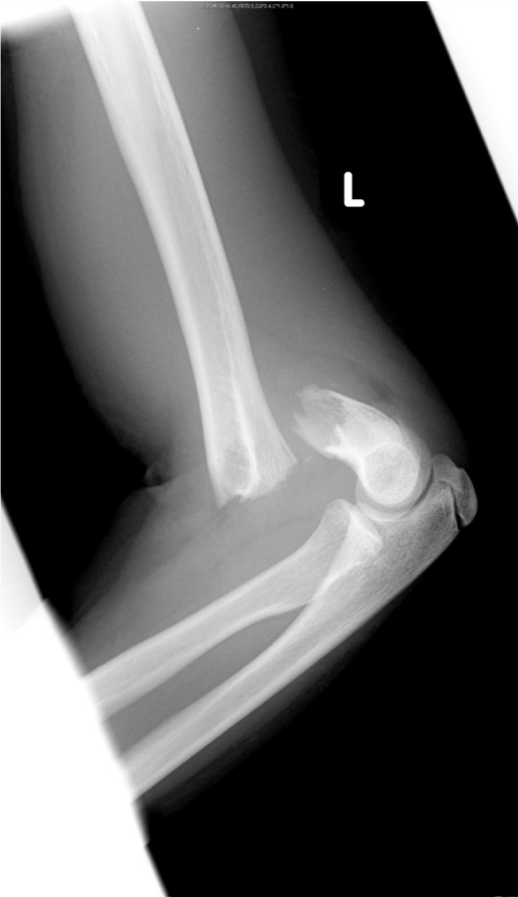
- Supracondylar fracture - this injur is more common in children than adults; typical mechanism is a fall onto the outstretched hand (FOOSH)
- Median nerve and brachial artery at risk
- Examine median nerve:
- Flexion of fingers (make a fist)
- Examine brachial artery:
- Colour, temperature of hand
More subtle supracondylar fracture x-rays.
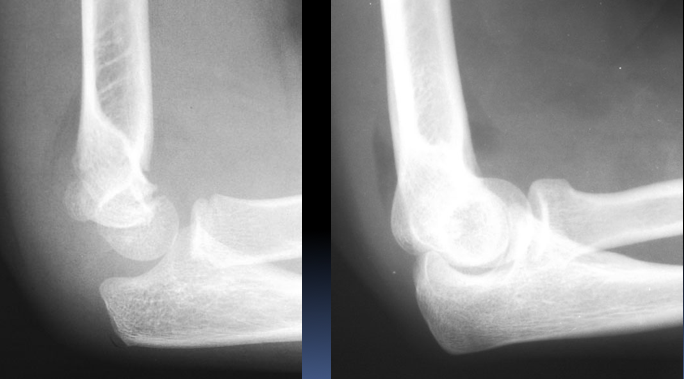
What are elbow fat pads?
A potential finding on elbow radiography which suggests a fracture of one or more bones at the elbow:
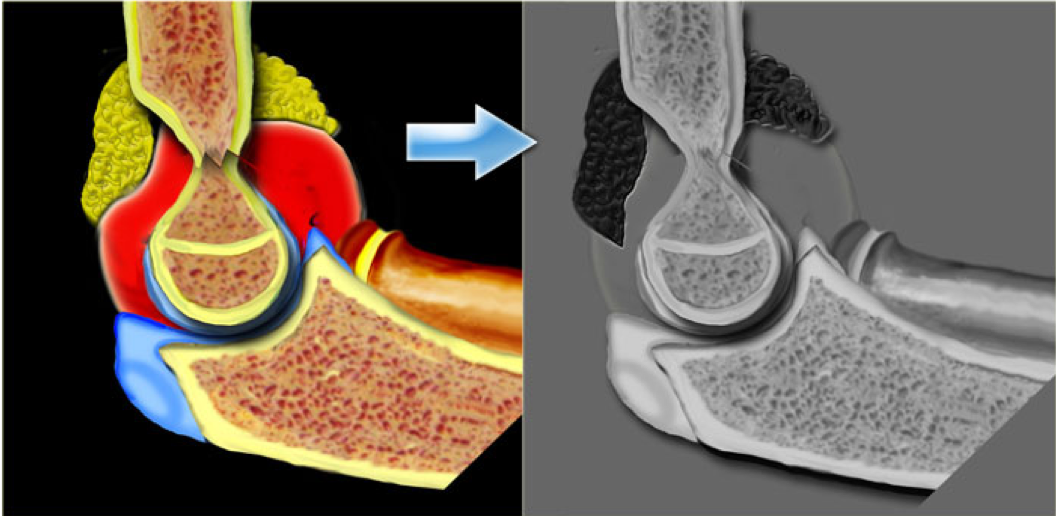
- The elbow joint has 2 regions of fat around it: anterior and posterior fat pads
Which elbow fat pads are visible on an x-ray?
Often the small anterior fat pad can be seen on a normal lateral elbow x-ray
The posterior fat pad is never visible on a normal xray
What is an intraarticular fracture? How can it present on an x-ray?
A fracture inside the joint capsule - can cause bleeding and swelling inside the capsule
This pushes up against the fat pads and pushes them away from the humerus - become more visible on x-rays as dark grey areas anterior and posterior to the joint


-
Pectoral Girdle and Shoulder129
-
Muscle Anatomy30
-
Clinical - Frozen Shoulder112
-
Pectoral Girdle and Shoulder SDL110
-
Arm and Elbow158
-
Clinical - Arthritis29
-
Forearm and Wrist126
-
Vessels and Nerves of the Upper Limb116
-
Arm and Elbow SDL137
-
The Hand121
-
Radiology Review37
-
Forearm and Wrist SDL120
-
Brachial Plexus Injuries34
-
Peripheral Lesions of the Upper Limb52
-
Nerves of the Upper Limb Revision50
-
The Hand SDL95
-
The Pelvis and Hip257
-
Clinical: Neck of Femur Fractures44
-
Gluteal Region and Hip - SDL110
-
The Thigh and Knee247
-
Development of the Limbs73
-
Anterior and Medial Thigh SDL115
-
The Leg, Ankle and Foot141
-
AFL321
-
Vessels of the Lower Limb86
-
Vascular Disease in the Lower Limb29
-
Posterior Thigh and Knee SDL84
-
Posterior Thigh and Knee Anatomy103
-
Clinical Lecture: External fixation of the Lower Limb12
-
Anatomy - Lower Leg and Ankle109
-
Leg and Ankle SDL96
-
The Foot - Intrinsic Muscles104
-
Foot SDL62
-
Leg, Ankle and Foot MCQs71
-
Lower Limb Radiology23
-
Ultrasound of the Lower Limb38
-
AFL424
-
Radiology12
-
UL Radiology Revision38



