Botulism is classically characterized by a __ paralysis
Botulism is classically cahracterized by a descending paralysis
Botulism in an infant
Clinical suspicion for botulism in an infant should be high as it is life threatening and since incidence is much higher in infants
The syndrome will look like this:
- Diffuse hypotonia in a descending pattern on history
- Autonomic dysfunction with hypotension
- Constipation
Spinomuscular atrophy will NOT affect ___
Spinomuscular atrophy will NOT affect the autonomic nervous system
This is a very helpful feature in differentiating it from similar diseases
Features of poliomyelitis
- Some reason for being unvaccinated
- Asymmetric myelitis associated with an elevated WBC count on CSF
- Affects primarily the lower motor neurons of the anterior horn
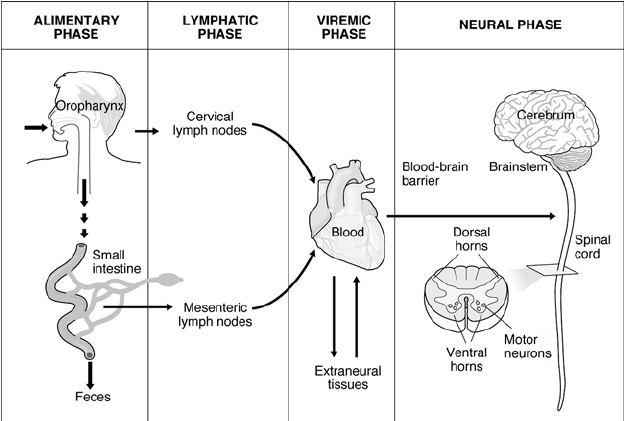
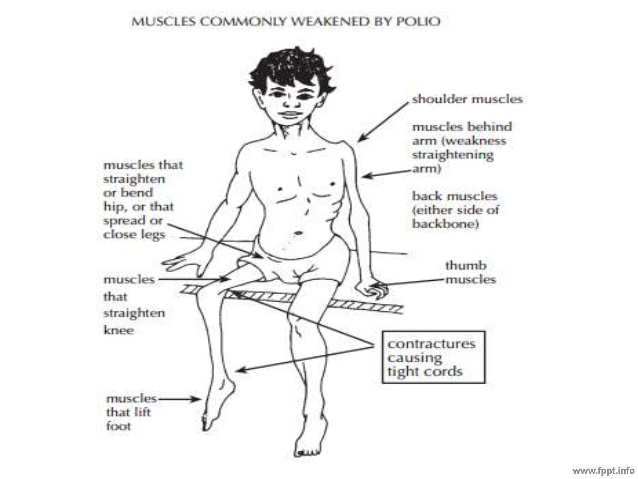
Post-polio syndrome
Electromyography with repetitive nerve stimulation study
An electrophysiologic test evaluating motor unit action potentials and function at the NMJ
When performed at various vrequencies, helps differentiate presynaptic NMJ disease from postsynaptic NMJ disease (for example, botulism from myasthenia gravis)
Why are infants so susceptible to C. botulinum colonization?
In adults, a healthy intestinal flora keeps C. botulinum from growing.
Infants have yet to develop a robust intestinal flora, making them susceptible to colonization. Colonization typically occurs in the cecum.
Two most commonly recognized sources of botulinum spores
Honey
Soil contamination of other food (home canned food)
Most cases of infantile botulism occur in infants under the age of ___
Most cases of infantile botulism occur in infants under the age of 6 months
Do not feed honey to an infant younger than ___
Do not feed honey to an infant younger than 1 year of age
Botulism syndrome
- Acute-to-subacute onset over days
- Descending paralysis/hypotonia with hyporeflexia
- Constipation
- Feeding difficulties
- Respiratory difficulties
- Cranial nerve abnormalities (facial weakness, ptosis, occulomotor abnormalities, unresponsive pupils, dysphagia, dysarthria, diminished gag, mydriasis)
___ is usually the first symptom of botulism, often preceding other symptoms by several weeks
Constipation is usually the first symptom of botulism, often preceding other symptoms by several weeks
Diagnosing botulism
- In an infant
- Fecal specimen with isolation of C. botulinum spores and botulinum toxin
- Sample size of at least 25-50 g is required for adequate sensitivity
- These studies take days to come back and should NOT delay treatment
- EMG findings:
- Decreased aplutide of motor units in at least 2 muscle groups
- Tetanic and post-tetanic fasciculations
- Absence of posttetanic exhaustion
Treating botulism
- Hospitalization
- Administer anti-toxin as soon as possible
- Mechanical ventilation and nasogastric tube feeding are likely to be required
- DO NOT give antibiotics – they are contraindicated
Why are antibiotics contrainidcated in infantile botulism?
Lysis of bacteria by the antibiotics can lead to exacerbation of symptoms due to the release of toxin from dead bacteria
Infants with botulism are likely to have gotten it from ___, adults with botulism are likely to have gotten it from ___.
Infants with botulism are likely to have gotten it from honey, adults with botulism are likely to have gotten it from dirt-contaminated food.
In the case of an adult with botulism, onset of neurological symptoms is likely to have been preceded by. . .
. . . nausea, vomiting, and diarrhea
Diffuse flacid paresthesis in a newborn vs in a 4 month old is likely to be. . .
Newborn: Neonatal myasthenia gravis
4-month-old: Botulism
Initial therapy for botulism in children
Less than 1: Human-derived anti-toxin
Older: Horse-derived anti-toxin
This is because horse antitoxin is more likely to cause a hypersensitivity reaction in those under age 1

-
Stroke69
-
Back to Basics2
-
Essential Tremor13
-
Huntington's Disease19
-
Encephalitis in a Healthy Individual18
-
Parkinson's Disease27
-
Hereditary Neurodegenerative Ataxias17
-
Tardive Dyskinesia and Related Dyskinesias11
-
Acute Spinal Cord Injury15
-
Epidural/Subdural Hematoma6
-
Delirium6
-
Concussions9
-
Lumbar Puncture4
-
Cerebral Cortex I and Vascular Territories49
-
Stroke and Intracerebral Hemorrhage46
-
Seizure and Epilepsy118
-
Subarachnoid Hemorrhage16
-
Stroke in a Young Patient12
-
Peripheral Neuropathy46
-
Syncope and Loss of Consciousness of Unknown Etiology13
-
Psychogenic Nonepileptic Spells7
-
Multiple Sclerosis and Other Myelopathies45
-
Headache55
-
Neuro Exam and Basic Neuro Tips13
-
Approach to Ataxia and Gait Disorders9
-
Alzheimer's Dementia22
-
Lewy Body Dementia18
-
Subacute Combined Degeneration of the Spinal Cord14
-
Optic Neuritis22
-
Acute Disseminated Encephalomyelitis13
-
Meningitis28
-
Botulism19
-
HIV-associated Neurologic Dysfunction/Dementia11
-
Creutzfeld-Jakob Disease18
-
Neurosyphilis24
-
Toxoplasmosis12
-
Sleep Disorders22
-
Pupillary Responses22
-
Pseudotumor cerebri14
-
Diplopia and Oculomotor Palsies8
-
Zoster13
-
Myasthenia20
-
Vertigo12
-
Chronic inflammatory demyelinating polyneuropathy7
-
Guillain-Barre Syndrome17
-
Uncovered High-Yield Topics39
-
Neuro Oncology33
-
Myositides25
-
Amyotrophic Lateral Sclerosis13
-
Anterior Horn Cell Diseases15
-
Febrile Seizure12
-
Muscular dystrophies8
-
Tics and Tourette Syndrome19
-
Benign Rolandic Epilepsy7
-
Lissencephaly13
-
Autism Spectrum Disorder9
-
Cerebellopontine Angle Mass15
-
Wilson's disease4
-
Last Week Prep39
-
Ned Divine Review23



